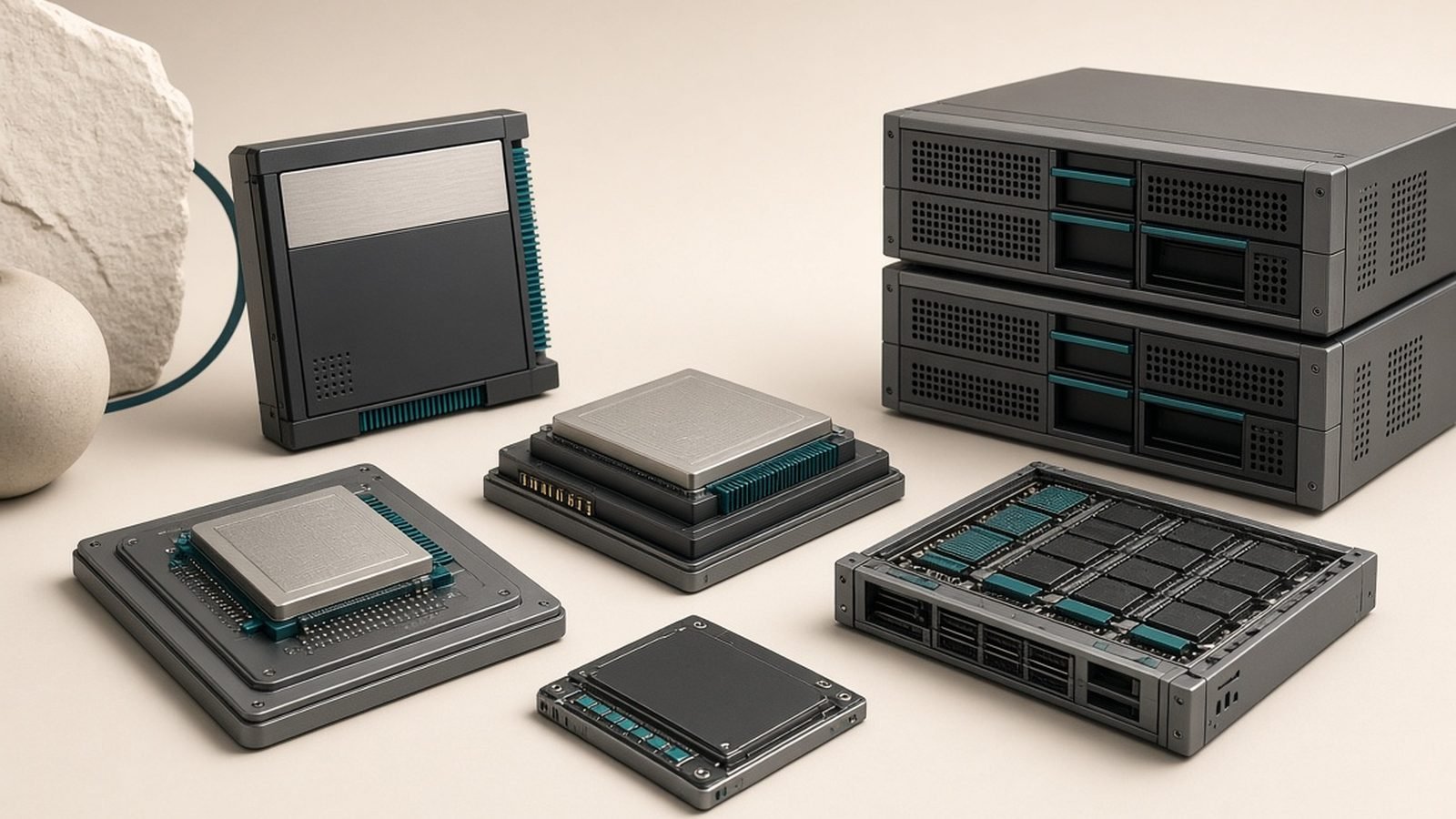
Groq is not an AI model maker — it’s the company that makes AI models run astonishingly fast. Its custom LPU inference chips and GroqCloud service are built around a single obsession: delivering answers from large language models at speeds that make typical cloud AI feel sluggish, streaming responses so quickly they appear almost instantly. If you’re a developer who cares about low latency — real-time voice, agents, or anything where waiting for tokens kills the experience — Groq is one of the most interesting names in AI infrastructure in 2026.
The one-line verdict: Groq delivers genuinely remarkable inference speed, a clean developer experience, and competitive pricing on the open models it hosts, making it a standout for latency-sensitive applications. The honest caveats are that it doesn’t make the models it serves, so you’re limited to the open models it chooses to host; it’s an infrastructure company competing against Nvidia’s entire ecosystem; and its name is endlessly confused with xAI’s “Grok” chatbot, which is a completely different product. It’s an excellent pick for developers who need speed; irrelevant if you just want a chatbot to talk to.
Company overview
Groq is a US semiconductor and AI-infrastructure company headquartered in Mountain View, California. It was founded in 2016 by Jonathan Ross, who had previously worked on Google’s Tensor Processing Unit (TPU), the custom chip that helped power Google’s AI. That pedigree is central to Groq’s identity: it was building purpose-built AI silicon years before the current inference boom made speed a headline feature.
Its reputation is that of the speed specialist. Groq designed a new class of chip — the LPU, or Language Processing Unit — specifically for running (rather than training) large language models with very low latency and predictable performance. When fast inference became a competitive battleground, Groq was well positioned, and its live demos of near-instant responses earned it wide attention. It has raised substantial funding and pursued large infrastructure deals. The honest counterpoint is that it competes in a market utterly dominated by Nvidia, and as an independent chip company it must win developers on the specific merits of speed and cost rather than on an entrenched ecosystem. It is privately held rather than owned by a larger group.
What Groq makes
Groq’s line-up centers on inference hardware and the cloud service built on it:
- The LPU (Language Processing Unit) — its custom inference chip, engineered for fast, predictable large-language-model performance.
- GroqCloud — its cloud platform where developers access hosted open models running on Groq hardware via API.
- The GroqCloud API — an OpenAI-compatible API that makes it easy to swap Groq in for other providers.
- Hosted open models — a selection of popular open-weight models (chat, reasoning, and speech) that Groq serves at high speed.
- On-premise and data-center systems — Groq hardware and rack-scale systems for organizations that want to deploy inference in their own environments.
- GroqChat — a demo chat interface that showcases the raw speed of the platform.
Standout Groq products in 2026
GroqCloud is the product most developers will actually use — an API that serves popular open models at speeds that genuinely change what feels possible, particularly for real-time and agentic applications. Because it’s OpenAI-compatible, teams can point existing code at it with minimal changes, which makes it a compelling backend for anything in our Best AI Coding Assistants 2026: Top Picks Compared & Ranked and agent-building workflows where latency matters.
The LPU chip is the technology underneath it all — Groq’s custom inference silicon, designed from scratch for the specific job of running language models quickly and predictably. It’s the reason GroqCloud is fast, and it’s what differentiates Groq from simply renting general-purpose GPUs.
Hosted open models on Groq let developers run well-known open-weight chat, reasoning, and speech models at high speed without managing their own hardware. That makes Groq a natural companion to the self-hosting and local-AI options in our Best Local AI Tools 2026: Run AI on Your Own PC guide, and it’s part of what powers the fastest responses you’ll see among the assistants in our Best AI Chatbots 2026: ChatGPT vs Claude vs Gemini & More roundup.
Strengths
Exceptional inference speed. Groq’s core advantage is real and dramatic — its LPU-based platform serves model responses at speeds that make latency-sensitive applications like real-time voice and agents far more viable.
Purpose-built hardware. Rather than repurposing GPUs, Groq designed a chip specifically for inference, which gives it predictable, consistent performance under load.
Developer-friendly and compatible. GroqCloud’s OpenAI-compatible API means developers can adopt it with minimal code changes, lowering the switching cost significantly.
Competitive pricing. For the open models it hosts, Groq’s pricing is often very competitive, making fast inference affordable as well as quick.
Strong technical pedigree. Founded by a key figure behind Google’s TPU, Groq has deep credibility in custom AI silicon, a genuinely hard field.
Weaknesses & criticisms
It doesn’t make the models. Groq serves open models it chooses to host, so you’re limited to that selection — you can’t run the latest closed frontier models like the newest GPT or Claude on it, and model availability is Groq’s decision, not yours.
Competing against Nvidia’s ecosystem. The AI-hardware market is overwhelmingly Nvidia’s, with an enormous software and developer ecosystem behind it. As an independent challenger, Groq faces a steep, well-funded incumbent.
Constant name confusion with Grok. Groq (the chip company, founded 2016) is routinely mistaken for xAI’s “Grok” chatbot — a totally unrelated product. The similarity is a genuine branding headache and a source of ongoing user confusion.
Not a consumer product. Groq is developer infrastructure. There’s a demo chat, but it isn’t a consumer assistant, so most people have no direct use for it.
Capacity and scale questions. Scaling custom-silicon capacity to meet surging inference demand is a real operational challenge, and availability can be a consideration for large workloads.
Reliability & support
As infrastructure, GroqCloud is built for production use and is generally dependable, with the predictable, low-latency performance that is its whole reason for being. The usual large-language-model caveat still applies, but it’s worth being precise about responsibility: Groq provides speed and uptime, while the accuracy of answers comes from the open models it hosts — so outputs can still be wrong and need verifying, just as on any other provider.
Support is developer-oriented: documentation, an API console, and standard developer channels, with enterprise arrangements for larger customers and on-premise deployments. Because Groq is an infrastructure layer, its reliability story is really about latency, throughput, and availability rather than customer hand-holding, and on those measures its purpose-built design is a strength. For teams that need inference in their own environment, Groq’s on-premise systems offer more control over performance and availability than a purely hosted service.
Who should buy Groq
Groq is the right choice for developers and businesses building latency-sensitive AI — real-time voice assistants, interactive agents, live translation, or any application where the speed of the response is part of the product. If you’re already using open models and want them served faster and often cheaper, GroqCloud’s OpenAI-compatible API makes it easy to adopt, and its speed can genuinely transform the user experience.
Look elsewhere if you need the latest closed frontier models, since Groq only serves selected open models; or if you’re a consumer who just wants an assistant to chat with, in which case the ChatGPT Review 2026: Still the Best AI Assistant?, Claude Review 2026: The Best AI for Writing & Code?, and Google Gemini Review 2026: Worth It for Google Users? are what you want. And don’t confuse it with xAI’s Grok — see our xAI Review 2026: Is It a Good Brand? for that entirely separate product. Groq is a developer and infrastructure play, best judged on speed, price, and model availability.
FAQ
Is Groq a good brand?
For developers who need fast inference, yes — Groq’s speed is genuinely impressive, its API is easy to adopt, and its pricing on hosted open models is competitive. The caveats are that it only serves selected open models rather than the latest closed ones, it competes against Nvidia’s dominant ecosystem, and it isn’t a consumer product. Within its niche, it’s excellent.
Is Groq reliable?
Yes, as infrastructure it’s built for production and delivers the predictable low latency that’s its main selling point. Groq is responsible for speed and uptime; the accuracy of answers depends on the open models it hosts, so outputs still need checking like any AI. For latency-sensitive workloads, its purpose-built hardware is a real reliability advantage.
Where is Groq from and who owns it?
Groq is a US company headquartered in Mountain View, California, founded in 2016 by Jonathan Ross, who previously worked on Google’s TPU chip. It is a privately held, independent company backed by substantial investment, rather than a subsidiary of a larger tech group or a publicly traded firm.
What is a Groq LPU?
The LPU, or Language Processing Unit, is Groq’s custom chip designed specifically to run — not train — large language models with very low latency and consistent performance. Purpose-built inference silicon is what lets GroqCloud serve model responses so much faster than typical GPU-based cloud services.
Is Groq the same as Grok?
No — this is a very common mix-up. Groq (with a “q”) is a chip and cloud-infrastructure company founded in 2016 that makes AI run fast. Grok (with a “k”) is a chatbot from Elon Musk’s xAI. They are entirely separate companies and products that happen to sound almost identical.
Is Groq better than Nvidia?
For pure inference speed on the models it hosts, Groq’s purpose-built LPUs can outperform general-purpose GPUs, which is its whole pitch. But Nvidia dominates the overall AI market with a vast hardware and software ecosystem, handles both training and inference, and is far more widely deployed. Groq is a focused challenger on inference latency, not an across-the-board replacement.
Zen Tech Hub may earn a commission from links on this page, at no extra cost to you.