If you build your smart home around Z-Wave and want sensors that expose every setting rather than hiding them, Aeotec is a specialist brand worth knowing in 2026. It is the company that now manufactures the SmartThings Hub, and its own sensors are longtime favorites among enthusiasts who run platforms like Home Assistant, Hubitat, and SmartThings. Verdict: buy Aeotec if you are a hands-on smart-home builder who wants deep, configurable Z-Wave hardware and a hub that runs a serious automation platform; look elsewhere if you want plug-and-play simplicity, a polished consumer app, or the lowest prices.
Aeotec sits firmly in enthusiast territory — its strengths and its rough edges both come from that focus. This profile covers what it makes, where it excels, and the caveats worth knowing.
Company overview
Aeotec is a smart-home hardware company that grew out of Aeon Labs, an early and prolific maker of Z-Wave devices. It operates internationally, with a significant European base (Germany) and roots in the broader Z-Wave manufacturing world, and it is best known in enthusiast circles for two things: a long catalog of Z-Wave sensors and accessories, and its role as the company that took over manufacturing and selling Samsung SmartThings-branded hardware — including the SmartThings Hub — after Samsung stepped back from making the physical devices itself. That means when you buy a “SmartThings Hub” today, you are very likely buying Aeotec-made hardware running Samsung’s platform.
Aeotec’s reputation among power users is strong. Its devices are seen as reliable, feature-rich, and well supported across third-party platforms, which is exactly what the DIY automation community wants. It is not a mainstream consumer brand, and it makes little effort to be one — there is no slick lifestyle marketing here, just capable hardware aimed at people who know what Z-Wave is and why they want it.
What Aeotec makes
Aeotec’s catalog is aimed at builders of real automation systems rather than casual buyers:
- Smart home hubs: The Aeotec Smart Home Hub (the SmartThings Hub) and related gateways that run the SmartThings platform locally and in the cloud.
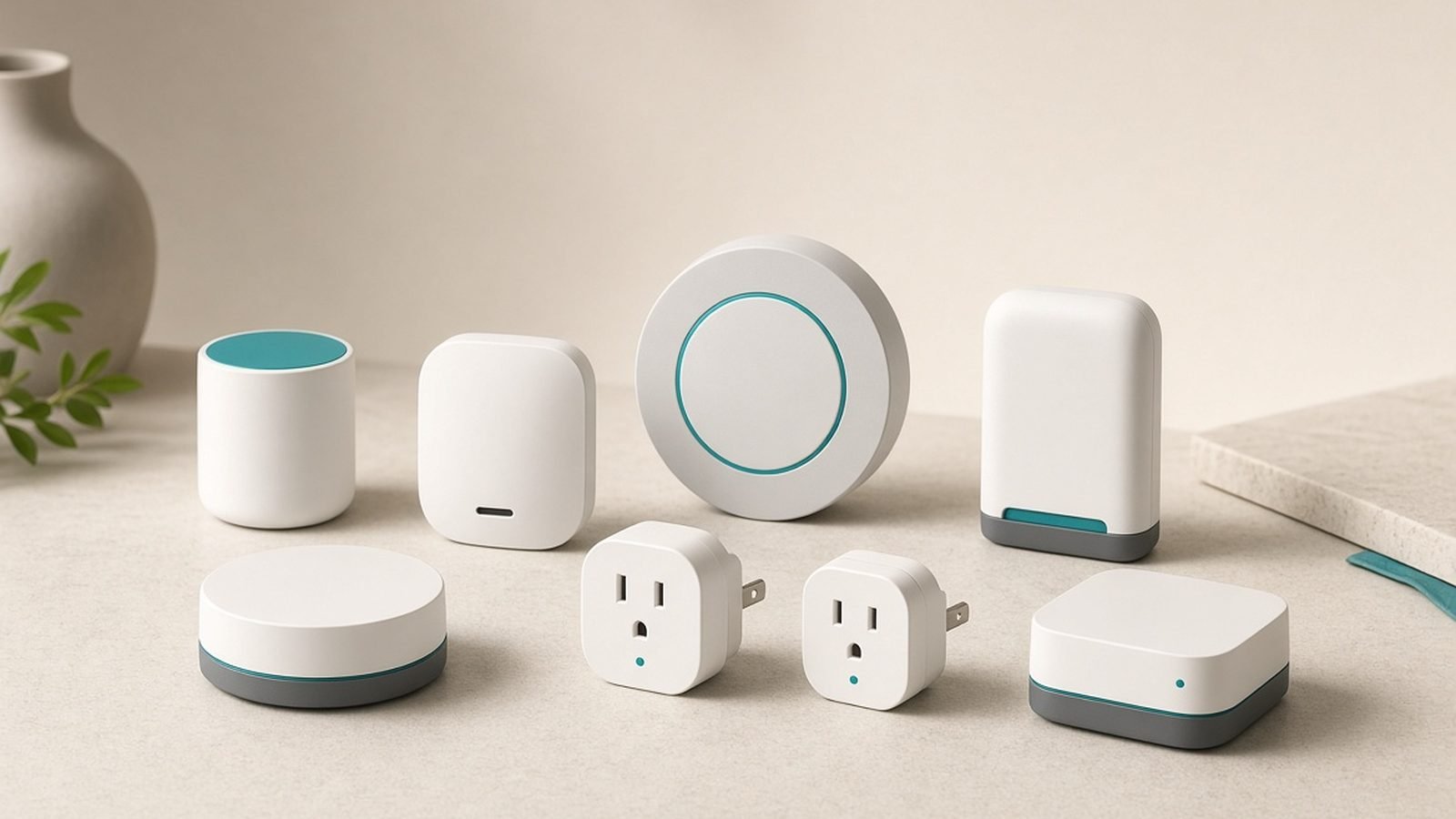
- Multi-sensors: Its signature products — devices like the MultiSensor and TriSensor that combine motion, temperature, humidity, light, and vibration sensing in one unit.
- Z-Wave accessories: Smart plugs, in-wall switches and dimmers, sirens, water sensors, door/window sensors, and range extenders/repeaters.
- Specialty devices: Energy meters, LED strips, and niche controllers for advanced setups.
Standout Aeotec products in 2026
Aeotec Smart Home Hub (SmartThings Hub). The flagship is the hub that powers a huge number of SmartThings installations. It supports Z-Wave, Zigbee, and increasingly Matter/Thread, making it a genuine multi-protocol brain for a mixed home. If you are choosing a platform, weigh it against the alternatives in our Best Smart Home Devices 2026: Where to Start guide and read What Is Matter? The Smart Home Standard Explained (2026) to understand where its Matter support fits.
Aeotec MultiSensor 7. The multi-sensor is Aeotec’s calling card: motion, temperature, humidity, light, vibration, and UV in one compact unit, with battery or USB power and deep configurability. It is the kind of sensor that lets you build genuinely smart automations rather than simple on/off triggers.
Aeotec TriSensor. A slimmer, more affordable motion/temperature/light sensor for people who want reliable presence detection without the full MultiSensor feature set — a common building block for lighting automations.
Aeotec Smart Switch and Range Extender. The energy-monitoring smart plug and the Z-Wave repeater are the unglamorous but essential parts of a robust mesh network; the extender in particular is what keeps a large Z-Wave home stable. These pair naturally with door locks in a Best Smart Locks 2026: Keyless Entry Compared & Ranked setup for whole-home security automations.
Sensors typically land around $40 / £35 each, with the hub often around $130 / £120, so a capable starter system is affordable — but it assumes you are willing to do the configuration.
Strengths
Deep configurability. Aeotec sensors expose an unusually rich set of parameters — sensitivity, reporting intervals, thresholds — which power users love because it lets them tune behavior precisely instead of accepting defaults.
Broad platform compatibility. Because Aeotec builds standards-based Z-Wave (and increasingly Zigbee/Matter) devices, its hardware works across SmartThings, Home Assistant, Hubitat, and other platforms rather than locking you into one app.
It makes the SmartThings Hub. Being the manufacturer of one of the most popular smart-home hubs gives Aeotec credibility and a central role in many homes.
Reliable mesh hardware. Its plugs, switches, and range extenders are well regarded for building a stable Z-Wave mesh, which is the foundation of a dependable automated home.
Multi-function sensors reduce clutter. Combining several sensors into one unit means fewer devices to mount, power, and manage.
Weaknesses & criticisms
Steep learning curve. Aeotec is unapologetically for enthusiasts. Getting the most from its configurable devices assumes comfort with Z-Wave parameters, hubs, and automation logic — casual buyers will find it overwhelming.
No polished first-party consumer app. Aeotec relies on whatever platform you pair it with (SmartThings, Home Assistant, etc.) rather than offering a slick, hand-holding app of its own, so the experience is only as friendly as your chosen hub.
Z-Wave inclusion can be finicky. As with the whole Z-Wave category, pairing (inclusion/exclusion) devices to a hub can occasionally be fiddly, and range/mesh issues require adding repeaters — a hassle newcomers don’t expect.
Pricier than generic sensors. Aeotec charges a premium over no-name Zigbee/Tuya sensors, which is justified by build quality and configurability but stings if you just want cheap motion detection.
Documentation aimed at experts. Manuals and parameter references are thorough but dense, written for people who already speak the language of home automation.
Reliability & support
Aeotec has a solid reliability reputation within the enthusiast community. Its sensors and mesh devices are known to run for years, and battery life on its multi-sensors is generally respectable given how much they do. Because the hardware follows open standards, it also tends to keep working across platform changes — a big advantage over proprietary gadgets that get orphaned when a company pivots.
Support is more community-driven than white-glove. Aeotec provides documentation, firmware, and direct support, but much of the practical troubleshooting happens in forums (SmartThings, Home Assistant, Hubitat communities) where Aeotec devices are widely used and well understood. Warranties are typically in the standard consumer range. The main reliability caveats are inherent to Z-Wave itself — mesh health and pairing — rather than defects in Aeotec’s hardware. For the audience it targets, Aeotec is a dependable, long-lived choice.
Who should buy Aeotec
Buy Aeotec if you are building or expanding a real automation system and want configurable, standards-based hardware that works across platforms — it is ideal for SmartThings, Home Assistant, and Hubitat users who want quality sensors and a stable Z-Wave mesh. If you are running the SmartThings platform, the Aeotec hub is effectively the reference hardware. Enthusiasts who value control over convenience are Aeotec’s core buyer.
Look elsewhere if you want a simple, app-first smart home that “just works” out of the box, if you are not comfortable with hubs and pairing, or if you are shopping purely on price. Newcomers should start with our Best Smart Home Devices 2026: Where to Start overview to decide on a platform first, then read What Is Matter? The Smart Home Standard Explained (2026) before committing to a protocol.
FAQ
Is Aeotec a good brand?
Yes — for its target audience. Aeotec makes reliable, deeply configurable Z-Wave sensors and manufactures the SmartThings Hub, and it works across major automation platforms. It is a strong choice for enthusiasts, though it is not aimed at casual, plug-and-play users.
Is Aeotec reliable?
Generally very reliable. Its sensors and mesh devices tend to last for years and follow open standards, so they survive platform changes. The main caveats are inherent to Z-Wave (mesh health and pairing) rather than defects in Aeotec’s hardware.
Where is Aeotec from and who owns it?
Aeotec grew out of Aeon Labs, an early Z-Wave device maker, and operates internationally with a significant European (German) base. It is best known for manufacturing Samsung’s SmartThings-branded hardware, including the SmartThings Hub, after Samsung stepped back from making the devices itself.
Does Aeotec make the SmartThings Hub?
Yes. Aeotec is the company that manufactures and sells SmartThings-branded hardware, including the Smart Home Hub, running Samsung’s SmartThings platform. When you buy a current SmartThings Hub, it is typically Aeotec-made.
Aeotec vs Fibaro — which is better?
Both make premium Z-Wave sensors. Aeotec offers broad multi-sensors and the SmartThings Hub with strong cross-platform support; Fibaro is known for compact in-wall modules and its own Home Center ecosystem. For flexibility across platforms, Aeotec is usually the safer pick; for tight in-wall installs, consider Fibaro.
Does Aeotec support Matter and Thread?
Increasingly, yes. The Aeotec/SmartThings Hub supports Matter and Thread alongside Z-Wave and Zigbee, positioning it as a multi-protocol hub. Individual sensors are mostly Z-Wave; check the specific product, and see What Is Matter? The Smart Home Standard Explained (2026) for what Matter adds.
Zen Tech Hub may earn a commission from links on this page, at no extra cost to you.