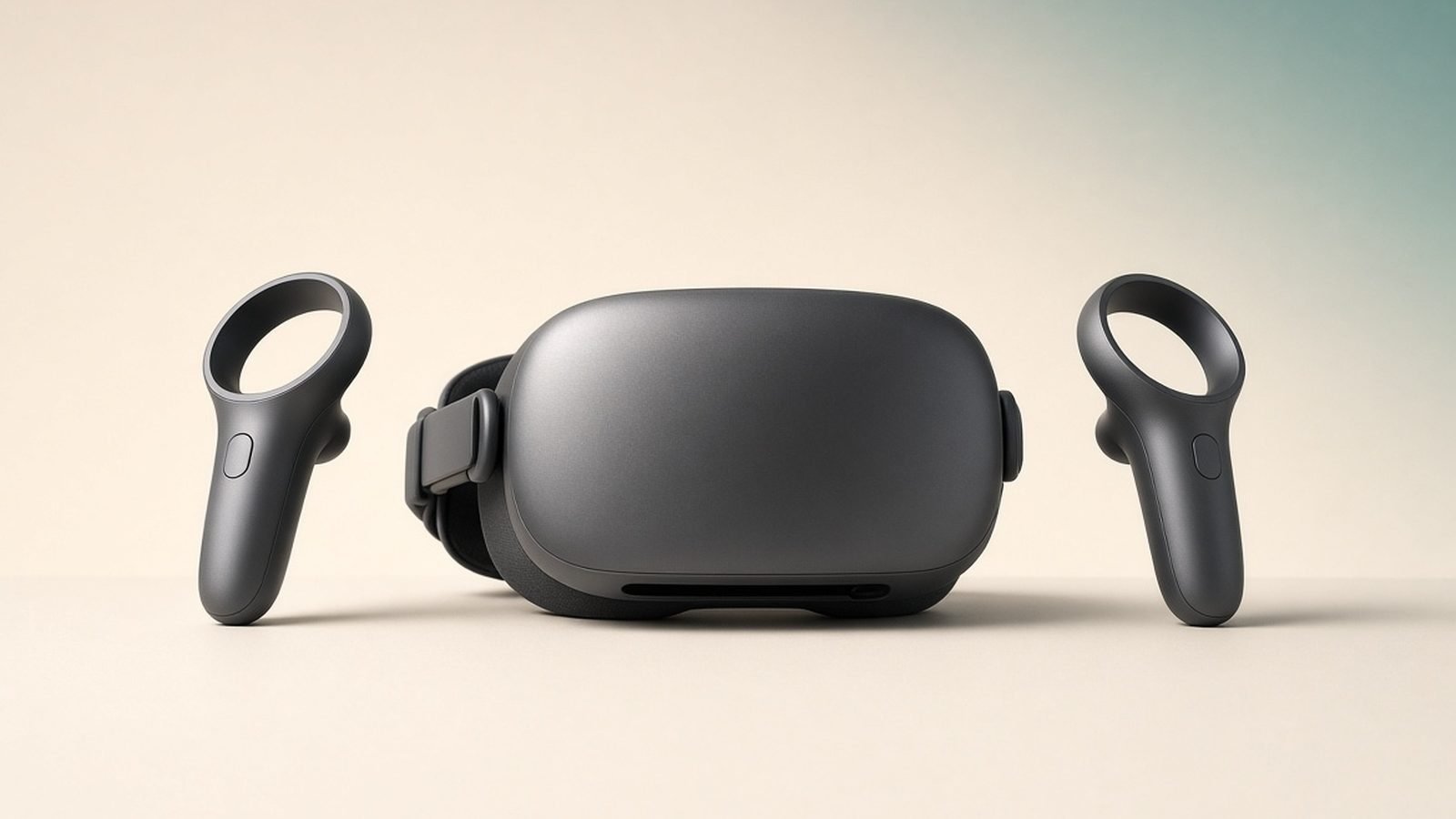
HTC Vive is one of VR’s founding names — the brand that, alongside Valve, launched room-scale PC virtual reality in 2016 and helped define what the medium could be. In 2026 it occupies a narrower, more premium niche: high-end headsets for enthusiasts, professionals, and businesses rather than the mass market. The short verdict: HTC Vive builds well-engineered, feature-rich, often industry-leading hardware, but it’s expensive, its consumer content ecosystem is thin next to Meta’s, and the brand has drifted away from mainstream gamers toward enterprise buyers.
Buy an HTC Vive if you want premium specs, top-tier tracking, or a headset for professional and business use and are willing to pay for it. Look elsewhere if you want the cheapest route into VR, the biggest game library, or the simplest plug-and-play experience.
Company overview
HTC Vive is the VR division of HTC Corporation, a Taiwanese electronics company headquartered in New Taipei City. HTC was once a major global smartphone maker before that business collapsed under competition; it has since pivoted much of its identity toward VR under the Vive brand. The original 2016 HTC Vive was co-developed with Valve, using Valve’s SteamVR “Lighthouse” tracking technology — a partnership that gave Vive its early technical edge, though the two companies later went their separate ways on hardware.
Vive’s reputation is that of a respected but niche premium player. It’s credited with pioneering room-scale VR and consistently pushing high-end features — sharp displays, precise external tracking, eye tracking, and modular designs. But it’s also seen as pricey, increasingly focused on enterprise and prosumer customers, and lacking the consumer momentum, content library, and marketing muscle of Meta. Among VR enthusiasts Vive commands genuine respect; among mainstream buyers it barely registers anymore.
What HTC Vive makes
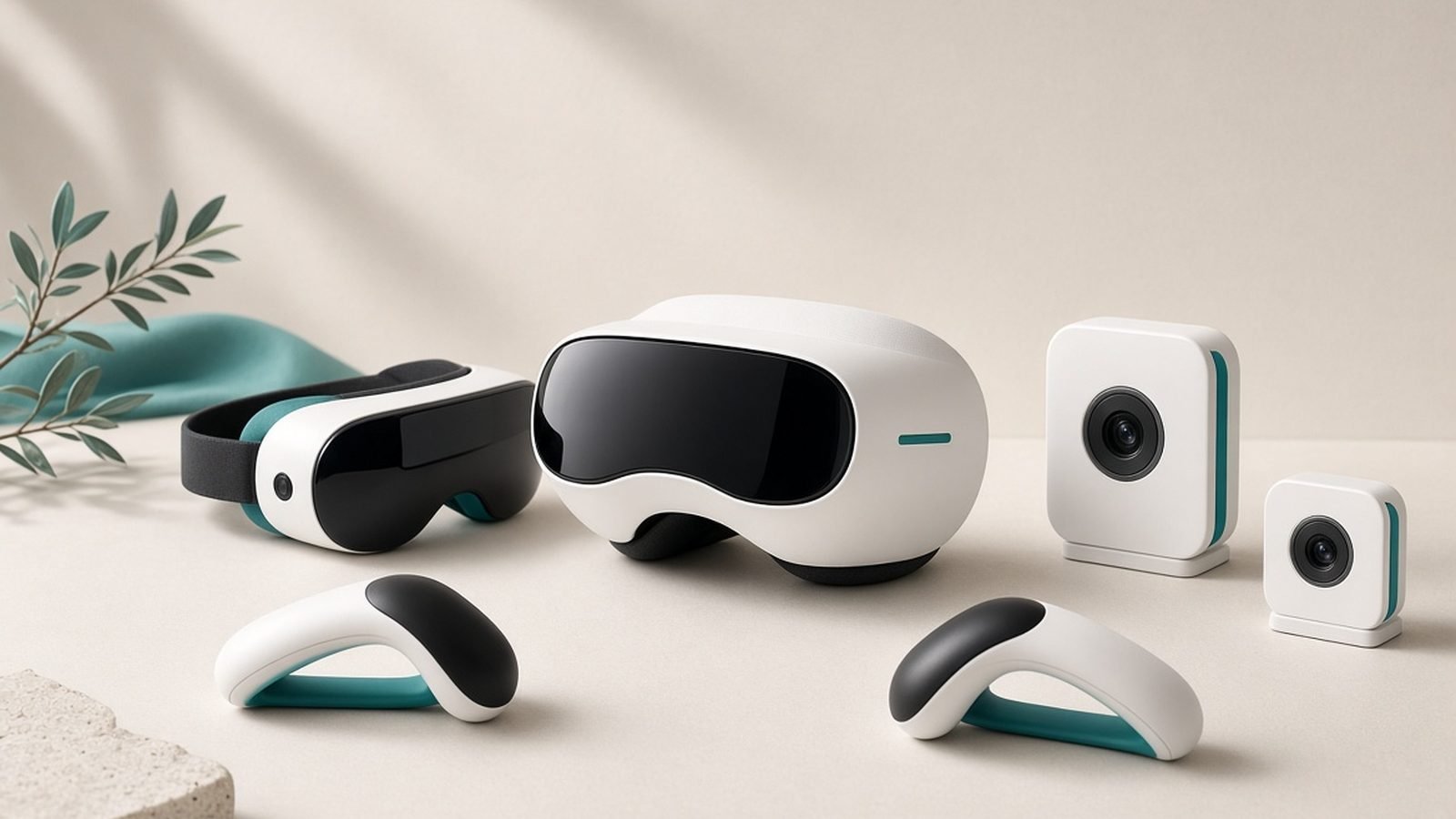
HTC Vive’s 2026 portfolio spans both PC-tethered and standalone VR, with a strong business tilt:
- Standalone VR/MR headsets — the Vive Focus line, self-contained headsets aimed at both enthusiasts and enterprise deployment.
- PC VR headsets — high-resolution tethered headsets (the Vive Pro and XR/Elite families) for demanding PC-driven experiences.
- Tracking and accessories — SteamVR base stations, Vive Trackers for full-body and object tracking, wireless adapters, and controllers.
- Vive software and services — the Viveport app store and subscription, plus enterprise device-management and deployment tools.
- Enterprise and prosumer solutions — training, simulation, design, and healthcare-focused VR packages.
The consumer headsets exist, but HTC’s business increasingly leans on enterprise sales, professional applications, and its ecosystem of precision tracking accessories.
Standout HTC Vive products in 2026
Vive Focus Vision — around $999 / £999. A standalone mixed-reality headset with high-resolution displays, eye tracking, and the option to tether to a PC for full PC VR — a genuinely versatile flagship that straddles standalone and tethered use. It’s a regular on our Best VR Headsets 2026: Quest 3S to Galaxy XR Compared guide for enthusiasts who want more than a mainstream headset.
Vive XR Elite — around $899 / £899. A compact, convertible headset that works standalone or PC-tethered, with color passthrough and a modular battery cradle. Praised for its light, glasses-like form factor, though the price keeps it niche.
Vive Trackers (Ultimate) — around $199 / £189 each. HTC’s standout accessory: precise trackers you strap to your body or objects for full-body tracking in VRChat, sim setups, and professional capture. A key reason enthusiasts stay in the Vive/SteamVR orbit.
Vive Ultimate Tracker & base stations. Precision SteamVR tracking hardware that remains a benchmark for accuracy, used well beyond gaming in motion capture and research.
Strengths
Premium engineering and specs. Vive consistently ships high-resolution displays, strong optics, eye tracking, and features that often lead the category. When Vive builds a flagship, it competes on quality, not price.
Best-in-class precision tracking. SteamVR base stations and Vive Trackers deliver accuracy that inside-out systems still can’t fully match, making Vive the default for full-body tracking, sim rigs, and professional capture.
Versatile standalone-plus-PC designs. Recent headsets work both untethered and tethered to a PC, so a single device covers casual standalone use and demanding PC VR — flexibility mainstream rivals often lack.
Strong enterprise and prosumer support. For business, training, and simulation buyers, HTC offers device management, deployment tools, and professional-grade hardware that consumer-focused brands don’t prioritize.
Weaknesses & criticisms
Expensive. Vive headsets and accessories cost far more than the mainstream competition. The value proposition is “premium and precise,” never “affordable,” which prices out most casual buyers.
Thin consumer content ecosystem. Viveport can’t match the Meta Quest Store’s library, and while Vive headsets can use SteamVR content, the brand lacks the exclusives, marketing, and consumer gravity of its bigger rival.
Drift away from mainstream gamers. HTC has increasingly aimed Vive at enterprise and prosumer markets, leaving everyday consumers feeling like an afterthought and raising questions about the brand’s long-term consumer commitment.
Complex, accessory-heavy setups. Getting the most from Vive — base stations, trackers, wireless adapters — can mean a costly, fiddly, room-scale installation that’s overkill for casual users.
Fading brand momentum. After HTC’s smartphone collapse and VR’s mass-market consolidation around Meta, Vive’s mindshare and sales volume are a fraction of what they once were, which can create uncertainty about future support and releases.
Reliability & support
HTC Vive hardware is generally well built, with premium materials and durable tracking accessories that hold up in demanding professional and enthusiast use. The SteamVR tracking ecosystem in particular has a long track record of reliability. Warranty is typically one year for consumers, with extended and dedicated coverage available for enterprise customers.
Consumer support is the softer area. As a smaller, enterprise-leaning company, HTC’s consumer customer service and RMA turnaround can be slower and less polished than a large mass-market brand’s, and experiences vary by region. Enterprise buyers get considerably better dedicated support, which reflects where HTC’s priorities now sit. Software updates arrive, but the pace and consumer attention lag behind Meta’s aggressively iterated platform. The honest read: the hardware is dependable, especially the tracking gear, but individual consumers should expect lighter-touch support than the flagship prices might imply.
Who should buy HTC Vive
Buy an HTC Vive if you’re an enthusiast or professional who wants premium specs, the best precision tracking for full-body or simulation use, or a versatile headset that works both standalone and tethered — and you have the budget for it. Businesses deploying VR for training, design, or research are also a natural fit given HTC’s enterprise tools. Enthusiasts comparing high-end options will find Vive well represented in our Best VR Headsets 2026: Quest 3S to Galaxy XR Compared guide.
Look elsewhere if you want the cheapest way into VR, the biggest consumer game library, or the simplest setup. Mainstream and budget-minded buyers are almost always better served by a standalone headset from a higher-volume, content-rich competitor.
FAQ
Is HTC Vive a good brand?
Yes, for the right buyer. HTC Vive builds premium, well-engineered headsets and industry-leading tracking accessories, and it’s a strong choice for enthusiasts, professionals, and businesses. The caveats are high prices, a thin consumer content ecosystem versus Meta, and a clear drift toward enterprise that leaves mainstream gamers underserved.
Is HTC Vive reliable?
Generally yes. The hardware is well built and the SteamVR tracking ecosystem has a long, dependable track record, especially in professional use. The weaker spot is consumer support: as a smaller, enterprise-focused company, HTC’s consumer service and RMA can be slower than a mass-market brand’s, and software attention trails Meta’s.
Where is HTC Vive from and who owns it?
HTC Vive is the VR division of HTC Corporation, a Taiwanese company headquartered in New Taipei City. HTC was formerly a major smartphone maker and pivoted toward VR under the Vive brand. The original 2016 Vive was co-developed with Valve using SteamVR tracking technology.
Is HTC Vive worth it in 2026?
For enthusiasts and professionals who value premium specs and precision tracking, yes. For everyone else, probably not — the prices are high and the consumer content library and simplicity trail mainstream rivals. It’s a specialist recommendation, not a mass-market one.
HTC Vive or Meta Quest — which is better?
They serve different buyers. Meta Quest is cheaper, easier, and has a far larger consumer library; HTC Vive is pricier, more premium, and stronger on precision tracking, professional use, and PC VR versatility. Casual and budget buyers should choose Quest; enthusiasts and pros wanting top-tier tracking lean Vive.
Can HTC Vive headsets play SteamVR games?
Yes. Vive headsets work within the SteamVR ecosystem when tethered to a PC, giving access to Steam’s VR catalog, and standalone models can also use HTC’s Viveport store. This SteamVR compatibility is part of why enthusiasts stick with the platform despite Viveport’s smaller native library.
Zen Tech Hub may earn a commission from links on this page, at no extra cost to you.