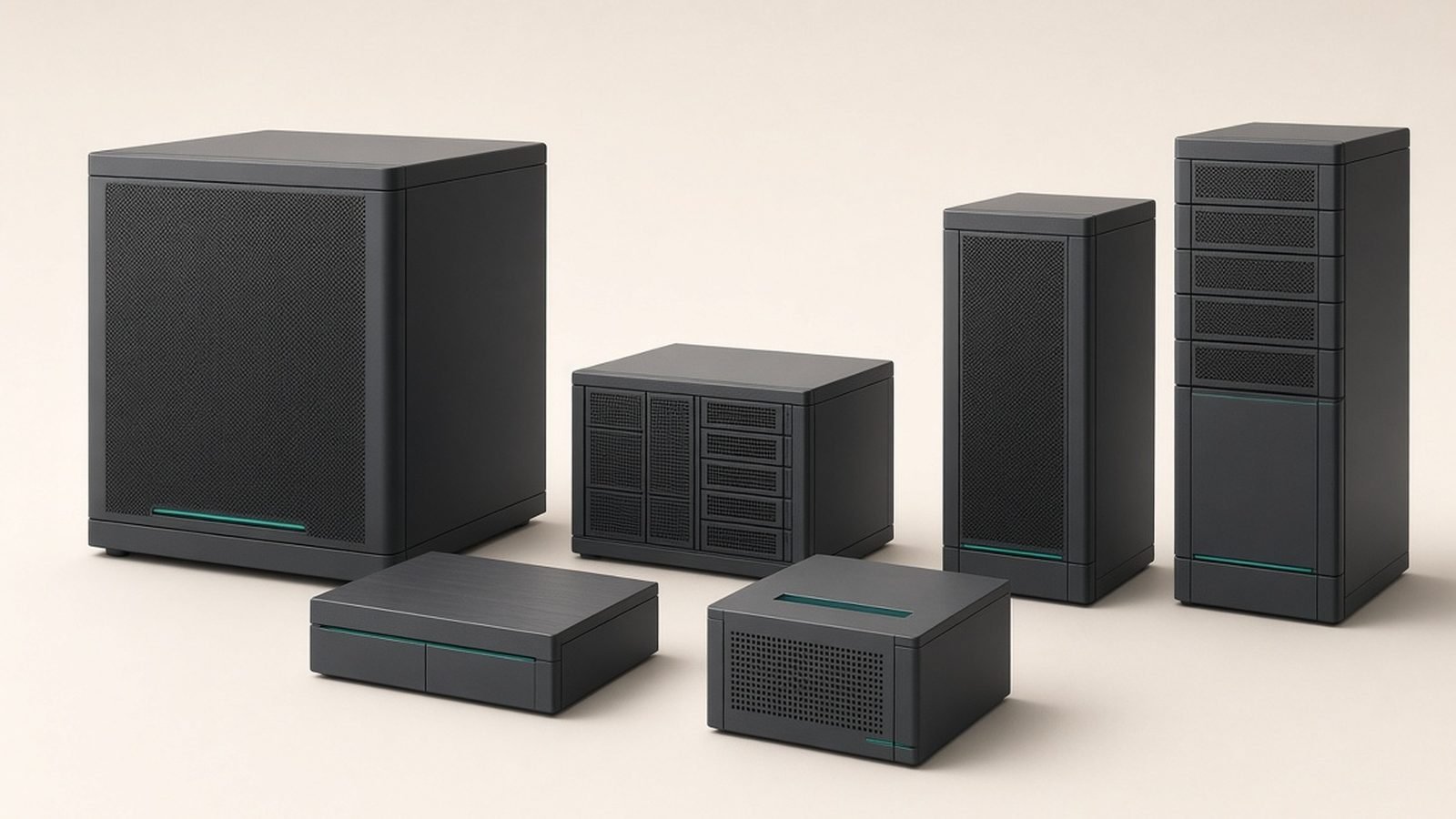
IBM is a good brand — a foundational one — but understanding it in 2026 means letting go of the “consumer computing” image many people still carry. IBM no longer makes ThinkPads or PCs; it is an enterprise-only company focused on hybrid cloud, AI, consulting, and the mainframe systems that quietly run a huge share of the world’s banking, insurance, and government workloads. For the large organizations it serves, IBM is a deeply capable, trusted partner. Its weaknesses are the classic ones of a century-old giant: it can be slow-moving, expensive, and complex to work with.
The one-line verdict: IBM is worth it for large enterprises and public-sector bodies that need rock-solid transaction systems, hybrid-cloud infrastructure, deep consulting, and enterprise AI they can govern carefully. It is not aimed at consumers or small businesses, and buyers should expect enterprise pricing and enterprise complexity to match.
Company overview
International Business Machines was founded in 1911 (as the Computing-Tabulating-Recording Company) and is headquartered in Armonk, New York. It’s one of the oldest technology companies in the world, publicly traded (NYSE: IBM), and independent. Nicknamed “Big Blue,” IBM has repeatedly reinvented itself — from tabulating machines to mainframes, to PCs, and now to enterprise cloud, AI, and services. It famously exited the consumer PC business by selling that division to Lenovo in 2005, and it spun off its managed-infrastructure business as Kyndryl in 2021 to focus on higher-growth areas.
IBM’s reputation is that of the establishment enterprise-tech vendor: trusted, serious, and deeply embedded in the systems that run large institutions. Its 2019 acquisition of Red Hat for around $34 billion reshaped its strategy around open, hybrid cloud. IBM is respected for research (it holds one of the largest patent portfolios in the industry and has a storied R&D history), reliability, and enterprise credibility. The common criticism is that it can feel like a slow, bureaucratic incumbent — capable but not nimble, and often more expensive and complex than leaner competitors.
What IBM makes
IBM’s business is organized around enterprise software, infrastructure, and services:
- Hybrid cloud (Red Hat) — Red Hat Enterprise Linux and OpenShift, the platform at the center of IBM’s cloud strategy.
- watsonx — its AI and data platform for building, governing, and deploying enterprise AI models.
- IBM Z mainframes — the high-end systems that process enormous volumes of secure transactions for banks and governments.
- IBM Consulting — a large global services arm that helps organizations implement technology and transform operations.
- Data and automation software — databases (Db2), integration, security (QRadar, Guardium), and IT automation tools.
- IBM Cloud — its public-cloud platform, positioned around regulated industries and hybrid deployments.
- Quantum computing — IBM Quantum, a long-horizon research bet with commercial access via the cloud.
Standout IBM products in 2026
Red Hat OpenShift is arguably IBM’s most strategically important product — the hybrid-cloud platform that lets enterprises run containerized applications consistently across on-premises data centers and multiple public clouds. It’s the technical heart of IBM’s “run anywhere” pitch.
watsonx is IBM’s flagship AI platform and its answer to the generative-AI era, built specifically for enterprises that need to build and govern AI with transparency, data control, and compliance — priorities that matter far more to a regulated bank than the consumer-facing assistants covered in our Best AI Chatbots 2026: ChatGPT vs Claude vs Gemini & More guide. IBM Z mainframes remain a quietly essential product; the latest generations integrate on-chip AI acceleration to score transactions for fraud in real time, and they still underpin a striking share of global financial processing. IBM Consulting is a product in its own right, and often the vehicle through which customers actually adopt everything else. For teams building on IBM’s stack, its developer and automation tooling complements the workflow software in our Best Project Management Software 2026: Which One Wins? guide, though at a very different scale.
Strengths
Enterprise trust and stability. IBM has more than a century of history and is deeply embedded in the world’s largest institutions. For mission-critical systems, that longevity and reliability are a genuine asset.
Hybrid-cloud leadership. Through Red Hat, IBM has a strong, credible position in hybrid and multi-cloud — an approach that suits large enterprises unwilling to bet everything on a single public cloud.
Deep consulting and services. IBM Consulting brings enormous implementation capability, industry expertise, and the ability to deliver complex, end-to-end transformations.
Serious R&D. IBM Research is one of the most respected corporate research organizations in the world, with a long record in semiconductors, AI, and quantum computing.
Governed, enterprise-grade AI. watsonx is built for organizations that need AI with data control, transparency, and compliance rather than just raw capability.
Weaknesses & criticisms
Slow and bureaucratic. As a very large, old company, IBM can move slowly and feel bureaucratic to work with, which frustrates customers who want speed and agility.
Expensive. IBM’s software, hardware, and consulting command premium enterprise pricing, and total costs can be high.
Complexity. IBM’s portfolio is broad and its solutions are often complex, requiring significant expertise (frequently IBM’s own consultants) to implement well.
Lagging in public cloud. IBM Cloud is a distant competitor to AWS, Azure, and Google Cloud in the general public-cloud market; IBM’s strength is hybrid, not scale of raw cloud infrastructure.
Reinvention overhang. IBM has spent years restructuring — exiting PCs, spinning off Kyndryl — and while its focus is now clearer, the perception of a company perpetually reorganizing lingers.
Reliability & support
Reliability is one of IBM’s core strengths. Its mainframes are engineered for extraordinary uptime and are trusted with the most critical transaction processing in banking, insurance, and government; the phrase “nobody ever got fired for buying IBM” endured for a reason. Red Hat Enterprise Linux is likewise known for stability and long, predictable support lifecycles, which is exactly why enterprises standardize on it.
Support is enterprise-grade and comprehensive, but it comes at enterprise prices and through enterprise processes — well-resourced but not always fast, and often intertwined with IBM’s consulting engagements. IBM maintains disciplined patching and long-term support commitments across its products, and Red Hat’s track record on security updates and lifecycle management is a real advantage for regulated industries. The honest summary is that IBM delivers dependable, well-supported technology for organizations equipped to work within its structure and budget; smaller or faster-moving teams may find the experience heavier than they want.
Who should buy IBM
IBM is the right partner for large enterprises, banks, insurers, telecoms, and government agencies that need highly reliable transaction systems, hybrid-cloud infrastructure, governed enterprise AI, and deep consulting to tie it all together. It excels where stability, security, compliance, and industry expertise matter more than moving fast — and where mainframe-class reliability is genuinely required.
IBM is not for consumers, and it’s a poor fit for small businesses and startups that want affordable, self-service, quick-to-adopt tools. Those users should look to public-cloud providers, open-source software, and lighter SaaS products. If you don’t have enterprise-scale needs and budgets, IBM’s strengths won’t apply to you and its cost and complexity will.
FAQ
Is IBM a good brand?
Yes. IBM is a foundational, highly trusted enterprise-technology brand with strengths in hybrid cloud, AI, consulting, and mainframes. Its weaknesses are those of a large incumbent: it can be slow, bureaucratic, expensive, and complex, and it trails the big three in general public cloud.
Is IBM reliable?
Very. IBM mainframes are engineered for exceptional uptime and run mission-critical transaction systems for banks and governments, and Red Hat Enterprise Linux is prized for stability and long support lifecycles. Reliability is one of IBM’s defining strengths.
Where is IBM from / who owns it?
IBM is an American company founded in 1911 and headquartered in Armonk, New York. It’s publicly traded (NYSE: IBM) and independent — no larger group owns it. IBM itself owns Red Hat, acquired in 2019.
Does IBM still make laptops or PCs?
No. IBM sold its personal-computer business, including the ThinkPad line, to Lenovo in 2005. IBM today is an enterprise-only company focused on hybrid cloud, AI, software, mainframes, and consulting — it makes no consumer products.
IBM vs Oracle — which is better?
They overlap less than you’d think. Oracle’s strength is its database and an increasingly competitive cloud; IBM’s is hybrid cloud (via Red Hat), mainframes, enterprise AI, and consulting. Large organizations often use both. Choose based on which capabilities and existing systems match your needs.
What is watsonx?
watsonx is IBM’s enterprise AI and data platform for building, governing, and deploying AI models. It’s aimed at organizations that need transparency, data control, and compliance — regulated industries especially — rather than at consumers, and it emphasizes governed, trustworthy AI over flashy consumer features.
Zen Tech Hub may earn a commission from links on this page, at no extra cost to you.