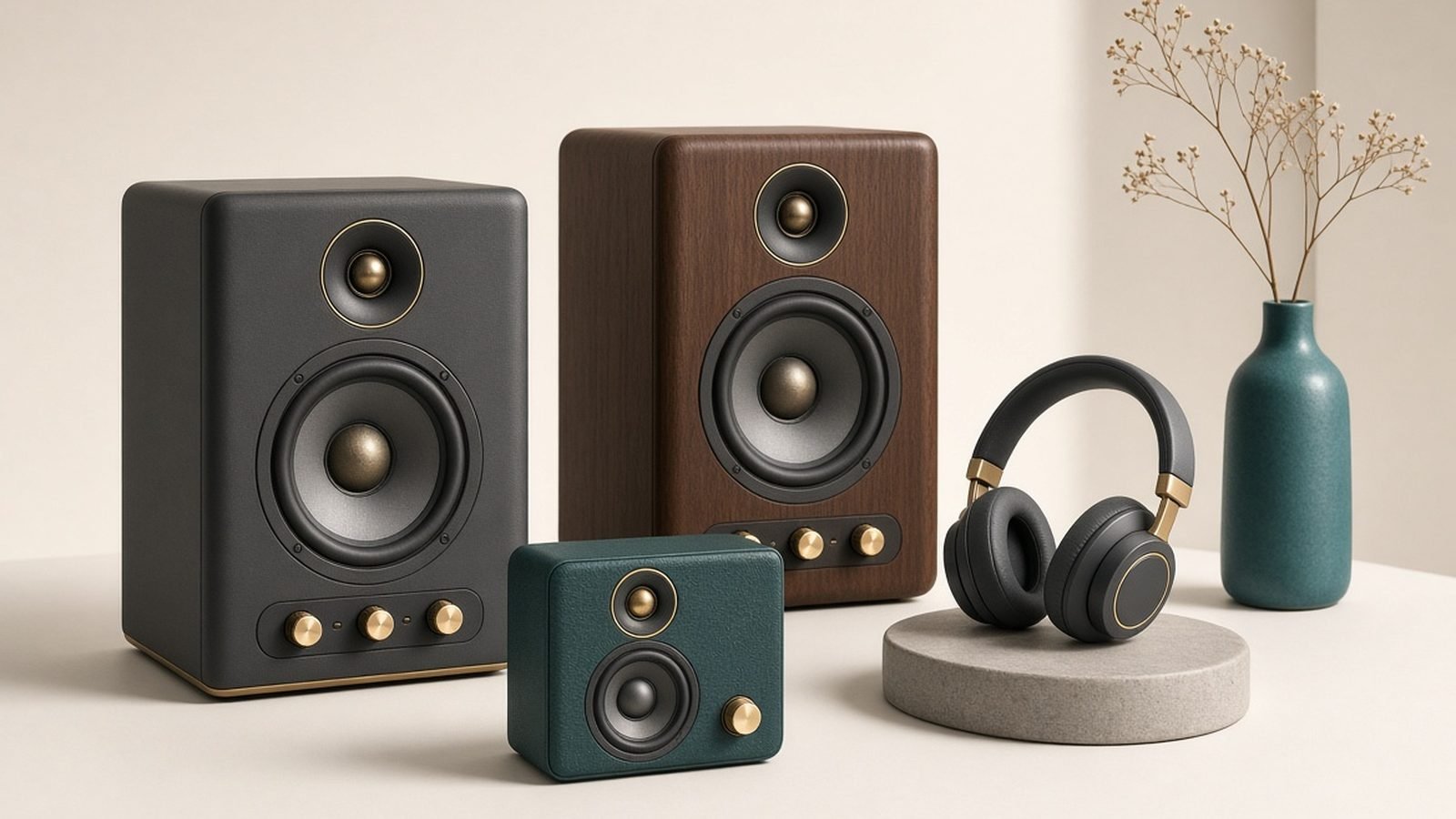
Marshall sells a look as much as a sound. Its Bluetooth speakers and headphones borrow the guitar-amp aesthetic — black vinyl wrap, gold piping, the iconic script logo and brass control knobs — and for a lot of buyers that iconic design is the whole point. The good news is that the audio has caught up with the styling: modern Marshall speakers sound warm, punchy and genuinely good, and the brand is an easy recommendation for anyone who wants gear that looks as distinctive as it sounds.
The caveat is price. You pay a clear premium for that badge and build, and on pure sound-per-dollar Marshall is beaten by JBL, Sonos and Anker. Features can lag too — app depth and noise cancelling aren’t class-leading. Buy Marshall for character, design and warm rock-leaning sound; skip it if you want maximum value or the best ANC.
Company overview
This is where Marshall gets confusing, so it’s worth being precise. The amplifier company, Marshall Amplification, was founded in 1962 by Jim Marshall in London, England, and became legendary in rock and roll. But the Bluetooth speakers and headphones you buy today are not made by that amp company directly.
The consumer-audio products are designed and built by Marshall Group (formerly Zound Industries), a Swedish company based in Stockholm that originally licensed the Marshall name and later brought the brand fully in-house — it acquired the Marshall trademark rights and even took a stake in the amplifier business. So a modern Marshall speaker is a Swedish-engineered product wearing a British rock heritage. That blend — English rock iconography, Scandinavian design and engineering — defines the brand. Its reputation is strong on style and build, and increasingly respected on sound, though value-focused buyers still question the pricing.
What Marshall makes
Marshall’s consumer range is focused on two categories, both trading on the amp aesthetic:
- Portable Bluetooth speakers — the compact Willen, the popular Emberton, and the larger Middleton and Kilburn.
- Home Bluetooth speakers — the desktop Acton, mid-size Stanmore and large Woburn, styled like miniature amps.
- Over-ear headphones — the Major (on-ear) and Monitor (over-ear) lines, with ANC on the flagships.
- Wireless earbuds — the Motif and Minor families.
- Occasional collaborations and limited editions tied to music and festival culture.
Standout Marshall products in 2026
- Marshall Emberton III — the sweet spot of the range: a rugged, IP67, true-stereo portable speaker with warm, room-filling sound. A regular in our Best Bluetooth Speakers Under $100 (£90) in 2026 guide.
- Marshall Stanmore III — a mid-size home speaker that doubles as a design statement on a shelf.
- Marshall Woburn III — the big home speaker for those who want real volume and bass.
- Marshall Major V — long-battery on-ear headphones; see our Best Headphones 2026: Over-Ear Picks for Every Budget roundup.
- Marshall Motif II ANC — the flagship earbuds, covered in Best Wireless Earbuds 2026: Top Picks Compared & Ranked.
Strengths
- Iconic, unmistakable design. Nothing else on a shelf looks like a Marshall, and the build quality backs up the looks.
- Warm, engaging sound. The house tuning is punchy and musical — flattering for rock, indie and electronic music.
- Excellent battery life. The Major headphones in particular are class-leading, with multi-day stamina.
- Rugged portables. IP67 ratings and tough construction on the Emberton and Willen.
- True stereo from single-cabinet portables via Marshall’s dual-driver design.
- Tactile controls. The brass-style knobs and joystick are genuinely satisfying and practical.
Weaknesses & criticisms
- Premium pricing. You pay noticeably more than equivalent JBL or Anker gear for similar or lesser specs.
- Style over ultimate fidelity. The sound is warm and fun rather than neutral or highly detailed; treble can be soft.
- Thin app and features. The Marshall app is basic, with limited EQ and few power-user options.
- ANC lags leaders. Noise cancelling on headphones and earbuds is decent but well behind Sony and Bose.
- No multi-room ecosystem to rival Sonos, despite the home-speaker styling.
- Bass can be one-note on smaller models pushed to high volume.
Reliability & support
Build quality is a genuine Marshall strength — the vinyl-wrapped, metal-detailed construction feels built to last, and portable models add IP67 water and dust resistance. Long-term owner feedback is largely positive on durability, with the usual wireless-audio caveat that sealed batteries lose capacity over years and can’t be user-replaced.
Warranty is typically one year (extendable to two in the UK/EU under consumer law), handled through Marshall Group’s support channels and the retailer you bought from. Support experiences are generally reported as average — fine for clear-cut claims, occasionally slow otherwise — which is fairly standard for the category. Firmware updates arrive through the Marshall app but are infrequent; this is a design-and-hardware brand more than a software-support one. Because Marshall sells widely through major retailers, buying from a big electronics chain or Amazon tends to give you the smoothest returns route.
Who should buy Marshall
Buy Marshall if you want audio gear that’s a design statement — a speaker that looks like a mini amp on your shelf or headphones with unmistakable rock styling — backed by warm, enjoyable sound and excellent build. It’s ideal for buyers who’d happily pay a bit more for character and craftsmanship, and for fans of rock, indie and electronic music that suit the tuning.
Look elsewhere if you want the most sound and features per dollar (JBL, Anker Soundcore), the best noise cancelling (Sony, Bose), a multi-room home system (Sonos), or deep app customization. Marshall asks you to pay for the badge and the look; if those don’t move you, better value exists.
FAQ
Is Marshall a good brand?
Yes — Marshall is a good brand if you value design, build quality and a warm, fun sound signature. Its modern Bluetooth speakers and headphones look iconic and sound genuinely good, with class-leading battery life on some models. The main drawback is price: you pay a premium for the styling, and rivals offer more features or better value for the same money.
Is Marshall reliable?
Generally yes. Marshall’s vinyl-and-metal construction is built to last, and portable speakers add IP67 water and dust resistance, with mostly positive long-term durability reports. As with any wireless product, the sealed battery loses capacity over several years and can’t be replaced, which effectively sets the lifespan.
Who owns Marshall and where is it from?
There are two Marshalls. The amplifier company was founded by Jim Marshall in London in 1962. The speakers and headphones you buy today are made by Marshall Group (formerly Zound Industries), a Swedish company based in Stockholm that owns the consumer-brand rights. So modern Marshall audio is British rock heritage engineered in Sweden and manufactured in Asia.
Marshall vs JBL — which is better?
JBL wins on value, loudness, waterproofing and battery-charging features, making it the better all-round outdoor and party choice. Marshall wins on design, build quality and a warmer, more characterful sound, at a higher price. Choose JBL for practicality and value; choose Marshall for style and a distinctive listen.
Are Marshall headphones any good?
Yes. The Major on-ear line offers outstanding battery life and a comfortable, retro design, and the Monitor over-ears deliver warm, engaging sound with ANC on the flagship. They’re not the best for noise cancelling or neutral accuracy — Sony and Bose lead there — but they’re stylish, well-built and enjoyable to listen to.
Do Marshall speakers work as a multi-room system?
Only in a limited way. Some Marshall speakers can pair together (stereo or “stack” modes via the app), but Marshall has no true whole-home multi-room ecosystem to rival Sonos. If synchronized audio across many rooms is your goal, Marshall isn’t the right platform despite its home-speaker looks.
Zen Tech Hub may earn a commission from links on this page, at no extra cost to you.