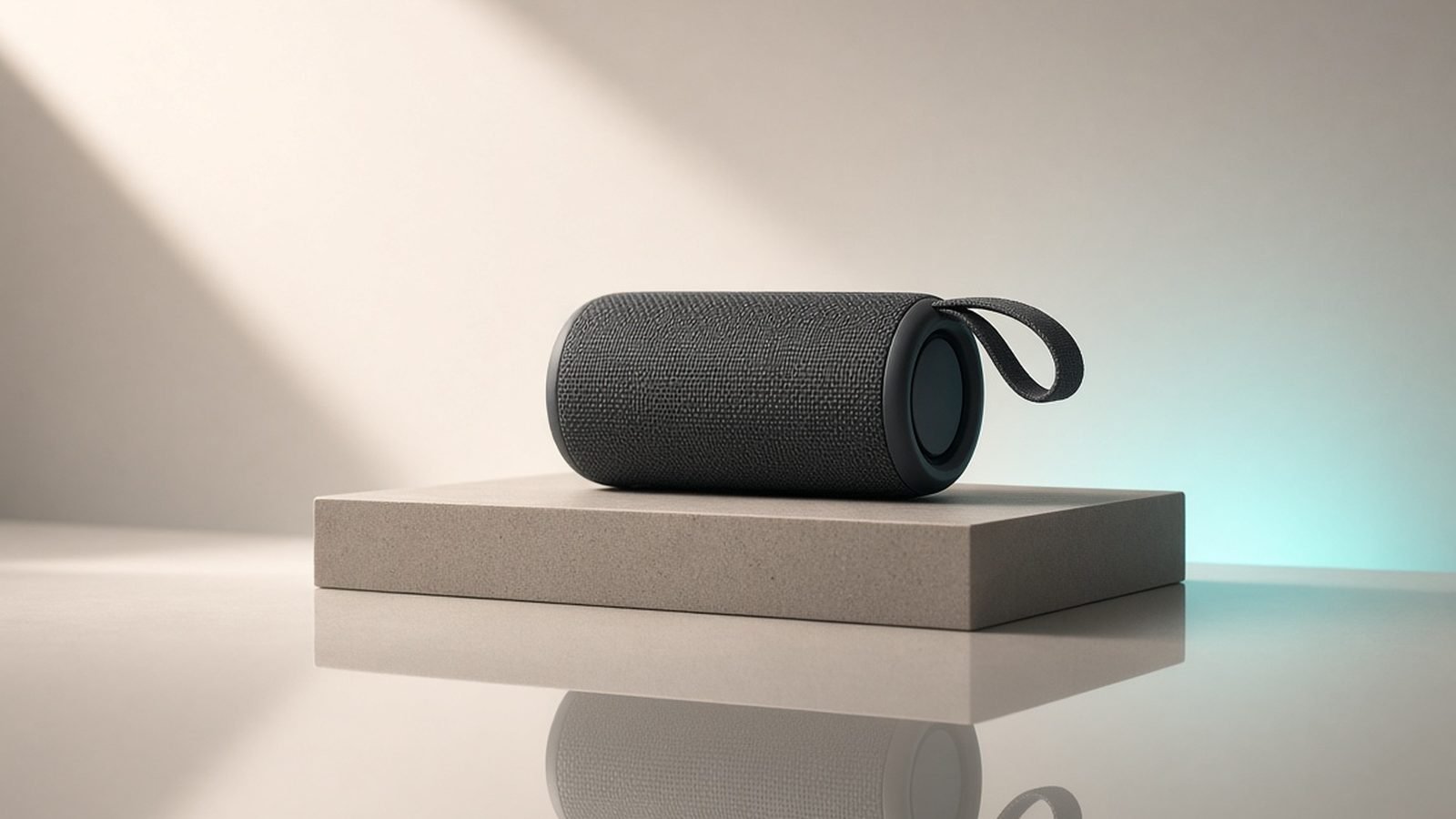
You’ve already decided on JBL. Good call — the Flip and Charge lines have been the default portable speakers for a decade for a reason. The harder question is the JBL Flip 7 vs Charge 6 decision, because the two look similar, share the same design language, and sit only about $50 / £40 apart. That gap buys you real things: roughly double the battery, noticeably deeper bass, and a built-in powerbank. It also costs you real things: an extra 430g in your bag and a speaker that no longer fits in a bottle cage.
In our research — spec-sheet analysis, published lab measurements from outlets like RTINGS, and hundreds of owner reports across both models — a clear pattern emerged: most people who buy the Flip 7 are happy, but almost nobody who stretches to the Charge 6 regrets it. Here’s the full breakdown so you can pick the right one the first time.
TL;DR: Who Should Buy Which
Buy the JBL Flip 7 if you want a genuinely grab-and-go speaker — bike rides, backpacks, hotel rooms, the shower shelf. It’s around $149.95 / £129.99 at list (frequently $129 / £99 on sale), it’s light at roughly 560g, and it plays louder and cleaner than any speaker this size has a right to.
Buy the JBL Charge 6 if the speaker will mostly live on a kitchen counter, patio table or beach blanket and you care about bass. Around $199.95 / £169.99 (often $169 / £139), it plays deeper and louder, runs up to 28 hours to the Flip’s 14, and can charge your phone over USB-C.
JBL Flip 7 vs Charge 6 at a Glance
| JBL Flip 7 | JBL Charge 6 | |
|---|---|---|
| Price (list) | ~$149.95 / £129.99 | ~$199.95 / £169.99 |
| Typical sale price | ~$129 / £99 | ~$169 / £139 |
| Weight | ~560g (1.2 lb) | ~990g (2.2 lb) |
| Output power | 35W total | 45W total (woofer + tweeter) |
| Battery life | Up to 14 hrs (+2 hrs Playtime Boost) | Up to 28 hrs (+ Playtime Boost) |
| Powerbank (charges phone) | No | Yes |
| Water/dust rating | IP68 | IP68 |
| Auracast | Yes | Yes |
| Lossless via USB-C | Yes | Yes |
| Carry option | Swappable loop + carabiner | Detachable handle/strap |
Price and Deals (US and UK)
The list prices are $149.95 / £129.99 for the Flip 7 and $199.95 / £169.99 for the Charge 6, but you should almost never pay list for either. Both launched in 2025, and by mid-2026 discounts are routine: the Flip 7 regularly dips to around $129 / £99, and the Charge 6 to around $169 / £139 at Amazon, Currys, Best Buy and JBL directly.
That matters for the value math. At full price the gap is $50 / £40. On a good sale day it can stretch to $40 or shrink the argument entirely — if you ever catch the Charge 6 near $150 / £130, it’s the easy pick. Set a price alert before a holiday weekend and one of them will drop.
Is the Charge 6 worth $50 more? For most people who play music more than a few hours a week outdoors or in bigger rooms, yes — and the battery section below shows why the math favours it even more than the sound does.
Size, Weight and Portability
This is the most underrated part of the JBL Flip 7 vs Charge 6 size question, because spec sheets undersell how different these two feel in hand.
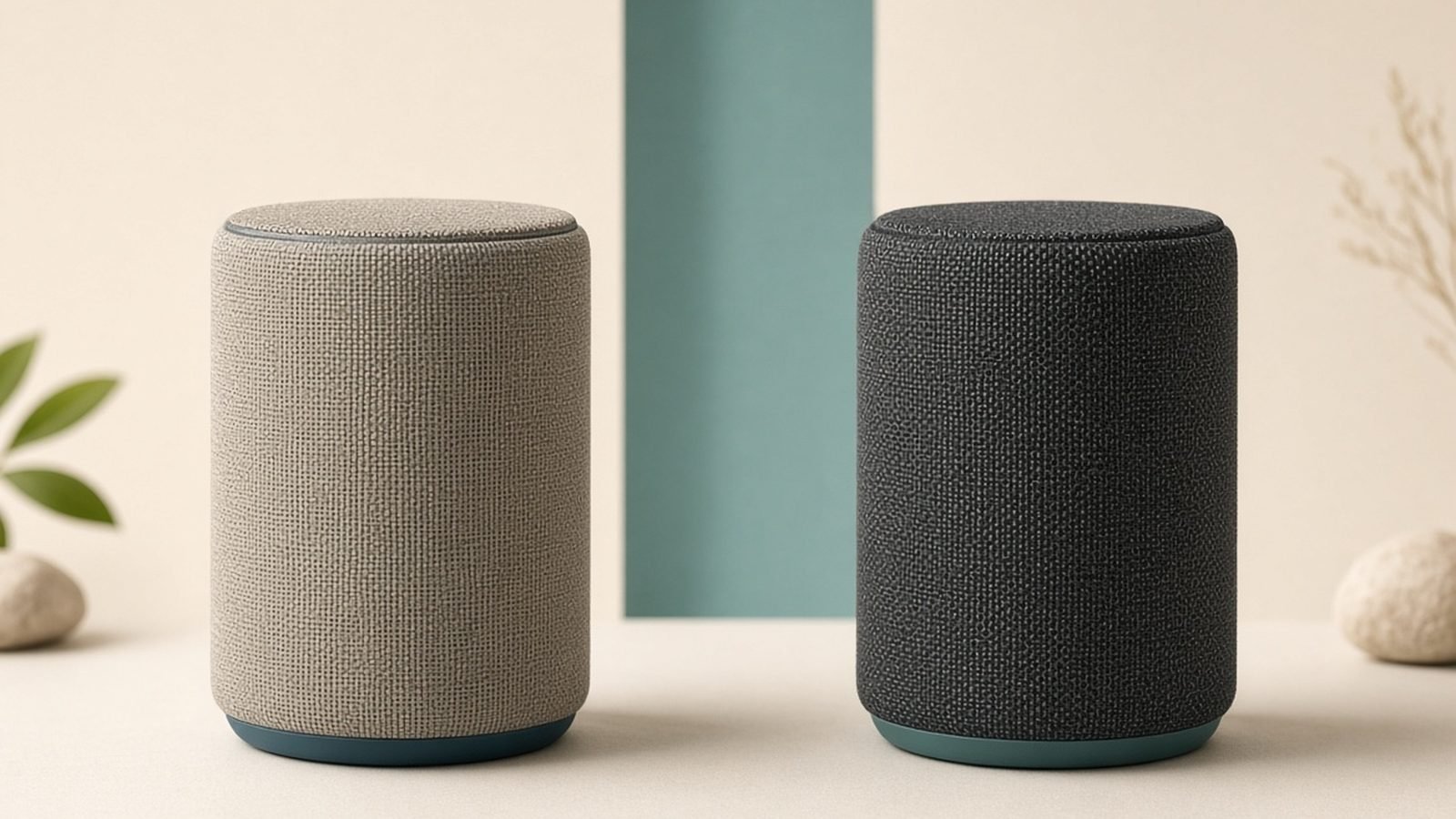
The Flip 7 is a ~560g cylinder about the size of a large water bottle. It slips into a backpack side pocket, a bike bottle cage, or a jacket pocket at a push. JBL ships it with two swappable attachments — a fabric loop and a carabiner — so it clips to a bag strap or tent pole. It’s a speaker you take by default.
The Charge 6 is a ~990g, noticeably fatter cylinder. It still counts as portable — the new detachable handle/strap genuinely helps — but it’s a speaker you pack deliberately, not one you forget is in your bag. Owner reports consistently describe the same split: Flip 7 owners carry it everywhere; Charge 6 owners move it between rooms and take it on planned outings.
If “will I actually bring it?” is the question, the Flip 7 wins. Portability you don’t use is just weight.
Sound Quality Head-to-Head: Volume, Bass and Outdoors
Here’s the honest version of the JBL Charge 6 vs Flip 7 sound quality comparison: at moderate indoor volume, they’re closer than the price gap suggests. Both have JBL’s AI Sound Boost processing, which analyses the signal in real time to push the drivers harder without audible distortion, and both sound tuned, punchy and crowd-pleasing out of the box.
The differences show up in three places:
Bass depth. The Charge 6 has a larger woofer, a dedicated tweeter and bigger passive radiators, and it digs meaningfully lower. In published frequency-response measurements and in aggregated owner feedback, the pattern is consistent: kick drums and basslines have weight on the Charge 6 that the Flip 7 physically can’t reproduce. The Flip 7’s bass is impressive for its size — that qualifier is doing real work.
Maximum volume. The Charge 6’s 45W output versus the Flip 7’s 35W translates to a louder ceiling, and more importantly, less compression near that ceiling. The Flip 7 stays composed loud, but the Charge 6 stays composed and full.
Outdoors. This is the real separator, and it’s the closest thing to a JBL Flip 7 vs Charge 6 bass test that matters in practice. Outside, with no walls to reinforce low frequencies, small speakers thin out fast. Owner reports from beach and park use repeatedly describe the Flip 7 as “fine for a few people sitting close” and the Charge 6 as “enough for a small gathering”. Neither will power a party of 30 — that’s Xtreme 4 or Boombox territory — but for 6–10 people outdoors, the Charge 6 is the minimum we’d recommend.
One more note: both speakers now support lossless audio playback over USB-C, a first for these lines. It’s a nice-to-have rather than transformative on speakers this size, but it’s there on both, so it’s not a deciding factor.
Battery Life and the Powerbank Feature
The JBL Flip 7 battery vs Charge 6 comparison is the least ambiguous section of this whole article: 14 hours versus 28 hours, both extendable a couple of hours further with JBL’s Playtime Boost mode (which trims bass to save power).
Real-world numbers land lower at high volume — expect roughly 8–10 hours from the Flip 7 and 16–20 from the Charge 6 when you’re pushing them, based on owner reports and published battery tests. But the ratio holds: the Charge 6 is a full-weekend speaker; the Flip 7 wants a nightly top-up on a camping trip.
Then there’s the feature the Charge line is named for: plug your phone into the Charge 6’s USB-C port and it works as a powerbank. On a beach day or at a festival campsite, that’s not a gimmick — it’s the feature owners mention most after the bass.
Price per Hour of Battery
A slightly unfair but clarifying way to frame the value:
| Typical sale price | Rated battery | Price per hour | |
|---|---|---|---|
| JBL Flip 7 | ~$129 / £99 | 14 hrs | ~$9.20 / £7.10 per hr |
| JBL Charge 6 | ~$169 / £139 | 28 hrs | ~$6.00 / £4.95 per hr |
On battery alone, the Charge 6 is the better deal per dollar. You’re paying about 30% more money for 100% more playtime — plus the powerbank, plus the bigger sound.
Durability and Waterproofing: IP68 Both
No winner here, and that’s the news. Both speakers carry an IP68 rating — up from IP67 on their predecessors — meaning full dust-proofing and submersion beyond one metre. Both shrug off sand, rain, pool splashes and the occasional dunk.
Both also use JBL’s rubberised end caps and tough woven fabric grille, and drop-survival stories are common in owner reviews of each. The Flip 7’s smaller mass arguably makes it slightly more drop-tolerant in practice, but there’s no meaningful durability reason to pick one over the other. Buy either with confidence for the pool, boat or beach.
App Features and Auracast Pairing
Both speakers use the JBL Portable app, and the feature set is identical: a multi-band EQ with presets and custom curves, firmware updates, Playtime Boost, and Auracast.
Auracast is the one to understand before buying. It’s the new Bluetooth broadcast standard that lets you link any number of Auracast-equipped JBL speakers together — a Flip 7 and a Charge 6 will happily play in sync. The catch: Auracast replaced JBL’s older PartyBoost system, and the two don’t talk to each other. If you own a Flip 6, Charge 5 or other PartyBoost-era speaker, neither of these new models will pair with it for multi-speaker playback.
Two small omissions on both, worth knowing: there’s no speakerphone function and no 3.5mm aux input. Neither is unusual in 2026, but if you take calls on your speaker, look elsewhere.
The Rest of the JBL Range in 60 Seconds
Wondering which JBL speaker is best beyond these two? Here’s the quick JBL speaker comparison for 2026, top to bottom:
JBL Clip 5 (~$79.95 / £59.99) — the carabiner micro-speaker. Fine for a shower or a desk, but it’s a clear step down in volume and bass from the Flip 7. If you can stretch to the Flip, stretch. More budget options in our roundup: Best Bluetooth Speakers Under $100 (£90) in 2026
JBL Xtreme 4 (~$379.95 / £329.99) — the step between Charge and Boombox: bigger drivers, a shoulder strap, ~24-hour battery and enough output for a proper garden party. Overkill for solo listening.
JBL Boombox 4 (~$499.95 / £449.99) — the range-topper, and RTINGS’ top overall Bluetooth speaker pick. Around 40 hours of battery and genuinely huge output with sub-bass the Charge 6 can’t approach. If your “speaker” use case is actually “parties”, skip both speakers in this comparison and buy this instead.
If you want smart-assistant features built in rather than pure Bluetooth, that’s a different product category — see Best Smart Speakers for Music in 2026: Echo, HomePod, Sonos. And for everything else we cover in audio: Audio
Verdict: Which Should You Buy?
The Charge 6 is the better speaker. The Flip 7 is the better portable. That’s the whole decision.
JBL Flip 7
Pros
- Genuinely take-anywhere size and weight (~560g)
- Loud and clean for its class, with AI Sound Boost
- IP68, swappable loop/carabiner attachments
- Often just $129 / £99 on sale
Cons
- Bass thins out outdoors and at high volume
- 14-hour battery is half the Charge 6’s
- No powerbank feature
Best for: travellers, cyclists, students, shower-singers — anyone who values carrying it over filling a garden.
JBL Charge 6 — Our Pick for Most Buyers
Pros
- Deeper, fuller bass and a louder, less compressed ceiling
- 28-hour battery — a full weekend away from a plug
- Charges your phone via USB-C
- Better price-per-hour value despite the higher sticker
Cons
- Nearly a kilogram — packed deliberately, not carried by default
- $50 / £40 more at typical prices
Best for: kitchens, patios, beach days, small gatherings — anyone whose speaker mostly stays put and occasionally travels. Read our full deep dive: JBL Charge 6 Review: Still the Default Bluetooth Speaker?
If you’re still torn: picture where the speaker will sit next Saturday afternoon. In a backpack, buy the Flip 7. On a table, buy the Charge 6.
FAQ
Is the JBL Charge 6 worth $50 more than the Flip 7?
For most buyers, yes. The extra ~$50 / £40 buys double the rated battery (28 vs 14 hours), noticeably deeper bass, higher maximum volume and a powerbank that charges your phone. Per hour of battery, the Charge 6 is actually cheaper. Skip it only if weight and packability are your top priority.
Which is louder, the JBL Flip 7 or Charge 6?
The Charge 6. Its 45W output versus the Flip 7’s 35W gives it a higher volume ceiling, and its larger woofer and passive radiators keep the sound full at loud levels, where the Flip 7 starts to compress and thin out — especially outdoors with no walls reinforcing the bass.
Can the JBL Flip 7 and Charge 6 pair together?
Yes. Both support Auracast, so you can link them (and any other Auracast JBL speakers) for synced multi-speaker playback via the JBL Portable app. Note that Auracast is not compatible with the older PartyBoost system, so neither speaker will pair with a Flip 6, Charge 5 or earlier.
Are the JBL Flip 7 and Charge 6 waterproof?
Both carry an IP68 rating — the highest of any mainstream portable speaker line. That means complete dust protection and survival beyond one metre of submersion. Pool, beach, boat and shower use are all fine, and both float-adjacent accidents and rain are non-issues based on widespread owner reports.
Does the JBL Flip 7 have a powerbank feature?
No — that’s exclusive to the Charge 6 in this comparison. The Charge 6’s USB-C port can top up your phone from the speaker’s battery, which is a genuinely useful feature on camping trips and beach days. The Flip 7’s USB-C port handles charging and lossless audio input only.
Should I wait for a JBL Flip 8 or Charge 7?
Probably not. JBL typically runs two to three years between generations; the Flip 7 and Charge 6 launched in 2025, so successors are unlikely before 2027. Both current models are mature, discounted regularly, and receive ongoing firmware updates — mid-2026 is a good time to buy either.
Zen Tech Hub may earn a commission from links on this page, at no extra cost to you.