Cambridge Audio is the brand you buy when you want serious British hi-fi without the boutique price tag — a London company that has spent decades building clean, powerful integrated amplifiers, network streamers, and DACs that punch above their price. In 2026 it remains a value favorite among enthusiasts, spanning stereo amps, all-in-one streaming amplifiers, standalone DACs and streamers, turntables, and the Melomania true-wireless earbuds. The short verdict: Cambridge Audio delivers a clean, detailed, refreshingly honest sound and genuinely strong value in electronics — but its house tuning can feel analytical rather than warm, the StreamMagic app and firmware have had rough patches, and its speakers and earbuds are weaker sidelines than its amplifiers.
If you want a well-built amp or streamer that sounds bigger than its price, Cambridge Audio is one of the smartest buys in hi-fi. If you want a lush, forgiving warmth or a flawless app experience, weigh the trade-offs first.
Company overview
Cambridge Audio was founded in 1968 and is headquartered in London, England. It is the flagship brand of Audio Partnership, a privately held British company — which means, unusually for the industry, Cambridge Audio is still independent rather than owned by a larger multinational conglomerate. That independence has let it keep a consistent engineering philosophy: measurably clean, powerful, no-nonsense electronics designed in Britain and sold at aggressive prices.
The brand made its name in amplification and digital-to-analog conversion, and its “Great British Sound” positioning reflects a tuning aimed at accuracy and detail rather than colored warmth. Over the years it has expanded into network streaming, one-box streaming amplifiers (the Evo line), turntables (the Alva series), and personal audio (Melomania earbuds), while keeping its reputation anchored in strong-value separates.
Cambridge Audio’s reputation among enthusiasts is that of a dependable, high-value engineering brand — not the flashiest or most luxurious, but consistently one of the best ways to get real hi-fi performance for the money.
What Cambridge Audio makes
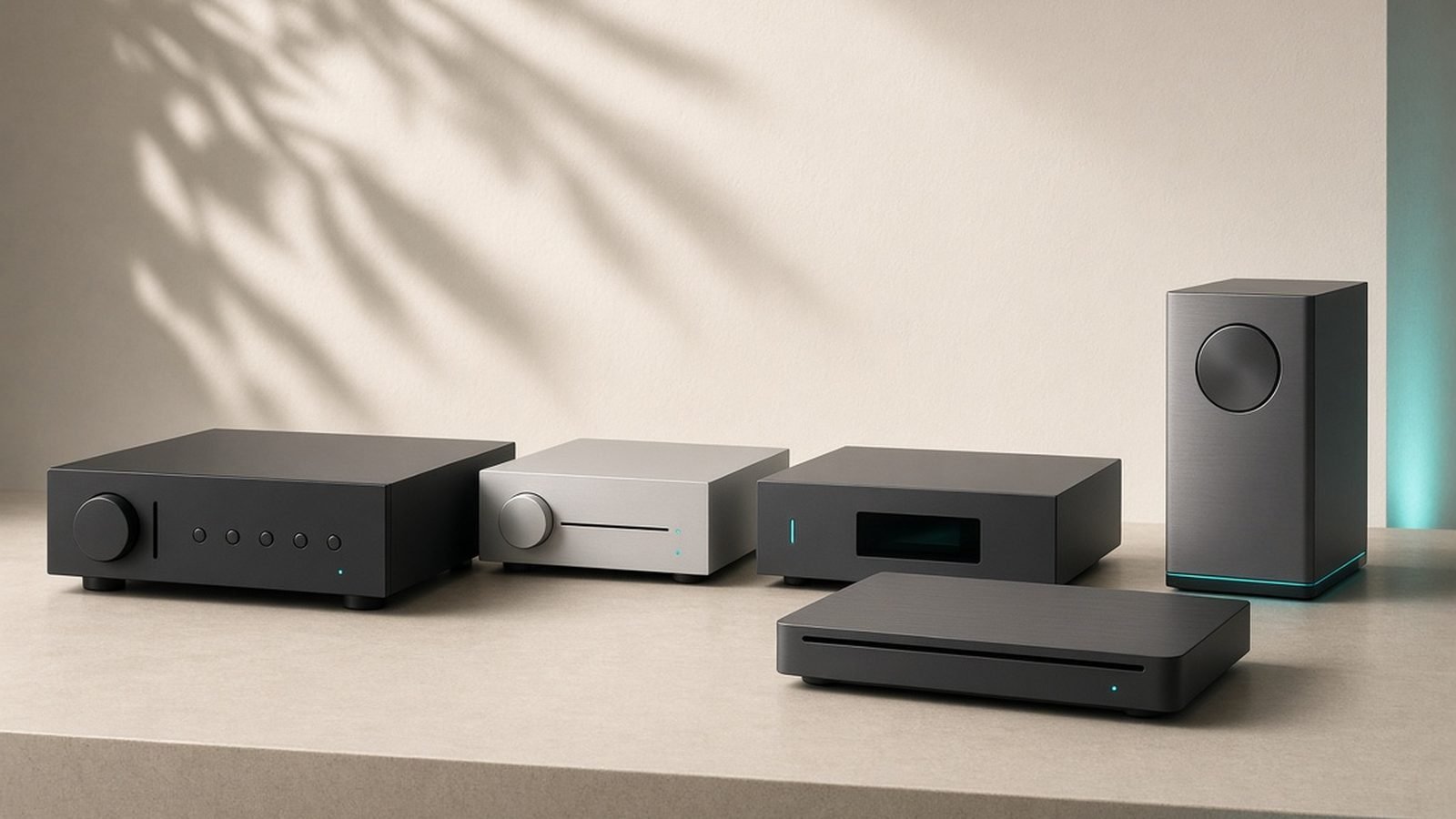
Cambridge Audio’s 2026 catalog centers on electronics:
- Integrated amplifiers — the CX series (CXA81, CXA61) and the entry AXA range, the core of the business.
- Streaming amplifiers — the Evo 75 and Evo 150 all-in-one systems combining amp, streamer, and DAC in one box.
- Network streamers and DACs — the MXN streamers and DacMagic digital-to-analog converters.
- Turntables — the Alva belt-drive and direct-drive models, some with built-in phono stages.
- Personal audio — the Melomania true-wireless earbuds, a smaller but well-regarded sideline.
- Speakers — a smaller range of bookshelf and floorstanding models that get less attention than the electronics.
The consistent thread is clean, powerful, honest engineering, with the amplifiers and streamers as the heart of the brand.
Standout Cambridge Audio products in 2026
Cambridge Audio CXA81 — around $1,499 / £1,099. The enthusiast favorite: a 80W-per-channel integrated amplifier with a high-quality ESS DAC, balanced inputs, and Bluetooth, delivering a clean, powerful, detailed sound that competes with pricier separates. A perennial recommendation for driving quality bookshelf speakers — pair it with picks from our Best Bookshelf Speakers 2026: Hi-Fi for Any Room guide.
Cambridge Audio Evo 150 — around $3,299 / £2,499. A gorgeous all-in-one streaming amplifier that combines amp, network streamer, DAC, HDMI-ARC, and phono input in a single compact box with interchangeable side panels — a complete high-end system for people who want simplicity without sacrificing sound.
Cambridge Audio MXN10 — around $499 / £399. A compact network streamer with a high-quality DAC that adds modern streaming (Tidal, Spotify Connect, Chromecast, AirPlay) to any existing amplifier, a superb value upgrade for legacy systems.
Cambridge Audio DacMagic 200M — around $549 / £449. A standalone digital-to-analog converter with MQA and balanced outputs, a long-time reference for adding clean, detailed digital conversion to a hi-fi or desktop setup.
Cambridge Audio Melomania P100 — around $279 / £229. The brand’s flagship over-ear headphones (and the Melomania earbuds line more broadly) offering long battery life and a clean, natural tuning — a credible entry in our Best Wireless Earbuds 2026: Top Picks Compared & Ranked roundups, though not a category leader on noise cancelling.
Cambridge Audio AXA35 — around $399 / £269. The budget integrated amplifier that brings the brand’s clean house sound to first-time buyers, a frequent recommendation for affordable stereo systems.
Strengths
Outstanding value in electronics. This is the whole reason to buy Cambridge Audio. Its amplifiers, streamers, and DACs consistently deliver performance and features that rival gear costing considerably more.
Clean, detailed, honest sound. The house tuning aims at accuracy rather than coloration, giving a transparent, well-controlled presentation that lets recordings and speakers speak for themselves.
Genuine independence. Unlike most audio brands, Cambridge Audio is still privately owned rather than folded into a conglomerate, which has kept its engineering philosophy consistent and focused.
Sensible, upgradable systems. From cheap streamers that modernize old amps to elegant one-box Evo systems, the range makes it easy to build or upgrade a hi-fi in stages without overspending.
Weaknesses & criticisms
Analytical tuning isn’t for everyone. The same clean, honest presentation that fans praise can sound clinical or lean to listeners who want a warm, lush, forgiving sound. Cambridge Audio rewards good sources and speakers more than it flatters bad ones.
App and firmware rough patches. The StreamMagic app and the streaming firmware in the Evo and MXN products have drawn recurring complaints about bugs, dropouts, and setup friction — a familiar weak point for network audio gear.
Weaker speakers and earbuds. The brand’s loudspeakers and Melomania personal audio are competent but not class-leading, and get far less love than the electronics. This is an amp-and-streamer company first.
Understated design and support reach. The industrial design is tasteful but restrained rather than luxurious, and the dealer and service network is smaller than that of the big multinational brands in some regions.
Reliability & support
Cambridge Audio electronics have a solid reliability reputation. The amplifiers in particular are straightforward, well-built pieces of hardware that tend to last for many years, and the brand’s older amps and DACs remain in service widely. Build quality is generally rated as good for the price, with metal casework and quality internal components rather than flimsy plastics.
The main reliability caveats sit with the network-connected products (Evo, MXN streamers) and the personal audio, where firmware and batteries introduce the usual long-term wear and software dependence. Warranty coverage typically runs around two to three years on electronics in many regions (sometimes extendable with registration) and shorter on earbuds. Customer support is generally rated as responsive, though the network smaller than the giant conglomerate brands. As with most hi-fi, the biggest consideration is fit rather than failure: make sure the clean house sound suits your taste and system before buying.
Who should buy Cambridge Audio
Buy Cambridge Audio if you want serious hi-fi electronics that sound bigger than their price and if you value clean, detailed, honest sound. It is the natural pick for enthusiasts building a stereo system on a sensible budget, for anyone wanting a slick one-box streaming amplifier like the Evo, and for owners of older systems who want an affordable streamer or DAC upgrade. Pair its amps with speakers from our Best Bookshelf Speakers 2026: Hi-Fi for Any Room guide for a genuinely high-value system.
Look elsewhere if you want a warm, lush, forgiving sound, if a flawless streaming app is a dealbreaker, or if you want the very best speakers and earbuds from a single brand. In those cases, audition rivals like Marantz, NAD, or Rega before deciding.
FAQ
Is Cambridge Audio a good brand?
Yes. Cambridge Audio is a well-respected British hi-fi brand known for clean, powerful, high-value amplifiers, streamers, and DACs. Its main caveats are an analytical house sound that suits some tastes more than others and occasional streaming-app friction.
Is Cambridge Audio reliable?
Generally yes. Its amplifiers and DACs are well-built and tend to last many years, typically carrying a warranty of around two to three years on electronics. The network streamers and earbuds add firmware and batteries that age like any device, but the core electronics are low-risk.
Where is Cambridge Audio from and who owns it?
Cambridge Audio was founded in 1968 and is based in London, England. Unusually, it is still independent — the flagship brand of the privately held British company Audio Partnership — rather than owned by a larger multinational.
What does Cambridge Audio sound like?
Cambridge Audio has a clean, detailed, honest house sound tuned for accuracy rather than warmth. Fans love its transparency and control; critics find it can be analytical or lean. It pairs best with speakers and sources that add character.
Is Cambridge Audio better than Marantz?
It depends on taste. Cambridge Audio leans clean, detailed, and analytical with strong value, while Marantz is known for a warmer, more musical house sound at a similar or higher price. Buyers who prize transparency lean Cambridge; those who want warmth often prefer Marantz.
Which Cambridge Audio amplifier should I buy?
For most enthusiasts the CXA81 is the sweet spot, with 80W per channel, a quality DAC, and balanced inputs. On a budget the AXA35 brings the house sound affordably, and for a one-box system the Evo 150 combines amp, streamer, and DAC beautifully.
Zen Tech Hub may earn a commission from links on this page, at no extra cost to you.