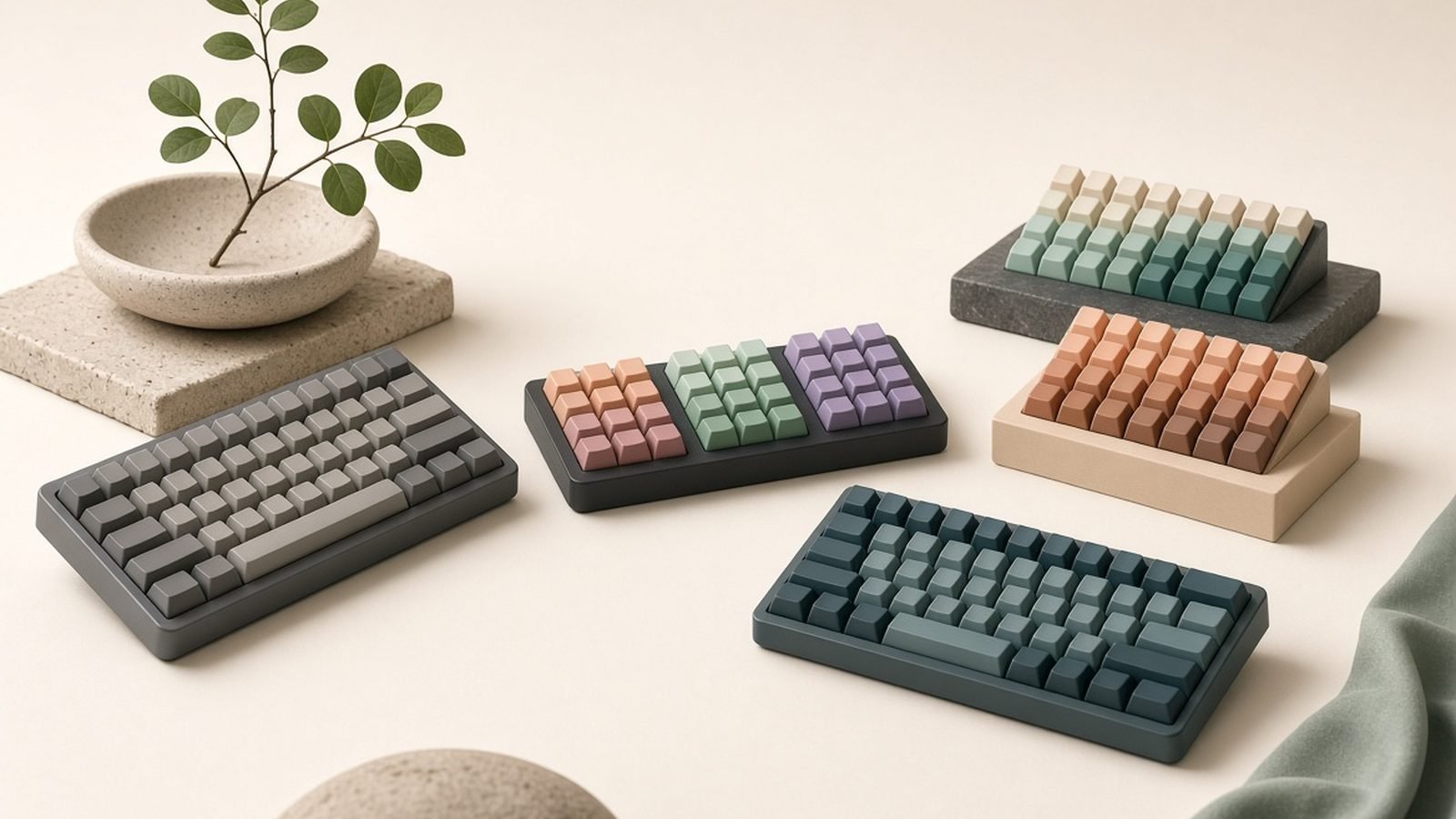
Ducky is the enthusiast’s mechanical keyboard brand — a maker beloved by typists and gamers who care more about build quality, keycaps and switch feel than flashy software or gimmicks. The short verdict: Ducky is one of the best mainstream brands for a keyboard that feels premium out of the box, thanks to thick doubleshot PBT keycaps, clean stabilizers, tight assembly and a wide choice of Cherry and gateron switches. The One 3 family is the line to know. The big caveats are the lack of proper configuration software (Ducky relies on hardware DIP-switch and key-combo programming rather than a modern app), no QMK/VIA support, and distribution that can be frustratingly patchy — desirable models and colorways go out of stock and stay that way.
Buy Ducky if you want a keyboard that types beautifully from day one and you don’t need per-key remapping software or hot-swap on every board. Look elsewhere if you rely on a polished companion app, want deep macro and layer customization, or need guaranteed availability and easy warranty service in your region.
Company overview
Ducky is a mechanical keyboard brand made by Ducky Channel International (duckychannel), a company founded in 2008 and based in Taiwan. It’s privately held and grew out of Taiwan’s strong keyboard-manufacturing scene, building a reputation first among enthusiasts on forums and communities before reaching a broad global gaming audience. Ducky designs and assembles its boards in-house, which is a big part of why fit-and-finish is so consistent.
Its reputation among keyboard people is genuinely strong. Ducky is a name that gets recommended when someone wants a “just works” premium mechanical keyboard without diving into the custom/group-buy world. The brand is respected for keycap quality, switch selection and reliable construction rather than for software or cutting-edge features. That focus is also the source of most criticism: Ducky has been slower than rivals to adopt hot-swap sockets, wireless, and app-based programming, so it can feel a step behind on features even as it stays ahead on feel.
What Ducky makes
Ducky’s catalog is centered almost entirely on keyboards and closely related gear:
- Full-size and TKL keyboards — the One 3 line in full-size, TKL and other layouts, the workhorse of the range.
- Compact keyboards — 65% and 60% boards (One 3 Mini, SF) for gamers and small-desk setups.
- Premium and limited editions — the Mecha series with metal cases, plus frequent seasonal and collaboration colorways.
- Switch and keycap variety — boards offered with Cherry MX, gateron and other switches, and Ducky’s own thick PBT doubleshot keycap sets sold separately.
- Accessories — keycap sets, cables, and the occasional mouse or novelty item.
The through-line is typing experience: quality keycaps, tuned stabilizers and solid cases rather than a sprawling accessory ecosystem.
Standout Ducky products in 2026
Ducky One 3 (TKL) — around $129 / £119. The flagship of the lineup and the board most people mean when they say “a Ducky.” Thick doubleshot PBT keycaps, quiet-tuned stabilizers, a hot-swap option on many SKUs, and a wide switch selection make it a premium typing experience out of the box. It’s a regular pick on our Best Gaming Keyboards 2026: Speed & Feel and Best Mechanical Keyboards 2026: Typing & Gaming guides.
Ducky One 3 Mini (60%) — around $119 / £109. The compact favorite for gamers who want maximum desk space for low-sens mouse movement, with the same keycap and build quality in a 60% footprint.
Ducky One 3 SF (65%) — around $125 / £115. A 65% layout that keeps dedicated arrow keys, hitting the sweet spot between compact size and everyday usability.
Ducky Mecha (metal case) — around $199 / £189. A premium, heavier board with an aluminum case for a more solid, higher-end feel and sound, aimed at buyers who want a step up from the plastic-cased One 3.
Ducky PBT doubleshot keycap sets — around $49 / £45. The keycaps that define the brand’s feel, sold on their own to upgrade other keyboards — a good demonstration of where Ducky’s strengths really lie.
Strengths
Outstanding keycaps and typing feel. Ducky’s thick doubleshot PBT keycaps resist shine and feel premium, and the boards ship with well-tuned stabilizers. Out of the box, few mainstream brands type better.
Excellent build quality. Cases are solid, assembly is tight, and the boards feel durable and rattle-free. This consistency is Ducky’s biggest reputational asset.
Wide switch and layout choice. Buyers can pick Cherry MX, gateron and other switches across full-size, TKL, 65% and 60% layouts, and many current boards offer hot-swap sockets for changing switches later.
No-nonsense reliability. Because Ducky leans on hardware programming rather than always-on software, there’s less to go wrong — no driver conflicts, no bloated app running in the background.
Weaknesses & criticisms
No modern configuration software. This is the headline complaint. Ducky uses DIP switches and key-combination programming instead of a graphical app, and most boards don’t support QMK/VIA. Remapping and macros are clunky compared to rivals with full software.
Limited wireless and features. Ducky has been slow to adopt wireless, and its feature set (per-key tuning, advanced layers, onboard profiles) lags brands that build around software.
Patchy availability and distribution. Desirable models, switch options and colorways frequently sell out, and regional stock and pricing can be inconsistent — a recurring frustration for buyers trying to get a specific board.
RGB and lighting control is basic. Lighting is adjusted via key combos rather than a slick app, so effects and per-key customization are more limited and fiddlier to set than on software-driven competitors.
Warranty and support vary by region. Because Ducky sells largely through distributors and resellers, the after-sales experience depends heavily on where you bought it, and support can be less direct than first-party brands.
Reliability & support
Ducky’s reliability is one of its strongest points. The boards are well assembled, the PBT keycaps hold up for years without going shiny, and the switch options (particularly Cherry MX and hot-swap sockets) are proven and easy to service. Because so much is handled in hardware rather than software, there are fewer failure points — no companion app to crash, no firmware quirks to manage. Owners routinely report keyboards lasting for years of heavy daily use, which is exactly the reputation an enthusiast brand wants.
Support is the softer side. Ducky operates through a network of regional distributors and resellers rather than a large first-party support operation, so warranty terms, RMA handling and turnaround depend on where and from whom you bought. Coverage is typically one to two years depending on region. In practice, the hardware is reliable enough that most buyers never need support, and the community around Ducky boards is large and helpful for troubleshooting. The honest guidance: buy from a reputable retailer in your region, keep the receipt, and you’re getting a keyboard that rarely needs the safety net in the first place.
Who should buy Ducky
Buy Ducky if your priority is how a keyboard feels and sounds — thick PBT keycaps, tuned stabilizers and a solid case out of the box — and you don’t need software-driven remapping, deep macros or wireless. The One 3 in TKL or 65% is an easy recommendation for gamers and typists alike, and the compact Mini is a favorite for low-sensitivity FPS players who want desk space. Enthusiasts who value build quality over features will love it.
Look elsewhere if you depend on a polished companion app, want QMK/VIA-level customization, need wireless, or require guaranteed local stock and first-party warranty service. Brands like Keychron, Corsair or Razer will suit software-heavy or wireless-first buyers better. Compare Ducky against those alternatives on our Best Gaming Keyboards 2026: Speed & Feel guide before deciding.
FAQ
Is Ducky a good brand?
Yes. Ducky is one of the best mainstream mechanical keyboard brands for build quality and typing feel, with thick PBT keycaps, tuned stabilizers and a wide switch selection. The main caveats are the lack of modern configuration software, limited wireless, and patchy stock and distribution.
Is Ducky reliable?
Very. Ducky boards are known for tight assembly, durable PBT keycaps that don’t go shiny, and proven switch options. With less reliance on software, there are fewer things to break, and owners commonly report years of trouble-free daily use.
Where is Ducky from and who owns it?
Ducky is a privately held brand made by Ducky Channel International (duckychannel), founded in 2008 and based in Taiwan. The company designs and assembles its keyboards in-house, which underpins its reputation for consistent build quality.
Do Ducky keyboards have software?
Largely no — and this is the biggest trade-off. Ducky relies on DIP switches and on-board key-combination programming rather than a graphical app, and most boards don’t support QMK/VIA. Basic remapping and lighting are possible, but nowhere near as flexible as software-driven rivals.
Ducky vs Keychron — which is better?
They target different buyers. Ducky wins on out-of-the-box typing feel, keycap quality and build consistency; Keychron wins on wireless, QMK/VIA software support and hot-swap flexibility across a broader range. For pure feel, Ducky; for customization and wireless, Keychron.
Are Ducky keyboards worth it?
For buyers who value keycap quality and typing feel, yes — you get a premium experience out of the box that many pricier customs chase. If you need software customization, wireless or advanced macros, the value proposition weakens, and a software-first brand may serve you better.
Zen Tech Hub may earn a commission from links on this page, at no extra cost to you.