Fanatec is the sim racer’s aspirational brand — the maker of direct-drive wheelbases, load-cell pedals and modular wheel rims that serious virtual drivers build their rigs around. The short verdict: Fanatec makes some of the best sim racing hardware you can buy, with class-leading direct-drive force feedback, a huge ecosystem of interchangeable wheels and pedals, and official compatibility across PlayStation, Xbox and PC that few rivals match. The CSL DD and ClubSport lines are the ones to know. The big caveats are a long, well-documented history of shipping delays, stock problems and customer-service complaints, plus the financial turmoil that led to the brand being acquired — issues that have genuinely frustrated many owners.
Buy Fanatec if you want a serious, upgradeable direct-drive sim setup with broad console support and you can accept a sometimes-painful buying and support experience. Look elsewhere if you want plug-and-play simplicity, the smoothest customer service, or a lower-cost entry point without the ecosystem commitment.
Company overview
Fanatec is the sim racing brand of Endor AG, a company founded by Thomas Jackermeier and based in Landshut, Germany. For years it operated as a publicly listed German company, but after a period of serious financial difficulty and insolvency proceedings, the Fanatec business was acquired by Corsair in 2024–2025, which now runs it as a dedicated sim racing brand alongside its other gaming hardware. The change of ownership is central to understanding the brand today: it brought new resources and stability but followed a turbulent stretch that damaged trust with parts of the community.
Fanatec’s reputation is a study in contrasts. On hardware, it’s widely respected — its direct-drive bases and pedals are benchmark products, and its ecosystem is the most complete in consumer sim racing. On service, it has drawn persistent, vocal criticism: delayed shipments, backorders, and slow or frustrating support are recurring themes in owner feedback. “Best-in-class hardware, worst-in-class buying experience” overstates it, but captures the tension that has defined the brand.
What Fanatec makes
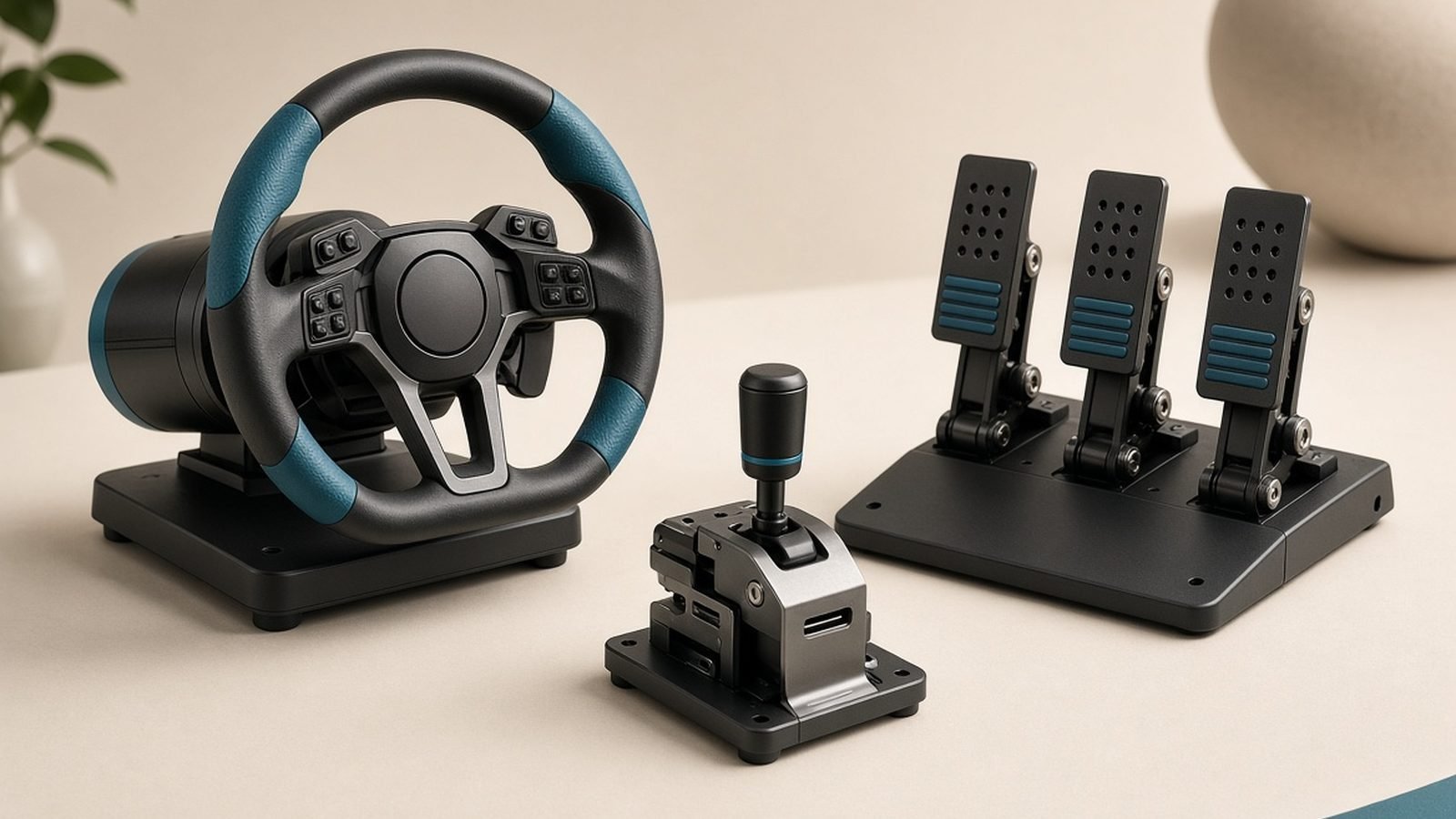
Fanatec’s range covers a full modular sim racing ecosystem:
- Direct-drive wheelbases — the CSL DD / Gran Turismo DD (entry direct drive), and the higher-torque ClubSport DD and Podium DD1/DD2 flagships.
- Steering wheel rims — a large catalog of interchangeable wheels (Formula, GT, McLaren, BMW, Porsche and more) that mount on any compatible base via a quick-release.
- Pedals — load-cell pedal sets like the CSL Pedals and ClubSport Pedals, with adjustable brake feel.
- Shifters and handbrakes — the ClubSport shifter and handbrake for a fuller cockpit.
- Accessories and cockpit gear — hubs, quick-release adapters, table clamps and rig hardware.
The core appeal is modularity: buy a base, then mix and match wheels and pedals over time.
Standout Fanatec products in 2026
Fanatec CSL DD — around $349 / £319 (base). The product that democratized direct drive. It brings genuine DD force feedback to a relatively accessible price, works across PC and (with the right wheel) consoles, and serves as the entry point into the whole ecosystem. It’s the base most newcomers start with, and a headline pick when we point readers toward serious wheels beyond a standard Best Game Controllers 2026: PC, Xbox & PlayStation setup.
Fanatec Gran Turismo DD Extreme — around $999 / £899. A higher-torque, PlayStation-official bundle aimed at Gran Turismo players who want strong direct-drive feedback with console compatibility built in.
Fanatec ClubSport DD — around $649 / £599 (base). A step up in torque and refinement from the CSL DD, for drivers who want more force and a more premium base without going to the Podium flagship.
Fanatec CSL Pedals with Load Cell Kit — around $199 / £179. The pedals many owners pair with a CSL DD, adding a pressure-sensing load-cell brake that dramatically improves braking consistency and feel.
Fanatec ClubSport Steering Wheel (various rims) — around $299–$499 / £269–£459. The interchangeable wheels that make the ecosystem shine, letting drivers swap between Formula, GT and manufacturer-licensed rims on the same base.
Strengths
Class-leading direct-drive hardware. Fanatec’s DD bases deliver strong, detailed force feedback that reveals track surface and grip in a way belt- and gear-driven wheels can’t. The hardware is genuinely benchmark-quality.
The most complete ecosystem. No consumer rival offers as many interchangeable wheels, pedals, shifters and accessories. You can start small and build a serious cockpit over time on the same base.
Broad console compatibility. Fanatec offers officially licensed hardware for PlayStation and Xbox as well as PC — a major advantage over PC-only sim brands for console racers.
Upgradeable and repairable. The modular design means you can upgrade the base or swap components without replacing everything, and parts are available for many products.
Weaknesses & criticisms
Shipping delays and stock problems. The most persistent complaint. Backorders, delayed dispatches and long waits for popular items have frustrated buyers for years and remain the brand’s biggest reputational weakness.
Customer-service complaints. Support responsiveness, RMA turnaround and communication have drawn recurring criticism. When something goes wrong, resolution can be slow and stressful.
Financial turmoil and ownership upheaval. Endor’s insolvency and the subsequent acquisition by Corsair unsettled the community and raised questions about warranties, orders and long-term support during the transition.
High and escalating cost. A capable setup — base, wheel and load-cell pedals — adds up fast, easily reaching four figures. The ecosystem’s modularity is a strength, but it also encourages steady spending.
Complexity for newcomers. Choosing compatible bases, wheels, pedals and firmware can be confusing, and setup and driver management are more involved than plug-and-play alternatives.
Reliability & support
On hardware reliability, Fanatec’s direct-drive bases and load-cell pedals are generally well regarded — the core mechanisms are robust, and the modular design means individual components can be serviced or replaced rather than scrapping a whole unit. Most owners who receive working hardware are very happy with how it performs and holds up under demanding use. Firmware and driver updates are frequent, which fixes issues over time but also means occasional troubleshooting.
Support and fulfillment are the brand’s Achilles’ heel. Warranty terms are standard for premium hardware, but the buying and after-sales experience — shipping timelines, backorders, RMA handling and communication — has been the source of sustained criticism, made worse by the financial difficulties that preceded the Corsair acquisition. Corsair ownership brings more resources and a more stable footing, which is the best reason for optimism, but the reputation was earned over years and won’t reset overnight. The honest guidance: buy Fanatec for the hardware, order well ahead of when you need it, keep records, and go in with realistic expectations about service.
Who should buy Fanatec
Buy Fanatec if you’re a committed sim racer who wants genuine direct-drive force feedback, an upgradeable ecosystem of wheels and pedals, and official compatibility with PlayStation or Xbox as well as PC. For drivers building a long-term rig who value hardware quality above all, Fanatec’s kit is among the best you can own, and the modularity rewards gradual investment.
Look elsewhere if you want the simplest possible plug-and-play setup, the most dependable customer service, or a cheaper way into sim racing without committing to an ecosystem. Logitech and other brands offer easier, better-supported entry points even if their force feedback isn’t as advanced. Weigh your priorities carefully before buying into the Fanatec platform.
FAQ
Is Fanatec a good brand?
Yes, on hardware. Fanatec makes class-leading direct-drive sim racing wheels, pedals and a deep ecosystem with broad console support. The serious caveats are a long history of shipping delays, stock problems and customer-service complaints, plus recent ownership upheaval — so it’s a strong-but-qualified recommendation.
Is Fanatec reliable?
The hardware generally is — direct-drive bases and load-cell pedals are robust and serviceable, and most working units perform and last well. The reliability concern is less about the products failing and more about fulfillment and support: delays and RMA friction are the recurring pain points.
Where is Fanatec from and who owns it?
Fanatec is the sim racing brand of Endor AG, founded by Thomas Jackermeier and based in Landshut, Germany. After financial difficulties and insolvency proceedings, the business was acquired by Corsair in 2024–2025, which now runs Fanatec as a dedicated sim racing brand.
Why does Fanatec have shipping and support complaints?
Fanatec has long struggled with backorders, delayed dispatches and slow customer service, and those problems worsened during the financial turmoil that preceded the Corsair acquisition. New ownership brings more resources, but the reputation was built over years of frustrated buyers and is still recovering.
Fanatec vs Logitech — which is better?
For advanced force feedback and an upgradeable ecosystem, Fanatec’s direct-drive hardware is clearly ahead. For simplicity, price, easy setup and dependable support, Logitech is the safer, friendlier choice. Serious sim racers lean Fanatec; newcomers and casual players are often better served by Logitech.
Is Fanatec worth it in 2026?
For dedicated sim racers who want the best consumer direct-drive hardware and a modular ecosystem, yes — provided you accept the buying and support risks and order ahead. For casual or budget-conscious players, the cost and service history make a simpler, better-supported wheel the smarter pick.
Zen Tech Hub may earn a commission from links on this page, at no extra cost to you.