Ricoh, through its Ricoh Imaging division and the Pentax brand it owns, is the enthusiast’s contrarian in 2026 — a maker that ignores prevailing trends and thrives on a small, devoted following. Its Ricoh GR compacts are legendary street-photography tools, pocketable cameras with big sensors and superb lenses, while Pentax has become the last company still championing the DSLR when everyone else has moved to mirrorless. That focus is both the appeal and the risk: these are wonderful, characterful cameras with limited lineups, slow release cycles and frustrating stock shortages. For photographers who value the specific things Ricoh and Pentax do well, nothing else scratches the same itch.
Verdict: A characterful, enthusiast-led brand that does a few things brilliantly. Best for street shooters (GR) and dedicated DSLR fans (Pentax); the caveats are slow updates, chronic stock shortages, and a small, aging lens ecosystem.
Company overview
Ricoh Company, Ltd. is a large Japanese corporation founded in 1936 and headquartered in Tokyo, best known globally for office equipment such as printers and multifunction copiers. Its cameras are made by Ricoh Imaging Company, which owns the Pentax brand — Ricoh acquired Pentax’s camera business from Hoya in 2011, bringing the storied Pentax name under its umbrella. So while “Ricoh” and “Pentax” appear as two brands, they are one company: Ricoh Imaging produces the Ricoh-branded GR compacts and Theta 360 cameras, and the Pentax-branded DSLRs, lenses and film products.
In plain terms, Ricoh Imaging’s reputation is that of a small, passionate, enthusiast-focused maker swimming against the industry current. It is respected for the cult-favorite GR series, for keeping the DSLR alive with weather-sealed, value-packed Pentax bodies, and for bold, heritage-minded projects like the Pentax film camera revival. The honest caveats are structural: it is a minor player with limited resources, its product updates are infrequent, popular models are frequently out of stock, and its lens ecosystems — especially Pentax K-mount — are aging with fewer new releases than rivals. Buyers get genuine character, but should not expect the pace or breadth of the big brands.
What Ricoh (Pentax) makes
The company’s camera output spans a few distinct, focused lines:
- Ricoh GR compacts — pocketable, large-sensor (APS-C) fixed-lens cameras beloved for street and everyday photography.
- Pentax DSLRs — weather-sealed APS-C and full-frame digital SLRs, notable as the last actively developed DSLR line.
- Pentax K-mount lenses — a range of DSLR lenses, including well-regarded Limited-series primes, though with a slow release cadence.
- Ricoh Theta 360 cameras — compact consumer and professional 360-degree cameras for VR and immersive content.
- Pentax film cameras — a recent heritage project reviving new film-camera production, such as the compact Pentax 17.
The GR compacts and Pentax DSLRs are the two pillars most buyers care about.
Standout Ricoh (Pentax) products in 2026
The product that best defines the brand is the Ricoh GR III / GR IIIx, a pocketable APS-C compact that appears in nearly every serious discussion of everyday and street cameras — and pairs naturally with recommendations in our Best Cameras for Beginners 2026: Easy & Affordable guide for people who want quality without bulk. Based on published specs and reviews, the GR line combines a large sensor, a sharp fixed prime lens and near-instant operation in a shirt-pocket body, a formula with no direct equivalent.
Across the rest of the range:
- Ricoh GR III / GR IIIx — the cult street-photography compacts, offered in 28mm-equivalent (III) and 40mm-equivalent (IIIx) flavors, a standout pick for grab-and-go quality.
- Pentax K-3 Mark III — a flagship APS-C DSLR with a superb optical viewfinder, rugged weather sealing and excellent ergonomics for enthusiasts who still prefer a mirror.
- Pentax K-1 Mark II — a full-frame DSLR offering high resolution, in-body stabilization and a hands-on shooting experience at a competitive price.
- Pentax 17 — a new half-frame film compact from the brand’s film-camera revival, aimed at enthusiasts embracing analog again.
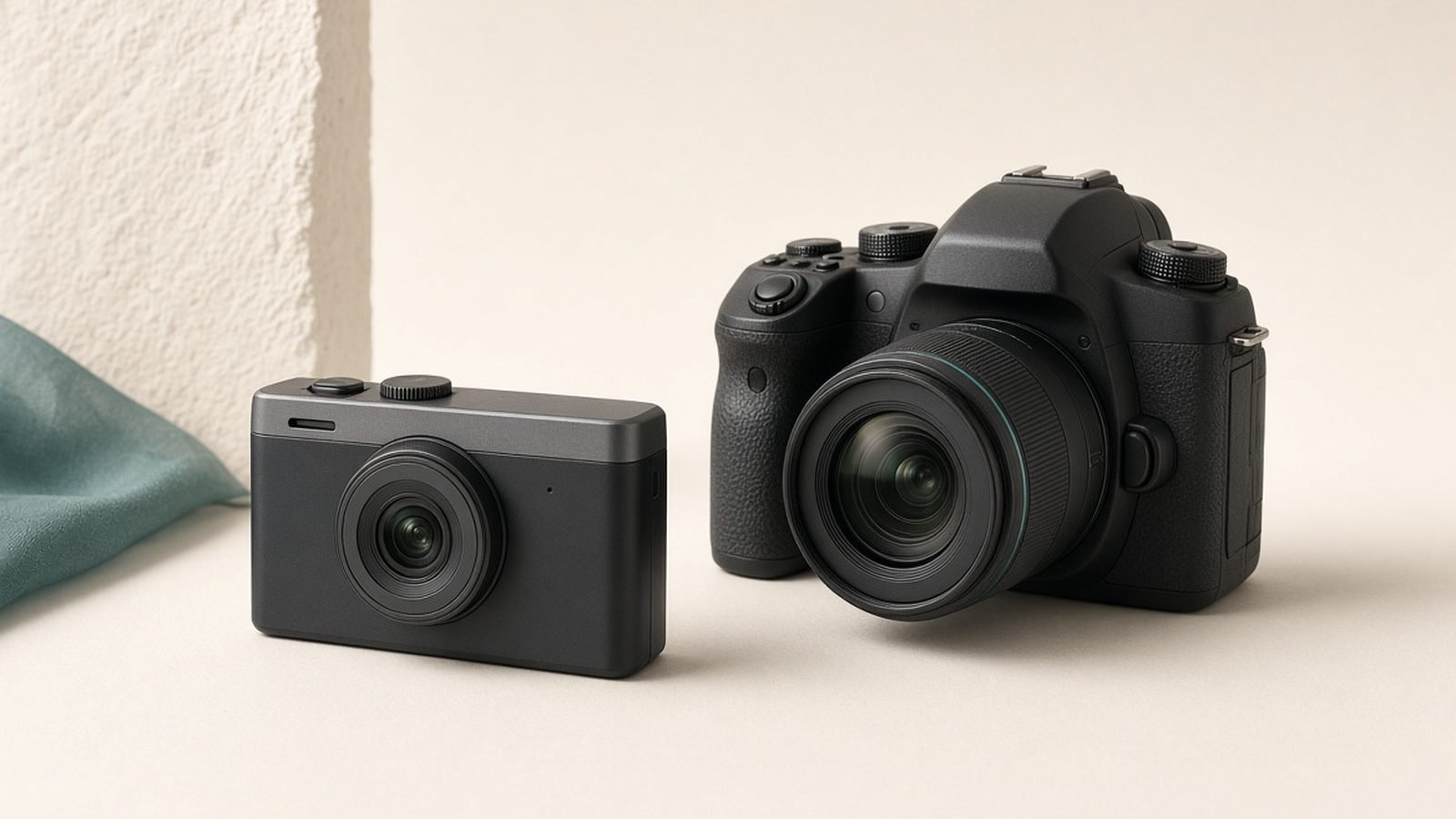
Here is the flagship compact most everyday shooters consider first:
Strengths
The GR formula is unmatched. A large APS-C sensor, a superb fixed prime and a truly pocketable body make the Ricoh GR compacts singular tools for street and everyday photography — there is simply nothing else quite like them.
Genuine character and image quality. Both GR compacts and Pentax DSLRs are praised for pleasing color, sharp lenses and a distinctive shooting feel that inspires loyalty far beyond the brand’s size.
Excellent weather sealing and build. Pentax DSLRs in particular are renowned for rugged, well-sealed bodies that shrug off dust, cold and rain, often at prices below comparable rivals.
Value for money. Pentax bodies frequently offer full-frame or high-end APS-C capability, in-body stabilization and pro-grade build for less than mirrorless competitors, appealing to hands-on enthusiasts.
Bold, heritage-minded projects. From keeping the DSLR alive to reviving new film-camera production with the Pentax 17, Ricoh Imaging does things no one else will, which endears it to enthusiasts.
Weaknesses & criticisms
Slow, infrequent updates. As a small maker, Ricoh Imaging updates its cameras rarely. Popular models can go years between refreshes, and the technology can feel behind the fast-moving mainstream.
Chronic stock shortages. The Ricoh GR series in particular is notorious for being sold out or in short supply, with buyers often waiting months or paying inflated prices to get one.
Betting against mirrorless. Pentax’s commitment to the DSLR is charming but risky: the wider industry has moved on, autofocus lags mirrorless rivals, and the long-term future of new K-mount development is uncertain.
Aging, limited lens ecosystems. New Pentax K-mount lenses appear slowly, and the GR is a fixed-lens system by design, so photographers wanting a broad, modern lens range are poorly served.
No serious video or hybrid focus. These cameras are built for stills. Video specs and features lag far behind rivals, so hybrid shooters and content creators should look elsewhere.
Reliability & support
Based on aggregated user feedback, Ricoh and Pentax cameras are generally reliable and well-built, with Pentax DSLRs especially praised for rugged, weather-sealed durability. The most discussed weak point is the Ricoh GR series’ sensor dust issue — the retracting lens mechanism can let dust reach the sensor over time — a well-known quirk rather than a universal failure, but one prospective GR buyers should know about. Otherwise, mechanical dependability is a relative strength given the brand’s build reputation.
Support reflects the company’s small scale. Ricoh Imaging offers standard warranty coverage and service, but its network and parts availability are thinner than the major brands’, so repairs can take longer depending on region. Firmware updates are infrequent but do arrive, occasionally adding features to existing bodies. The bigger frustration for many owners is not service quality but simple availability — getting a GR in stock in the first place. Net: the cameras are dependable and well-made, but buyers should accept a boutique support experience, the GR’s dust caveat, and patience around stock.
Who should buy Ricoh (Pentax)
Buy Ricoh (Pentax) if you: want a pocketable, large-sensor street camera with no real rival (the GR), love the optical-viewfinder DSLR experience and rugged weather sealing (Pentax), or value character and value over cutting-edge specs. For the right enthusiast, these cameras deliver a shooting experience the mainstream no longer offers.
Look elsewhere if you: need fast, modern autofocus, strong video, a broad and actively growing lens lineup, or reliable stock availability. Mirrorless systems from the larger makers will serve hybrid shooters, action photographers and future-proofers far better. If you are new to cameras, weigh the alternatives in our Best Cameras for Beginners 2026: Easy & Affordable guide before deciding.
FAQ
Is Ricoh a good brand?
Yes, for what it does. Ricoh Imaging (which owns Pentax) makes characterful, well-built cameras with a devoted following — the pocketable GR compacts and the rugged, value-focused Pentax DSLRs. The caveats are real: slow updates, frequent stock shortages and small lens ecosystems. It is an enthusiast’s brand, not a do-everything mainstream one.
Is Ricoh (Pentax) reliable?
Generally yes. Pentax DSLRs are known for rugged, weather-sealed durability, and Ricoh GR compacts are dependable in daily use. The best-known caveat is the GR’s tendency to collect sensor dust over time due to its retracting lens. Support exists but the service network is smaller than the major brands’.
Where is Ricoh from and who owns Pentax?
Ricoh is a Japanese company founded in 1936 and headquartered in Tokyo, widely known for office printers and copiers. Its cameras are made by Ricoh Imaging, which owns the Pentax brand — Ricoh acquired Pentax’s camera business from Hoya in 2011. So Ricoh and Pentax are two brands under one company.
Are Pentax cameras still being made in 2026?
Yes. Pentax remains actively developed as the last major DSLR line, with models like the K-3 Mark III and full-frame K-1 Mark II, plus a recent revival of new film-camera production such as the Pentax 17. Updates are infrequent, and Pentax has notably chosen to stick with DSLRs rather than switch to mirrorless.
Why is the Ricoh GR always out of stock?
The GR series has a small production scale and outsized cult demand, especially among street photographers, so supply frequently runs short. Buyers often wait months or pay premiums on the used and gray markets. Availability, more than the camera itself, is the most common GR frustration.
Is the Ricoh GR good for beginners?
It can be, if you want a simple, pocketable, high-quality camera and are happy with a single fixed focal length. The GR is fast and produces excellent images, but the fixed lens and street-photography focus make it more of a considered choice than a versatile first camera. See our Best Cameras for Beginners 2026: Easy & Affordable guide for more flexible options to compare.
Zen Tech Hub may earn a commission from links on this page, at no extra cost to you.