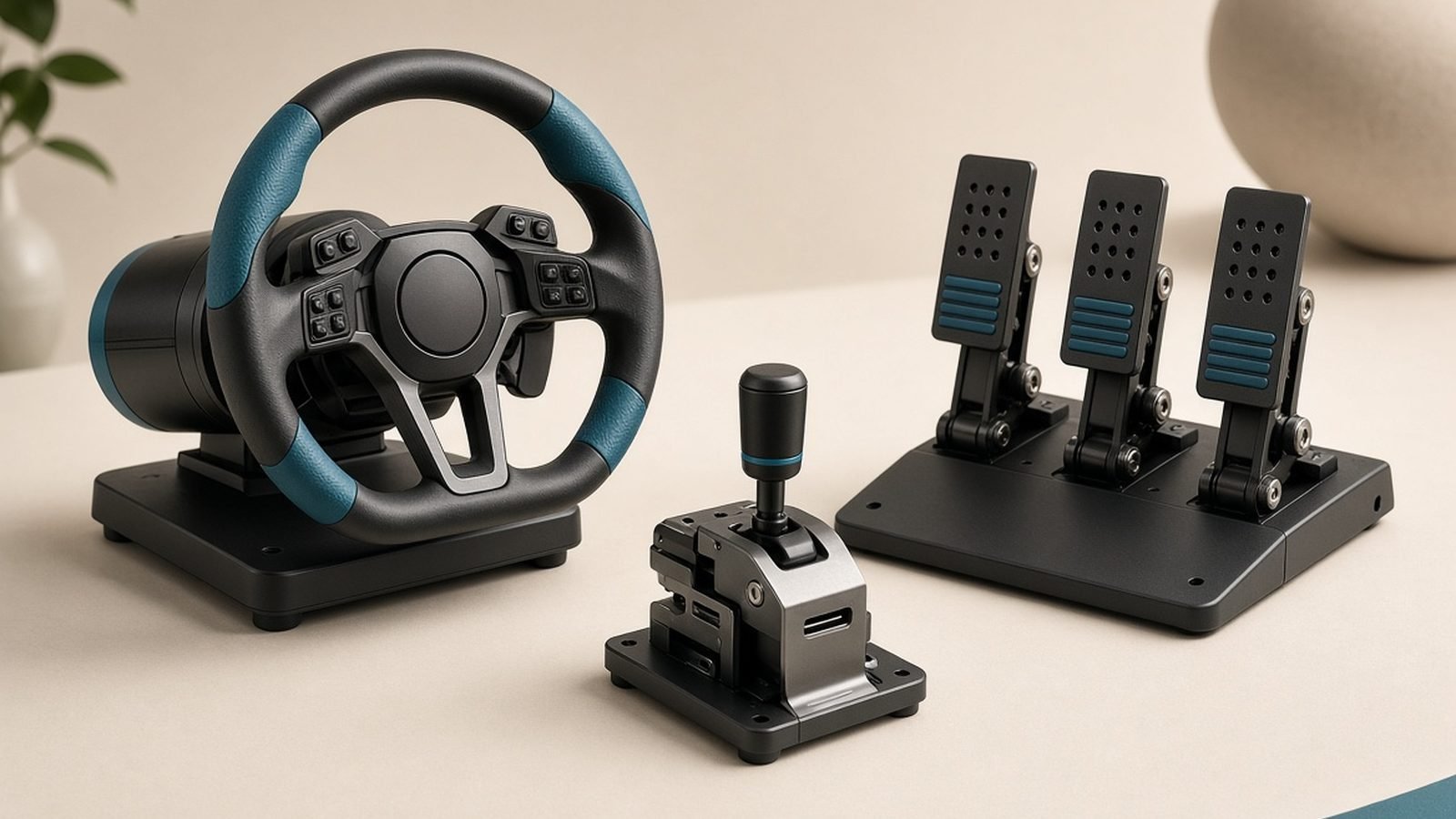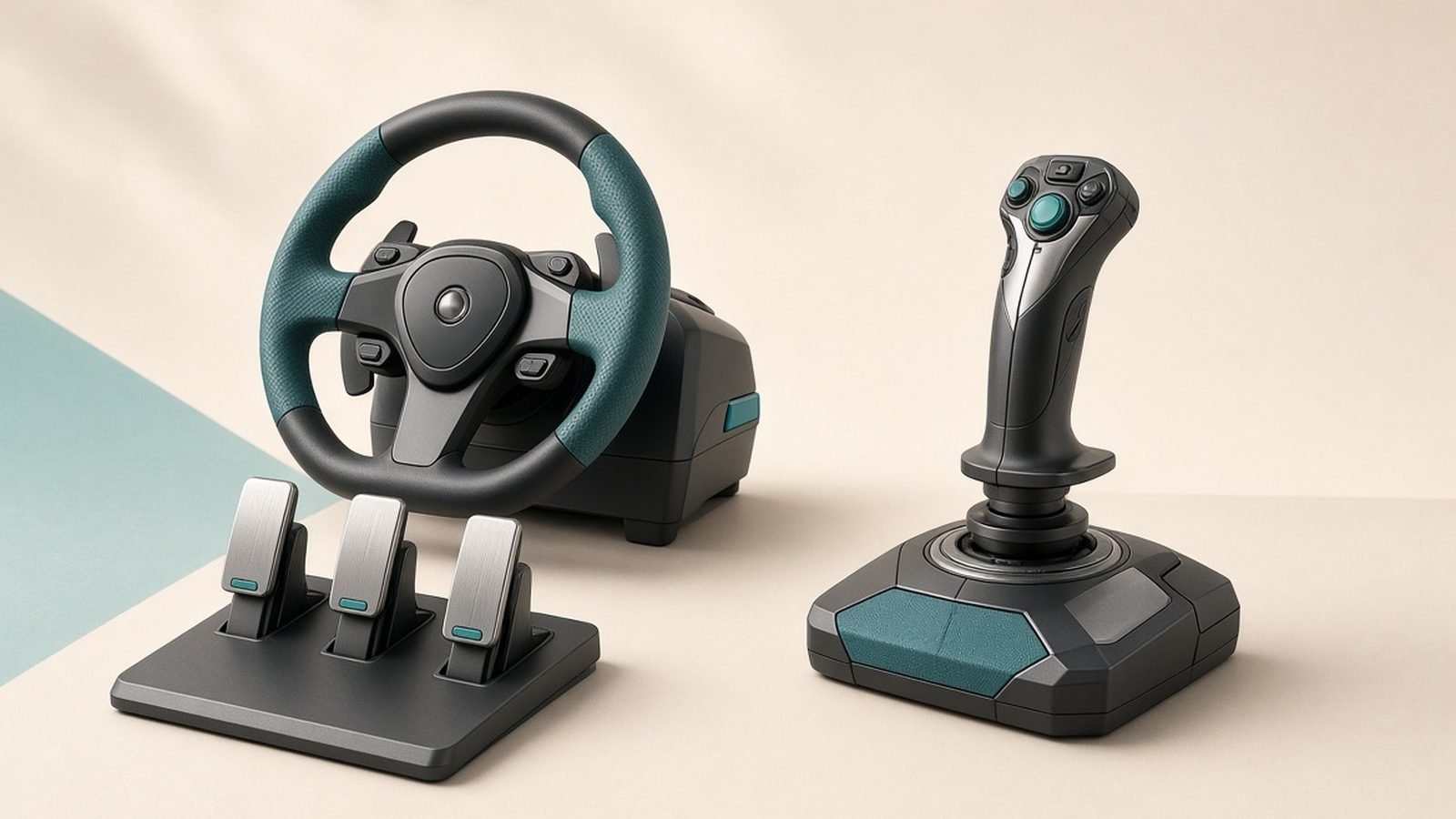
Thrustmaster is the versatile simulation brand — the maker of racing wheels, HOTAS flight controllers and gamepads that has served sim racers and flight-sim pilots for decades. The short verdict: Thrustmaster offers some of the best value in sim hardware, with a wide range that spans budget wheels to a direct-drive base, respected flight sticks like the T.16000M and HOTAS Warthog, and broad compatibility across PlayStation, Xbox and PC. The T300/T-series wheels and the flight-sim HOTAS line are the ones to know. The big caveats are more plastic-heavy construction than premium rivals at the lower end, force feedback that (outside its newest direct-drive gear) trails the best DD systems, and customer support that owners describe as inconsistent.
Buy Thrustmaster if you want a well-priced, broadly compatible wheel or flight setup with a huge accessory range and a proven track record. Look elsewhere if you demand the strongest direct-drive force feedback, all-metal premium construction, or the smoothest warranty experience.
Company overview
Thrustmaster is a simulation and gaming peripheral brand owned by the Guillemot Corporation, a French company that also owns the Hercules brand. Thrustmaster has a long heritage in flight and racing peripherals going back to the 1990s, and today it designs racing wheels, flight controllers and gamepads sold worldwide. Being part of Guillemot — a stable, established European hardware company — gives Thrustmaster reach, distribution and staying power across console generations.
Its reputation is that of a dependable, value-oriented all-rounder. Thrustmaster is the brand many sim racers and flight-sim pilots start with, because it offers a credible product at almost every price point and works across the major platforms. It doesn’t carry the boutique prestige of the most premium direct-drive or all-metal brands, but it’s widely trusted for delivering solid performance without a boutique price. The main knocks are construction that leans on plastic in cheaper products and a support experience that varies by region.
What Thrustmaster makes
Thrustmaster’s catalog spans several simulation categories:
- Racing wheels and bases — belt-driven wheels like the T300 RS and TX, the higher-end TS-XW and T-GT, and newer direct-drive bases such as the T598.
- Wheel rims and pedals — interchangeable wheel add-ons and pedal sets (including load-cell options) that upgrade the base experience.
- Flight controllers (HOTAS) — the T.16000M FCS, the premium HOTAS Warthog, and the TCA Airbus/Boeing-style airliner controllers for flight sims.
- Gamepads — wired and wireless controllers for PC and consoles, including officially licensed pads.
- Accessories — shifters, handbrakes, and mounts that round out a cockpit.
The through-line is broad, compatible simulation hardware at a range of prices, plus a strong flight-sim presence that most rivals lack.
Standout Thrustmaster products in 2026
Thrustmaster T300 RS GT — around $399 / £369. A long-running favorite belt-driven racing wheel with strong force feedback for the price, official PlayStation and PC support, and an upgrade path via interchangeable rims. It’s a benchmark value pick for drivers stepping up from a standard Best Game Controllers 2026: PC, Xbox & PlayStation setup.
Thrustmaster T598 (direct drive) — around $499 / £459. Thrustmaster’s push into direct drive, bringing DD force feedback into a more accessible price bracket with console compatibility, aimed at drivers who want the DD feel without top-tier pricing.
Thrustmaster HOTAS Warthog — around $499 / £459. The premium, all-metal flight stick and throttle set modeled on the A-10C, a benchmark for serious flight-sim pilots and one of the most respected HOTAS setups available.
Thrustmaster T.16000M FCS — around $79 / £69. An affordable, ambidextrous flight stick with accurate Hall effect sensors that punches well above its price, a perennial recommendation for flight-sim newcomers.
Thrustmaster TCA Airbus/Boeing controllers — around $99–$199 / £89–£179. Airliner-style sidesticks and throttle quadrants for Microsoft Flight Simulator fans who want realistic civil-aviation controls.
Strengths
Excellent value across the range. Thrustmaster offers credible hardware at nearly every price point, from a $79 flight stick to a direct-drive base, making it easy to find something that fits a budget.
Broad compatibility. Officially licensed support across PlayStation, Xbox and PC (varying by product) makes Thrustmaster a safe pick for players who may switch platforms.
Strong flight-sim credentials. The T.16000M and HOTAS Warthog give Thrustmaster a respected presence in flight simulation that most racing-focused rivals can’t match.
Upgrade paths and accessories. Interchangeable rims, pedals, shifters and load-cell options let owners improve their setup over time rather than starting from scratch.
Weaknesses & criticisms
Plastic-heavy construction at the low end. Cheaper wheels and pedals lean on plastic, and while they perform well, they don’t feel as premium or durable as all-metal boutique gear. Pedal sets in particular are a common upgrade target.
Force feedback trails the best DD systems. Outside its newest direct-drive base, much of Thrustmaster’s range uses belt or gear drive, which is smooth and capable but not as detailed as high-end direct-drive wheels from premium rivals.
Inconsistent customer support. Owner reports on warranty handling, RMA turnaround and support responsiveness vary by region and can be frustrating when hardware fails.
Firmware and driver quirks. Some owners encounter driver, calibration or firmware-update issues that require troubleshooting, especially across platform changes.
Aging models in the lineup. Parts of the range have been around a while, so buyers need to check which products are current and best-value versus older stock.
Reliability & support
Thrustmaster’s reliability is generally solid for the price. The flagship flight controllers — particularly the all-metal HOTAS Warthog and the Hall-effect-based T.16000M — have excellent reputations for durability, and the mainstream racing wheels like the T300 hold up well under regular use. The most common reliability concerns are around cheaper plastic components (some pedal sets and lower-end parts) and occasional force-feedback motor or calibration issues that show up in a minority of units. Because much of the range is upgradeable, wear items can often be replaced rather than forcing a full repurchase.
Support is the more variable side. Warranty terms are standard for the category (commonly one to two years depending on region and product), but the after-sales experience — RMA speed, communication and repair turnaround — draws mixed feedback and depends heavily on where you bought and your regional service center. Guillemot’s scale means parts and distribution are widely available, which helps. The honest guidance: Thrustmaster hardware is reliable enough that most buyers get years of use, especially from the well-regarded flight gear; buy from a reputable retailer, keep proof of purchase, and expect a support experience that’s adequate rather than white-glove.
Who should buy Thrustmaster
Buy Thrustmaster if you want strong value and broad compatibility in a racing wheel or flight controller, especially if you’re getting into flight simulation, where its HOTAS and T.16000M gear are standout picks. For sim racers on a budget or those who want an upgrade path across PlayStation, Xbox and PC, the T300 and newer T598 direct-drive base are compelling. It’s the sensible middle ground between basic gamepads and boutique sim hardware.
Look elsewhere if you demand the strongest, most detailed direct-drive force feedback, all-metal premium construction throughout, or the most polished warranty experience. Buyers chasing the absolute high end of sim racing may prefer a dedicated premium direct-drive brand, and casual players may be happier with a standard controller from our Best Game Controllers 2026: PC, Xbox & PlayStation guide.
FAQ
Is Thrustmaster a good brand?
Yes. Thrustmaster is a dependable, value-oriented simulation brand with a wide range of racing wheels, flight controllers and gamepads, plus broad platform compatibility. The caveats are plastic-heavy construction at the low end, force feedback that trails the best direct-drive rivals, and inconsistent customer support.
Is Thrustmaster reliable?
Generally, yes — especially its flight gear like the HOTAS Warthog and T.16000M, which are known for durability. Mainstream wheels such as the T300 hold up well; the more common concerns are cheaper plastic components and occasional calibration or force-feedback issues in a minority of units.
Where is Thrustmaster from and who owns it?
Thrustmaster is owned by the Guillemot Corporation, a French gaming-hardware company that also owns the Hercules brand. Thrustmaster has a long heritage in flight and racing peripherals dating back to the 1990s and sells worldwide across PlayStation, Xbox and PC.
Is Thrustmaster good for flight simulators?
Yes — it’s one of the strongest brands for flight sims. The affordable T.16000M FCS is a top newcomer pick, the all-metal HOTAS Warthog is a benchmark for serious pilots, and the TCA airliner controllers suit civil-aviation fans in Microsoft Flight Simulator.
Thrustmaster vs Fanatec — which is better?
Thrustmaster wins on value, breadth (including flight sims) and accessibility; Fanatec wins on high-end direct-drive force feedback and a deeper premium ecosystem. For most newcomers and budget-conscious sim racers, Thrustmaster is the friendlier pick; for top-tier force feedback, Fanatec leads — if you accept its higher cost and support risks.
Are Thrustmaster racing wheels worth it?
For the money, yes. Models like the T300 RS deliver strong force feedback and console compatibility at a fair price, with upgrade paths for rims and pedals. Enthusiasts wanting the absolute best direct-drive feel may spend more elsewhere, but Thrustmaster is one of the best value routes into sim racing.
Zen Tech Hub may earn a commission from links on this page, at no extra cost to you.