Zoom — the Japanese audio company, not the video-call software — makes the handheld field recorders that a generation of filmmakers, musicians and podcasters learned to record on. In 2026 its H-series recorders, PodTrak podcast units and USB mics remain the default choice for capturing clean audio away from a computer. The short verdict: Zoom offers the best value in portable recording, with capable multi-input recorders and creator-friendly podcast gear that cost far less than pro field kit — but its interfaces and menus can feel dated, the built-in preamps on cheaper units are noisier than premium rivals, and its plasticky bodies and fiddly controls betray the aggressive pricing.
If you need to record interviews, instruments, films or podcasts on the move without a laptop, Zoom is an easy recommendation and often the best value in the category. If you want the quietest preamps, the most rugged build, or professional broadcast features, higher-end Tascam, Sound Devices or Zoom’s own F-series are worth the step up.
Company overview
Zoom Corporation was founded in 1983 in Tokyo, Japan, initially making guitar effects and multi-effects units before becoming famous for its handheld digital recorders in the 2000s. The H-series in particular — starting with the H4 and H2 — put professional-quality portable recording within reach of students, filmmakers and musicians for the first time.
The most important thing to understand about this brand is the name confusion: Zoom Corporation (audio hardware) is entirely unrelated to Zoom Video Communications (the meeting software). They share nothing but a name. Zoom Corporation remains a Japanese audio-equipment maker, publicly listed in Japan, and distributes its recorders in some markets in partnership with Samson. It also still makes guitar and bass multi-effects pedals alongside its recorders and creator gear.
Its reputation is built on affordable, capable portable recording. Zoom recorders are the ones film students, indie musicians and podcasters buy first because they deliver most of what pro gear does for a fraction of the price. When you want to capture good audio away from a desk without spending a fortune, Zoom is the name most creators reach for.
What Zoom makes
Zoom’s 2026 catalog centers on portable audio capture:
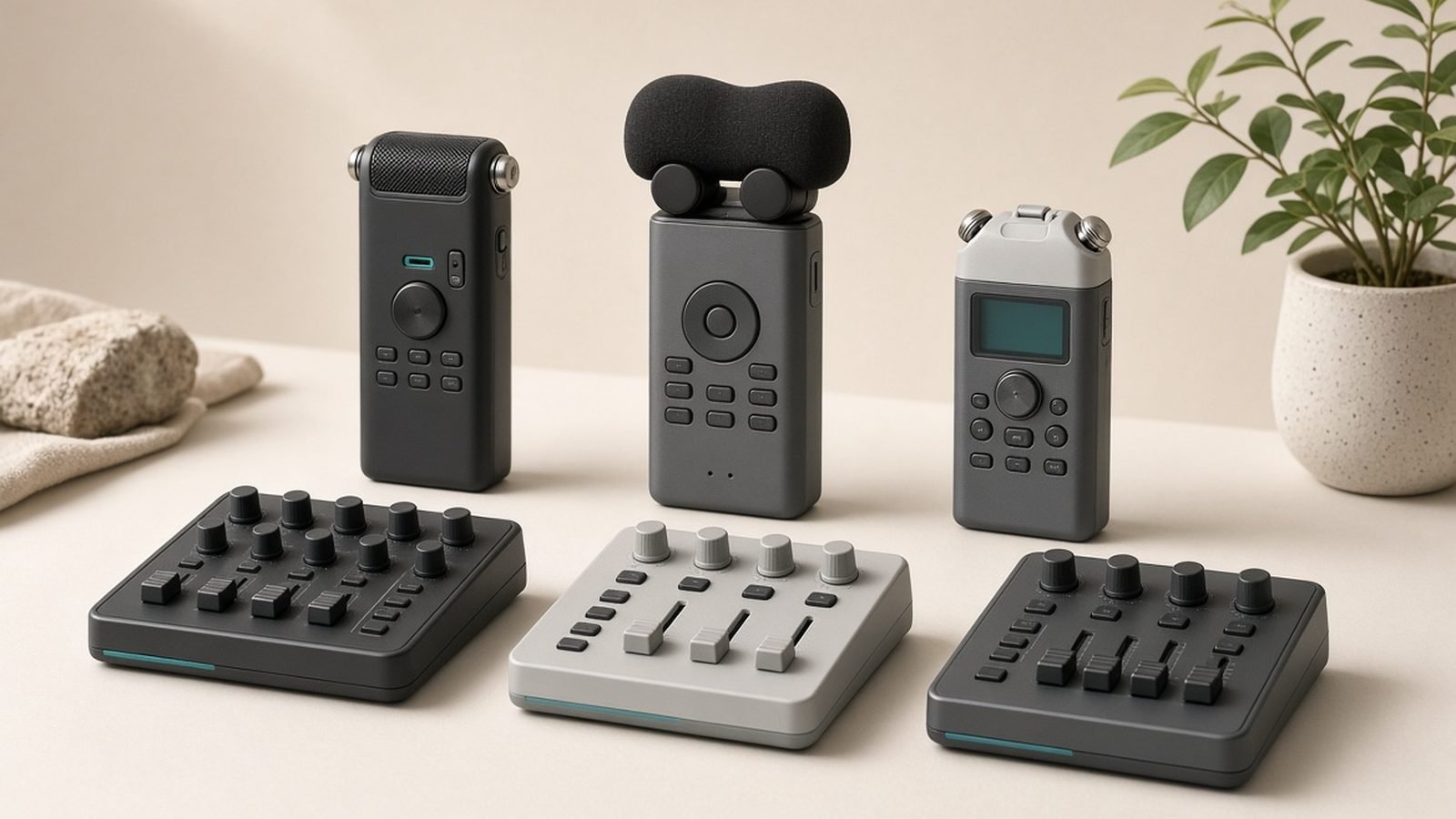
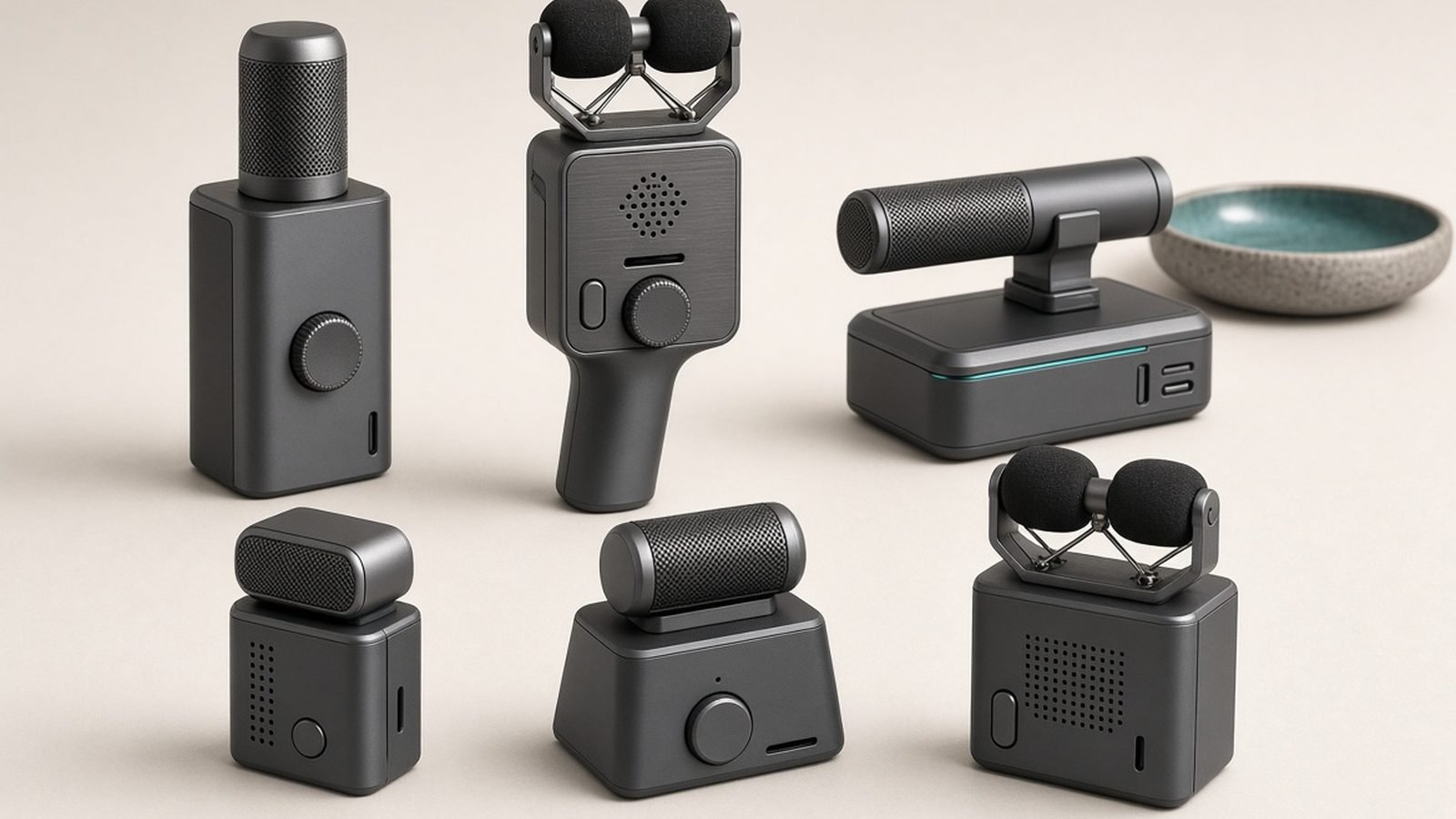
- Handheld field recorders — the H-series (H1essential, H4essential, H6essential and the flagship-ish H6) for interviews, music and film sound.
- Professional field recorders — the F-series (F3, F6, F8n Pro) with cleaner preamps and 32-bit float recording for pro film and location work.
- Podcasting hardware — the PodTrak P4 and P8 multitrack podcast recorders with headphone outputs and phone inputs.
- USB microphones and audio interfaces — the ZUM and Podcast Mic lines plus USB interfaces for direct computer recording.
- Multi-effects pedals — guitar and bass processors, the company’s original product category.
- Accessories — capsule mics, windscreens, and mounts for the recorder ecosystem.
The consistent thread is capture away from the computer: Zoom’s heartland is portable, self-contained recording, and it covers that ground from a $99 pocket recorder to pro location rigs.
Standout Zoom products in 2026
Zoom H6essential — around $299 / £279. A six-track handheld recorder with interchangeable mic capsules, four XLR/TRS inputs and 32-bit float recording that all but eliminates clipping. It’s the go-to for filmmakers and musicians who need flexible, safe multitrack capture, and a natural partner to the cameras in our Best Vlogging Cameras 2026: Creators' Picks guide.
Zoom H4essential — around $189 / £179. A four-track recorder with two XLR inputs and a stereo mic pair, offering 32-bit float in a smaller, cheaper body. A superb all-rounder for interviews, music and film sound.
Zoom H1essential — around $99 / £89. A pocket-sized stereo recorder with 32-bit float, perfect as a backup recorder, a lav catch or a first serious recording device for students and creators.
Zoom PodTrak P4 — around $199 / £189. A four-mic podcast recorder with headphone monitoring for each host, sound-effect pads and a phone-caller input, aimed at podcasters who want an all-in-one recorder without a computer. It pairs well with the mics in our Best USB Microphones in 2026 for Streaming and Podcasting guide.
Zoom F6 — around $749 / £699. A professional six-input field recorder with very clean preamps and dual 32-bit float, popular with location sound recordists who need broadcast-grade capture in a compact body.
Zoom ZUM-2 / Podcast Mic — from around $79 / £74. USB microphones aimed at streamers and podcasters who want simple, plug-and-play computer recording without a separate interface.
Strengths
Unbeatable value in portable recording. Zoom repeatedly delivers multitrack, multi-input recording for far less than the pro competition. The essential H-series brings 32-bit float — a genuinely useful anti-clipping feature — down to budget prices.
Flexible, feature-rich recorders. Interchangeable capsules, multiple XLR inputs, phantom power and onboard effects give Zoom recorders real versatility for interviews, music, film and podcasts alike.
Strong creator and podcast focus. The PodTrak line and USB mics show Zoom reading the content-creation market well, offering all-in-one podcast recording that needs no laptop.
Ubiquity and community knowledge. Zoom recorders are everywhere in film schools, indie music and podcasting, so tutorials, accessories and secondhand units are abundant and support is easy to find.
Weaknesses & criticisms
Noisier budget preamps. The preamps on cheaper Zoom recorders are audibly noisier than premium rivals, which matters when recording quiet sources at high gain — a long-standing criticism the F-series addresses but the budget H-series does not fully escape.
Dated interfaces and menus. Zoom’s menus, small screens and button layouts can feel clunky and unintuitive, and firmware polish lags behind the hardware value.
Plasticky, fiddly build. To hit their prices, many Zoom recorders use lightweight plastic bodies and small controls that feel less rugged and precise than pricier Tascam or Sound Devices gear.
Name confusion. Being constantly mistaken for the video-call company creates real search and support friction, and Zoom Corporation’s smaller marketing footprint means its excellent hardware is under-recognized.
Reliability & support
Reliability for Zoom recorders is generally solid for the price. The core H-series and PodTrak units hold up to regular field and studio use, and the move to 32-bit float across the essential line has removed one of the biggest causes of ruined recordings — accidental clipping. The main durability concerns are the plastic bodies, battery-door hinges and small controls, which feel less robust than premium alternatives and can wear with heavy handling.
Warranty coverage is typically a standard one-year limited warranty (varying by region and distributor, often handled by Samson in some markets), which is shorter than the multi-year coverage from some rivals but adequate for the price bracket. Firmware updates are provided but arrive less frequently and with less polish than the best in the industry. Customer support experiences are mixed and depend heavily on regional distributors, but the huge installed base means community help, tutorials and spare accessories are always easy to find. The main reliability advice is to treat the budget bodies gently and step up to the F-series if you need pro-grade robustness.
Who should buy Zoom
Buy Zoom if you need affordable, flexible portable recording away from a computer. It’s the natural pick for film students and indie filmmakers (H4essential, H6essential), musicians capturing rehearsals and gigs, and podcasters who want an all-in-one recorder (PodTrak P4). If value and versatility matter most, Zoom is the category’s default first buy.
Look elsewhere if you need the quietest possible preamps, broadcast-grade robustness, or the most polished interface. In those cases, step up to Zoom’s own F-series, or cross-shop Tascam and Sound Devices for professional field recording. For desk-based podcasting, our Best USB Microphones in 2026 for Streaming and Podcasting guide compares Zoom’s mics against dedicated USB rivals.
FAQ
Is Zoom a good brand?
Yes — the audio-hardware Zoom (Zoom Corporation) is one of the most respected makers of portable recorders, known for outstanding value in the H-series and PodTrak lines. Its main drawbacks are noisier budget preamps, dated menus and plasticky build. Note it is unrelated to the Zoom video-call software.
Is Zoom reliable?
For the price, yes. Its recorders hold up to regular field and studio use, and 32-bit float on the essential line prevents clipping. The main concerns are plastic bodies, battery doors and small controls that feel less rugged than premium rivals, plus a shorter standard warranty.
Where is Zoom (the recorder company) from and who owns it?
Zoom Corporation was founded in 1983 in Tokyo, Japan, and remains a publicly listed Japanese audio-equipment maker. It is entirely separate from Zoom Video Communications (the meeting software) and distributes its recorders in some markets through a partnership with Samson.
Are Zoom recorders better than Tascam?
They trade blows. Zoom generally leads on value, features and multitrack flexibility, while Tascam often edges ahead on build quality and, on some models, cleaner preamps. For most creators the choice comes down to budget and which specific model fits their input needs.
What is 32-bit float recording and do Zoom recorders have it?
32-bit float captures such a wide dynamic range that you effectively can’t clip a recording, letting you fix levels afterward. Zoom’s essential H-series (H1/H4/H6essential) and F-series include it, which is a major reason they’re recommended for run-and-gun and interview work.
Is Zoom Corporation the same as Zoom video calls?
No. They are completely unrelated companies that happen to share a name. Zoom Corporation makes audio recorders and effects pedals in Japan; Zoom Video Communications makes the meeting software in the United States.
Zen Tech Hub may earn a commission from links on this page, at no extra cost to you.