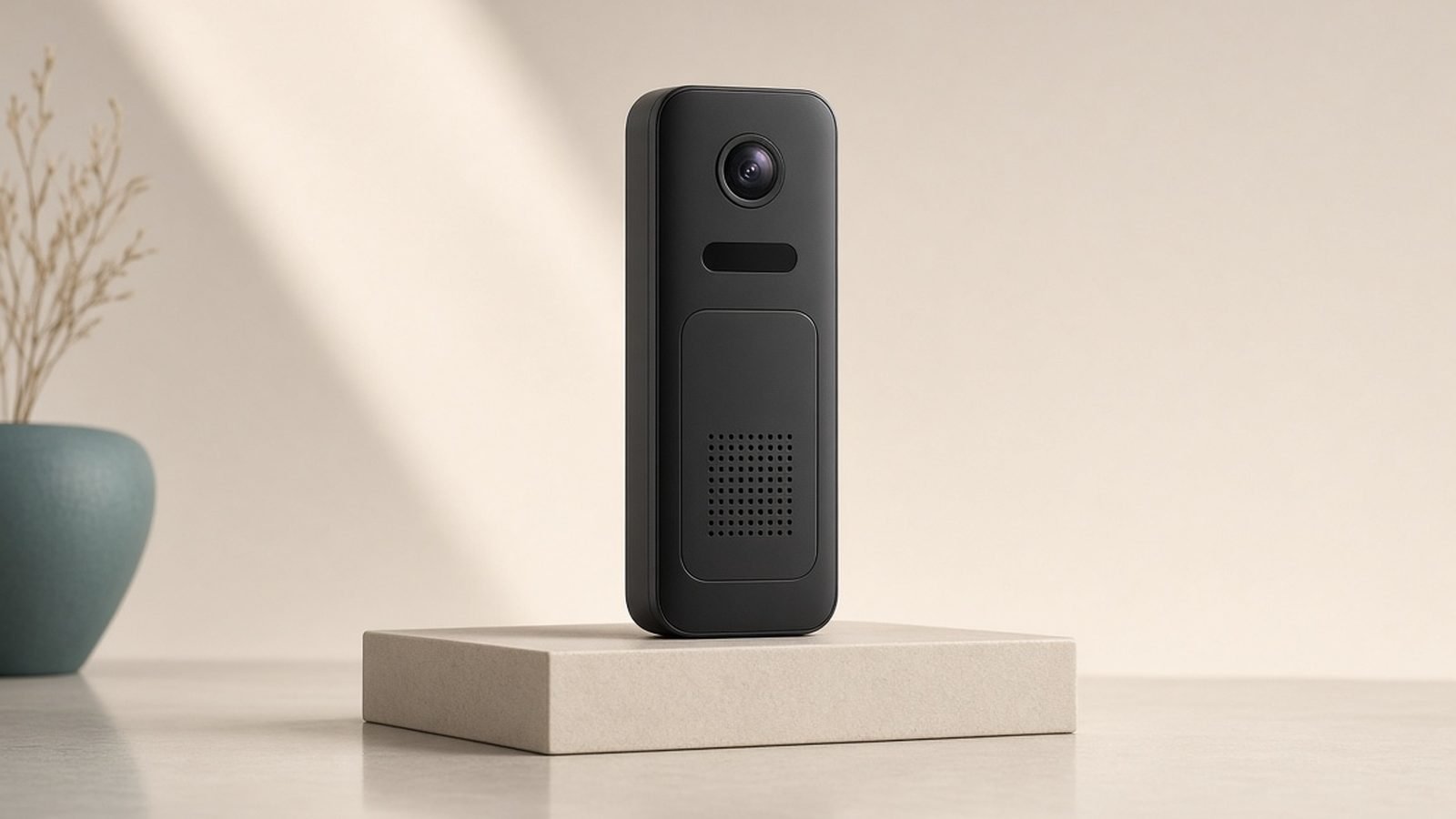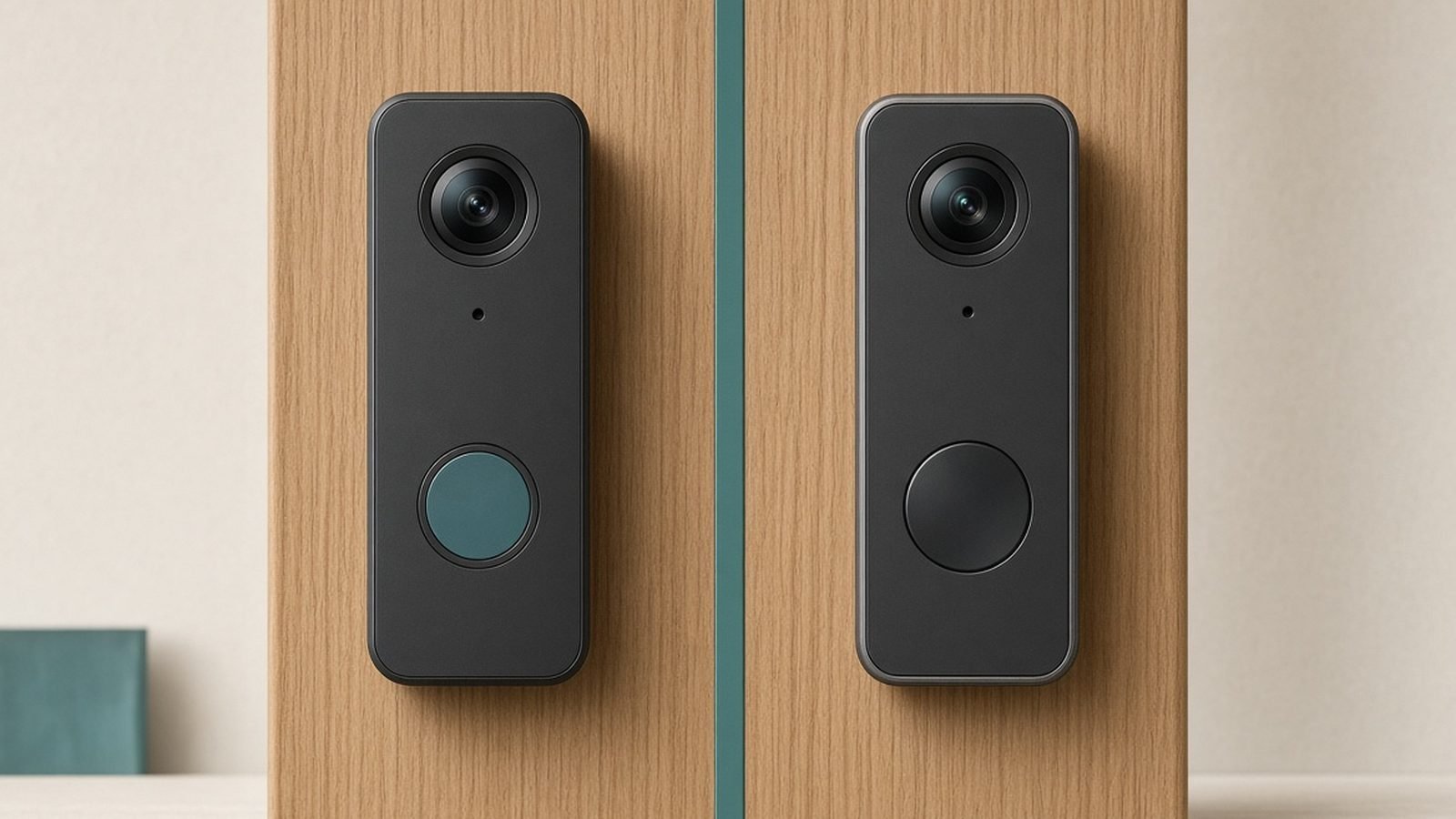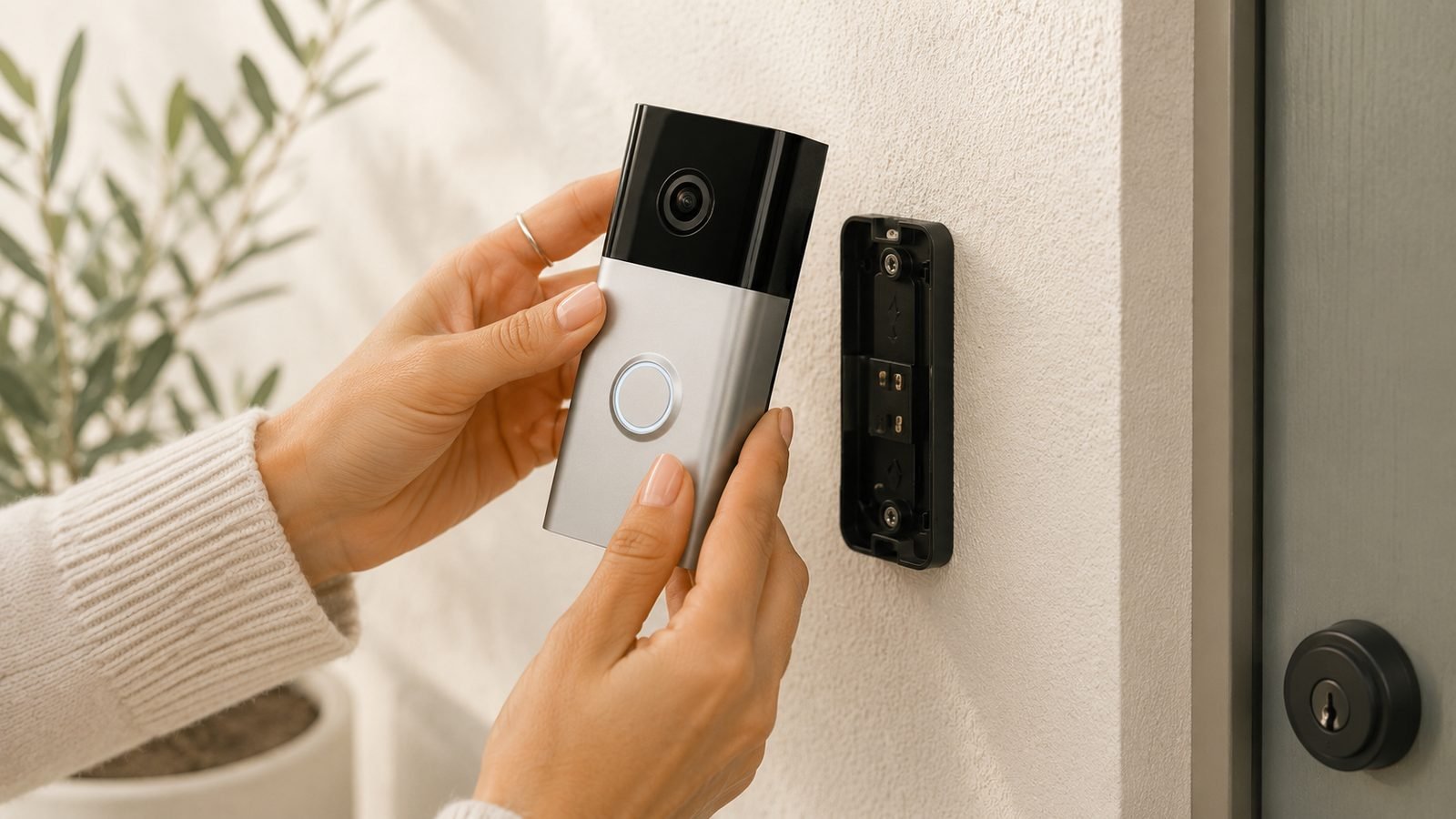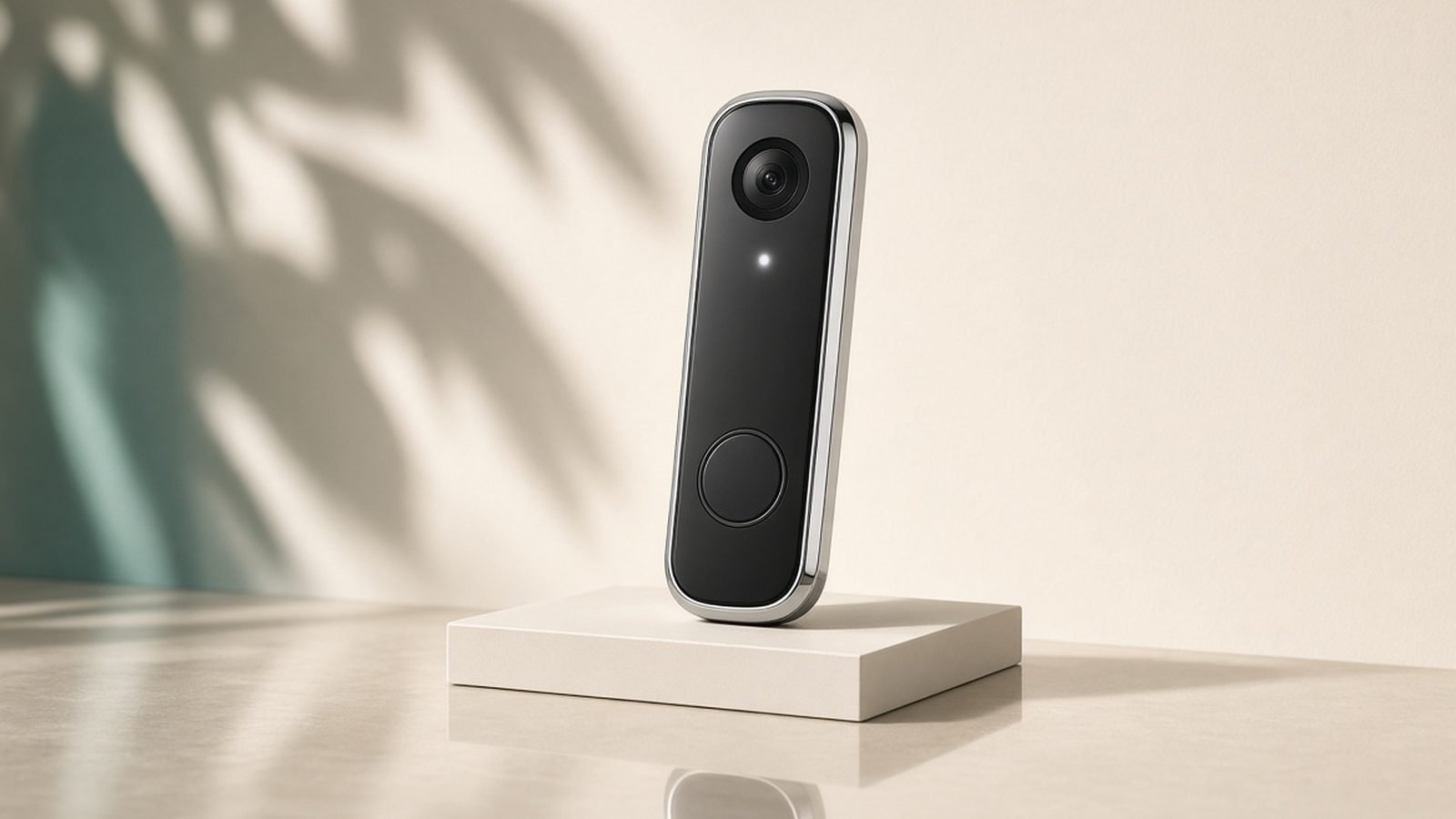
Ring’s first 4K doorbell finally answers the question every porch-pirate victim has asked: why can I see that someone took my package, but not who? This Ring Wired Doorbell Pro review digs into whether Retinal 4K genuinely changes what you can identify on camera — and whether the real cost, once you add a Ring Home subscription, still makes sense against cheaper 2K rivals.
Short answer: the video is the best we’ve seen on any consumer doorbell, the motion detection is genuinely smart, and the wired-only design will be a dealbreaker for a lot of UK homes. Here’s the full picture.
Verdict Up Front
The Ring Wired Doorbell Pro (3rd Gen) is the doorbell to buy if you have existing wiring, live in the Alexa ecosystem, and are already comfortable paying Ring’s monthly fee. The 4K sensor with 10x digital zoom resolves faces and licence plates at distances where 2K doorbells give you smudges, and the colour night vision is a real upgrade rather than a spec-sheet gimmick.
It is not the doorbell to buy if you rent, refuse to pay a subscription, or use Google Assistant. At around $229 / £199 plus roughly $4.99 / £4.99 a month for recording, you’re committing to about $350 / £320 over two years — nearly double the sticker price.
Rating: 4.5/5 — the best video doorbell you can buy, with two big asterisks: wiring and subscription.
Check price: Ring Wired Doorbell Pro (3rd Gen, 4K)
How It Compares at a Glance
| Ring Wired Doorbell Pro (3rd Gen) | Ring Battery Doorbell (2K, 2026) | Google Nest Doorbell (Wired, 3rd Gen) | |
|---|---|---|---|
| Price | ~$229 / £199 (deals ~$200) | ~$99 / £89 | ~$179 / £179 |
| Resolution | 4K “Retinal” (2160p) | 2K | 2K, square aspect |
| Power | Wired only | Battery or wired | Wired |
| Night vision | Colour (Low-Light Sight) | Infrared + colour | Infrared |
| Free recording | None | None | 6 hrs event history |
| Subscription | Ring Home from ~$4.99/mo | Ring Home from ~$4.99/mo | Nest Aware from ~$8/mo (optional) |
| Ecosystem | Alexa | Alexa | Google Home |
Price, Versions and the New $99 Battery Siblings
The Ring Wired Doorbell Pro (3rd Gen) launched at $229 in the US and £199 in the UK, and in our price tracking it dips to around $200 / £169 during Amazon sales events — Ring hardware discounts reliably on Prime Day and Black Friday, so patience pays.
Naming is a mess, so let’s untangle it. This is the third generation of what used to be called the Ring Video Doorbell Pro 2. “Wired Doorbell Pro” is the current name; “3rd Gen” and “4K” identify this model specifically. There’s also a Battery Doorbell Pro with the same 4K sensor for people without wiring, at a higher price.
At the other end, Ring’s 2026 refresh brought a $99 / £89 Ring Battery Doorbell with a 2K sensor. It exists precisely to catch people who baulk at $229, and for renters it’s honestly the smarter buy — more on that in the comparison section.
UK price note: at £199, the ring doorbell pro UK price works out proportionally worse than the US price at current exchange rates, and UK homes face an extra installation hurdle we cover below. Factor both in before ordering.
Check price: Ring Battery Doorbell (2K, 2026)
Installation: What “Wired” Really Requires
This is the section that saves you a return. “Wired” doesn’t mean it plugs into a socket — it means the doorbell needs low-voltage power from your home’s doorbell circuit, and the requirements differ sharply between the US and UK.
US homes: check your transformer
Most US houses built or renovated since the 1980s have a doorbell transformer, usually near the electrical panel, furnace or in a closet. The Wired Doorbell Pro needs 16–24 VAC at 30 VA. Older 10 VA transformers — common with basic mechanical chimes — will power the doorbell inconsistently, causing the random-offline problems that fill Ring’s support forums. If your existing doorbell works, installation is a 30–45 minute job: kill the breaker, swap the button, install the included Pro Power Kit at the chime. If you hit connectivity gremlins afterwards, an undersized transformer is suspect number one — see our guide Ring Doorbell Offline? How to Fix It in Minutes (2026).
UK homes: most of you don’t have the wiring
Here’s the long-tail truth almost no review covers: the majority of UK homes have either a battery-powered chime or no doorbell wiring at all. Byron battery chimes screwed to the hallway wall don’t count — there’s no transformer behind them.
UK buyers have three realistic paths:
- Ring’s official plug-in adapter (around £25–30): run a thin cable from the doorbell position to an indoor socket. Cheapest, but you’ll be drilling through the door frame and trailing cable.
- A dedicated 24V transformer fitted by an electrician into your consumer unit or a fused spur: the clean solution, typically £80–150 installed.
- Give up on wired and buy the Battery Doorbell Pro or the £89 Battery Doorbell instead. No shame in it — this is what most UK owners in our research actually did.
If you’re not sure which camp you’re in, open your existing chime. Two thin bell wires entering it means you likely have a transformer somewhere. Batteries inside means you don’t.
Retinal 4K Video Quality: Day and Night
Ring brands the sensor “Retinal 4K”, and stripped of marketing it means a 2160p sensor paired with processing tuned for the two things doorbell footage is actually for: faces and text.
In our research — comparing published frame grabs and hundreds of owner-posted clips against 2K footage from the previous Pro 2 and Nest’s doorbell — the difference is not subtle at distance. At typical porch range (under 2 metres), 2K is already fine and 4K is a marginal win. The gap opens at 5–10 metres: a delivery driver at the kerb, a car on the street, someone walking a dog past your drive. That’s where ring retinal 4K video quality earns its name, because the 10x digital zoom is cropping from a 4K frame instead of a 2K one. Zoom into a 2K doorbell’s footage at kerb distance and you get blocky mush; zoom into the Pro’s and you can frequently read a licence plate or make out a face well enough to matter.
The 150° x 150° head-to-toe field of view shows the full person and any package on the mat — table stakes for a premium doorbell in 2026, but done well here with modest distortion at the edges.
Two honest caveats from aggregated owner reports. First, 4K streams are heavier: on congested 2.4GHz Wi-Fi, live view can take a beat longer to load than on a 2K doorbell, and weak signal at the front door hurts this model more than most. Second, what you watch back is subject to compression — footage is noticeably better than 2K rivals, but don’t expect cinema-grade stills.
Low-Light Sight: Colour Night Vision That’s Actually Useful
Traditional doorbell night vision is infrared: grainy, monochrome, and useless for details like clothing colour or vehicle colour — exactly what police ask for. The Pro’s “Low-Light Sight” uses the larger sensor to deliver colour video in surprisingly low light, falling back to IR only in near-total darkness.
Based on owner footage from typical suburban settings — a porch light, a streetlamp 20 metres away — the Pro holds full colour where older Ring models had long since switched to black-and-white. The practical win: “dark grey Transit van, man in a red jacket” is a usable description; “a van, a person” is not. With zero ambient light it’s still IR like everything else, so if your porch is pitch black, add a bulb.
Motion Detection, Package Alerts and False Positives
Resolution gets the headlines, but detection quality is what you live with daily. The Pro uses radar-assisted 3D Motion Detection with Bird’s Eye View — an overhead map showing the path someone took across your property before pressing the bell — plus person, package and vehicle detection.
In our research across owner reports and independent testing, this is the most accurate detection system on any mainstream doorbell. Radar-based distance thresholds mean you can genuinely ignore the pavement: set the boundary at 3 metres and people walking past don’t trigger anything, which camera-only rivals still struggle with. Package detection reliably flags parcels left in view, though it can miss envelopes and parcels placed below the camera’s near-field edge.
False positives aren’t zero — passing car headlights at night and spider webs remain the classic offenders — but owners consistently report far fewer junk alerts than with Ring’s battery models or the Nest. If alert fatigue made you abandon a previous doorbell, this is the fix.
The Subscription Question: What Works Without Ring Home?
Here’s the framing Ring’s product page won’t give you: the hardware is half the story. Without a subscription, the Wired Doorbell Pro does live view, two-way talk, motion notifications and real-time alerts. What it doesn’t do is record anything. Miss the notification, and the moment is gone forever — no event history, not even a snapshot.
The ring home subscription cost breaks down like this (prices as of mid-2026, worth re-checking):
- Ring Home Basic — around $4.99 / £4.99 a month: 180 days of video history for one device, person/package alerts, rich notifications.
- Ring Home Standard — around $9.99 / £7.99 a month: all devices at one address, extended live view, doorbell calls on Alexa devices.
- Ring Home Premium — around $19.99 / £15.99 a month: adds 24/7 recording for wired cameras and advanced AI features.
Basic is enough for a single doorbell. But run the maths: over three years, a $229 doorbell plus Basic is roughly $410 / £380. That’s the honest price of ownership, and it’s the strongest argument for rivals with free storage tiers. If a mandatory subscription offends you on principle, you want our roundup of doorbells with local or free storage instead Best Video Doorbells With No Subscription (2026).
Our take: paying ~$5 a month for 180 days of 4K history is defensible. Buying this doorbell and not subscribing is pointless — a 4K camera that can’t remember what it saw is an expensive doorbell button.
App, Alexa and Smart Home Integration
The Ring app remains one of the better security apps: clean event timeline, fast scrubbing, granular motion zones, and modes (Home/Away/Disarmed) that sync with Ring Alarm if you have it. Owner complaints centre on the app’s relentless upselling of subscriptions and Ring’s history of moving features between tiers.
Alexa integration is predictably excellent: Echo Show devices announce visitors and pop up live video automatically, and two-way talk from an Echo works well. Ring is Amazon-owned, so this is the doorbell’s home turf.
The gaps: no Google Assistant support, no Apple HomeKit. There are community workarounds via Home Assistant, but officially, if your household runs on Nest Hubs or Apple TVs, buy accordingly. Ring supports dual-band Wi-Fi (2.4GHz and 5GHz), and given the 4K bitrate, use 5GHz if your router reaches the front door.
Ring Wired Doorbell Pro vs Battery Doorbell Plus and Nest Doorbell
vs Ring Battery Doorbell (2K, 2026) and Battery Doorbell Plus
The ring wired doorbell pro vs battery doorbell plus decision comes down to wiring and money. The battery models install in ten minutes with zero wiring, which makes them the default for renters and most UK homes. You give up 4K (on the non-Pro battery models), radar detection precision, and you inherit battery charging every couple of months — the single most common ownership complaint in Ring forums.
The $99 / £89 Battery Doorbell in particular is a ruthless bit of pricing: 2K video and the same app and subscription for well under half the cost. If your porch interactions all happen within two metres, it captures 90% of what the Pro does.
Buy the Pro if: you have (or will install) wiring and want the best possible footage. Buy the Battery Doorbell if: you rent, you’re in a wiring-free UK home, or $229 stings.
Check price: Ring Battery Doorbell (2K, 2026)
vs Google Nest Doorbell (Wired, 3rd Gen)
The Nest Doorbell (around $179 / £179) is the thinking person’s rival. Its 2K square-aspect sensor can’t match the Pro’s detail at distance, but the square frame shows doorstep packages and tall visitors equally well, Google’s on-device AI is superb, and — critically — it includes roughly six hours of free event storage. Miss a notification and you can still see who came by, no subscription required.
If you’re in the Google Home ecosystem, this isn’t a contest: buy the Nest. If video quality is your top priority and you’re paying for a plan anyway, the Ring wins on pure image evidence. We break this down street by street in our full comparison Ring vs Nest Doorbell (2026): Which Should You Buy?.
Check price: Google Nest Doorbell (Wired, 3rd Gen)
Ring Wired Doorbell Pro (3rd Gen) — Pros and Cons
Pros
- Class-leading Retinal 4K video; 10x zoom that survives cropping
- Colour night vision that works in real-world porch lighting
- Radar-based motion detection with the fewest false alerts in its class
- Head-to-toe 150° x 150° view; packages and faces in one frame
- Dual-band Wi-Fi; deep Alexa integration
Cons
- No recording at all without a Ring Home plan
- Wired only — a genuine obstacle in most UK homes
- No Google Assistant or HomeKit support
- 4K streams demand strong Wi-Fi at the front door
FAQ
Is the Ring 4K doorbell worth it?
Yes — if you have doorbell wiring, use Alexa, and will pay for Ring Home. The 4K sensor and 10x zoom capture identifiable detail at kerb distance that 2K doorbells cannot, and the radar motion detection is the most accurate available. If you won’t pay a subscription or lack wiring, the answer flips to no: buy the $99 Ring Battery Doorbell or a Nest instead.
Does the Ring Wired Doorbell Pro work without a subscription?
Partially. Live view, two-way talk and motion notifications work free forever, but nothing is recorded — miss an alert and the footage is gone. Recording history requires Ring Home Basic at around $4.99 / £4.99 a month. In practice, buying this doorbell without a plan wastes its main strength.
Can I install the Ring Wired Doorbell Pro in a UK home without doorbell wiring?
Yes, but not out of the box. Most UK homes lack a doorbell transformer, so you’ll need Ring’s plug-in adapter (~£25–30) run to an indoor socket, or an electrician-fitted 24V transformer (£80–150 installed). If neither appeals, the Battery Doorbell Pro offers the same 4K sensor with no wiring at all.
What’s the difference between the Wired Doorbell Pro (3rd Gen) and the Video Doorbell Pro 2?
The 3rd Gen replaces the Pro 2’s 1536p sensor with Retinal 4K, adds Low-Light Sight colour night vision and 10x digital zoom, and improves the AI detection. The Pro 2’s radar Bird’s Eye View carries over. If you own a working Pro 2, the upgrade is only compelling if identification at distance has actually failed you.
Does the Ring Wired Doorbell Pro work with Google Home or HomeKit?
No. Ring is Amazon-owned and officially supports Alexa only — no Google Assistant, no Apple HomeKit. Home Assistant users have unofficial integrations, but Nest Hub and Apple households should buy the Google Nest Doorbell or an Aqara/Eufy HomeKit-compatible model instead.
Final Verdict
The Ring Wired Doorbell Pro (3rd Gen) is the best video doorbell on the market in mid-2026, and this Ring Wired Doorbell Pro review comes down to a simple test of three questions. Do you have wiring (or the will to add it)? Are you in the Alexa camp? Will you pay roughly $5 / £5 a month indefinitely? Three yeses: buy it and enjoy footage that actually identifies people. Any no: the $99 Battery Doorbell or the Nest Doorbell will make you happier for less.
For more doorbell and security camera coverage, browse our smart home hub Smart Home.
Zen Tech Hub may earn a commission from links on this page, at no extra cost to you.