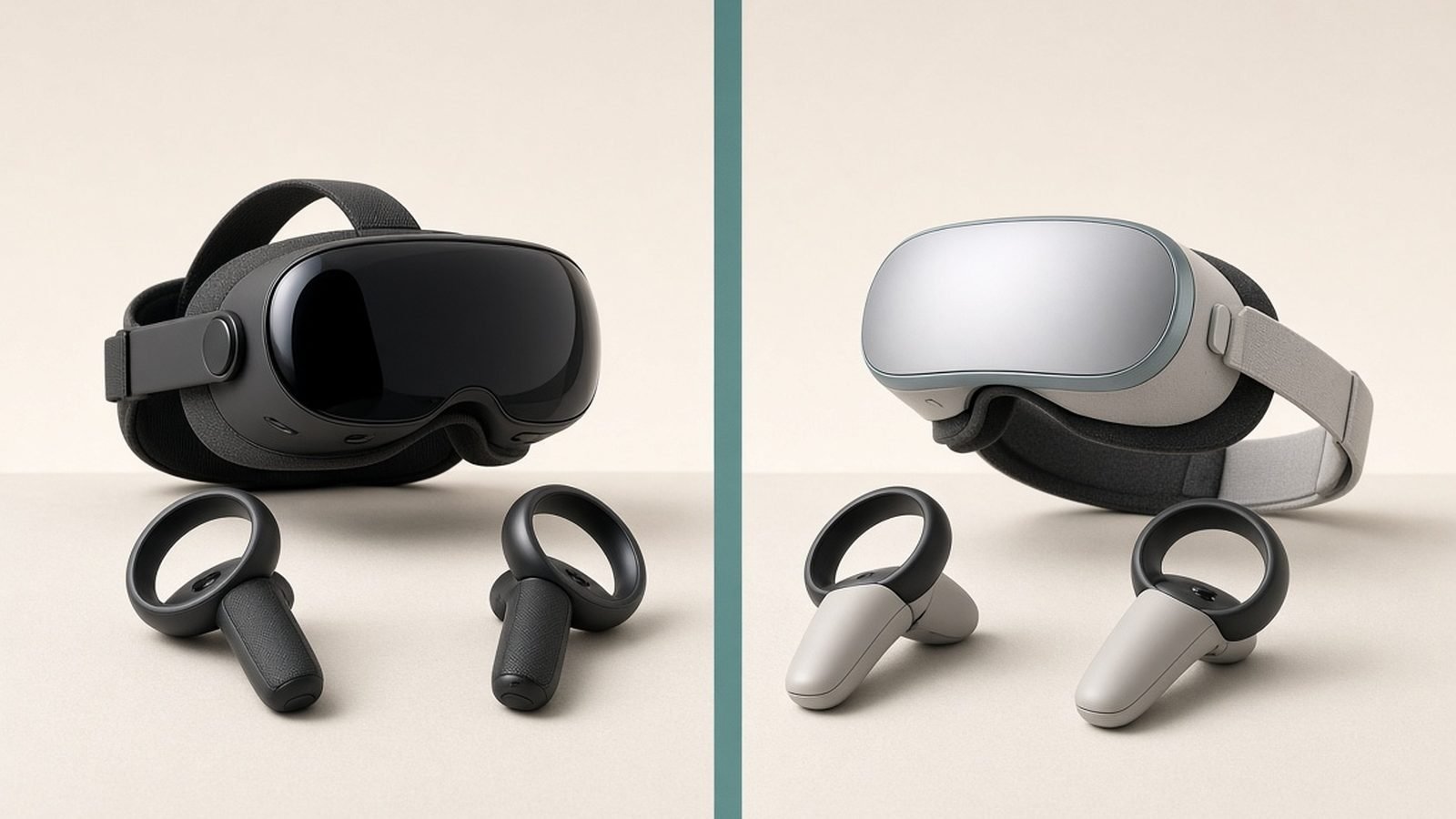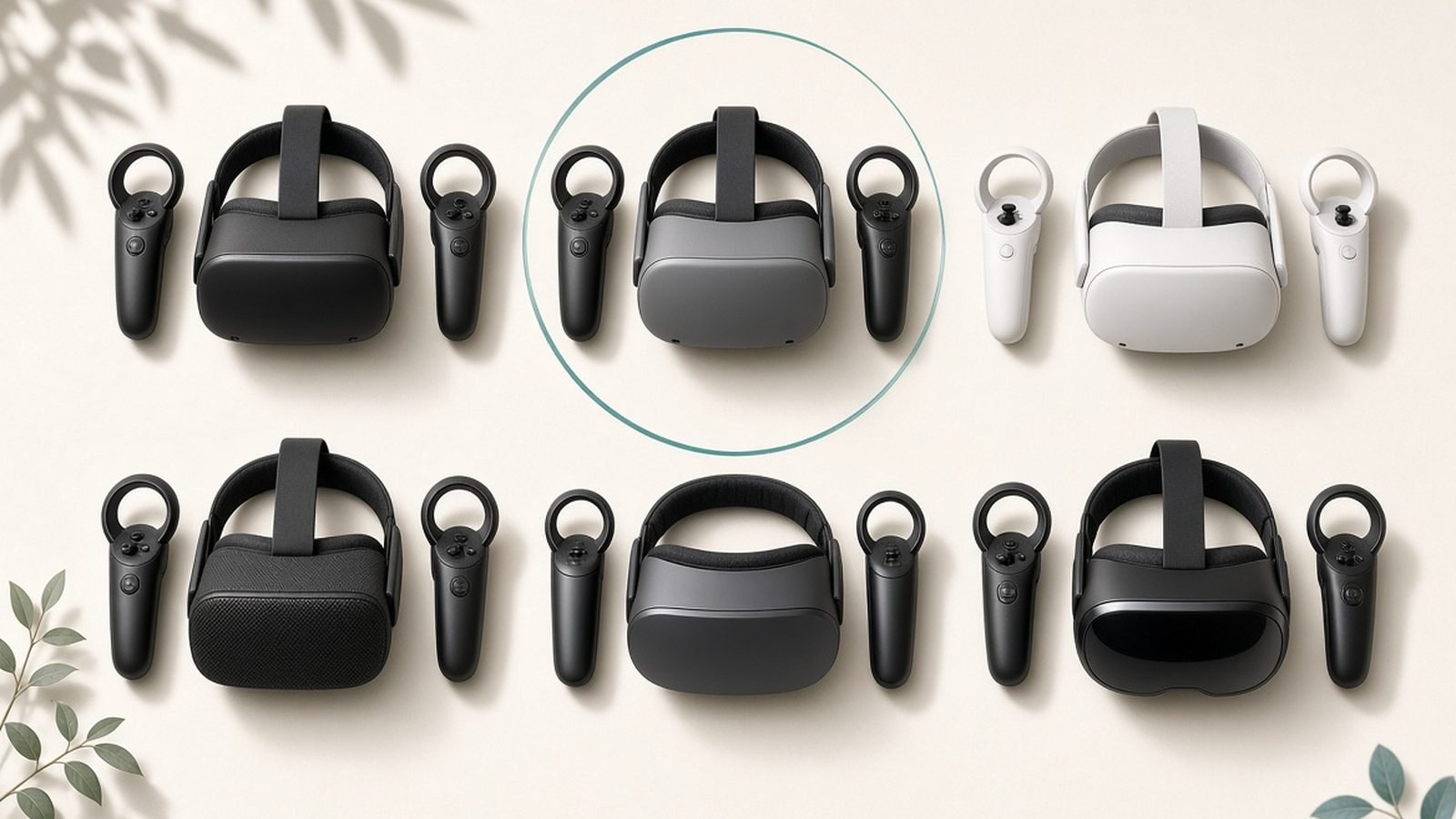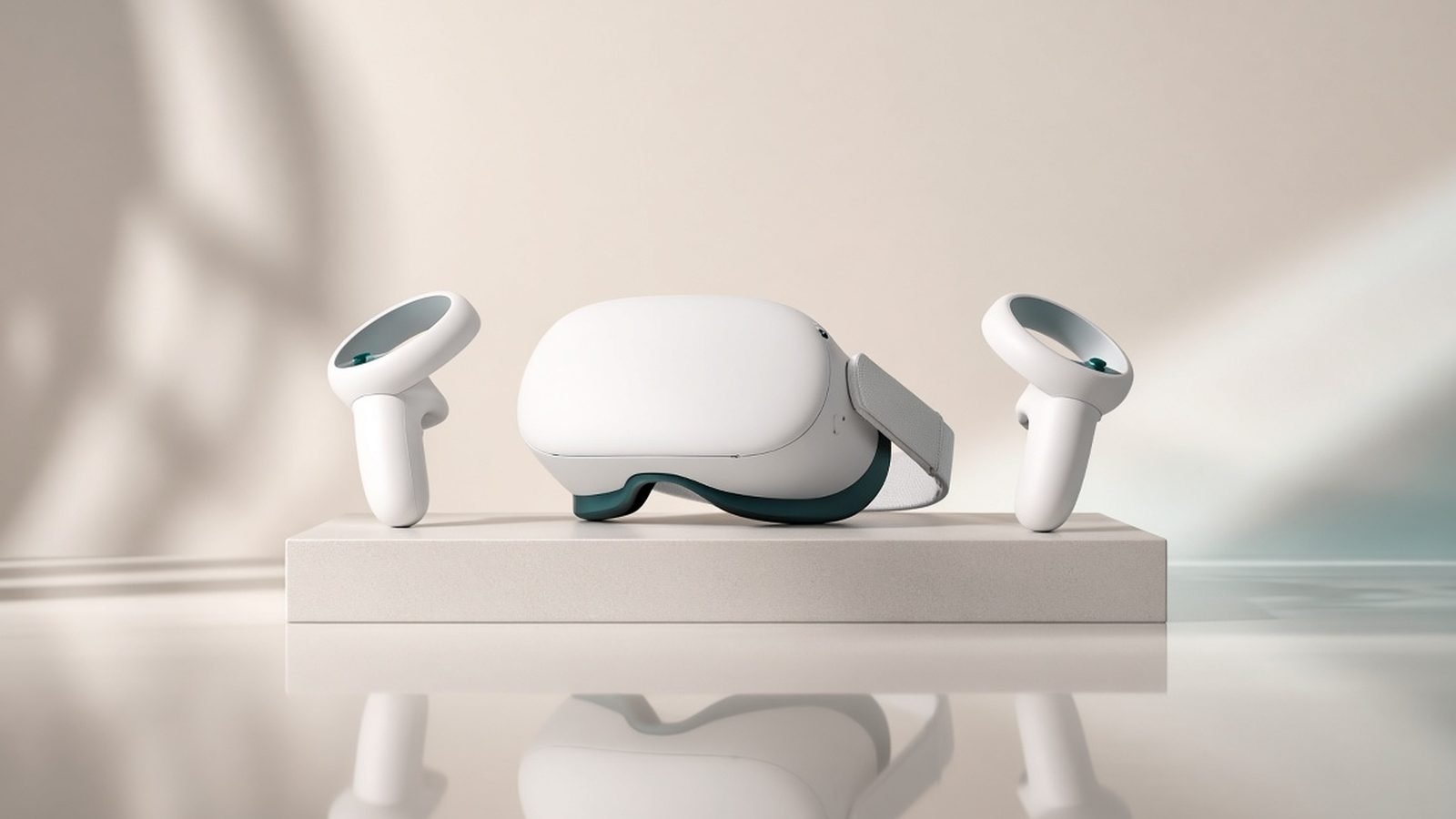
Almost two years after launch, this Meta Quest 3S review asks the only question that matters in mid-2026: does the cheapest way into real, standalone VR still make sense, or has time caught up with it? Short answer — it’s still the headset we hand to beginners more than any other. It runs the same games, on the same chip, as a headset costing hundreds more, and nothing under $300 comes close. But the corners Meta cut to hit that price are the same corners it cut in 2024, and you should know exactly where they are before you buy.
Below is our verdict, honest trade-offs, current US and UK pricing, and where the 3S sits against the Quest 3 and a still-distant Quest 4.
Verdict and score: 4.5 / 5
The Quest 3S is the best-value VR headset you can buy right now, full stop. Full access to the Quest library, genuinely good mixed-reality passthrough, and the powerful Snapdragon XR2 Gen 2 chip — all at an entry price. It loses half a star for two things: chunky Fresnel lenses instead of the Quest 3’s pancake optics, and a 128GB base model that fills up faster than any new owner expects.
Buy it if you’re new to VR, buying for family or kids, or you want the cheapest door into standalone VR that still plays every current game. Skip it if you’re a resolution-chasing enthusiast or a sim/flight player who lives in cockpits and text-heavy menus — you’ll want the sharper Quest 3.
Check price: Meta Quest 3S (128GB)
Price and configurations in mid-2026 (US/UK)
As of July 2026, the Meta Quest 3S lineup looks like this:
| Model | Storage | US price | UK price | Best for |
|---|---|---|---|---|
| Meta Quest 3S | 128GB | ~$299 | ~£289 | First-time buyers, kids, casual play |
| Meta Quest 3S | 256GB | ~$399 | ~£379 | Anyone installing 8+ big games |
| Meta Quest 3 (reference) | 512GB | ~$499 | ~£469 | Enthusiasts wanting the sharper display |
One honest caveat on Meta Quest 3S price UK and US alike: Meta adjusted Quest pricing upward across 2025–2026, so what you pay can drift above the classic $299 / £289 figure depending on bundles and retailer. Always cross-check the live price. Meta also frequently ships a game bundle (a marquee title or two included free), which quietly improves the value if you were going to buy those games anyway.
Our steer: if your budget stretches, the 256GB 3S is the smart middle — same headset, double the storage, far less app-juggling than the 128GB.
Check price: Meta Quest 3S (128GB) Check price: Meta Quest 3S (128GB)
Setup and first 30 minutes for VR beginners
This is where the 3S shines and why it’s our go-to for Quest 3S for beginners. Out of the box you charge it, put it on, and follow voice-and-visual prompts. You’ll pair the Meta Horizon phone app, sign in, and — importantly — trace your play space with the controllers so the headset knows where your walls are. Based on owner reports, most people are in a game within 20–30 minutes of opening the box.
A few first-night tips from aggregated owner feedback:
Do the lens-spacing adjustment properly. A blurry image is almost always a fit problem, not a hardware fault.
Set the Guardian boundary generously but honestly — clip a wall once and you’ll respect it forever.
Update and connect first. A fresh unit often wants a firmware update, and games are large downloads, so decent Wi-Fi matters.
If you’re gifting this to a child or a nervous first-timer, the passthrough cameras let them see the real room by tapping the side — a big reassurance that lowers the intimidation factor of VR.
Display and lenses: where the 3S cuts corners
Here’s the single most important paragraph in this review. The 3S uses Fresnel lenses and a 1,832 x 1,920-per-eye LCD panel. The Quest 3 uses newer pancake lenses at a higher resolution. In practice that means the 3S has a smaller visual “sweet spot” — the sharp zone in the centre of the lens — so you turn your head to look at things rather than just your eyes. Text and fine detail are a touch softer, and the passthrough (the colour see-through view of your room) is noticeably grainier and more warped than the Quest 3’s.
Does this ruin it? No. For gaming, fitness and media, most owners stop noticing within a session. But if you plan to read a lot, work in VR, or do detailed mixed-reality apps, this is the gap you’re paying $200 to close.
Performance and game library (same chip as Quest 3)
This is the 3S’s trump card. It runs the exact same Snapdragon XR2 Gen 2 processor as the Quest 3, so every title runs identically — there is no “3S version” of a game. When people ask about Quest 3S games, the answer is simply: the entire Quest library, including Asgard’s Wrath 2, Batman: Arkham Shadow, Beat Saber and Supernatural.
The only difference between the two headsets comes from the display and lenses, not horsepower. The 3S is not a “slower” headset — it’s a lower-resolution one. For a beginner or casual player, that’s exactly why it’s such good value: you’re not compromising on what you can play, only slightly on how sharp it looks.
Comfort, battery life and must-have accessories
Straight talk on Quest 3S battery life: expect roughly 1.5 to 2.5 hours of mixed use per charge, based on Meta’s figures and owner reports — closer to two hours for lighter media, nearer 90 minutes for intense games. That’s typical for standalone VR, not a flaw unique to the 3S, but it’s shorter than newcomers assume. A charge cable long enough to play while plugged in solves it for stationary games.
Comfort is the 3S’s other soft spot. The stock “soft strap” is fine for short sessions but pushes weight onto your cheeks over time. Two accessories transform the experience and, conveniently, add basket value:
A rigid head strap (official Elite-style or a good third-party one) redistributes weight to the back of your head — the single biggest comfort upgrade.
A silicone facial interface improves hygiene, blocks light leak around the nose, and is easy to wipe down — essential if more than one person uses it.
A portable battery/head-strap combo doubles playtime and rebalances the headset at once.
Check price: Meta Quest 3S Head Strap Check price: Meta Quest 3S Silicone Facial Interface
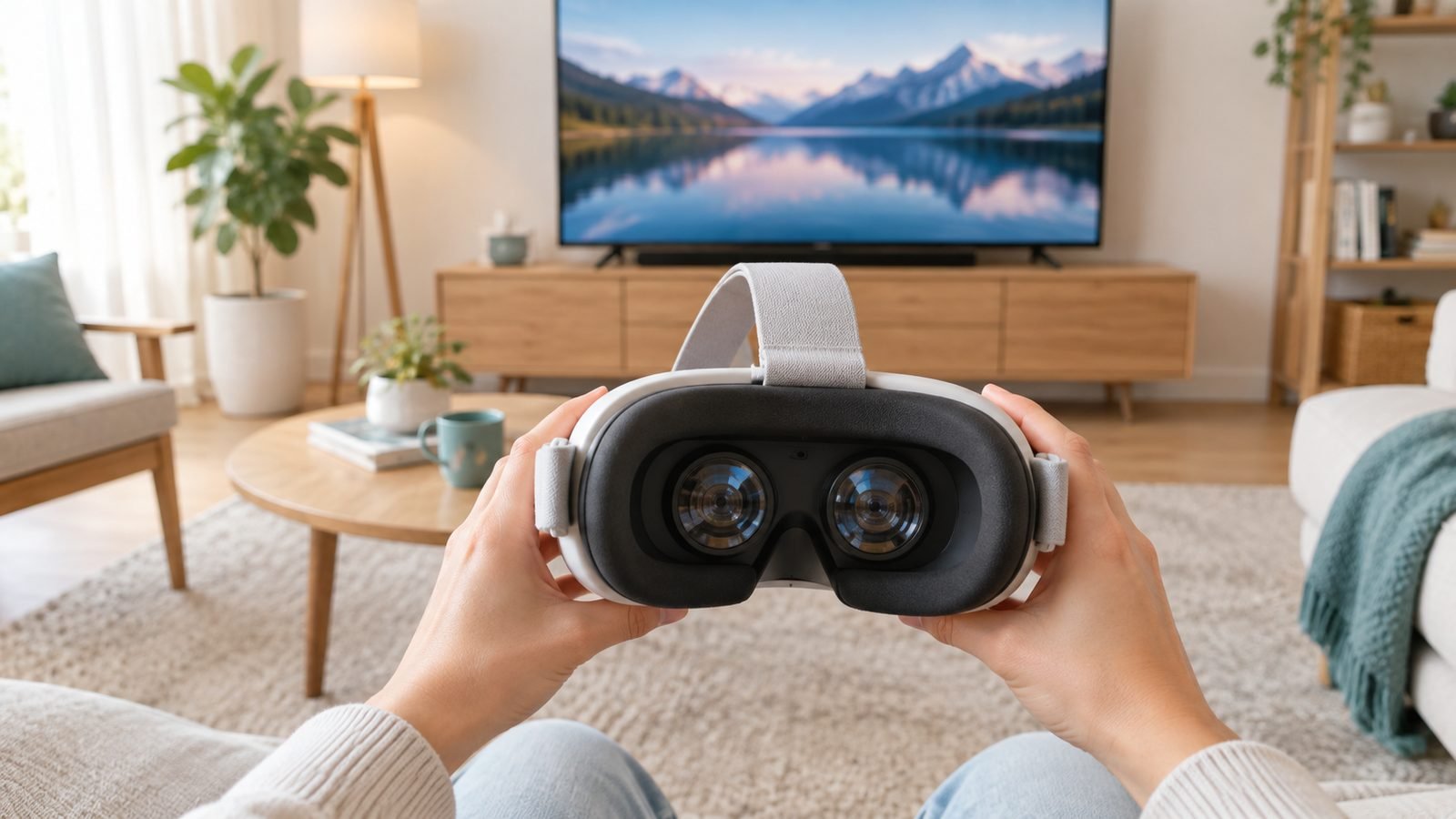
Want to share the experience? See our guide to How to Cast Meta Quest 3 or 3S to a TV (4 Easy Ways) — the same method works on the 3S.
Quest 3S vs Quest 3 vs waiting for Quest 4
The Quest 3S vs Quest 3 decision comes down to one word: optics. Pay the extra ~$200 / £180 for the Quest 3 if you want pancake lenses, higher resolution, a wider sharp zone, cleaner passthrough and more storage. Stick with the 3S if you want to save that money and accept a softer image for the same games and same performance. For most beginners and casual players, the 3S wins on value; for enthusiasts, sim players and anyone who reads or works in VR, the 3 earns its premium.
Check price: Meta Quest 3 (512GB)
Should I wait for Quest 4? For most people in 2026, no. Multiple 2026 reports indicate the Quest 4 has slipped, with credible leaks pointing to a 2027 launch after earlier prototypes were reportedly shelved. Waiting means giving up a year-plus of VR for a headset that will certainly cost more. If you want VR now and want it cheap, the 3S is the pragmatic buy. If you’re an enthusiast who must have the newest thing and can happily wait into 2027, then holding makes sense — but that’s a narrow group.
For the full breakdown, read Meta Quest 3 vs Quest 3S: Is the Upgrade Worth $200? and our Best VR Headsets 2026: Quest 3S to Galaxy XR Compared roundup.
Pros and cons
Meta Quest 3S — Pros - Cheapest genuine standalone VR at ~$299 / £289 - Same XR2 Gen 2 chip and full game library as the Quest 3 - Beginner-friendly setup and colour passthrough - Frequent free-game bundles improve real-world value
Meta Quest 3S — Cons - Fresnel lenses: smaller sweet spot, softer image than Quest 3 - Lower 1,832 x 1,920-per-eye resolution and grainier passthrough - 128GB base storage fills fast — 256GB is the smarter pick - Stock strap and ~1.5–2.5hr battery need accessory upgrades
FAQ
Is the Meta Quest 3S worth it in 2026?
Yes, for its target buyer. If you’re new to VR, buying for the family, or simply want the lowest-cost way to play every current Quest game, nothing beats it on value. The trade-offs — softer lenses and modest storage — are real but easy to live with. Enthusiasts chasing maximum sharpness should step up to the Quest 3 instead.
What is Quest 3S battery life really like?
Plan for around 1.5 to 2.5 hours per charge depending on the game, based on Meta’s ratings and owner reports. Lighter media leans toward two hours; demanding titles drain faster. It’s normal for standalone VR. A long charging cable or a battery head-strap lets you play indefinitely for seated, stationary games.
Quest 3S vs Quest 3 — what’s the actual difference?
Performance is identical; both use the Snapdragon XR2 Gen 2 and run the same games. The Quest 3 adds pancake lenses, higher resolution, a wider sharp zone, cleaner passthrough and more storage. You’re paying roughly $200 / £180 purely for a better image, not more power. Beginners rarely need it; enthusiasts often do.
Should I wait for the Quest 4?
Probably not. As of mid-2026, credible reports point to a Quest 4 launch around 2027 rather than this year. Waiting means skipping a year or more of VR for a pricier future headset. If you want to play now and spend little, the 3S is the sensible choice today.
Is 128GB enough storage on the Quest 3S?
For a handful of games, yes. But big titles run 10–20GB each, so 128GB fills within a few installs and you’ll be uninstalling to make room. If you can stretch the budget, the 256GB model removes that headache and is the version we recommend to most buyers.
For everything wearable, from VR to smartwatches, visit our Wearables.
Zen Tech Hub may earn a commission from links on this page, at no extra cost to you.