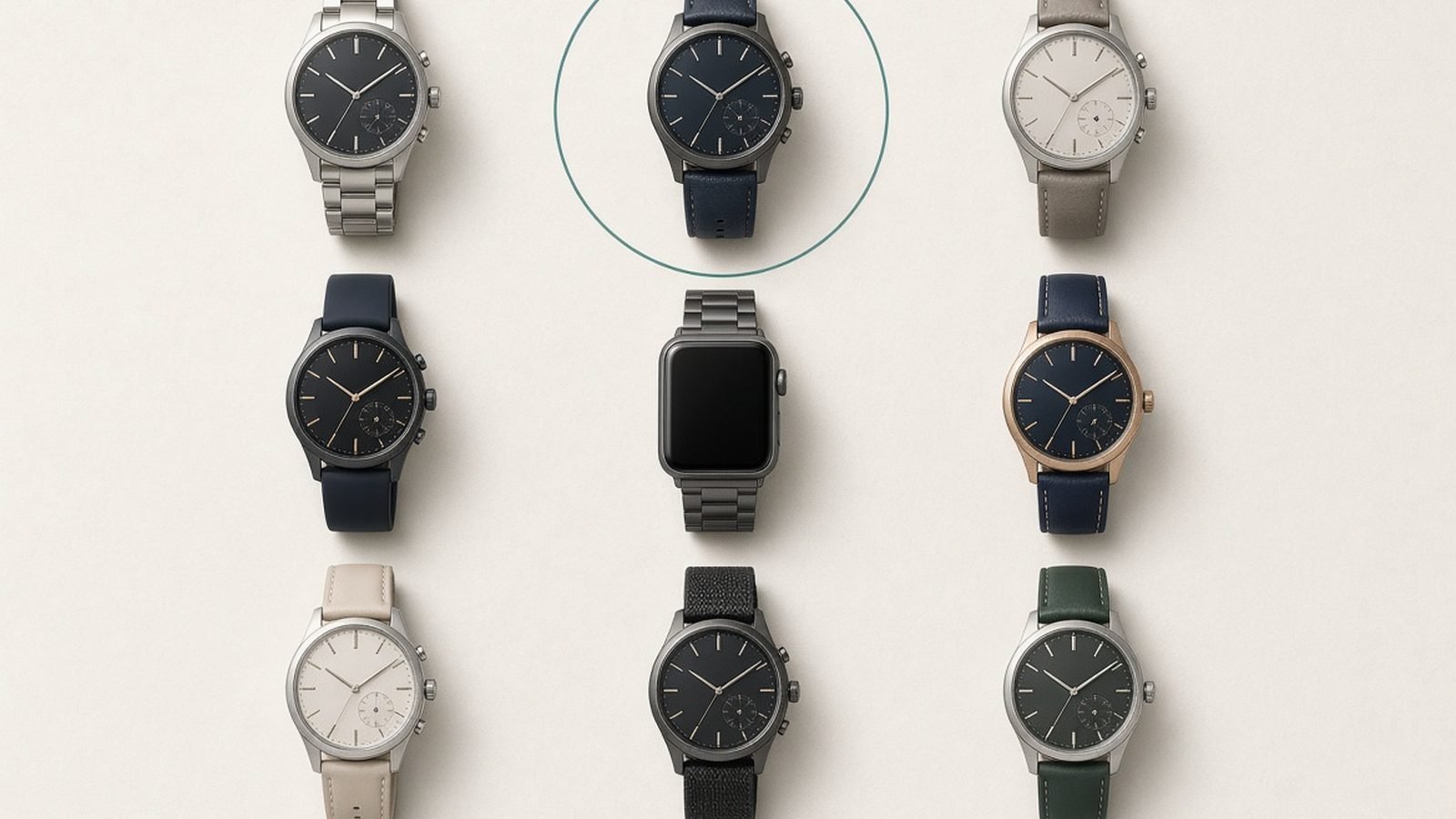
If you are stuck on the smart ring vs smartwatch question, here is the honest starting point: they are not really rivals. They are two devices built for different jobs. A smart ring is a quiet, all-day health sensor you forget you are wearing. A smartwatch is a wrist-mounted computer that tracks workouts, pushes notifications, and can call for help. Choosing well means matching the device to how you actually live, not to a spec sheet.
Below we break down what each does better, sensor accuracy, the true cost once subscriptions are included, and whether wearing both makes sense.
The Short Answer: Different Jobs, Not Rivals
Buy a smart ring if your priority is sleep, recovery, and long-term health trends with zero screen distraction. Buy a smartwatch if you want live workout stats, GPS, notifications, contactless pay, and safety features like fall detection.
Most people lean one way based on a single question: do you want data delivered quietly to an app each morning, or a screen on your wrist all day?
Comparison at a Glance
| Feature | Smart Ring | Smartwatch |
|---|---|---|
| Sleep & recovery tracking | Excellent | Good |
| Battery life | 4–8 days | ~18 hrs to a few days |
| Live workout metrics | Limited | Excellent |
| Built-in GPS | No | Yes (most) |
| Notifications | No | Yes |
| Safety (fall/crash detection, SOS) | No | Yes |
| Contactless payments | Rare | Yes |
| Discretion / comfort in bed | Excellent | Fair |
| Typical starting price | ~$349 / £349 | ~$399 / £369 |
What Smart Rings Do Better (Sleep, Battery, Discretion)
Smart rings win on the things you do while you are not looking at a screen. The finger is a strong location for optical heart-rate and temperature sensing, and a ring never digs into your wrist when you roll over at night. In our research, sleep and recovery are consistently where ring owners feel they get the most value.
Battery life is the other standout. Most rings run four to eight days per charge, so overnight tracking never gets skipped because the device died on your nightstand. And discretion matters more than people expect: a ring reads as jewelry, not tech, which suits meetings, formal settings, and anyone who dislikes a glowing wrist.
The Oura Ring 4 is the ring-side exemplar for sleep-first buyers, pairing a titanium build with detailed readiness and sleep scoring.
Smart ring pros and cons
Pros: multi-day battery, superb sleep and recovery data, comfortable and discreet, no screen fatigue.
Cons: no display, no live workout guidance, usually no GPS, ring sizing is permanent, and premium models add a subscription.
What Smartwatches Do Better (Workouts, GPS, Notifications, Safety)
A smartwatch is the better tool the moment you want real-time feedback. During a run or ride, a wrist screen shows pace, heart-rate zones, and splits as they happen, something a ring simply cannot do. Built-in GPS maps your route without your phone, and structured workout modes cover everything from intervals to swims.
Then there is everything beyond fitness: notifications, replies, music control, contactless payments, and safety tools such as fall detection, crash detection, and emergency SOS. For older users, lone exercisers, or anyone who values that safety net, this is decisive.
The Apple Watch Series 11 is our watch-side exemplar for workouts, notifications, and safety, with one of the widest app ecosystems available.
Check price: Apple Watch Series 11
Smartwatch pros and cons
Pros: live workout metrics, built-in GPS, notifications, payments, safety features, huge app support.
Cons: shorter battery life, bulkier in bed, more distracting, and screens invite constant checking.
Accuracy: Wrist vs Finger Sensors Explained
Are smart rings better than smartwatches for accuracy? It depends on what you measure. For resting heart rate, heart-rate variability, and skin temperature at night, the finger tends to give a clean, stable signal because it moves less and has strong blood flow. Based on owner reports, rings often produce steadier overnight resting data than wrist devices.
For active heart rate during high-intensity exercise, wrist optical sensors struggle with motion, and rings face the same physics. Neither matches a chest strap for gym accuracy. The takeaway: rings shine for passive, all-day and overnight metrics; watches are stronger during structured workouts, especially with GPS pace layered in.
This is also why a smart ring vs fitness tracker comparison usually favours the ring for sleep and recovery, while a traditional band or watch stays ahead for live exercise data.
Cost Comparison Including Subscriptions (US/UK)
Sticker price is only half the story. Here is the realistic 2026 picture.
Oura Ring 4 — from around $349 / £349, plus a membership of roughly $5.99 / £5.99 per month to unlock full insights. Over two years that subscription adds meaningfully to the total.
Apple Watch Series 11 — around $399 / £369, with no mandatory subscription for core health and fitness features.
Galaxy Ring — around $399 / £399 (frequently discounted lower), with no ongoing subscription fee.
The headline: some rings look cheaper up front but cost more over time once membership is included, while most smartwatches and the subscription-free Galaxy Ring are one-and-done purchases. Factor the monthly fee into any smart ring vs smartwatch decision before you commit.
Can You Wear Both? The Stack Strategy
Yes, and plenty of enthusiasts do. Wearing a smart ring and smartwatch together is a genuine strategy, not overkill, if you want the best of each: the ring for uninterrupted overnight sleep and recovery, the watch for daytime workouts, notifications, and safety.
Samsung leans into this directly. The Galaxy Ring is designed to complement a Galaxy Watch, using a smart handoff so the ring can cover overnight tracking and extend the watch’s effective battery life, letting you charge the watch while you sleep without losing data.
The trade-offs are simple: extra cost and two devices to charge. For data-driven users inside the Android ecosystem, it is a compelling combo. See our Oura Ring 4 vs Samsung Galaxy Ring: Which Wins in 2026? breakdown if you are weighing the two leading rings.
Decision Framework: Which One for Your Lifestyle
Should you buy a smart ring? Can a smart ring replace a smartwatch? Use this quick framework.
Buy a smart ring if: sleep and recovery are your top priority, you dislike screens, you want multi-day battery, or you need something discreet for work and formal settings.
Buy a smartwatch if: you train with live metrics or GPS, you rely on notifications and payments, you want fall or crash detection, or you exercise alone.
Buy both if: you are a data-focused optimiser who wants overnight recovery insight plus full daytime functionality, and you do not mind managing two devices.
A ring can replace a watch for health tracking, but it cannot replace the notifications, safety, and workout guidance a watch provides. If those matter, the watch stays.
For deeper shortlists, see our guides to the Best Smart Rings 2026: Oura, Galaxy Ring & Cheaper Rivals, the Best Smartwatches 2026: 7 Top Picks for Every Budget, and the Best Sleep Trackers 2026: Rings, Bands & Watches Ranked. You can also browse everything in the Wearables.
FAQ
Can a smart ring replace a smartwatch? For pure health and sleep tracking, yes, a smart ring can stand in for a watch and often does the overnight job better. But it cannot show notifications, run GPS workouts, take payments, or trigger emergency SOS. If you rely on any of those, a ring is a complement, not a replacement.
Are smart rings more accurate than smartwatches? For resting and overnight metrics like heart-rate variability and temperature, the finger often gives a steadier signal than the wrist. For high-intensity exercise, both struggle with motion and neither beats a chest strap. Rings lead on passive data; watches lead on active workouts.
Do smart rings need a subscription? Some do. The Oura Ring 4 requires a membership of about $5.99 / £5.99 a month to unlock full insights, which adds up over years. Others, like the Galaxy Ring, charge no ongoing fee. Always add any subscription to the sticker price before comparing.
Is it worth wearing a smart ring and smartwatch together? If you want the best sleep and recovery data plus full daytime features, yes. The ring handles the night comfortably while the watch charges, and covers workouts, notifications, and safety by day. The downsides are extra cost and charging two devices, but many data-focused users find it worthwhile.
Which is better for beginners? A smartwatch is usually the friendlier first wearable because it does everything in one place and shows data on your wrist. A smart ring suits people who already know they care most about sleep and recovery and want a low-effort, screen-free device.
Zen Tech Hub may earn a commission from links on this page, at no extra cost to you.