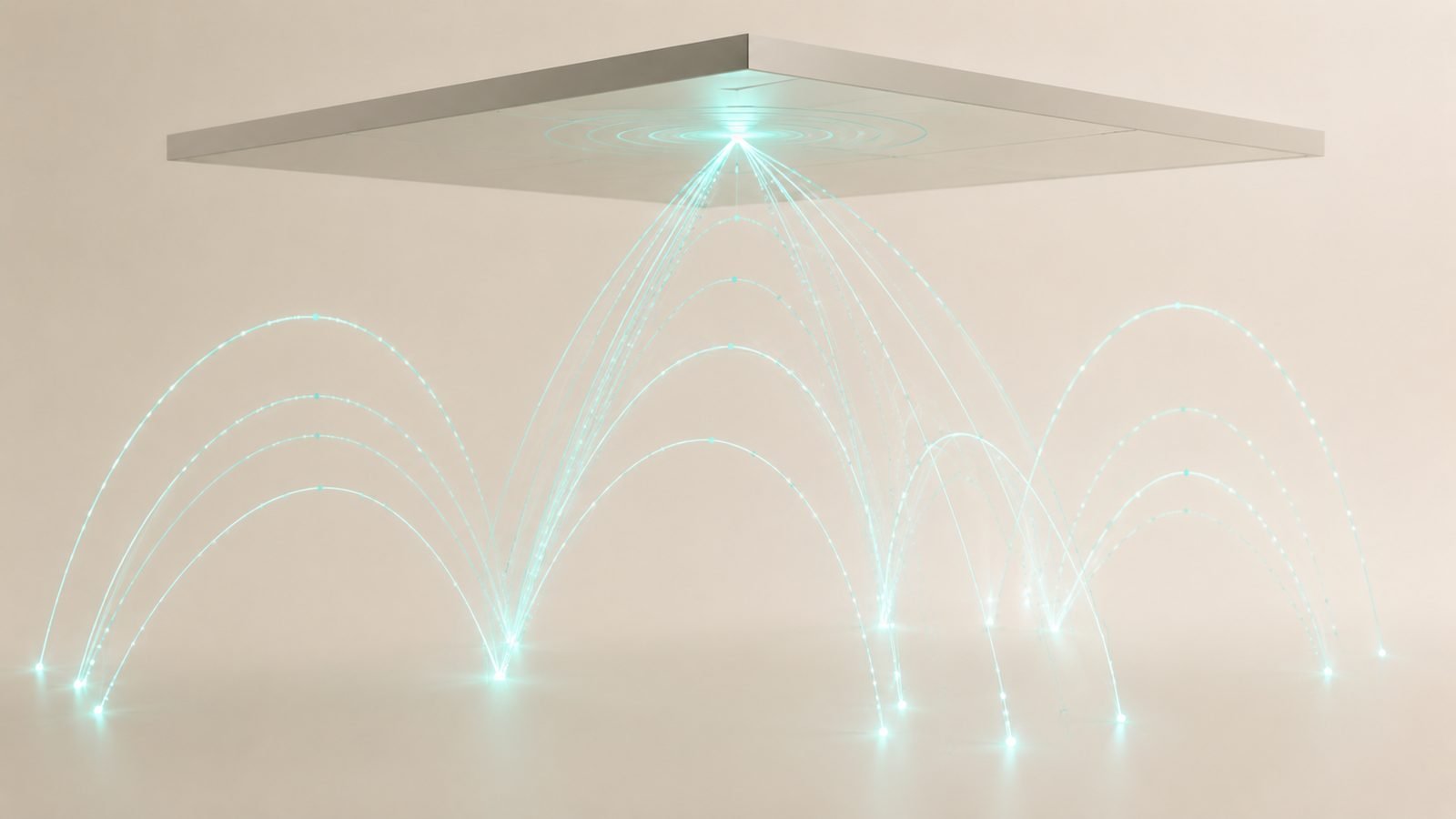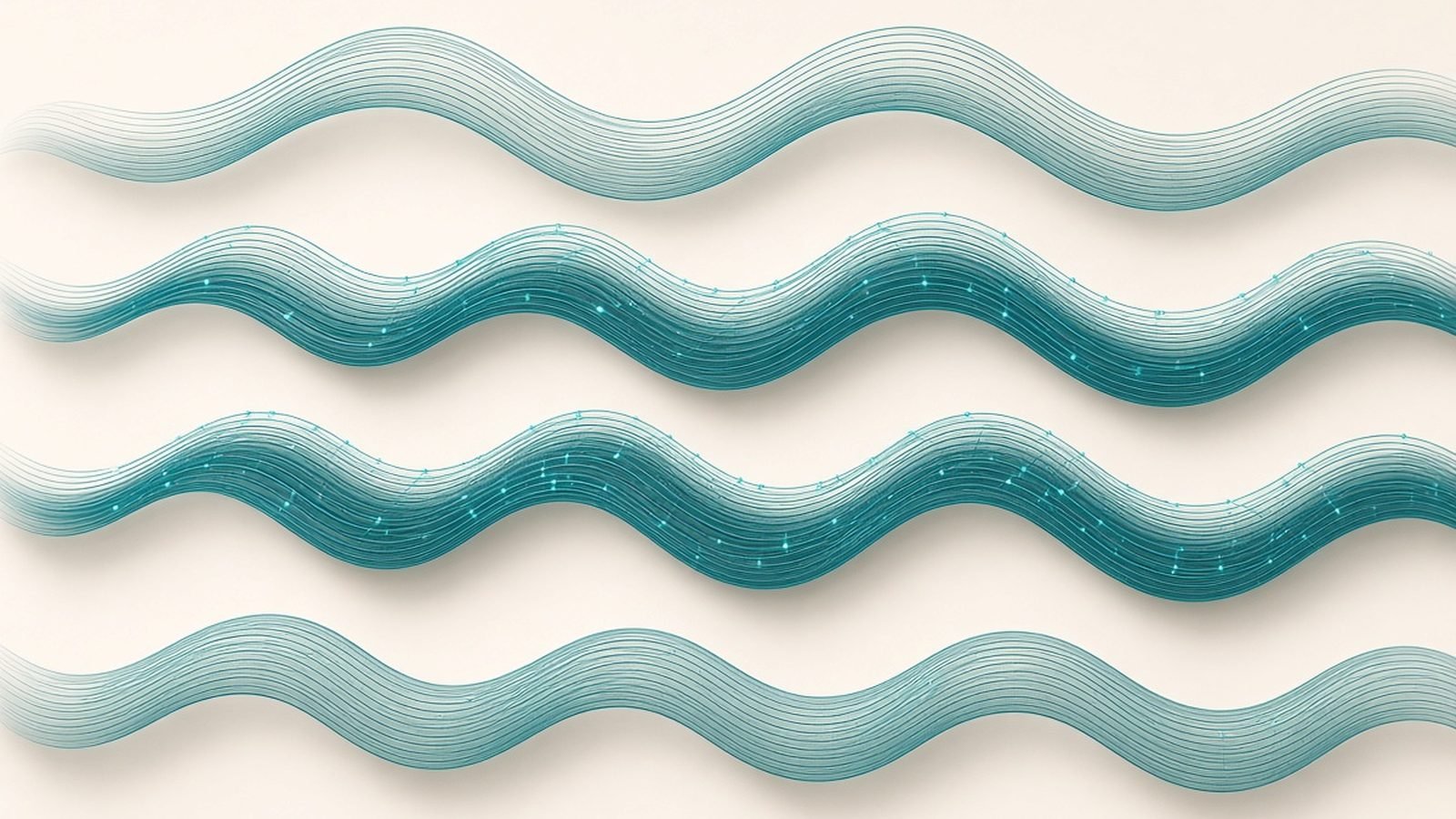
ANC stands for Active Noise Cancellation — a technology that uses tiny microphones and audio processing to cancel out background noise before it reaches your ears. It works by listening to the sound around you, generating an inverted “anti-noise” sound wave, and playing that through your headphones so the two waves cancel each other out. The effect is strongest on steady, low-frequency drone: aeroplane engines, train rumble, air-conditioning hum. It’s much weaker against sudden, high-pitched or complex sounds like speech.
This explainer covers exactly how ANC works, the microphone setups behind it, where it succeeds and fails, how it differs from simple passive isolation, and whether it’s safe to use all day — in plain English, no marketing.
How Active Noise Cancellation Works
ANC is built on a physics principle called destructive interference. Sound travels as waves of pressure. If you take a noise wave and create a second wave that’s its exact opposite — a peak wherever the original has a trough, and vice versa — the two waves sum to (near) silence. That mirror-image wave is called anti-noise.
Here’s the sequence inside your headphones, happening continuously in real time:
- A microphone captures the ambient noise around (or inside) the earcup.
- A processing chip analyses that noise wave — its frequency, amplitude and timing.
- The chip generates the precise inverse wave.
- That anti-noise is mixed into your audio and played through the driver, cancelling the incoming noise at your eardrum.
All of this must happen in fractions of a millisecond, because the anti-noise has to line up with the real noise perfectly. Any timing or shape error means incomplete cancellation. That’s why ANC quality varies so much between a $40 pair and a flagship — the chip, the mic placement and the tuning determine how accurately the anti-noise matches reality.
Feedforward vs Feedback: The Microphone Setups
The microphones doing the “listening” can sit in two places, and where they sit defines the ANC design.
Feedforward ANC places the mic on the outside of the earcup or earbud. It hears the noise before it reaches your ear, giving the chip a head start to compute anti-noise. It’s effective across a wider frequency range but can’t hear what actually arrives at your eardrum, so it can’t self-correct — and it’s more prone to picking up wind noise.
Feedback ANC places the mic inside the earcup, near your ear. It hears noise closer to what you actually hear and can correct its own errors, making it accurate at low frequencies. But it has less time to react and can struggle with higher frequencies, and it risks feedback squeal if mishandled.
Hybrid ANC combines both — an outer and an inner mic per ear — and is what nearly every good modern headphone uses. The feedforward mic gets the early warning and broad range; the feedback mic verifies and cleans up the result. When a spec sheet says “hybrid ANC” with four or six microphones, this is what it means.
Adaptive ANC goes one step further: it continuously measures how well the cancellation is working — accounting for your ear shape, your fit, even a broken seal from glasses — and adjusts the anti-noise on the fly. Based on aggregated owner reports, adaptive systems are the biggest real-world differentiator, because they keep performing when a fixed system would falter with an imperfect seal.
What ANC Blocks Well (and What It Doesn’t)
This is where honest expectations save disappointment. ANC is not a mute button on the world.
ANC excels at: low-frequency, continuous, predictable noise. Aeroplane cabin drone, train and bus rumble, road noise, fans, air conditioning, refrigerator hum. These are steady waves the chip can model and cancel easily, and this is where good ANC feels almost magical.
ANC struggles with: sudden, sharp, high-frequency and unpredictable sounds. A door slamming, cutlery clinking, a dog barking, keyboard clatter — and crucially, human speech. Voices sit in a frequency range and change too quickly for ANC to model well, which is why the office chatter or the toddler behind you on the plane still gets through. Modern flagships have improved on voices, but no headphone truly erases them.
So does ANC block voices? Partially at best. It muffles and lowers them, but conversation nearby remains intelligible. If your main goal is silencing talking, ANC helps less than you’d hope — passive isolation and a bit of white noise often do more.
Active vs Passive Noise Cancelling
There’s a second, simpler kind of noise blocking that gets confused with ANC: passive isolation.
Passive isolation is purely physical — it’s the noise blocked by the headphone material and seal, with no electronics involved. A well-sealed over-ear earcup or a snug in-ear tip forms a physical barrier that blocks sound, especially higher frequencies. Foam ear tips and closed-back designs are passive isolation at work.
The two are complementary:
- Passive handles higher frequencies well (the ones ANC struggles with) but does little for deep rumble.
- Active handles low-frequency drone well (the ones passive can’t stop) but needs power and processing.
The best real-world quiet comes from combining them: a good seal (passive) plus strong ANC (active). This is also why fit matters enormously. A broken seal — wrong ear tips, glasses arms lifting an earpad — cripples both the passive blocking and the ANC’s ability to work, because a leaking seal lets noise in faster than any chip can cancel it. Getting the right tip size does more for perceived noise reduction than upgrading the headphones. Our Best Noise Cancelling Headphones Under $200 in 2026 guide flags which models seal reliably across different ear shapes.
Transparency Mode: ANC in Reverse
Most ANC headphones include a transparency (or “ambient” / “aware”) mode, which is worth understanding because it uses the same hardware.
Instead of cancelling outside sound, transparency mode uses those external mics to pipe the outside world in, so you can hear traffic, announcements or a conversation without removing your headphones. It’s not just “ANC off” — it actively amplifies and passes through ambient sound, often more clearly than your bare ears would.
It’s a genuinely useful safety and convenience feature: crossing a road, ordering a coffee, listening for a boarding call. Good implementations sound natural; weaker ones sound hollow or hissy. The ability to switch instantly between deep cancellation and full awareness is one of the best reasons to buy ANC headphones at all.
Is Noise Cancelling Safe for Your Ears?
A common worry, so let’s be clear and honest. The ANC process itself does not damage hearing. Anti-noise is very low-level sound engineered to cancel other sound, not blast your ears, and there’s no established evidence that the cancellation mechanism harms hearing.
There are two real, minor considerations:
- The “pressure” sensation. Some people feel a slight pressure or fullness with strong ANC, similar to being in a quiet, pressurised cabin. It’s caused by your brain interpreting the absence of expected low-frequency sound, is harmless, and usually fades as you adapt. If it bothers you, a lower ANC setting or transparency mode removes it.
- Volume, not ANC, is the risk. The genuine hearing risk with any headphone is listening too loud for too long. Ironically, ANC helps here: by removing background noise, it lets you listen at lower volumes, because you’re no longer cranking the music to drown out engine drone. Used sensibly, ANC can be better for your ears than non-ANC headphones in noisy places.
The one situational caution is awareness: don’t use deep ANC where you need to hear hazards (cycling in traffic, walking near roads). That’s exactly what transparency mode is for.
FAQ
What does ANC stand for?
ANC stands for Active Noise Cancellation. It’s a technology that uses microphones to detect ambient noise and generates an inverted “anti-noise” sound wave to cancel it before it reaches your ears. “Active” distinguishes it from passive isolation, which blocks sound purely with physical materials and a good seal rather than electronics.
How does noise cancelling actually work?
Microphones capture the surrounding noise, a chip analyses that sound wave and generates its exact mirror image, and that anti-noise is played through your headphones. Where a peak in the noise meets a trough in the anti-noise, the two cancel out — a physics principle called destructive interference. It all happens in fractions of a millisecond to stay in sync with the real noise.
Does ANC block people talking?
Only partially. ANC is excellent at steady low-frequency drone like engines and fans, but human speech sits in a higher, rapidly changing range that’s hard to model and cancel. Voices are muffled and reduced but stay intelligible. If silencing conversation is your goal, a good physical seal plus some background audio often helps more than ANC alone.
What’s the difference between active and passive noise cancelling?
Passive isolation blocks sound physically — the earcup material and seal forming a barrier — and works best on higher frequencies. Active (ANC) uses electronics to cancel sound and works best on low-frequency rumble. They’re complementary, and the quietest results come from combining a good seal with strong ANC. A poor seal weakens both dramatically.
Is it safe to use noise cancelling all day?
Yes. The ANC process doesn’t harm hearing, and by removing background noise it actually lets you listen at safer, lower volumes. Some people feel a mild, harmless pressure sensation that fades with adaptation. The only real cautions are keeping volume moderate and switching to transparency mode when you need to hear traffic or other hazards.
Why doesn’t my ANC work as well as advertised?
Almost always a seal problem. ANC depends on a tight fit — wrong-size ear tips, glasses lifting an earpad, or a loose over-ear clamp all let noise leak in faster than the chip can cancel it. Try different tip sizes first. Cheaper feedforward-only designs and windy conditions also reduce performance compared with hybrid or adaptive ANC systems.
Zen Tech Hub may earn a commission from links on this page, at no extra cost to you.