A Dolby Atmos soundbar adds a sense of height and space to movie and game audio by placing sounds above you, not just left, right and centre. Whether you need one comes down to two things: your room and your content. If you have a flat ceiling around 2.3–3.5m high and you watch a lot of Atmos-mixed films on a service like Netflix, Disney+ or Apple TV+, the effect is genuinely worth it. If your ceiling is vaulted, sloped or very high, or you mostly watch news and sitcoms, you’ll pay for capability you can barely hear.
This guide explains what Atmos actually is, the difference between real up-firing drivers and “virtual” height, and how to judge whether it’s worth the premium for your setup — without the marketing gloss.
What Dolby Atmos Actually Is
Traditional surround sound (5.1, 7.1) is channel-based: the mix engineer assigns audio to fixed speakers — front left, centre, surround right, and so on. Dolby Atmos is object-based. Instead of “put this in the rear-left speaker”, the mixer says “put this helicopter at these coordinates in the room and move it overhead.” Your equipment then renders those objects to whatever speakers it has.
The headline addition is height. Atmos introduces overhead sound as a dimension, so rain falls from above, a jet passes over your head, and dialogue sits in a more three-dimensional space. On a full home-cinema system that means physical ceiling speakers. On a soundbar, it’s simulated in one of two ways — which is the single most important thing to understand before buying.
How Soundbars Create Height: Up-Firing vs Virtual
There are two approaches, and spec sheets often blur them.
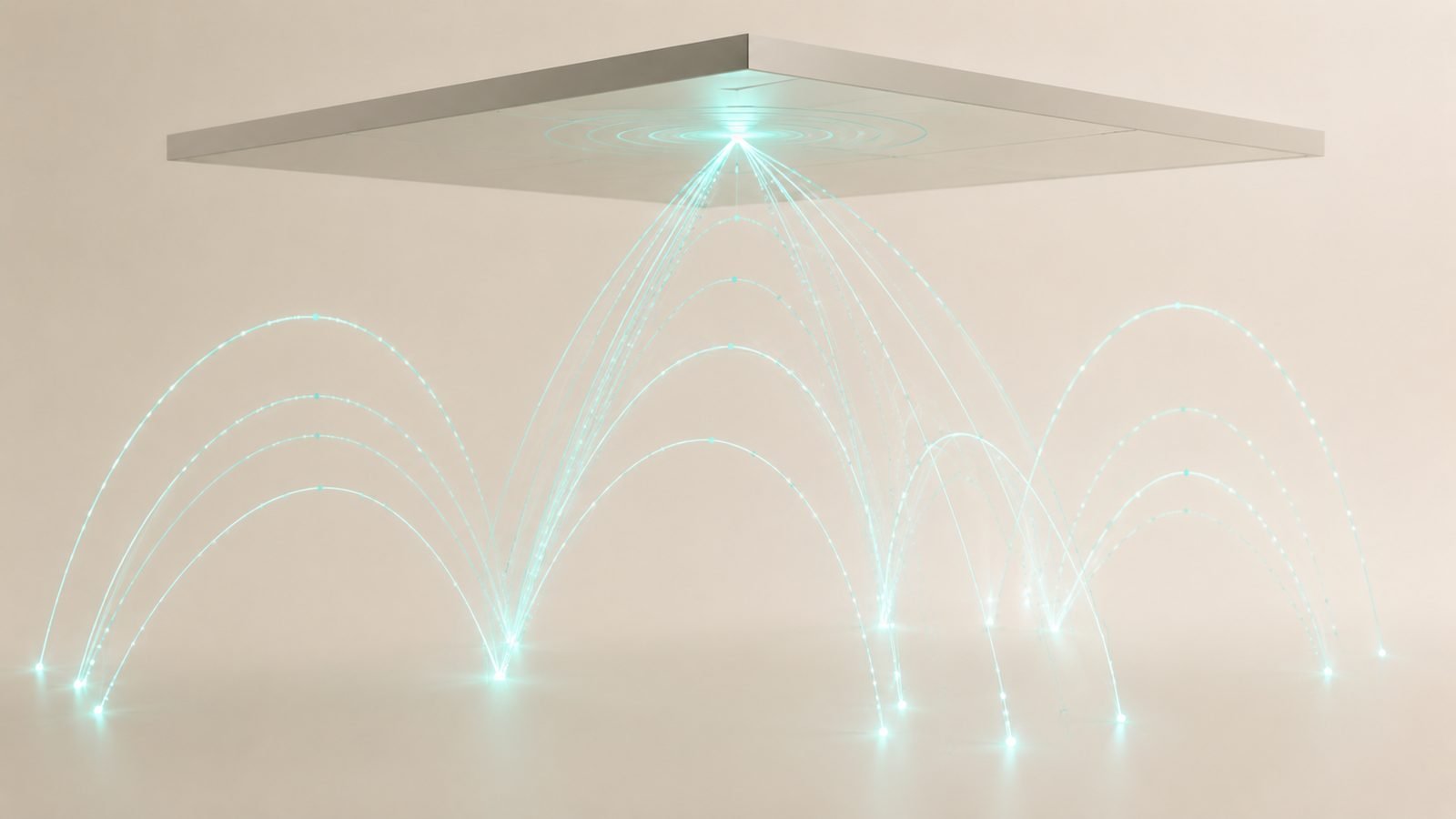
Up-firing drivers are angled speakers on top of the bar that fire sound at your ceiling, which reflects it down to your ears. Done well, this produces a convincing overhead layer — you genuinely perceive sound coming from above. It’s the approach used by mid-range and premium bars (think Sony’s HT-A-series or the Sonos Arc Ultra) and it’s the closest a single bar gets to real ceiling speakers.
Virtual Atmos uses no dedicated height drivers at all. Instead, it uses psychoacoustic processing (Dolby’s own virtualiser or a brand equivalent) to trick your ears into perceiving height from ordinary forward-firing speakers. It’s cheaper and works in any room, but the effect is subtler — more “wider and taller soundstage” than “distinct object overhead.”
The practical takeaway: up-firing needs the right ceiling to work and does little in a bad room; virtual Atmos works anywhere but ceils out lower. Neither is a scam — they’re different tools. If your room can’t support reflections, a good virtual-Atmos bar is often the smarter buy. Our How to Set Up a Soundbar: HDMI ARC vs eARC vs Optical guide covers the ceiling-clearance rules in detail.
Why the Connection Matters: eARC and Dolby Digital Plus
Atmos is only as good as the pipe carrying it to your bar, and this trips up a lot of buyers.
Streaming services deliver Atmos wrapped inside Dolby Digital Plus, a compressed format that fits through a normal HDMI ARC connection just fine. So for Netflix, Disney+, Max and the rest, regular ARC gets you Atmos — you do not need the newest ports.
Lossless Atmos — the Dolby TrueHD version on 4K Blu-ray discs and high-bitrate media files — is bigger and needs HDMI eARC, the enhanced version found on roughly 2019-onward TVs. Optical (Toslink) cables carry no Atmos at all, in any form.
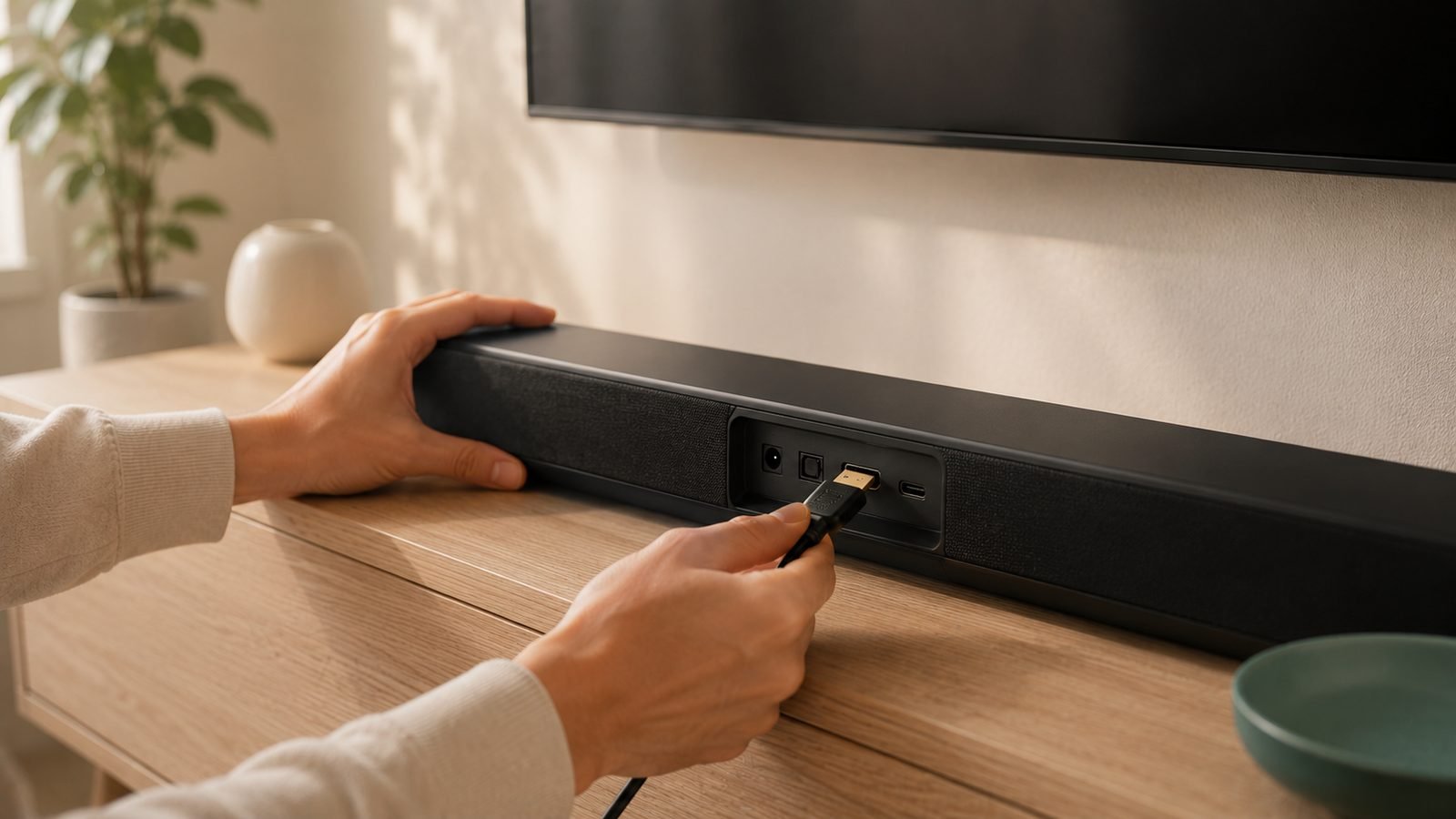
So before you spend on an Atmos bar, check that your TV has an ARC or eARC HDMI port. If it only has optical, an Atmos bar will fall back to regular surround. The full breakdown of ARC vs eARC vs optical lives in How to Connect a Soundbar to Your TV (HDMI eARC & More).
Does Your Room Suit Up-Firing Atmos?
This is where honesty saves you money. Up-firing height depends entirely on ceiling reflection, so:
- Best case: a flat, hard ceiling roughly 2.3–3.5m high, with nothing mounted on the wall directly above the bar. Reflections arrive clean and the overhead effect lands.
- Poor case: vaulted, sloped, beamed or very high ceilings scatter the reflections; acoustic-tile ceilings (common in basements and offices) absorb them. In these rooms the height layer largely evaporates, and you’ve paid for drivers doing almost nothing.
- No-go for reflection: open-plan lofts with no ceiling above the seating position.
If you’re in a poor-case room, don’t fight physics. A well-tuned virtual-Atmos bar, or simply a great non-Atmos bar with strong dialogue and bass, will satisfy you more than expensive up-firing drivers bouncing sound into a vaulted void.
Dolby Atmos vs Regular Surround: Can You Hear the Difference?
Based on published specs and aggregated owner feedback, the pattern is consistent: on the right content in a suitable room, Atmos is a clear, enjoyable upgrade — the added spaciousness and overhead cues make big films and games more immersive. It’s most obvious in rain, weather, aircraft, sci-fi ambience and busy action scenes deliberately mixed to use the height layer.
But the effect is content-dependent. A lot of what people watch — broadcast TV, older catalogue titles, most YouTube — simply isn’t mixed in Atmos, so the bar plays ordinary stereo or 5.1 and the height drivers sit idle. The jump from a TV’s built-in speakers to any decent soundbar is far bigger and more universal than the jump from good surround to Atmos. Prioritise buying a good bar first; treat Atmos as the desirable bonus on top.
Do You Actually Need Dolby Atmos?
Here’s the honest decision framework.
You’ll benefit from Atmos if: you have a flat ceiling of normal height, you watch a lot of films and prestige TV on Atmos-capable services, you have an ARC/eARC TV, and immersion matters to you. In that situation an up-firing Atmos bar is money well spent.
You can skip Atmos (or go virtual) if: your ceiling is vaulted/sloped/high, you mostly watch news, sport and sitcoms, your TV only has optical, or your budget is tight. A great non-Atmos or virtual-Atmos bar under $300 will transform your TV audio for far less.
The trade-off nobody mentions: Atmos bars often cost 50–100% more than equally-loud non-Atmos bars. That premium buys the height layer specifically — not more volume, clarity or bass. Decide whether the height layer is what you’re actually short of. For many people, better dialogue clarity and a subwoofer matter more day to day.
If you’re shopping the value end, our Best Soundbars Under $300 (£300) in 2026: Big TV Sound, Small Price roundup includes both virtual-Atmos and true up-firing options, and flags which rooms each suits.
FAQ
Do I need a special TV for a Dolby Atmos soundbar?
Not a special one, but it needs an HDMI ARC or eARC port — the label is printed next to the socket, usually on HDMI 2 or 3. ARC passes the compressed Atmos every streaming app uses; eARC (roughly 2019-onward TVs) adds lossless Atmos from 4K Blu-ray. A TV with only optical output can’t carry Atmos at all.
Does Dolby Atmos work without ceiling speakers?
Yes — that’s the whole point of an Atmos soundbar. Up-firing bars bounce sound off your ceiling to fake overhead speakers, and virtual-Atmos bars use audio processing to simulate height from forward-firing drivers. Neither fully matches real in-ceiling speakers, but a good up-firing bar in a suitable room gets impressively close.
What content do I need for Dolby Atmos?
An Atmos-mixed source and, usually, a subscription tier that unlocks it. Netflix Premium, Disney+, Max, Apple TV+ and Prime Video all carry Atmos titles, shown by an Atmos badge on the title page. 4K Blu-rays offer lossless Atmos. Broadcast TV, most YouTube and older catalogue titles generally aren’t mixed in Atmos.
Is up-firing or virtual Atmos better?
Up-firing produces a more convincing, distinctly overhead effect — but only in rooms with a flat, normal-height ceiling to reflect off. Virtual Atmos is subtler but works in any room, including vaulted or open-plan spaces. Match the technology to your ceiling rather than assuming up-firing always wins; in a bad room, virtual can sound better.
Do I need eARC for Dolby Atmos?
No, not for streaming. Netflix, Disney+ and the rest deliver Atmos as compressed Dolby Digital Plus, which regular HDMI ARC handles perfectly. You only need eARC for lossless Dolby TrueHD Atmos from 4K Blu-ray discs or high-bitrate media files. If you stream everything, ARC delivers the same Atmos the apps actually transmit.
Will a Dolby Atmos soundbar improve non-Atmos content?
Somewhat. Atmos bars are usually higher-end, so their extra drivers, tuning and processing improve regular stereo and 5.1 too, and most include an “upmixing” mode that spreads standard audio across all speakers. But the dedicated height drivers stay largely idle on non-Atmos sources, so you won’t get the overhead effect — just the general benefit of a better-built bar.
Zen Tech Hub may earn a commission from links on this page, at no extra cost to you.