ASRock began in 2002 as a spin-off aimed at the value end of the motherboard market, and the remarkable thing is how little that DNA has changed even as the company grew into graphics cards, mini PCs and server hardware. The playbook is still features-per-dollar: boards that undercut the big names while packing in capabilities the price tag does not suggest, and now credible Radeon cards that compete the same way. The costs of the playbook are equally consistent — BIOS and software polish that can trail ASUS and MSI, a more mixed RMA and support reputation, and a lineup so broad that the budget and premium tiers are not the same quality experience. Whether that trade suits you is the whole buying decision.
Buy ASRock if value and features-per-dollar matter most. Look elsewhere if you want the most polished BIOS and support experience regardless of price.
Company overview
ASRock was founded in 2002 in Taipei, Taiwan, originally as a spin-off aimed at the value end of the motherboard market. It’s part of the Pegatron group (itself with roots in ASUS’s manufacturing arm), and it is now publicly listed in Taiwan. Over two decades it has grown from a budget-board maker into a broad component brand covering motherboards, graphics cards, mini PCs, and industrial and server hardware.
ASRock’s identity has always been value and feature density — packing more features and more model variety into lower price points than the market leaders. In recent years it has moved upmarket with its Taichi and Phantom Gaming premium lines and become one of AMD’s key add-in-board partners for Radeon graphics cards. Its reputation among builders is solid and improving: respected for value, with the caveat that firmware and support polish can lag the top-tier brands.
What ASRock makes
ASRock’s 2026 consumer lineup spans:
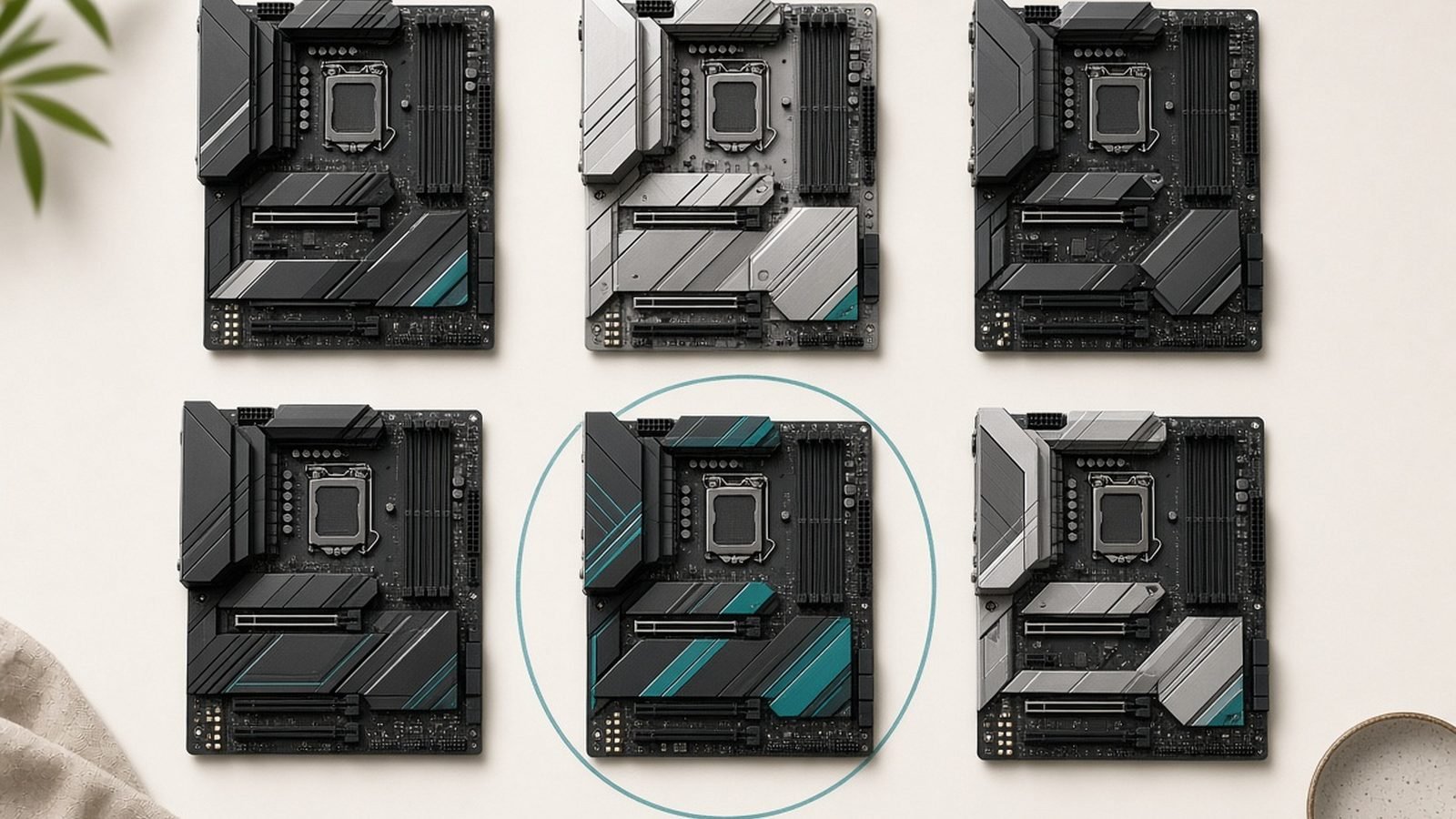
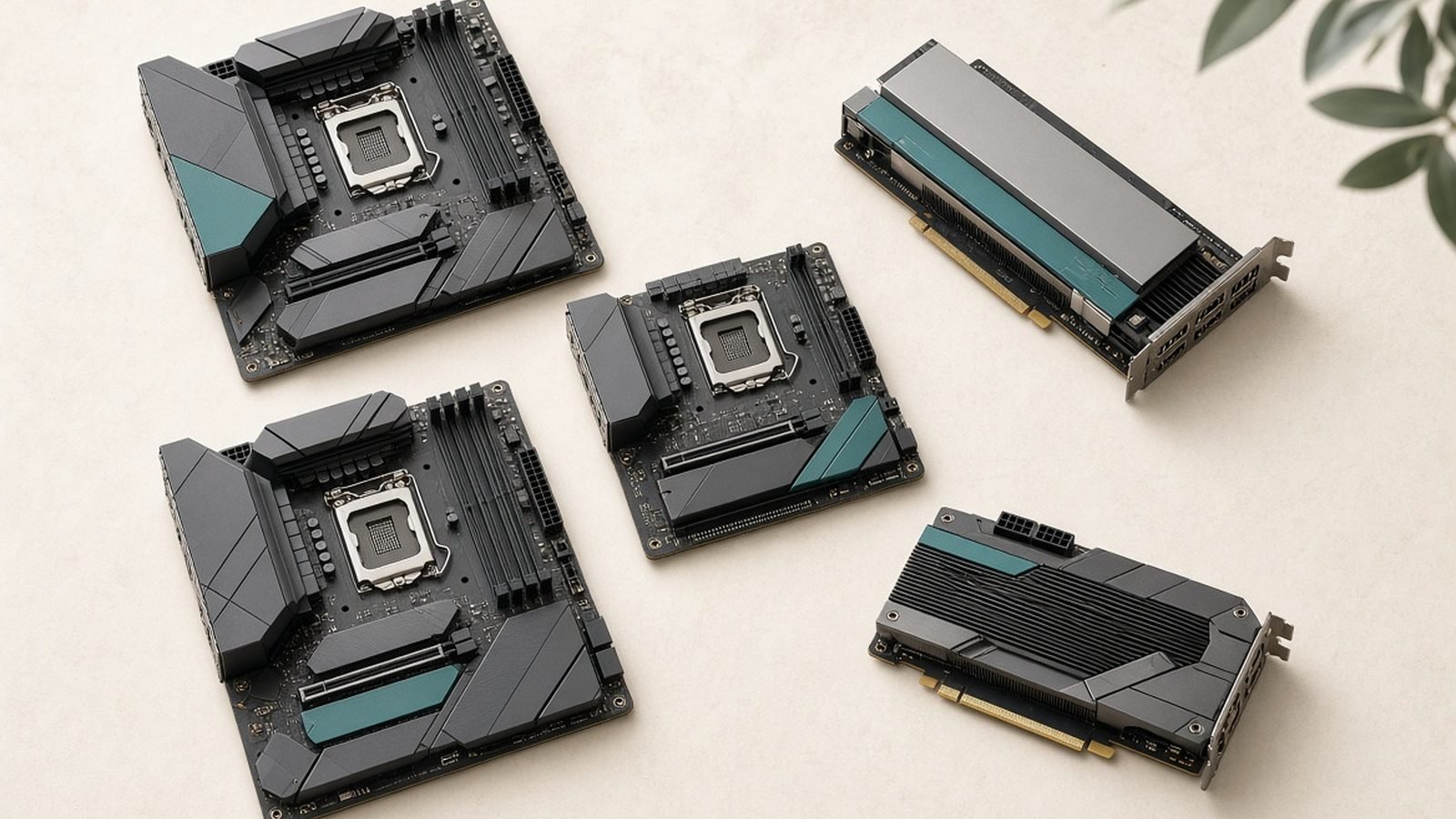
- Motherboards — the core business, from budget A- and B-series boards to premium X870 Taichi and Phantom Gaming models, across both AMD and Intel platforms.
- Graphics cards — Radeon RX cards in the Taichi, Steel Legend, and Challenger lines, now a significant part of the business.
- Mini PCs and NUC-style systems — compact desktops and industrial small-form-factor machines.
- Motherboard sub-brands — Taichi (premium), Phantom Gaming (gaming), Steel Legend (mid-range value), and Pro/Lightning (budget), which help buyers navigate the tiers.
- Industrial and server hardware — through ASRock Rack, a related business line.
Standout ASRock products in 2026
ASRock X870E Taichi — around $500 / £470. The flagship AMD motherboard: robust power delivery, extensive connectivity, Wi-Fi 7, and premium build for high-end Ryzen builds. A strong option on our Best B850 Motherboards for Ryzen in 2026 guide’s premium tier for those who want maximum features.
ASRock B850 Steel Legend WiFi — around $200 / £189. The value-and-features sweet spot: strong VRMs, good connectivity, and a clean design at a mid-range price. A frequent recommendation on our Best B850 Motherboards for Ryzen in 2026 shortlist.
ASRock Radeon RX Steel Legend / Taichi cards — pricing tracks the GPU tier. ASRock’s Radeon cards offer solid cooling and competitive pricing, and they feature among the AMD options on our Best Graphics Cards 2026: GPUs for Every Budget guide.
ASRock B850M Pro RS — around $150 / £139. A budget-friendly micro-ATX board that covers the essentials for a mainstream Ryzen build without overspending, popular in value-focused systems.
ASRock DeskMini series — around $180 / £169 (barebones). Compact, upgradeable mini-PC barebones kits that let builders make tiny desktops, a niche ASRock has served well for years.
Strengths
Value and features-per-dollar. ASRock’s core appeal. Its boards frequently offer more connectivity, better VRMs, or more features at a given price than similarly priced rivals, making it a favorite for budget and mid-range builds.
Broad model coverage. Few brands offer as many variants across chipsets, form factors, and price points, so there’s usually an ASRock board that fits a specific need or budget.
Improved premium lineup. The Taichi and Phantom Gaming lines have genuinely moved ASRock upmarket, with premium boards that compete on features with the best from other brands.
Growing GPU credibility. ASRock has established itself as a legitimate Radeon card maker with well-cooled, competitively priced designs, giving buyers more choice in the AMD GPU space.
Weaknesses & criticisms
BIOS and software polish. ASRock’s UEFI/BIOS and companion software have historically been seen as less refined than ASUS or MSI — occasionally less intuitive, with a reputation for needing firmware updates to iron out early-platform quirks.
Mixed support and RMA reputation. ASRock’s customer service and RMA experience draws more inconsistent feedback than the top-tier brands, with quality varying by region. This is the most common knock against the brand.
Quality varies across the range. Because the lineup is so broad, the budget boards are more clearly built to a price. Buyers need to match the tier (Pro vs Steel Legend vs Taichi) to their needs rather than assume every ASRock board is equal.
Platform-early stability concerns. As with several board makers, some ASRock models have drawn attention on new platforms for early BIOS or stability issues that later updates addressed, so early adopters should keep firmware current.
Reliability & support
ASRock’s hardware reliability is generally good, especially on its mid-range and premium boards, which use solid power delivery and quality components. As with any motherboard brand, occasional failures happen, and the budget tier is built more tightly to a price. The graphics cards have earned a reputation for competent cooling and reliable operation.
Warranty coverage is standard for the category — commonly around one to three years on motherboards depending on model and region, with variation by market. The weaker link is support: ASRock’s RMA and customer-service experience is more inconsistent than the market leaders, and this is worth factoring in, particularly outside its strongest regions. The practical guidance: ASRock boards are reliable enough for most builders, keep BIOS updated on new platforms, and buy from a retailer with a good return policy so you’re not solely reliant on the brand’s RMA if something goes wrong.
Who should buy ASRock
Buy ASRock if value and features-per-dollar are your priorities. Its mid-range boards like the Steel Legend line are excellent picks for cost-conscious Ryzen and Intel builds, the Taichi models compete at the high end, and its Radeon cards add welcome choice. For builders who want the most features at a given price, ASRock is consistently one of the smartest options.
Look elsewhere if you want the most polished BIOS, software, and support experience and are willing to pay a premium for it, or if you’re an early adopter who wants the most stable day-one firmware on a brand-new platform. In those cases a top-tier board from a rival may suit you better — compare options on our Best B850 Motherboards for Ryzen in 2026 guide.
FAQ
Is ASRock a good brand?
Yes. ASRock is a well-regarded, value-focused component maker, especially strong on motherboards and now credible in Radeon graphics cards. Its boards offer excellent features-per-dollar. The main trade-offs are BIOS and software polish that can trail the top brands and a more inconsistent support reputation.
Is ASRock reliable?
Generally, yes. Its mid-range and premium boards use solid components and hold up well, though the budget tier is built more to a price. Keep BIOS updated on new platforms, and buying from a retailer with a good return policy is wise given ASRock’s more mixed RMA reputation.
Where is ASRock from and who owns it?
ASRock was founded in 2002 in Taipei, Taiwan. It’s part of the Pegatron group (which has roots in ASUS’s manufacturing side) and is publicly listed in Taiwan. It started as a value-focused motherboard spin-off and has since grown into a broad component brand.
Is ASRock better than ASUS for motherboards?
They target different priorities. ASRock leads on value and features-per-dollar, while ASUS generally offers more polished BIOS, software, and support at a higher price. For budget and mid-range builds ASRock is often the smarter buy; for the most refined premium experience many prefer ASUS. Compare on our Best B850 Motherboards for Ryzen in 2026 guide.
Are ASRock graphics cards any good?
Yes. ASRock has become a legitimate Radeon add-in-board partner, with well-cooled, competitively priced cards in its Taichi, Steel Legend, and Challenger lines. They’re a solid choice among AMD GPU options — see our Best Graphics Cards 2026: GPUs for Every Budget guide.
Which ASRock motherboard tier should I buy?
Match the sub-brand to your needs: Pro/Lightning for budget builds, Steel Legend for mid-range value, Phantom Gaming for gaming features, and Taichi for premium high-end boards. Because the lineup is broad, picking the right tier matters more with ASRock than with narrower brands.
Zen Tech Hub may earn a commission from links on this page, at no extra cost to you.