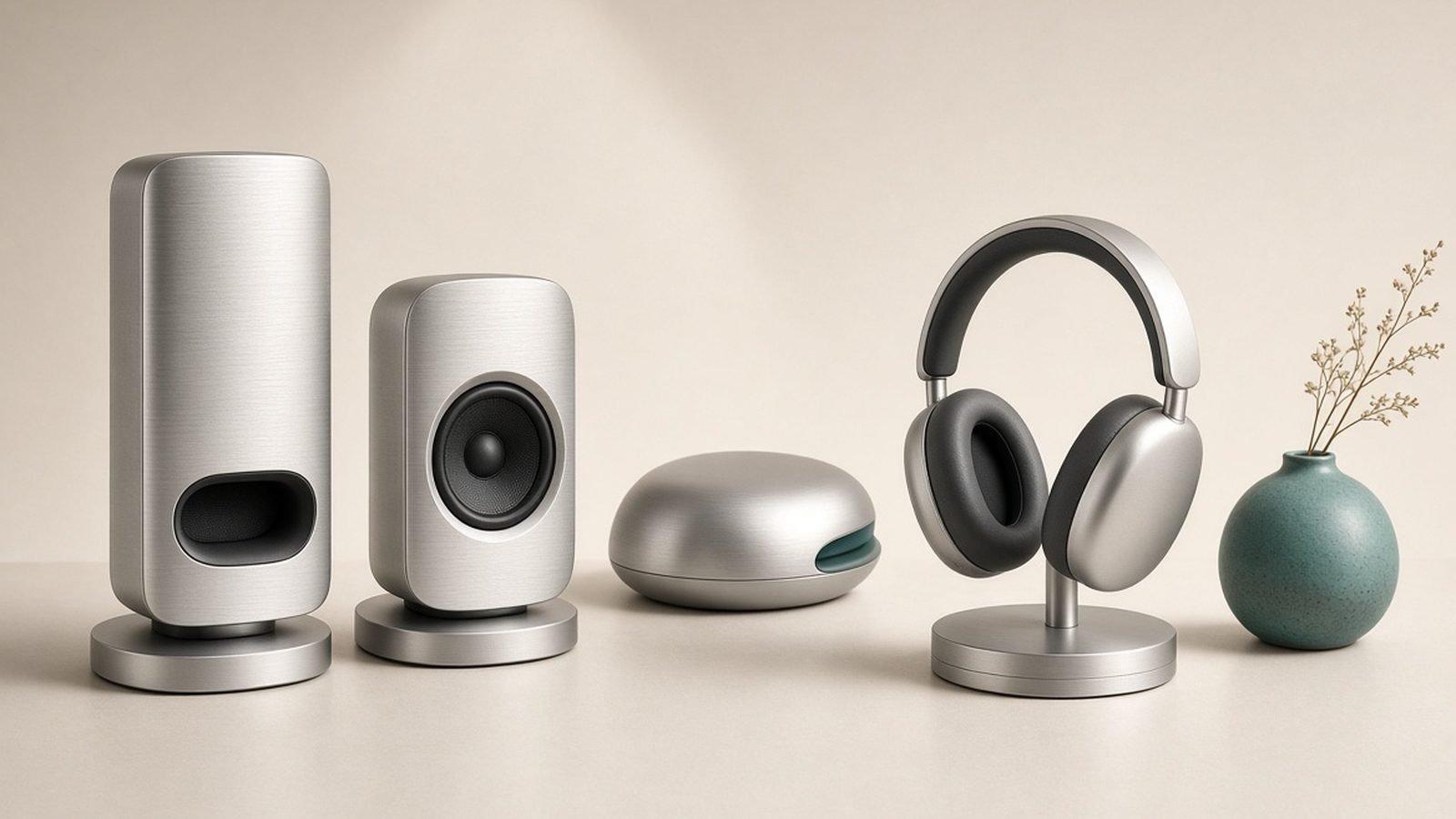
Bang & Olufsen is the brand you buy when design and status matter as much as sound. In 2026 the Danish company remains the most recognizable name in luxury audio, selling aluminum-and-glass speakers and headphones that double as furniture. The short verdict: B&O products are genuinely beautiful, well-built, and good-sounding — but you pay an enormous premium over rivals that sound just as good or better, and the value case only works if the design is worth real money to you.
If you want a statement piece that happens to play music, and price is a secondary concern, B&O delivers something no mainstream brand does. If you’re buying purely on sound-per-dollar, almost every competitor beats it.
Company overview
Bang & Olufsen was founded in 1925 in Struer, Denmark, by Peter Bang and Svend Olufsen, and it’s still headquartered there today as a publicly listed company. For a century it has positioned itself at the intersection of audio engineering and industrial design, collaborating with renowned designers and using premium materials — anodized aluminum, real wood, woven textiles, tempered glass — where most brands use plastic.
B&O’s reputation is unusual. Among the general public it’s shorthand for luxury and taste. Among audio enthusiasts it’s more divisive: the products are admired for design and build but frequently criticized as overpriced relative to their sound. Both views are fair. B&O has never competed on spec sheets; it competes on how a product looks in your home and how it feels to own.
The company also licenses its expertise to the automotive world, supplying high-end sound systems to several premium and luxury carmakers, which is where many people first hear the brand.
What Bang & Olufsen makes
B&O’s 2026 lineup is boutique rather than broad, but it spans several categories:
- Wireless speakers — the Beosound and Beoplay ranges, from portable units to large architectural home speakers that anchor a room.
- Over-ear headphones — the Beoplay H-series, led by flagships built from aluminum and leather.
- Wireless earbuds — the Beoplay EX and successors, premium true-wireless designs.
- Televisions — the Beovision range, ultra-premium OLED sets integrated with B&O sound and motorized stands.
- Turntables and heritage audio — occasional statement products that lean on the brand’s design legacy.
Everything is unified by materials, minimalism, and a philosophy that an audio product should be visible and admired, not hidden away.
Standout Bang & Olufsen products in 2026
Beoplay H100 — around $1,549 / £1,299. The flagship over-ear headphone, wrapped in aluminum, lambskin, and glass touch controls. It sounds warm and refined and feels extraordinary in the hand, but it costs three to four times as much as sonically comparable rivals on our Best Headphones 2026: Over-Ear Picks for Every Budget guide. You’re paying for materials and design as much as audio.
Beosound A5 — around $1,099 / £899. A portable-but-hefty home speaker with a wood handle and woven front, designed to look as good on a shelf as by the pool. Excellent room-filling sound, priced well above mainstream portables.
Beosound A9 — around $3,199 / £2,999. The iconic circular wall speaker, a design landmark that has appeared in various forms for years. It’s as much an art object as a speaker, and priced accordingly.
Beoplay EX — around $399 / £349. The flagship earbuds: premium aluminum styling, solid sound, and capable noise cancellation, though on features alone Sony and Bose offer more for less.
Beovision OLED televisions — from around $6,000 / £5,500. Ultra-premium TVs pairing top OLED panels with integrated B&O sound and motorized furniture-grade stands, aimed squarely at luxury buyers.
Strengths
Industrial design. This is the entire point of the brand, and B&O delivers. Its products are among the best-looking in consumer electronics, using real metal, wood, glass, and textile where rivals use plastic. Nothing else looks quite like it.
Build quality and materials. The premium isn’t purely cosmetic. B&O hardware genuinely feels dense, solid, and beautifully finished, with a tactility that mass-market brands don’t match.
Good, pleasant sound. To be clear, B&O products do sound good — warm, smooth, and enjoyable. They just don’t sound proportionally better than the price implies.
Longevity and software support. B&O has a strong record of supporting older products with updates and modular upgrades, and it markets some speakers as “long-lasting by design,” aiming for products you keep for many years.
Weaknesses & criticisms
Price versus sound. This is the defining criticism. On pure audio quality per dollar, B&O is comprehensively beaten by Sony, Sennheiser, Bose, KEF, and others. You are paying a large premium for design, materials, and the badge.
Features lag the mainstream. On headphones and earbuds, ANC, app depth, and codec support often trail cheaper rivals. B&O rarely leads on functionality.
App and software polish. Owner reports periodically cite connectivity quirks and an app experience that doesn’t feel as refined as the hardware. For the money, the software can feel like an afterthought.
Repair costs. The premium materials cut both ways: out-of-warranty repairs and replacement parts can be expensive, and servicing a luxury product is rarely cheap.
Reliability & support
B&O’s build quality is genuinely high, and its hardware tends to feel and stay solid over years of ownership. The company has a better-than-average record of long-term software support and offers modular upgrades on some speaker lines, which fits its “own it for a decade” positioning.
That said, the ownership experience carries luxury-tier costs. Warranty terms vary by region and product (commonly two to three years on speakers, shorter on some accessories), and out-of-warranty repairs can be pricey given the materials involved. Customer service is generally handled through B&O’s own stores and premium retail network, which many owners rate well, though it’s a more boutique experience than the mass-market brands. As with all wireless audio, batteries in headphones and earbuds fade over time — and replacing them in a luxury product is not cheap.
Who should buy Bang & Olufsen
Buy B&O if design, materials, and the statement of the object matter to you as much as the sound, and if the price premium is comfortable rather than painful. It’s a natural fit for design-led homes, gifts where presentation is the point, and buyers who want audio gear that looks like it belongs in an architecture magazine. In that context, nothing else quite competes.
Skip B&O if you’re optimizing for sound quality per dollar, headline features, or value. Buyers focused on pure performance will get more from Sony, Sennheiser, KEF, or Bose at a fraction of the price. See how the mainstream leaders stack up on our Best Headphones 2026: Over-Ear Picks for Every Budget guide before committing to the premium.
FAQ
Is Bang & Olufsen a good brand?
Yes, but with a clear caveat. B&O makes beautifully designed, well-built, good-sounding products — it’s a genuinely premium brand. The catch is that you pay a very large premium for design and materials, and rivals deliver equal or better sound for much less. It’s a good brand for the right buyer, not a good value.
Is Bang & Olufsen reliable?
Generally yes. The build quality is high and the company has a good record of long-term software support and modular upgrades on some products. The main downsides are expensive out-of-warranty repairs and the usual battery aging in wireless headphones and earbuds.
Where is Bang & Olufsen from and who owns it?
Bang & Olufsen was founded in 1925 in Struer, Denmark, where it’s still headquartered. It’s a publicly listed Danish company, not owned by a larger conglomerate, though it licenses its audio expertise to several premium carmakers.
Is Bang & Olufsen overpriced?
On sound quality alone, yes — most rivals offer equal or better audio for far less. Whether it’s “overpriced” depends on how much you value design, materials, and status. If those are worth real money to you, the premium can be justified; if not, you’re paying for the badge.
Bang & Olufsen vs Bose — which is better?
They serve different buyers. Bose wins decisively on noise cancellation, features, and value. B&O wins on design, materials, and prestige. If you want the best sound-per-dollar and quiet on flights, choose Bose; if you want a beautiful statement piece, choose B&O.
Do Bang & Olufsen products sound worth the price?
They sound good — warm, smooth, and enjoyable — but not proportionally better than products costing a quarter as much. The price reflects design and materials far more than raw audio performance, so the “worth it” answer hinges on how much you value those things.
Zen Tech Hub may earn a commission from links on this page, at no extra cost to you.