Denon is the brand most people end up with when they build a serious home-theater system, and one of the oldest names in recorded sound still trading today. In 2026 it remains a default choice for AV receivers, with a catalog that also spans stereo amplifiers, turntables, and wireless multiroom speakers. The short verdict: Denon builds feature-packed, powerful, reliable AV receivers that consistently offer the most connectivity for the money — but its onscreen menus and app software feel dated next to smart-speaker rivals, its receivers run hot and are physically large, and the brand has changed corporate hands enough times to make some buyers uneasy about long-term support.
If you’re building a home cinema and want the most HDMI ports, decoding formats, and room-correction features per dollar, Denon is an easy recommendation. If you want a sleek, app-first, minimalist audio setup, look at the lifestyle brands first.
Company overview
Denon traces its roots to 1910 in Japan, making it one of the oldest audio-electronics names in the world; the name itself derives from “Denki Onkyo.” Over the following century it became a pillar of Japanese hi-fi, known for CD players, turntables, amplifiers, and — most of all — AV receivers.
Ownership is the part every buyer should understand, because it’s changed repeatedly. Denon merged with Marantz to form D&M Holdings, which later became Sound United, which was then acquired and folded into Masimo, a US medical-technology company, in 2022. In practice, Denon and its sister brand Marantz are engineered by the same group and often share underlying platforms, tuned to different house sounds. Masimo has publicly explored selling its consumer audio division, so the corporate future has looked uncertain — worth knowing, though day-to-day product quality and firmware support have continued as normal. (Note that Denon DJ gear is a separate business under inMusic Brands and is not part of the same company.)
Denon’s reputation is that of a value-packed engineering brand: lots of power, lots of features, and a long track record of receivers that keep working for years. It’s trusted by home-theater enthusiasts who want capability over gloss.
What Denon makes
Denon’s 2026 consumer catalog covers several categories:
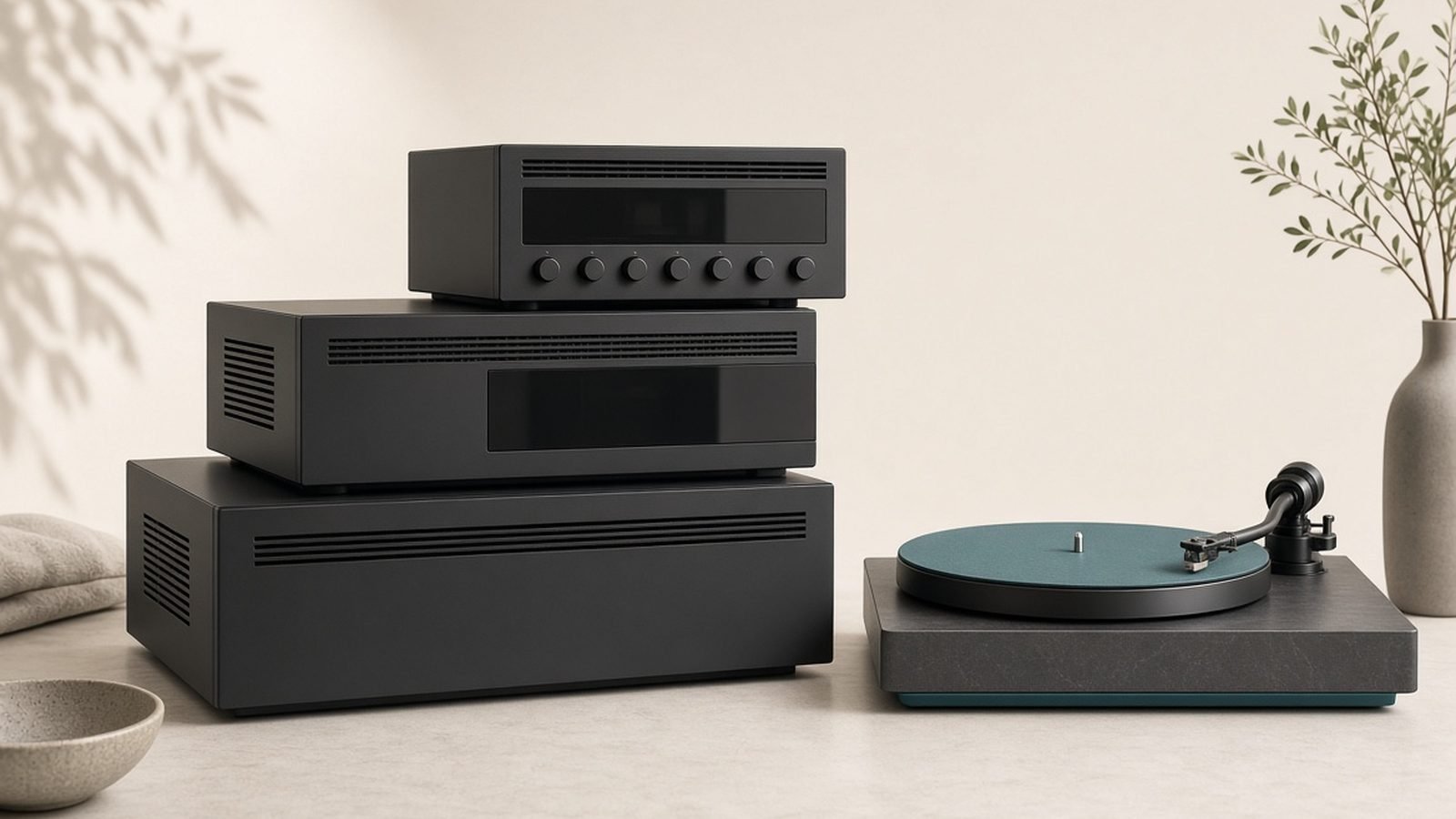
- AV receivers — the core business, from the entry AVR-S line to the high-end AVR-X and flagship AVC/A-series, covering Dolby Atmos, DTS:X, and 8K HDMI switching.
- Stereo hi-fi — the PMA integrated amplifiers and DCD CD players for two-channel listeners.
- Turntables — the DP series belt- and direct-drive turntables, including USB models.
- Wireless multiroom speakers — the Denon Home line, built on the HEOS platform for whole-home streaming.
- Soundbars — the Denon Home Sound Bar range, aimed at simpler living-room setups.
- Headphones and network players — a smaller selection of personal audio and streaming components.
The consistent thread is home audio infrastructure: Denon’s strength is being the reliable brain of a living-room or hi-fi system.
Standout Denon products in 2026
Denon AVR-X3800H — around $1,299 / £1,199. The enthusiast sweet spot: a 9.4-channel receiver with generous HDMI 2.1 connectivity, Dolby Atmos and DTS:X, and Denon’s excellent Audyssey room correction. It’s the receiver we point most home-cinema builders toward for its blend of power, features, and value, and it anchors many a Best Bookshelf Speakers 2026: Hi-Fi for Any Room pairing.
Denon AVR-S770H — around $599 / £549. The value pick for first home-theater systems: 7.2 channels, 8K HDMI passthrough, and Atmos support at an accessible price. It covers the essentials most living rooms need without the enthusiast premium.
Denon PMA-600NE — around $499 / £449. A well-reviewed entry integrated amplifier with a built-in phono stage and Bluetooth, a popular heart for a simple stereo system feeding a pair of bookshelf speakers.
Denon Home 350 — around $699 / £599. The flagship wireless multiroom speaker, with room-filling sound and HEOS streaming built in. A capable alternative to Sonos for buyers already in the Denon ecosystem.
Denon DP-300F — around $399 / £329. A fully automatic belt-drive turntable with a built-in phono preamp, aimed at newcomers who want plug-and-play vinyl playback.
Denon AVC-X4800H — around $2,199 / £1,999. A step-up receiver for larger, more ambitious home cinemas wanting more channels and higher-end amplification.
Strengths
Features and connectivity per dollar. This is the core reason to buy Denon. Its receivers consistently offer more HDMI ports, decoding formats, and channels than similarly priced rivals, making them superb value for feature-hungry home-theater builders.
Excellent room correction. Denon’s implementation of Audyssey room calibration is one of the best in the mainstream market, meaningfully improving sound in real, imperfect rooms — a genuine advantage over simpler systems.
Power and sound quality. Denon receivers drive demanding speakers well and have a warm, robust house sound that many listeners prefer to the more clinical alternatives. The PMA stereo amps carry that reputation into two-channel audio.
Proven longevity. Denon receivers have a strong track record of running reliably for many years, and the brand’s century-long heritage means deep engineering experience.
Weaknesses & criticisms
Dated software and menus. Denon’s onscreen setup interface and the HEOS app feel clunky and old-fashioned next to modern smart-speaker ecosystems. Firmware updates arrive, but the user experience lags the hardware.
Big, hot, and power-hungry. AV receivers are large, heavy, and run warm; they need proper ventilation and shelf space. This is inherent to the category but still a real living-room consideration.
Corporate churn and an uncertain future. Repeated ownership changes — through D&M, Sound United, and now Masimo, which has weighed selling the division — create understandable nervousness about long-term software support and warranty continuity.
Overlapping, confusing model ranges. Denon (and near-twin Marantz) ship many similar models with dense alphanumeric names, making it genuinely hard for shoppers to tell which receiver is right for them.
Reliability & support
Denon has a solid reliability reputation, particularly for its AV receivers, which are known to run for many years when given adequate ventilation. Heat is the main enemy of any receiver, so buyers who cram them into closed cabinets without airflow shorten their lifespan — given breathing room, Denon units tend to be dependable long-term performers.
Warranty coverage is typically two years in many regions, in line with the category. Customer support and the firmware-update record are adequate rather than exceptional: receivers do receive updates for HDMI compatibility and streaming services, but the pace and polish trail the software-first consumer brands. The bigger open question is corporate rather than technical — with the division’s ownership in flux under Masimo, some buyers reasonably wonder how long-term support and app development will be resourced. It’s a fair thing to weigh, though there’s no current sign of products being abandoned.
Who should buy Denon
Buy Denon if you’re building a home-theater system and want maximum features, connectivity, and power for your money. It’s the natural pick for cinema enthusiasts who want lots of HDMI 2.1 inputs, Atmos and DTS:X decoding, and best-in-class room correction, as well as stereo listeners after a warm, capable integrated amp. Pair an AVR-X receiver with a good speaker set — see our Best Bookshelf Speakers 2026: Hi-Fi for Any Room guide — and you have a system that will serve for years.
Look elsewhere if you want a sleek, minimalist, app-first setup, a compact footprint, or the simplest possible living-room audio. In those cases, lifestyle systems like Sonos or a quality soundbar make more sense. If ownership stability is a top concern, that’s worth factoring in too.
FAQ
Is Denon a good brand?
Yes. Denon is one of the most respected names in home audio, especially for AV receivers that pack in more features, connectivity, and power for the money than most rivals, plus excellent room correction. Its main weaknesses are dated software and menus and repeated changes of corporate ownership.
Is Denon reliable?
Generally yes. Denon receivers have a strong track record of lasting many years, provided they get adequate ventilation — heat is the main thing that shortens a receiver’s life. They’re backed by a typically two-year warranty, and the brand’s century of engineering experience shows in the hardware.
Where is Denon from and who owns it?
Denon originated in Japan in 1910, making it one of the oldest audio brands still trading. After passing through D&M Holdings and Sound United, it is now owned by Masimo, a US medical-technology company that acquired the division in 2022 and has since explored selling it. Sister brand Marantz shares the same corporate parent.
Is Denon or Marantz better?
They’re engineered by the same group and share platforms, tuned to different house sounds. Denon tends toward a punchy, feature-forward presentation and slightly better value, while Marantz aims for a smoother, more refined sound at a premium. For pure home-theater value, Denon usually wins; for a warmer hi-fi character, some prefer Marantz.
Which Denon AV receiver should I buy?
For most enthusiast home cinemas, the AVR-X3800H hits the sweet spot of channels, HDMI 2.1 connectivity, and room correction. On a tighter budget, the AVR-S770H covers the essentials, while the AVC-X4800H suits larger, more ambitious setups.
Do Denon receivers get software updates?
Yes, they receive firmware updates for HDMI compatibility, bug fixes, and streaming services via the HEOS platform, though the pace and polish trail the software-first consumer brands. The interface remains one of Denon’s weaker points relative to its strong hardware.
Zen Tech Hub may earn a commission from links on this page, at no extra cost to you.