If you want maxed-out 1440p gaming without paying Nvidia’s flagship tax, this Radeon RX 9070 XT review will feel like good news. AMD’s RDNA 4 card pairs 16GB of memory with genuinely strong raster performance, and after a year on the market it has settled into the sweet spot of the 2026 GPU stack. It is not perfect — ray tracing still trails Nvidia and street prices crept above launch MSRP — but for most people building or upgrading a high-refresh 1440p rig, the RX 9070 XT is the card to beat.
Below we dig into specs, real-world performance based on aggregated benchmarks and owner reports, and the one comparison that matters most: the RX 9070 XT vs RTX 5070 Ti value fight.
RX 9070 XT specs and 2026 street price
The RX 9070 XT is built on AMD’s RDNA 4 architecture with 64 compute units, 16GB of GDDR6 on a 256-bit bus, and a board power rating around 304W. That 16GB frame buffer is the headline for longevity — it sidesteps the VRAM anxiety that dogs some cheaper 12GB cards as textures balloon.
Here is how it lines up against Nvidia’s closest rival on paper and at the till.
| Spec | Radeon RX 9070 XT | GeForce RTX 5070 Ti |
|---|---|---|
| Architecture | RDNA 4 | Blackwell |
| Memory | 16GB GDDR6 | 16GB GDDR7 |
| Bus width | 256-bit | 256-bit |
| Board power | ~304W | ~300W |
| Upscaling | FSR 4 | DLSS 4 |
| Street price | around $769 / £729 | around $1,069 / £999 |
AMD launched the 9070 XT with a lower MSRP, but demand and limited supply pushed real-world pricing up. In our research, mainstream partner cards from Sapphire, XFX, ASRock and PowerColor cluster around $769 / £729 in mid-2026 — still a commanding roughly $300 saving versus a typical RTX 5070 Ti. (For how the card stacks up across the wider market, see our best graphics cards guide.)
Check price: Radeon RX 9070 XT
RDNA 4 architecture and FSR 4 in brief
RDNA 4 is less about raw core counts and more about efficiency and feature parity. AMD reworked the ray accelerators and, crucially, shipped FSR 4 — a machine-learning upscaler that finally closes much of the image-quality gap with DLSS.
Why FSR 4 matters so much: earlier FSR relied on hand-tuned heuristics and could shimmer or smear in motion. Based on owner reports and side-by-side coverage, RX 9070 XT FSR 4 delivers noticeably cleaner edges and more stable fine detail, especially in its Quality mode at 4K. It is not a pixel-for-pixel match with DLSS 4 in every title, but it is close enough that the difference stops being a buying reason for most players.
The catch is adoption. FSR 4 is supported in a growing list of games but not the entire back catalogue, so a handful of older titles fall back to FSR 3.1 or lower. If a specific game matters to you, check its support status before buying.
1440p and 4K gaming benchmarks
This is where the RX 9070 XT earns the “value champ” label. Across aggregated RX 9070 XT benchmarks, the card trades blows with the RTX 5070 Ti in pure rasterization — sometimes edging ahead, sometimes falling a few percent behind, depending on the engine.
At 1440p, that means triple-digit frame rates in the vast majority of modern titles at maxed settings. Fast-paced shooters comfortably saturate high-refresh panels, and demanding open-world games hold well above 60fps without upscaling crutches. For a 1440p 144Hz or 165Hz monitor, this is the natural pairing.
Push to RX 9070 XT 4K gaming and the picture stays strong for a card at this price. Raster-heavy titles remain very playable at native 4K, and where you need more headroom, FSR 4 Quality reliably lifts you back into the 90–120fps range in most games. The 16GB buffer means you can run high-resolution textures without stutter from VRAM exhaustion — a real advantage over 12GB competitors as game requirements climb.
The honest caveat: this is not a no-compromise 4K card in the heaviest ray-traced titles. Treat it as an excellent 1440p card that moonlights very capably at 4K, rather than a native-4K-ultra machine.
If you are weighing where it sits in AMD’s own lineup, our RTX 5070 vs RX 9070: Best 1440p GPU in 2026? breakdown covers the step down and the cross-brand alternatives.
Ray tracing performance vs Nvidia
RDNA 4 is the biggest ray tracing leap AMD has made, and it shows. Compared with the previous generation, the RX 9070 XT handles ray-traced reflections, shadows and ambient occlusion far more gracefully, and in lighter RT titles the hit to frame rate is very manageable.
But let’s be straight: in heavy ray tracing and full path-traced games, the RTX 5070 Ti still pulls ahead. Nvidia’s dedicated RT hardware and more mature denoising give it a lead that grows as the RT workload intensifies. If your must-play list is dominated by path-traced showcases, that gap is a genuine reason to consider Nvidia.
For everyone else — players who switch RT on for reflections and lighting but do not chase path tracing — the RX 9070 XT delivers perfectly enjoyable ray-traced gameplay, particularly with FSR 4 sharing the load. It is no longer the dealbreaker it once was for Radeon.
VRAM headroom helps here too, since ray tracing inflates memory use. If that topic is new to you, our How Much VRAM Do You Need for Gaming in 2026? guide explains how much you actually need in 2026.
Power, thermals and noise
RX 9070 XT power draw lands around 304W under gaming load, which is competitive for the performance on tap — RDNA 4’s efficiency gains are real. In practice, based on owner reports, a quality 750W power supply is the comfortable recommendation, giving headroom for transient spikes and a mid-range CPU.
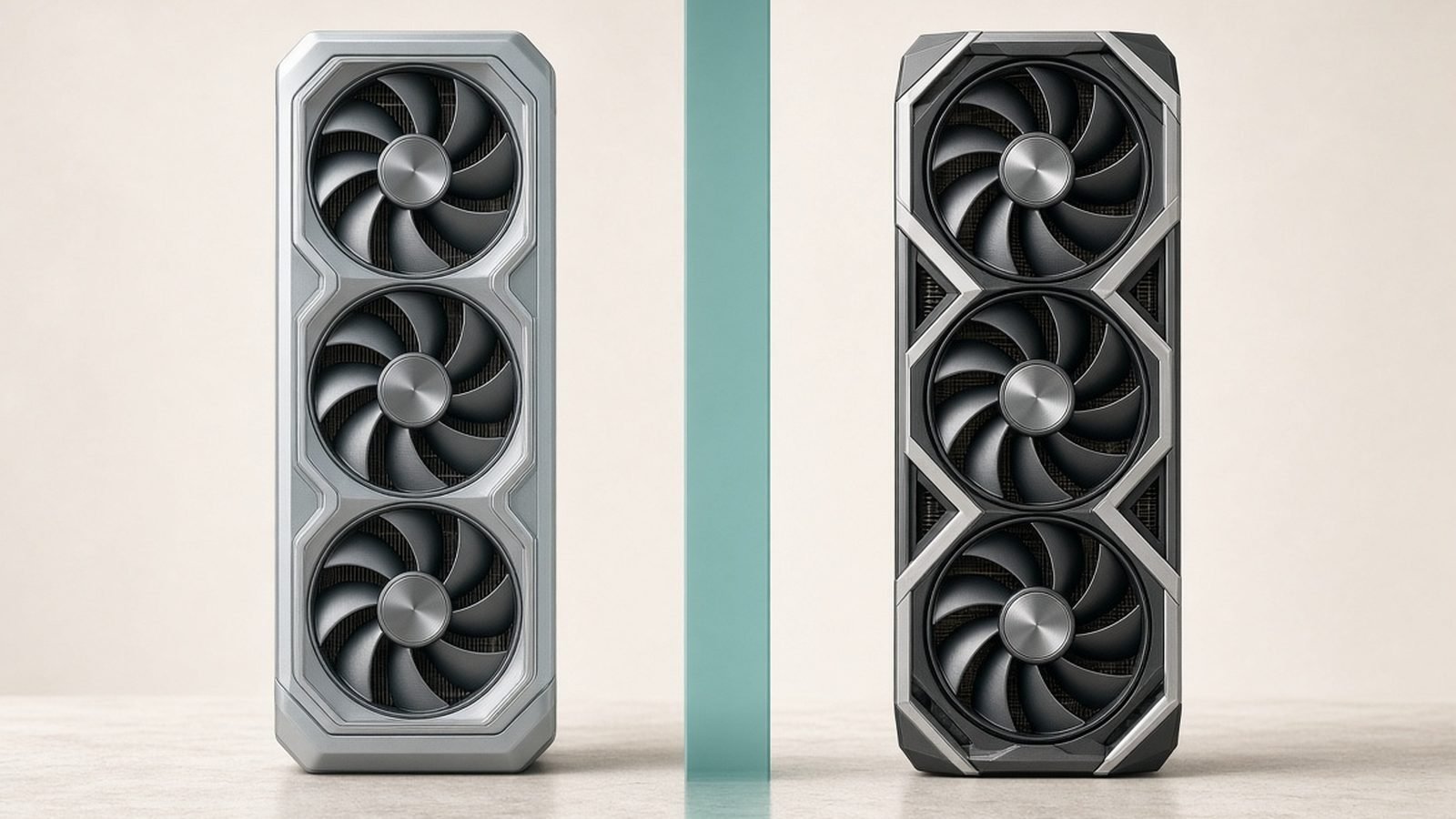
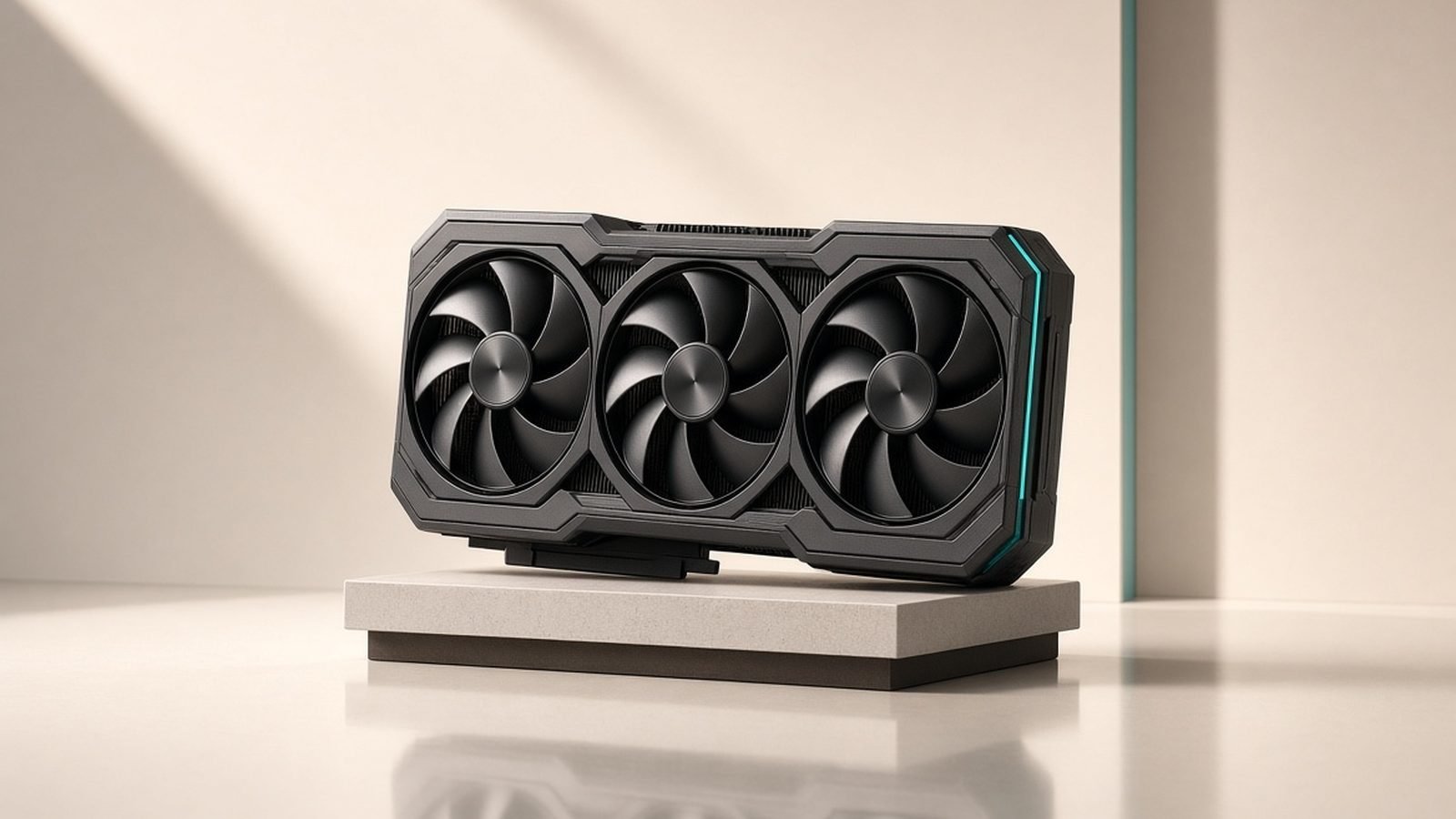
Thermals and noise come down to the partner cooler more than the GPU itself. The larger triple-fan designs from the major board partners run cool and quiet, holding sustained clocks without ramping fans to a distracting level. Compact two-fan or blower-style cards trade some acoustic comfort for case compatibility, so if a near-silent build is the goal, spend up for a beefier cooler.
One practical note: these are chunky cards. Check your case clearance and PCIe power connectors before ordering, especially in smaller ATX or micro-ATX builds.
Value verdict vs RTX 5070 Ti
Here is the crux of the RX 9070 XT vs RTX 5070 Ti decision, and the answer to “is the RX 9070 XT worth it”: for the money, yes, emphatically.
The RTX 5070 Ti is the better card in absolute terms — stronger ray tracing, a slight edge in DLSS maturity, and top-tier features. But it costs roughly $300 / £270 more. When you divide performance by price, the RX 9070 XT wins the value-per-frame contest decisively in rasterized games, which is still where the overwhelming majority of your playtime happens.
Who the RX 9070 XT is for: 1440p high-refresh gamers, value-focused 4K players, and anyone who wants a future-proof 16GB buffer without flagship pricing. It is the obvious heart of a balanced build — see our Best 1440p Gaming PC Build Under $1500 (2026) for a full parts list.
Who should look at the RTX 5070 Ti instead: enthusiasts who play path-traced titles constantly, or professionals leaning on CUDA and Nvidia’s software ecosystem, and who have the budget to pay for it.
Radeon RX 9070 XT
Pros - Excellent 1440p and strong 4K rasterization - 16GB VRAM for real longevity - Big image-quality gains from FSR 4 - Solid RDNA 4 efficiency - Meaningfully cheaper than the RTX 5070 Ti
Cons - Ray tracing still trails Nvidia in heavy titles - Street price sits above launch MSRP - FSR 4 game support is still expanding
Check price: Radeon RX 9070 XT
GeForce RTX 5070 Ti
Pros - Class-leading ray tracing at this tier - Mature DLSS 4 upscaling and frame generation - Excellent all-round feature set
Cons - Around $300 / £270 more expensive - Similar 16GB buffer, so no memory advantage - Overkill value-wise for pure rasterized gaming
Check price: GeForce RTX 5070 Ti
For more options across budgets, browse our Best Graphics Card Under $500 for 1440p (2026) roundup and the full PC Hardware.
FAQ
Is the RX 9070 XT good for 4K gaming? Yes, with realistic expectations. It handles native 4K well in rasterized games and stays smooth in demanding titles once FSR 4 Quality is enabled. The 16GB buffer prevents texture-related stutter. It is not built for native 4K ultra with heavy path tracing, but as a value 4K card it performs above its price class.
How does the RX 9070 XT compare to the RTX 5070 Ti? They are close in rasterization, often within a few percent either way. The RTX 5070 Ti wins on ray tracing and DLSS maturity, but costs roughly $300 more. If you prioritize frames per dollar in normal gaming, the RX 9070 XT is the better buy; if path tracing is central to your library, the Nvidia card justifies its premium.
What power supply does the RX 9070 XT need? With a board power draw around 304W, a quality 750W PSU is the safe recommendation for most builds paired with a mainstream CPU. That leaves headroom for power spikes and future upgrades. You can run a strong 650W unit in a modest system, but 750W removes the guesswork and keeps the card comfortably fed.
Is FSR 4 as good as DLSS 4? It closes most of the historic gap. RX 9070 XT FSR 4 produces far cleaner, more stable images than earlier FSR versions and gets close to DLSS 4 in many titles, especially at 4K Quality. Nvidia still holds a slight edge in some scenarios, and FSR 4 support is not yet universal across every game.
Verdict
The Radeon RX 9070 XT is the most sensible high-performance GPU purchase of 2026 for the majority of gamers. It delivers flagship-adjacent 1440p performance, credible 4K, a future-proof 16GB buffer and a transformative FSR 4 upscaler — all for meaningfully less than the RTX 5070 Ti. Accept the ray tracing caveat and the above-MSRP pricing, and you are left with the clear value champion of its class.
Zen Tech Hub may earn a commission from links on this page, at no extra cost to you.