More than a year and a half after launch, this Ryzen 7 9800X3D review asks the only question that matters in mid-2026: is AMD’s 8-core gaming darling still the chip to build around, or has time and a growing pile of rivals finally dethroned it? The short answer is that the 9800X3D remains the fastest mainstream gaming CPU you can buy, and it now sits at a more reasonable price than it did on day one. The longer answer, as always, is about total platform cost and whether you actually need this much horsepower.
We have not run these chips in our own lab. What follows is expert analysis drawn from published spec sheets, reviewer benchmark aggregates, and a large body of owner reports from the last 18 months.
Ryzen 7 9800X3D at a glance (specs and price)
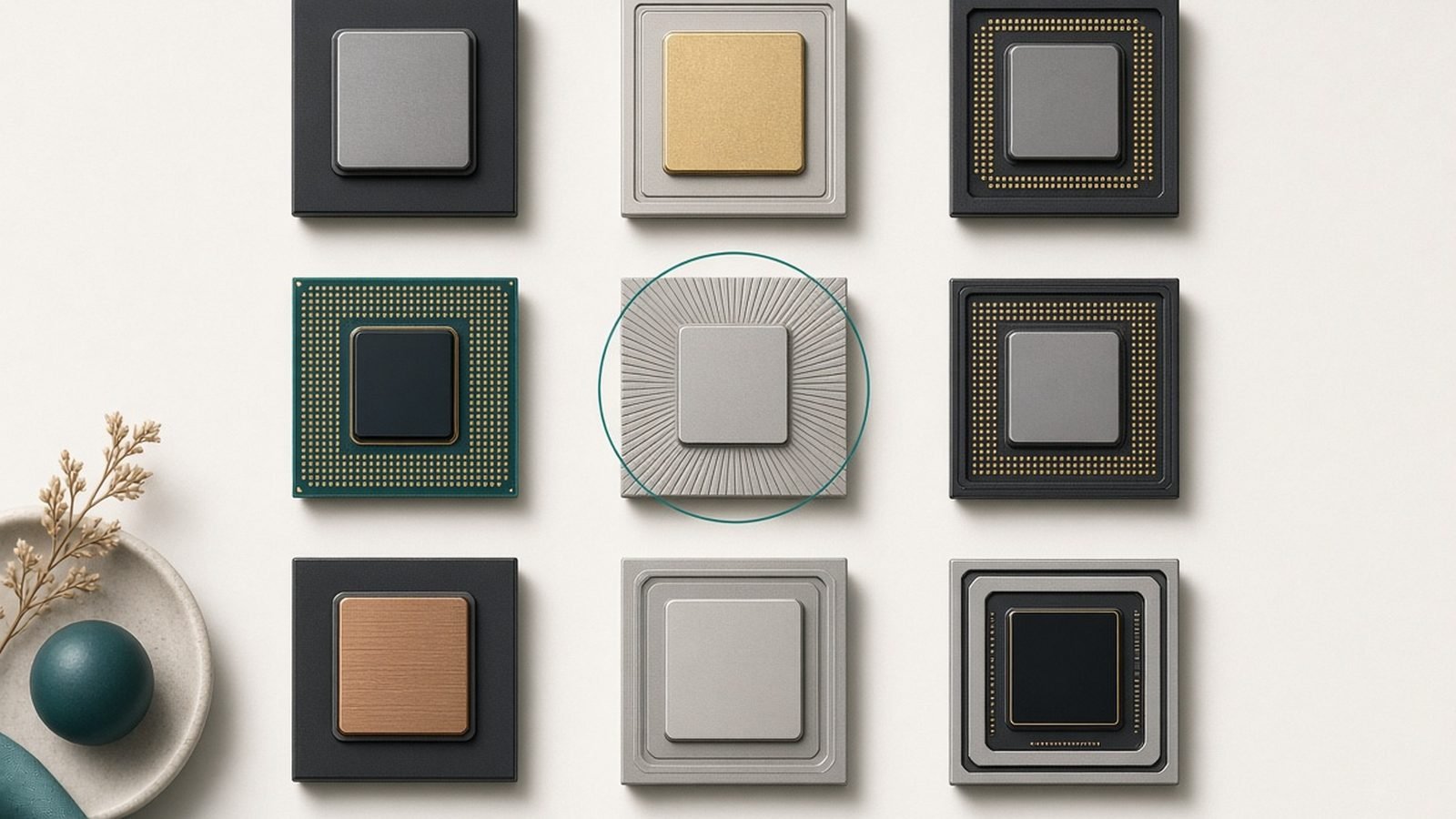
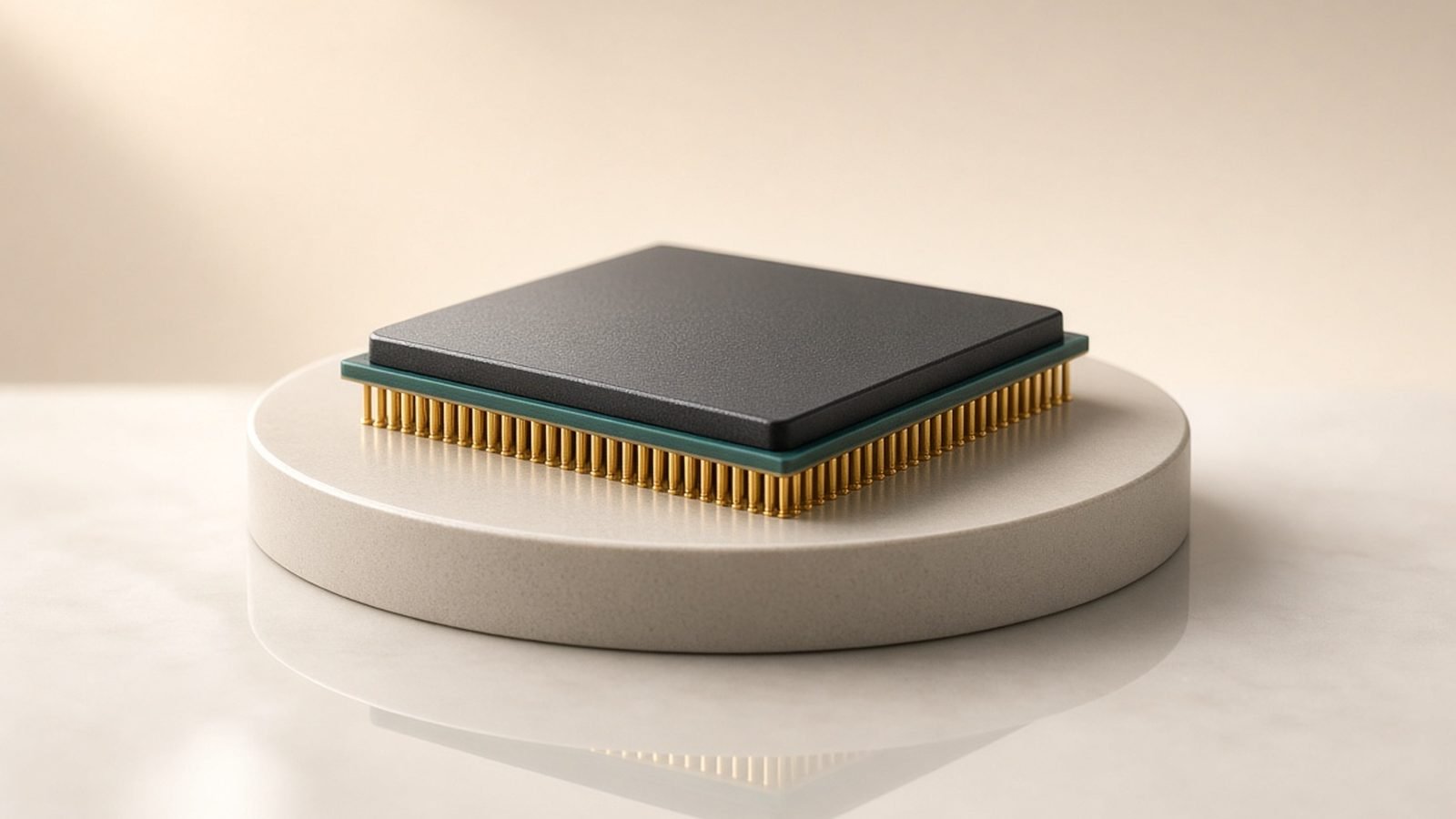
The 9800X3D is an 8-core, 16-thread Zen 5 processor with 96MB of total cache (a 64MB 3D V-Cache slice stacked on top of 32MB of on-die L3), a 4.7GHz base clock, and a 5.2GHz boost. It drops into any AM5 motherboard and carries a 120W TDP.
| Spec | Ryzen 7 9800X3D |
|---|---|
| Cores / threads | 8 / 16 |
| Architecture | Zen 5 |
| Base / boost clock | 4.7 / 5.2 GHz |
| Total cache | 96MB (64MB 3D V-Cache) |
| TDP | 120W |
| Socket | AM5 |
| Overclockable | Yes (unlocked) |
| US / UK price | around $449 / £429 |
At launch the 9800X3D commanded a firm $479-plus in most markets. In mid-2026 it has settled to an MSRP of around $449 / £429, and we have repeatedly seen US retail dip under $410 during sales events. That is meaningful, because it narrows the gap to older and cheaper options while keeping the performance crown intact.
What’s new: second-gen 3D V-Cache and overclocking
The headline change over the previous generation is structural. On the 7800X3D, AMD stacked the extra cache on top of the compute die, which trapped heat and forced conservative clocks. With the 9800X3D, AMD flipped the layout: the cache now sits beneath the cores, so the hottest silicon faces the cooler directly.
Two things fall out of that redesign. First, clocks are no longer throttled by the cache, so the 9800X3D boosts higher than any X3D chip before it. Second, and this is the fun part, the multiplier is unlocked. For the first time an X3D part is genuinely overclockable, with owner reports pointing to stable all-core gains and easy Precision Boost Overdrive tuning. Most gamers will leave it on auto and still get the benefit of the higher stock ceiling.
If you are weighing this against AMD’s dual-CCD flagship for mixed work, our Ryzen 7 9800X3D vs 9950X3D: Which to Buy in 2026? breakdown covers where the extra cores earn their keep.
Gaming benchmarks at 1080p and 1440p
This is where the 9800X3D justifies its existence. Across aggregated 9800X3D gaming benchmarks, it consistently tops the mainstream charts, trading blows only with AMD’s own newer X3D refreshes and sitting comfortably ahead of Intel’s competing parts in the vast majority of titles.
At 1080p with a top-tier GPU, the picture is clear: the huge cache feeds the cores in simulation-heavy and CPU-bound games, delivering the highest average and, crucially, the strongest 1% lows. That last point is what owners describe as “smoothness” you can feel in games like competitive shooters, large-scale strategy, and open-world titles that thrash memory.
At 1440p the story shifts, as it always does. The higher your resolution, the more the GPU becomes the bottleneck, and the gap between the 9800X3D and a good mid-range CPU shrinks. If you play exclusively at 4K on a single-GPU rig, you will see far less of this chip’s advantage than a 1080p high-refresh player will.
9800X3D vs 7800X3D
The 9800X3D vs 7800X3D comparison is the one most buyers actually agonise over, because the 7800X3D is still on sale and much cheaper. Based on reviewer aggregates, the 9800X3D lands roughly in the high single digits to mid-teens percent faster in gaming on average, with a wider gap in the handful of titles that love raw clock speed alongside cache.
That is a real, repeatable lead, not a rounding error, but it is not transformative. If you already own a 7800X3D, there is no reason to upgrade. If you are buying new and the price delta is small, take the 9800X3D; if the 7800X3D is heavily discounted, it remains a phenomenal value. Our Best Gaming CPU Under $300 in 2026 (AMD vs Intel) guide digs into that cheaper end.
Productivity performance
X3D chips have historically been gaming specialists that gave up ground in content creation, and the 9800X3D partially closes that reputation gap. Thanks to the higher clocks unlocked by the new cache layout, it is noticeably stronger in productivity than the 7800X3D, competitive in single-threaded tasks, and perfectly capable for the kind of Photoshop, light video editing, code compilation, and streaming most gamers actually do.
What it is not is a rendering workstation. With only 8 cores, heavily multi-threaded workloads like large Blender projects, sustained 4K video exports, or big software builds will run faster on a 12- or 16-core non-X3D part for the same money. If your day job is rendering and gaming is the hobby, that is the trade-off to weigh honestly.
Thermals, power and cooling requirements
Here is one of the pleasant surprises. Because the cache no longer insulates the cores, 9800X3D temperatures are markedly better behaved than the previous generation despite the higher performance. Owner reports consistently describe a chip that stays in a comfortable range under a decent air cooler and only approaches its thermal ceiling under synthetic all-core stress.
On 9800X3D power consumption, the 120W TDP tells most of the story: in gaming this is an efficient chip that sips power relative to the frames it produces, though pushing PBO and overclocking will raise both draw and heat as you would expect.
The practical upshot is that you do not need a big all-in-one liquid cooler. A quality dual-tower air cooler tames it easily. The Thermalright Peerless Assassin 120 SE is the value pick almost everyone recommends: it fully handles the 9800X3D for around $40, with the only real downside being a slightly fiddly manual mounting process.
Peerless Assassin 120 SE pros and cons
Pros: cools the 9800X3D with headroom; near-silent; extraordinary value; dual-tower performance at a budget price.
Cons: manual mount is finicky; no fancy RGB or screen if you want show-off looks.
Check price: Peerless Assassin 120 SE
If you would rather go liquid for aesthetics or extreme overclocking headroom, our Arctic Liquid Freezer III 360 Review: Best AIO Value? covers a strong 360mm option.
Platform cost: motherboard and RAM in 2026
The CPU price is only part of the bill, and honesty here matters. To run a 9800X3D you need an AM5 motherboard and DDR5 memory. The good news in 2026 is that AM5 is mature, so entry boards are cheap and DDR5 has fallen to commodity pricing.
For most builders the sweet spot is a mid-range B850 board. The MSI B850 Tomahawk WiFi, at around $220 / £210, is the pairing we would point most people toward: a strong VRM that will never bottleneck this CPU, solid connectivity, and good headroom for the overclocking the 9800X3D now supports. It is not the cheapest board, and if you are not overclocking you can spend less, but it is the “buy once, forget about it” option.
B850 Tomahawk WiFi pros and cons
Pros: robust VRM for overclocking; excellent feature set for the money; reliable AM5 platform.
Cons: overkill if you run stock; cheaper B850 boards exist for pure gaming builds.
Check price: B850 Tomahawk WiFi
For a full breakdown of board options at every budget, see Best B850 Motherboards for Ryzen in 2026. Add a 32GB DDR5-6000 CL30 kit (the X3D sweet spot) and you can budget the whole platform realistically before you buy.
Is the 9800X3D worth it? Verdict
So, is the 9800X3D worth it in mid-2026? For its target buyer, absolutely. If you are building a high-refresh gaming PC around a fast GPU and you play at 1080p or 1440p, this is the best CPU for gaming 2026 has on offer at the mainstream tier. It delivers the highest frame rates, the best 1% lows, runs cool on a cheap air cooler, and now overclocks on top. The settled ~$449 price makes it far easier to recommend than the launch sticker did.
The honest caveats: it is overkill for esports-only players who are already at their monitor’s refresh cap on a cheaper chip, it is not the pick for a rendering workstation, and if you play only at 4K you will barely notice its advantage over a mid-range CPU. And with newer X3D refreshes now arriving, wringing the last few percent may cost meaningfully more for little real-world gain.
Buy it if you want the fastest mainstream gaming CPU and plan to keep the platform for years. Skip it if you already own a 7800X3D, or if your budget is better spent on the GPU.
See more builds and buying guides at PC Hardware.
FAQ
Is the 9800X3D worth it over the 7800X3D? If you are buying new and the price gap is small, yes: the 9800X3D is meaningfully faster in gaming, runs cooler, and adds overclocking. But if you already own a 7800X3D, do not upgrade. And when the 7800X3D is heavily discounted, it remains a superb value that gets you most of the way there for less.
What cooler do I need for the 9800X3D? You do not need liquid cooling. The redesigned cache layout means the chip runs cool for its performance, and a good dual-tower air cooler like the Thermalright Peerless Assassin 120 SE handles it with headroom for around $40. Only reach for a 360mm AIO if you want the aesthetics or plan aggressive overclocking.
Does the 9800X3D matter at 1440p and 4K? At 1440p it still helps in CPU-bound titles, though the gap over a mid-range chip narrows as resolution rises. At 4K on a single GPU you become GPU-limited, so the advantage shrinks further. High-refresh 1080p and 1440p players benefit most; pure 4K players may not need it.
Is the 9800X3D good for productivity? It is capable but not a workstation chip. The higher clocks make it stronger than the 7800X3D in creative apps, and it is fine for streaming, photo work, and light editing. For heavy rendering or big compiles, a 12- or 16-core non-X3D CPU at the same price will finish faster.
How much power does the 9800X3D use? It carries a 120W TDP and is efficient in gaming relative to the frames it delivers. Real draw stays modest in games; pushing Precision Boost Overdrive or a manual overclock raises both power consumption and heat, but stock operation is well within the reach of any decent air cooler.
Zen Tech Hub may earn a commission from links on this page, at no extra cost to you.