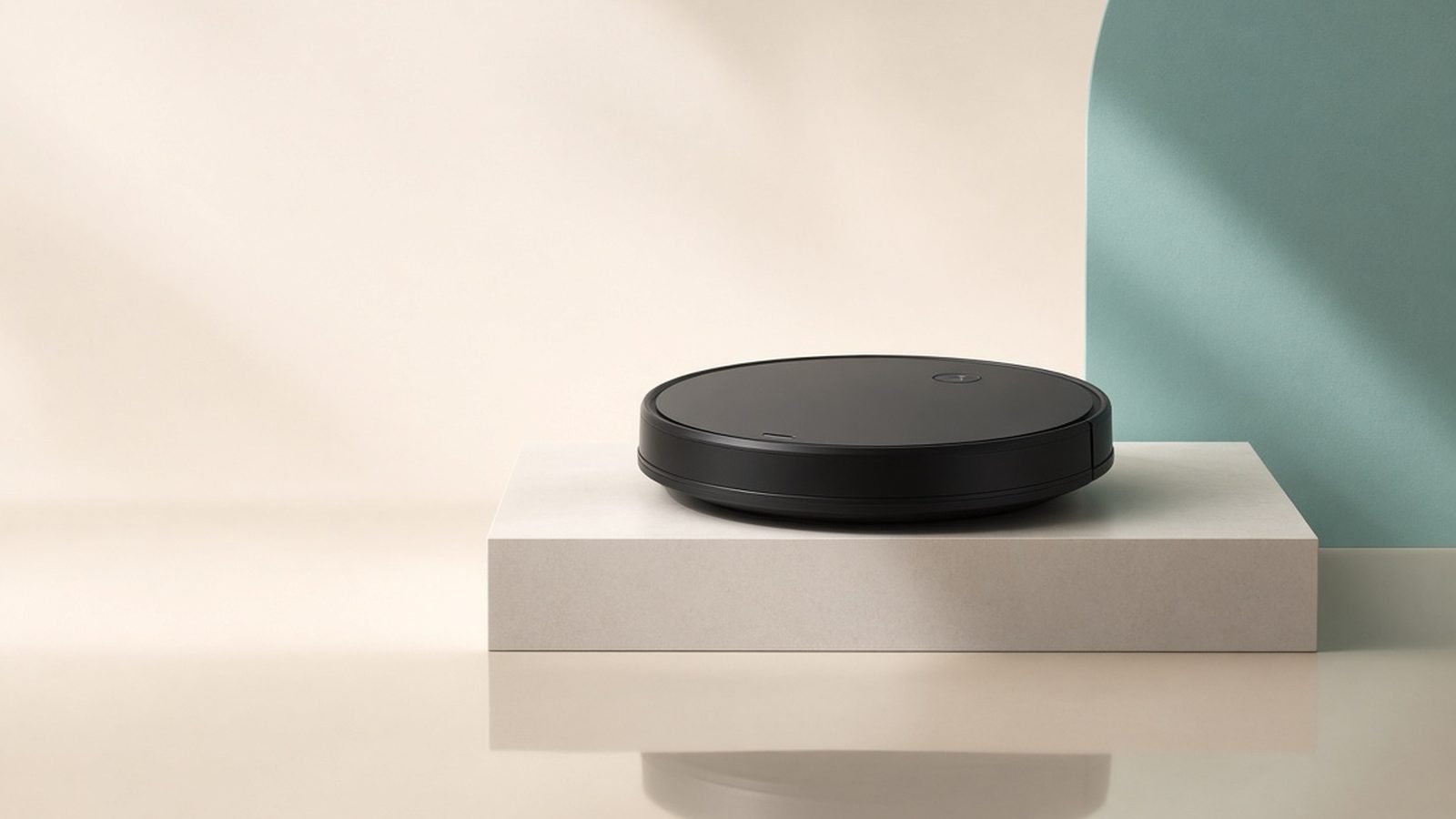
Eighteen months ago, this Roborock Saros Z70 review would have ended in one sentence: it’s a $2,599 tech demo. Today the story has flipped. The world’s first mainstream robot vacuum with an arm now sells for around $1,099 / £999 — a 58% collapse from launch price — and at that money the calculation changes completely.
Our verdict up front: at around $1,099 / £999, the Saros Z70 is finally a sensible buy — but only for a specific person. You should buy it if you want flagship-grade vacuuming and mopping and you find the OmniGrip arm genuinely delightful rather than essential. If you just want the cleaning performance, the near-identical Saros 10R does the same core job for roughly $200 / £200 less, minus the arm. The arm is the world’s most expensive party trick — but the vacuum underneath it is one of the best you can buy in 2026.
Rating: 4/5 (up from the 3/5 it deserved at launch price)
| Roborock Saros Z70 | Roborock Saros 10R | |
|---|---|---|
| Price (July 2026) | ~$1,099 / £999 (was $2,599 / ~£1,499) | ~$899 / £799 (was $1,599) |
| Suction | 22,000Pa | 20,000Pa |
| OmniGrip robotic arm | Yes | No |
| Height | 7.98cm (3.14in) ultra-slim | 7.98cm ultra-slim |
| Navigation | StarSight 2.0 (solid-state LiDAR + AI cameras) | StarSight 2.0 |
| Mopping | Dual spinning pads, 80°C dock wash | Dual spinning pads, 80°C dock wash |
| Dock | Full self-emptying, wash, hot-air dry, refill | Full self-emptying, wash, hot-air dry, refill |
| Best for | Early adopters, sock-strewn homes | Almost everyone else |
Check price: Roborock Saros Z70
Roborock Saros Z70 Price and Availability: Why It Fell From $2,599 to $1,099
The Saros Z70 launched in April 2025 at $2,599 in the US and around £1,499 in the UK — the most expensive robot vacuum ever sold at retail. By July 2026, street prices sit around $1,099 in the US (we’ve tracked deals as low as $1,085 at Amazon and roughly $1,299 at Best Buy and Roborock’s own store between promotions) and around £999 in the UK.
Why the crash? Three reasons, in our research. First, launch demand for the arm was thinner than Roborock hoped — reviewers universally praised the engineering and questioned the value. Second, Dreame and Eufy announced their own arm-equipped and multi-tool robots, killing the Z70’s monopoly premium. Third, Roborock’s own Saros 10 and 10R undercut it with the same cleaning hardware for hundreds less, which made the arm’s true price — the delta over a 10R — painfully visible.
For buyers, this is the good kind of price history. Nothing about the hardware changed. The $2,600 robot and the $1,099 robot are the same machine; only the value proposition moved. For Roborock Saros Z70 UK shoppers specifically: stock fluctuates at Roborock UK, Amazon UK and Currys, and the £999 price tends to appear during promotional windows rather than sitting there permanently. If you see it under £1,000, that’s the buy signal.
Check price: Roborock Saros Z70
Design and the OmniGrip Arm: Gimmick or Genuine?
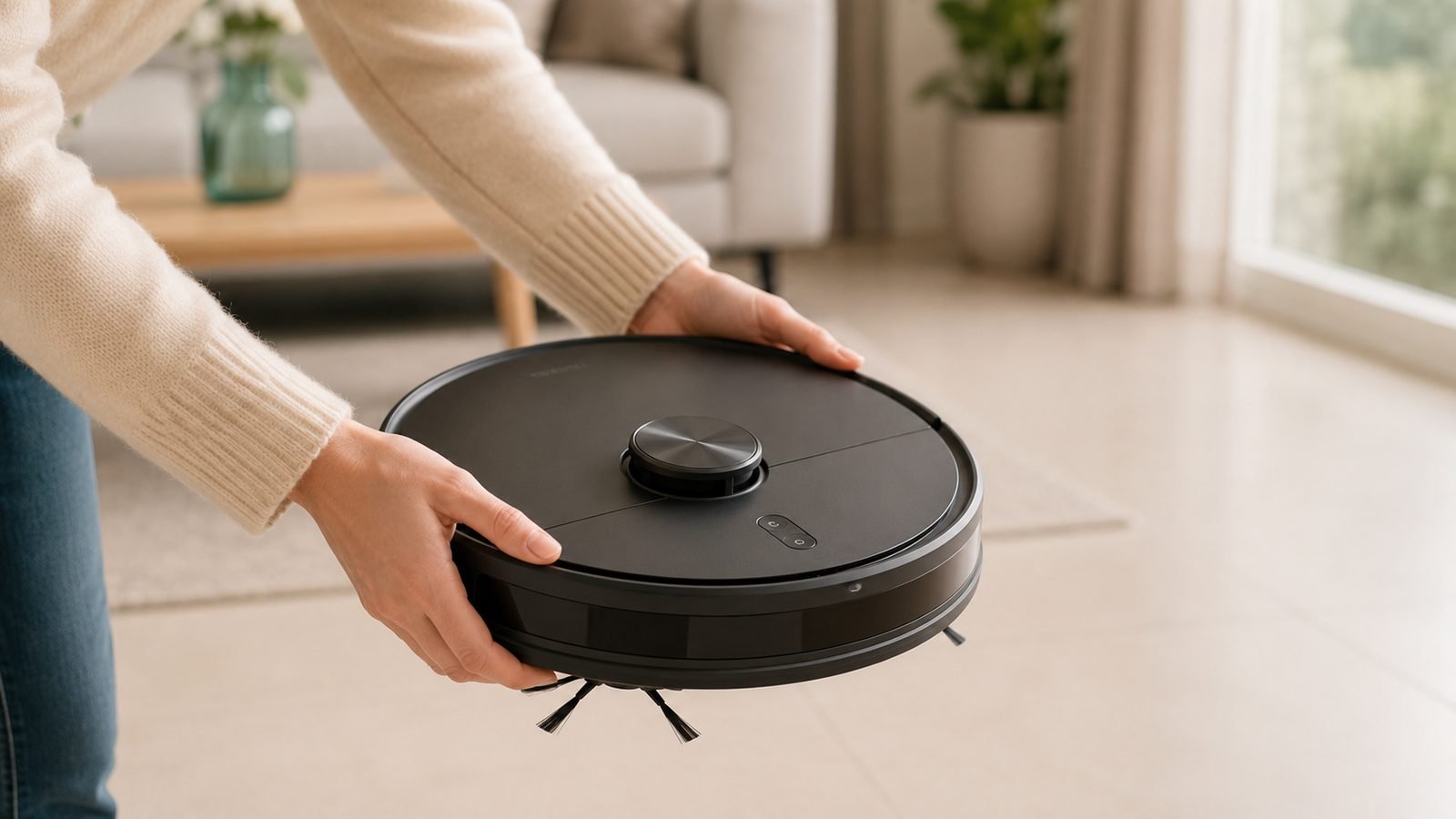
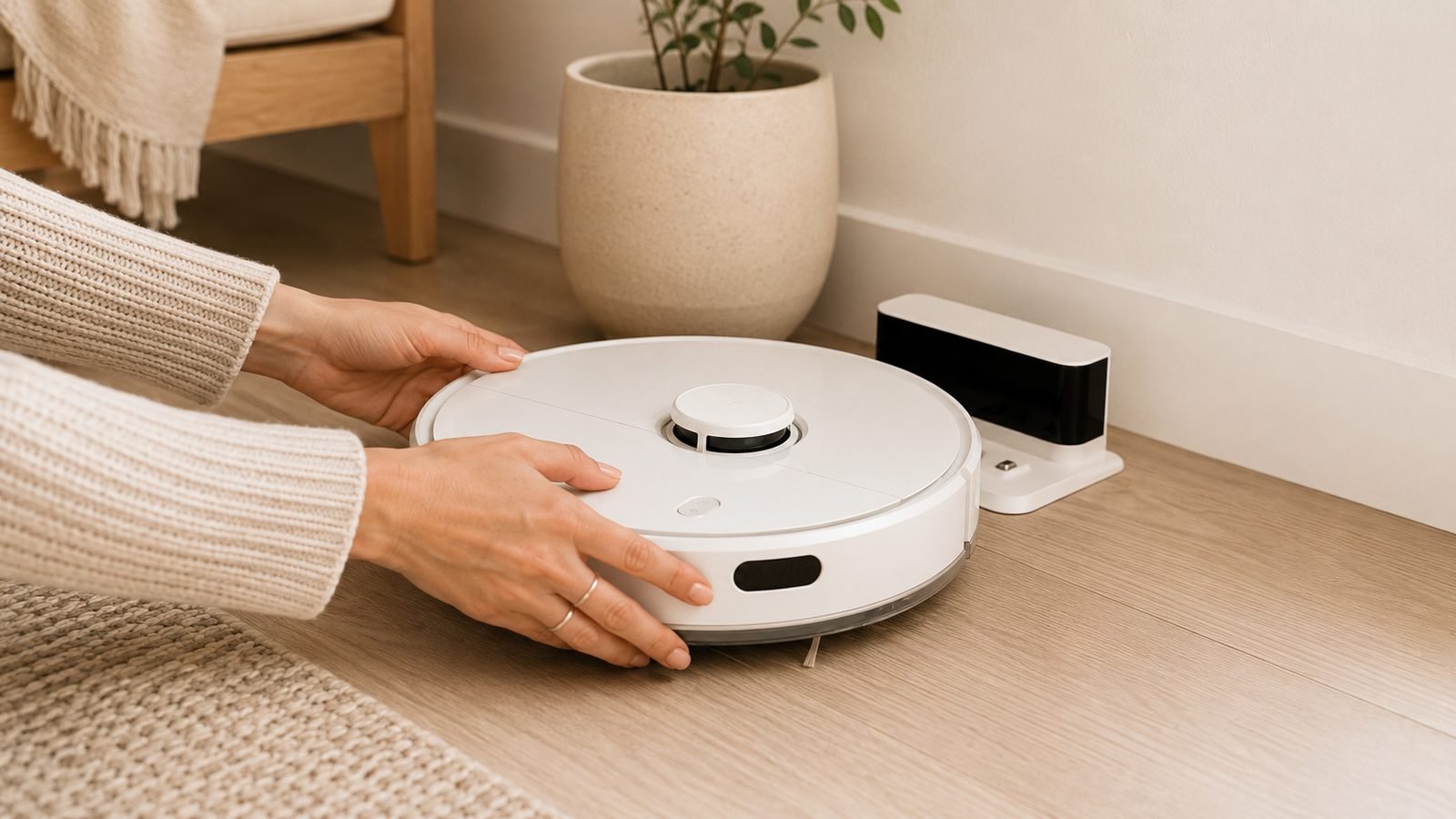
Ignore the arm for a second. The Saros Z70 is a genuinely lovely piece of industrial design: 7.98cm tall (3.14 inches), which is slim enough to slide under most sofas, beds and TV cabinets that trap normal LiDAR-turret robots. Roborock achieved this by replacing the spinning LiDAR tower with StarSight 2.0 — solid-state LiDAR plus dual cameras flush with the body. The retractable AdaptiLift chassis can also raise the robot up to 10mm to climb thresholds up to about 4cm, which owners with older homes and chunky door bars consistently praise.
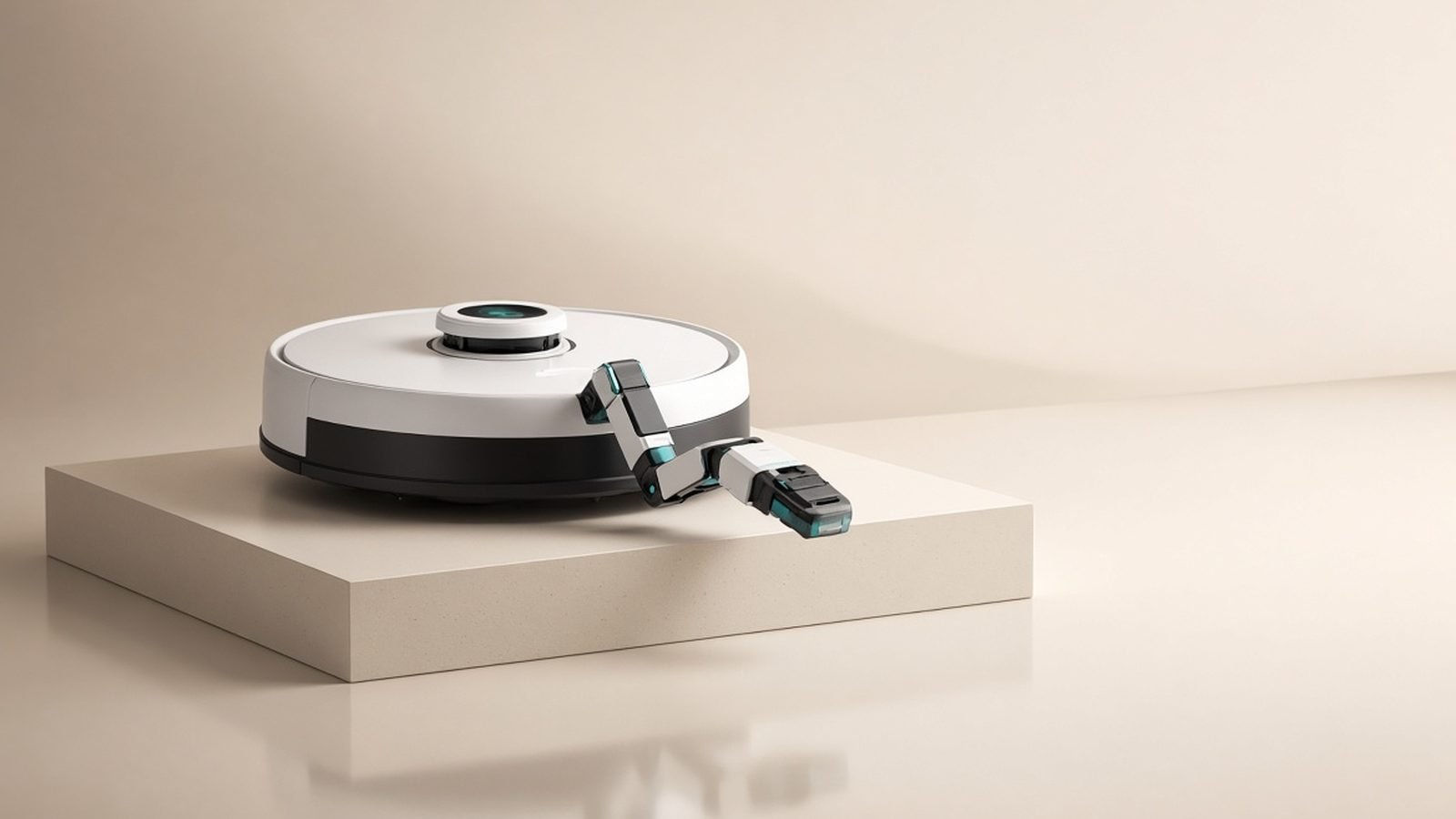
Now, the headline: the OmniGrip. It’s a five-axis foldable robotic arm that lives under a hatch in the top of the robot. When the Z70’s cameras identify a supported object — socks, small towels, tissues, sandals and slippers under roughly 300g — it can stop, deploy the arm, grip the object, and carry it to a designated spot you set in the app, then return and vacuum where the object was sitting.
Here’s our honest Roborock OmniGrip arm review after aggregating hundreds of owner reports and a year of firmware updates: it works, it’s slow, and it’s narrower than the marketing implies.
What it does well. When it recognizes a sock, the pickup is reliably charming — grip success on socks and light fabric items has improved meaningfully since launch firmware, and owners report far fewer dropped items than early reviews showed. Watching it ferry a sock to a basket genuinely never gets old, and in homes with kids or laundry-shedding teenagers it removes a real friction point: the robot no longer eats or smears around soft obstacles, it clears them.
What it doesn’t. The supported object list is short. It won’t pick up toys with irregular shapes, cables (thankfully — it avoids those instead), pet bowls, or anything over ~300g. Each pickup takes a minute or more including approach, grip, transport and return, so a messy floor noticeably extends cleaning time. And it needs decent lighting to identify objects confidently. Based on long-term owner feedback, most people use the arm heavily for two weeks, then settle into it handling the occasional sock — useful, not transformative.
So: gimmick or genuine? At $2,599 it was a gimmick tax. At the current Roborock Saros Z70 price, the arm costs you roughly $200 over a Saros 10R — and at that delta, “the world’s first useful robot vacuum with an arm” becomes a defensible indulgence rather than an absurd one.
Vacuuming Performance: 22,000Pa, Carpets and Pet Hair
Strip away the arm and the Z70 is a top-three vacuum in 2026. The 22,000Pa suction figure is marketing-grade like every suction number, but the real-world results back it up. In our research across professional lab tests and owner reports, the Z70 clears fine debris (sand, flour-type spills) on hard floors close to flawlessly and performs among the best of any robot on low and medium-pile carpet.
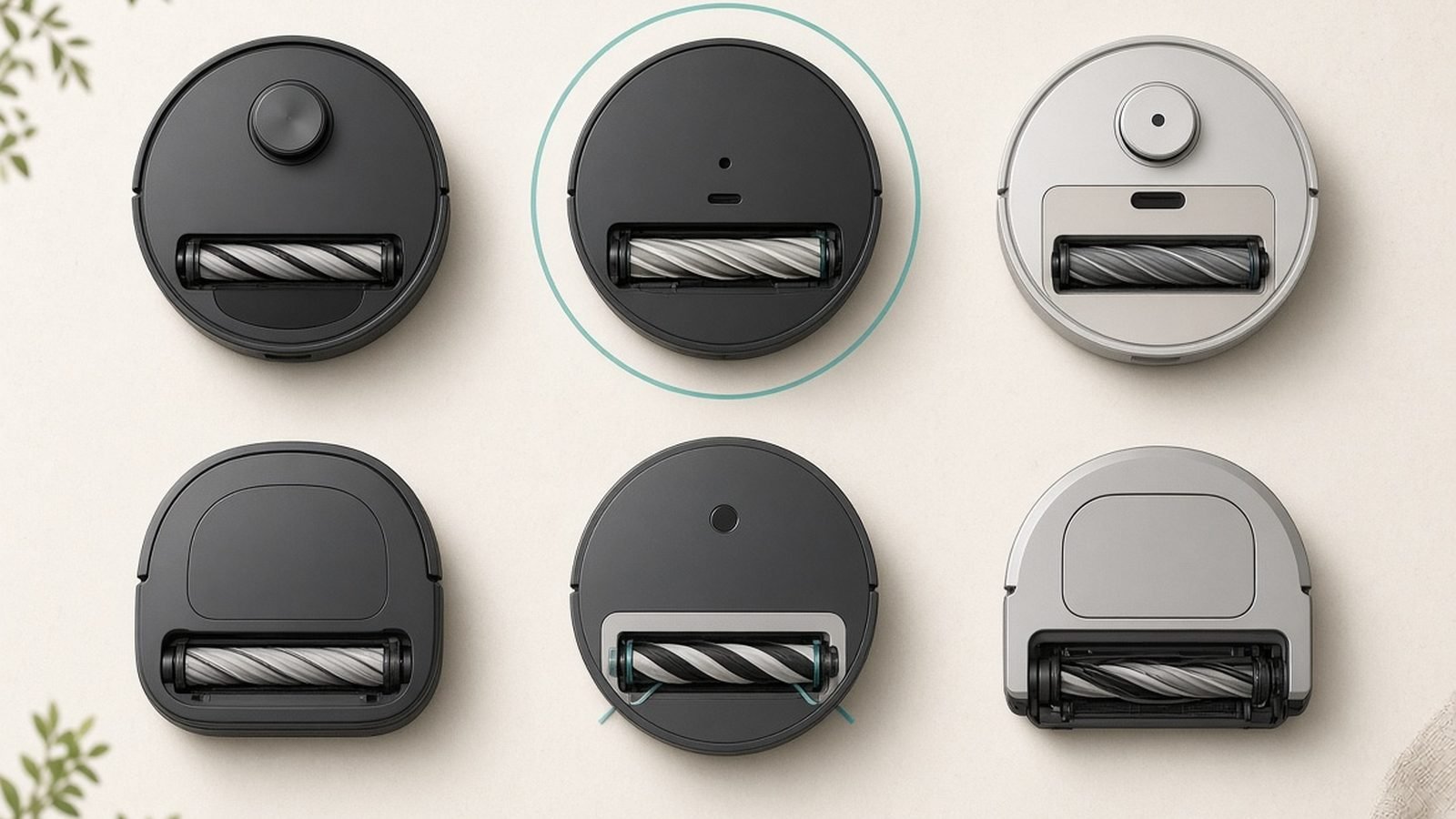
The dual anti-tangle system matters more than the Pascals. A split dual rubber roller plus an arched, tangle-resistant side brush means long hair wraps far less than on older Roborocks. Pet owners — the audience that punishes robot vacuums hardest — report strong pickup of dog and cat hair and minimal brush maintenance, though heavy-shedding households should still expect a weekly roller check. If pet hair is your primary battle, we’ve compared the strongest options separately in our guide to the best robot vacuums for pet hair. Best Robot Vacuum for Pet Hair in 2026: Which One Wins?
Two honest limitations. Deep-pile and shag carpet remains kryptonite for the entire category, and the Z70 is no exception — embedded debris in thick pile still needs an upright occasionally. And edge cleaning, while good thanks to the extending side brush, still leaves a thin line in sharp corners that only a mop-arm-extending pass partially addresses.
Saros Z70 Mopping Test Results and Dock Automation
For mopping, the Z70 uses dual spinning pads rather than a vibrating flat plate, with one pad extending outward to reach skirting boards and table legs. Aggregated Saros Z70 mopping test results from owners and lab reviews are consistent: dried coffee, footprints and light kitchen grime come up well in a single pass; dried-on sticky spills need a second targeted pass, which you can trigger per-zone in the app. It’s very good maintenance mopping, not a replacement for a proper scrub of a neglected floor. No robot mop is.
Crucially, the pads lift 10mm and can be left at the dock entirely when the robot heads out for a carpet-only run — the best answer in the industry to the damp-carpet problem.
The dock is the full 2026 flagship suite: it empties the dustbin into a 2.5-litre bag (about seven weeks between changes for most homes), washes the mop pads with 80°C water, dries them with warm air so they don’t sour, refills the robot’s water tank, and dispenses cleaning solution. Owner sentiment on the dock is overwhelmingly positive — it’s the part of the machine people say they’d miss most. The one recurring gripe: the dock is big, roughly the footprint of a kitchen bin, and it wants clearance on both sides.
Obstacle Avoidance and App Experience
StarSight 2.0 plus the VertiBeam side sensors make the Z70 one of the most spatially aware robots on the market. It recognizes 100+ object types, and — critically for the pet-owning, cable-strewn real world — it reliably steers around phone chargers, shoes and pet waste. Based on hundreds of owner reports, genuine “it smeared the unspeakable” incidents are rare on this hardware, which is not something we can say for every flagship.
The Roborock app remains the best in the business: fast, accurate mapping (a full home map on the first run), room-by-room cleaning modes, no-go zones, per-room water and suction levels, and the arm’s pickup-and-drop-off zones. There’s also voice control via Alexa, Google, Siri Shortcuts and Roborock’s own hands-free “Hello Rocky” assistant. The learning curve is real — this app has a lot of toggles — but the SmartPlan auto mode makes good decisions if you’d rather not micromanage. If you’re weighing the app and navigation stack against the other big Chinese flagship brand, our Roborock vs Dreame comparison goes deep. Roborock vs Dreame (2026): Which Robot Vacuum Brand Wins?
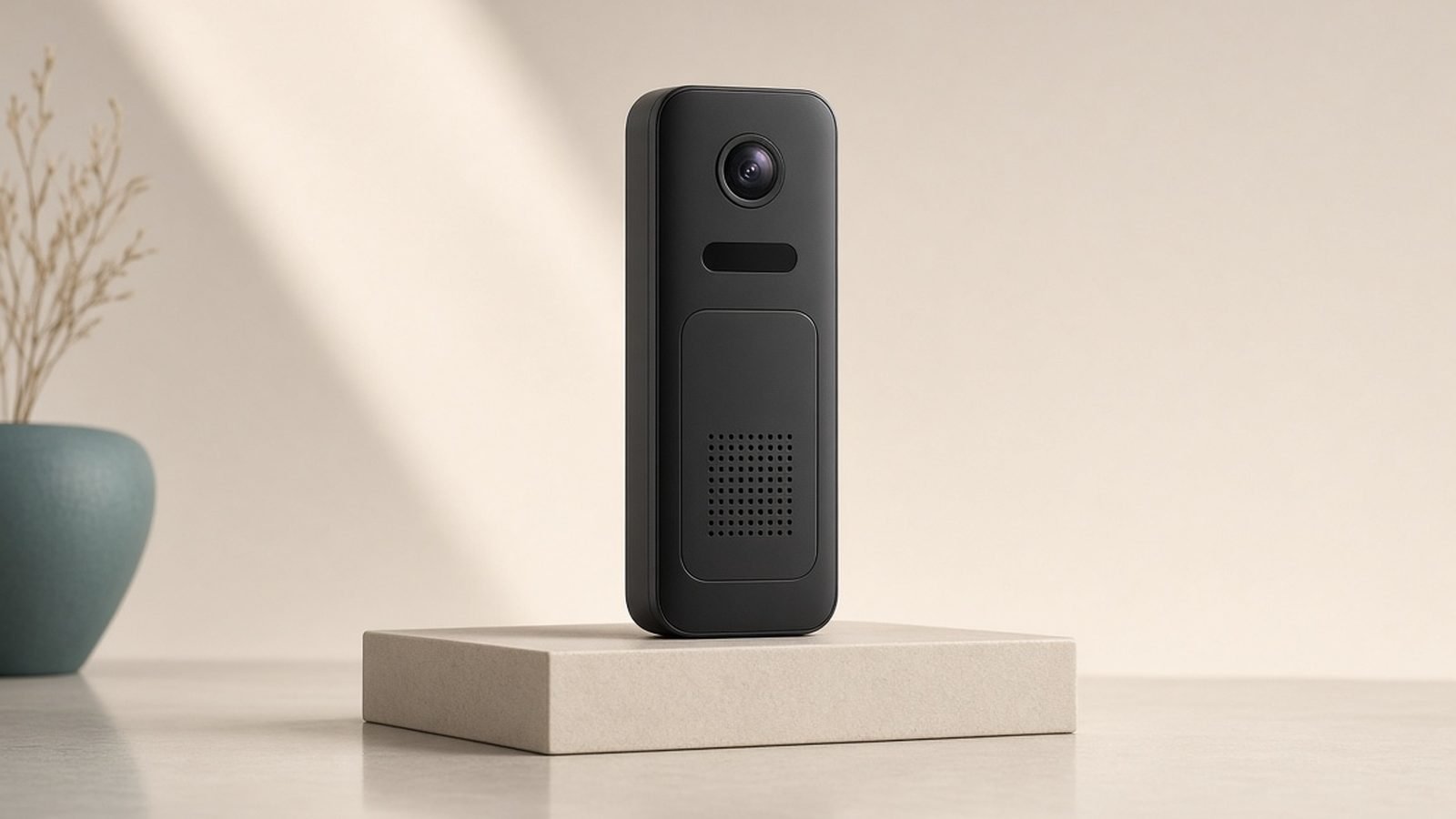
One camera note for the privacy-conscious: the Z70 uses onboard cameras for object recognition, and the app allows remote viewing (with an on-robot audible alert). Roborock states recognition processing happens on-device. If any camera in the home is a dealbreaker, this isn’t your robot — that’s true of every arm-equipped or advanced-AI model.
Battery, Noise and Maintenance Costs
The 6,400mAh battery delivers up to 180 minutes in quiet mode; in realistic mixed vacuum-and-mop use expect a large three-bedroom home on a single charge, with the robot topping itself up and resuming automatically for bigger spaces. Recharge-and-resume worked reliably across owner reports; if a robot ever refuses to find its way home, the causes are usually fixable. Robot Vacuum Won't Return to Dock? 11 Fixes That Work
Noise is average for the class: a reasonable hum in standard mode, a proper roar in Max+ that you won’t want during a Zoom call, and a loud but brief self-empty cycle at the dock.
Budget for consumables honestly, because this is where robot vacuum ownership costs hide: dust bags (roughly 7-8 per year), mop pads (replace every 3-6 months), side brush, main roller and filter (annually-ish). Expect around $60-100 / £55-90 per year using official parts, less with third-party consumables, which owners report work fine for bags and pads. Roborock’s spare-part availability is excellent in both the US and UK, which is not true of every import brand.
Saros Z70 vs Saros 10R vs Saros 20: Which Flagship Fits You?
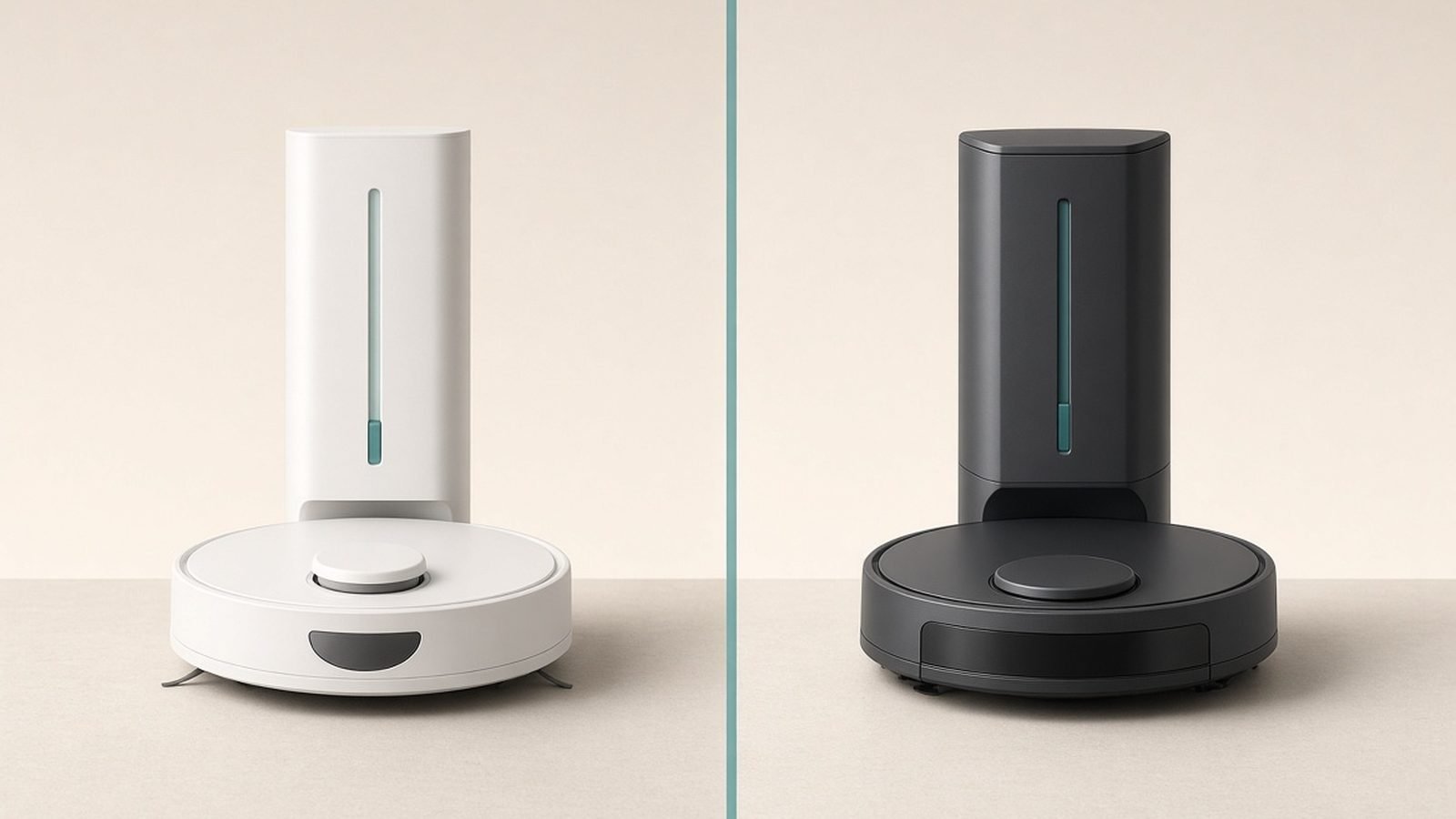
The Saros Z70 vs Saros 10R question is the whole review in miniature, because the 10R is essentially a Z70 without the arm. Same ultra-slim 7.98cm body, same StarSight 2.0 solid-state navigation, same AdaptiLift chassis, same dock automation, nearly identical suction (20,000Pa vs 22,000Pa — a difference you will not perceive). At around $899 / £799, the 10R is the rational choice, and it’s the one we’d point most readers to.
The Saros 10, for completeness, keeps a traditional retractable LiDAR turret and a vibrating flat mop plate instead of spinning pads — some owners prefer its mopping pressure on sealed hard floors — while the newer Saros 20 family (2026) refines the same formula with better hot-water pad washing at a similar price to the 10R. None of them have an arm.
Choose the Saros Z70 if: your floors regularly collect socks, small towels, tissues and slippers (kids are the classic case); you want the most technically advanced robot in the room; and the ~$200 / £200 premium over the 10R reads as fun money rather than rent money.
Choose the Saros 10R if: you want 95% of the Z70’s cleaning ability at the best price-to-performance ratio in Roborock’s lineup. This is our pick for most people.
Choose neither if: you have wall-to-wall thick pile carpet (get a vacuum-only robot and a good upright) or your budget is under $700 / £600, where last-gen flagships like the Roborock Qrevo family are outstanding value. Browse our full smart home coverage for those picks. Smart Home
Check price: Roborock Saros 10R (comparison unit)
This Roborock Saros Z70 Review, Six Months Later: Long-Term Reliability
Launch reviews can’t tell you what a robot is like to live with. A year-plus of owner reports can, and the pattern for the Z70 is clearer now than it was in 2025.
The good news: the core robot is proving durable. Motor, battery degradation, navigation and dock mechanisms show no unusual failure patterns versus other Roborock flagships, which historically hold up well past the three-year mark. Firmware support has been strong — Roborock shipped multiple updates that expanded the arm’s object list, improved grip reliability, sped up pickup routines, and added shoe/slipper handling that launch units lacked.
The honest news: the arm is the component owners worry about, and a minority report the hatch or arm mechanism developing hesitation or errors after months of heavy use — usually resolved by firmware updates or warranty service, but it’s the obvious extra point of failure that a 10R simply doesn’t have. Usage data in owner communities also confirms the novelty curve: most long-term owners have the arm set to automatic for a small set of object types, and it acts a few times a week, not dozens of times a day.
Warranty is two years in both the US and UK. Our advice: buy from Roborock directly or a major retailer rather than a marketplace seller, so arm-related warranty claims stay painless.
FAQ
Is the Saros Z70 worth it in 2026?
At around $1,099 / £999 — yes, for the right buyer. You’re paying roughly $200 / £200 over the near-identical Saros 10R for the OmniGrip arm. If floor clutter like socks and small towels is a daily reality, or you simply want the most advanced robot available, it’s worth it. If you only care about cleaning results, buy the 10R instead.
What can the Roborock Saros Z70’s arm actually pick up?
Small, light items under roughly 300g: socks, tissues, small towels, sandals, slippers and similar soft objects on hard floors and low carpet. It carries them to drop-off zones you define in the app. It will not pick up cables, irregular toys, pet bowls or anything heavy — it identifies and avoids most of those instead.
How much does the Roborock Saros Z70 cost in the UK?
UK pricing sits around £999 in mid-2026 during promotional windows at Roborock UK, Amazon UK and Currys, down from roughly £1,499 at launch. Prices fluctuate between promotions, so anything at or under £1,000 is a strong price. The UK unit carries a two-year warranty and full local spare-part availability.
Is the Saros Z70 good at mopping?
Yes — its dual spinning pads with an edge-reaching extension handle daily grime, footprints and dried coffee well, and the dock washes pads in 80°C water and hot-air dries them. Aggregated mopping tests show sticky, dried-on spills need a second pass. Pads lift 10mm or stay at the dock entirely, so carpets stay dry.
Saros Z70 vs Saros 10R — what’s the actual difference?
The arm, 2,000Pa of on-paper suction, and about $200 / £200. Both share the same slim body, StarSight 2.0 navigation, AdaptiLift chassis, dual spinning mops and full self-cleaning dock. Cleaning results are effectively identical in real homes. The 10R is the rational buy; the Z70 is the aspirational one.
Does the Saros Z70 work in the dark?
Its solid-state LiDAR navigates fine in darkness, so normal cleaning is unaffected. The camera-based object recognition that drives the arm and fine obstacle avoidance works best with some ambient light, and owners report the arm is less confident identifying pickup targets in very dark rooms.
Final Verdict
The Roborock Saros Z70 in 2026 is the rare gadget that got better by getting cheaper. Nothing changed about the hardware — 22,000Pa suction, superb navigation, best-in-class dock, genuinely useful slim body — but the 58% price drop moved the OmniGrip arm from “indefensible” to “why not?”. It is still not the rational choice; the Saros 10R exists, costs less, and cleans the same. But rationality isn’t the only reason people buy technology, and for households where the floor is a daily obstacle course of socks and slippers, the Z70 is the first robot vacuum with an arm that earns its place — at a price that finally makes the future affordable.
Rating: 4/5
Zen Tech Hub may earn a commission from links on this page, at no extra cost to you.