If you only read one line of this TCL QM7K review, make it this one: for around $499, the 55-inch QM7K delivers most of what made TCL’s flagships exciting, and it does it in the price bracket where the majority of 2026 buyers actually shop. This is the mid-range QD-Mini LED to beat, and nothing else near the money makes the trade-offs feel as small.
The QM7K inherits TCL’s “Halo Control” backlight from the pricier QM8K and QM9K, dials back the zone count and peak brightness, and undercuts almost every name-brand rival. It isn’t perfect — narrow viewing angles, forgettable speakers — but the picture-per-dollar math is hard to argue with.
Verdict: the mid-range mini-LED to beat at $499
Rating: 4.5 / 5
The QM7K is the TV we point most people to when they ask for a big, bright, punchy screen without stepping up to OLED money. Based on aggregated owner reports and professional measurements, its mini-LED backlight controls blooming better than anything else in the class, HDR highlights genuinely pop, and the 144Hz panel makes it a legitimate gaming display. You give up wide viewing angles and good built-in sound — that’s the deal.
Pros - Excellent contrast and halo control for the price - Bright, vivid HDR with QD-wide color - 144Hz native, up to 288Hz Game Accelerator, VRR, low input lag - Anti-reflective screen handles bright rooms well - Clean, fast Google TV
Cons - Narrow viewing angles — color washes off-axis - Built-in speakers are thin; plan on a soundbar - Google TV can feel ad-heavy on the home screen
Check price: TCL QM7K (55-inch)
Price, sizes and UK equivalent (C7K)
TCL QM7K price in the US starts at around $499 for the 55-inch, with the 65-inch frequently landing near $698 and larger 75-, 85- and 98-inch panels scaling up from there. Sale pricing dips lower during major events, so it’s worth watching.
| Size | US price (approx.) | UK equivalent (C7K) |
|---|---|---|
| 55” | ~$499 | ~£649 |
| 65” | ~$698 | ~£849 |
| 75” | ~$999 | ~£1,199 |
In the UK and Europe the closest match is the TCL C7K, which uses the same QD-Mini LED platform. If you’re reading this as a TCL C7K UK review, the takeaways here carry over almost exactly — the 55-inch C7K sits around £649, with the panel tech, gaming features and off-axis weaknesses all shared. Naming differs by region; the hardware story is the same.
Design and build
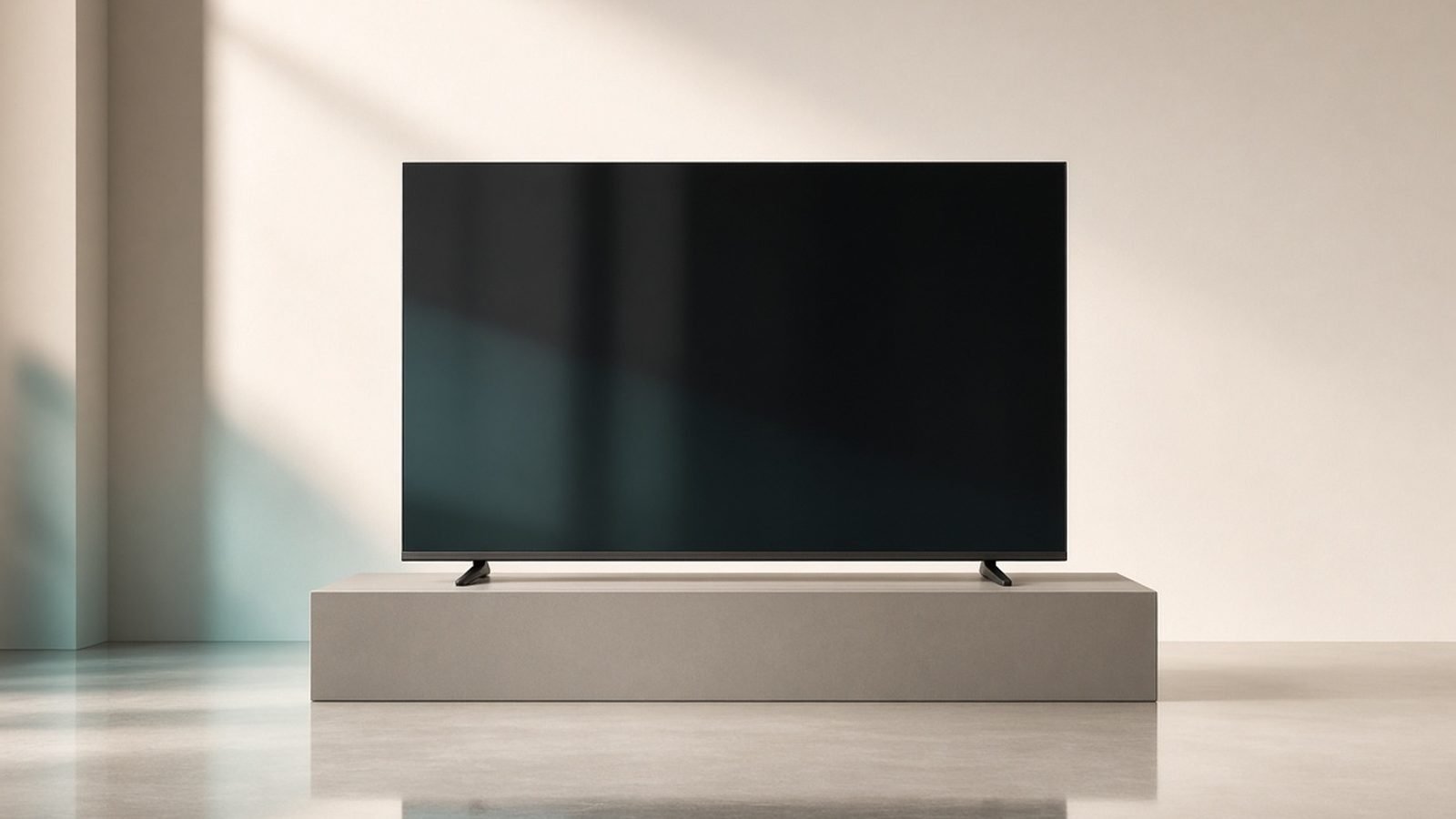
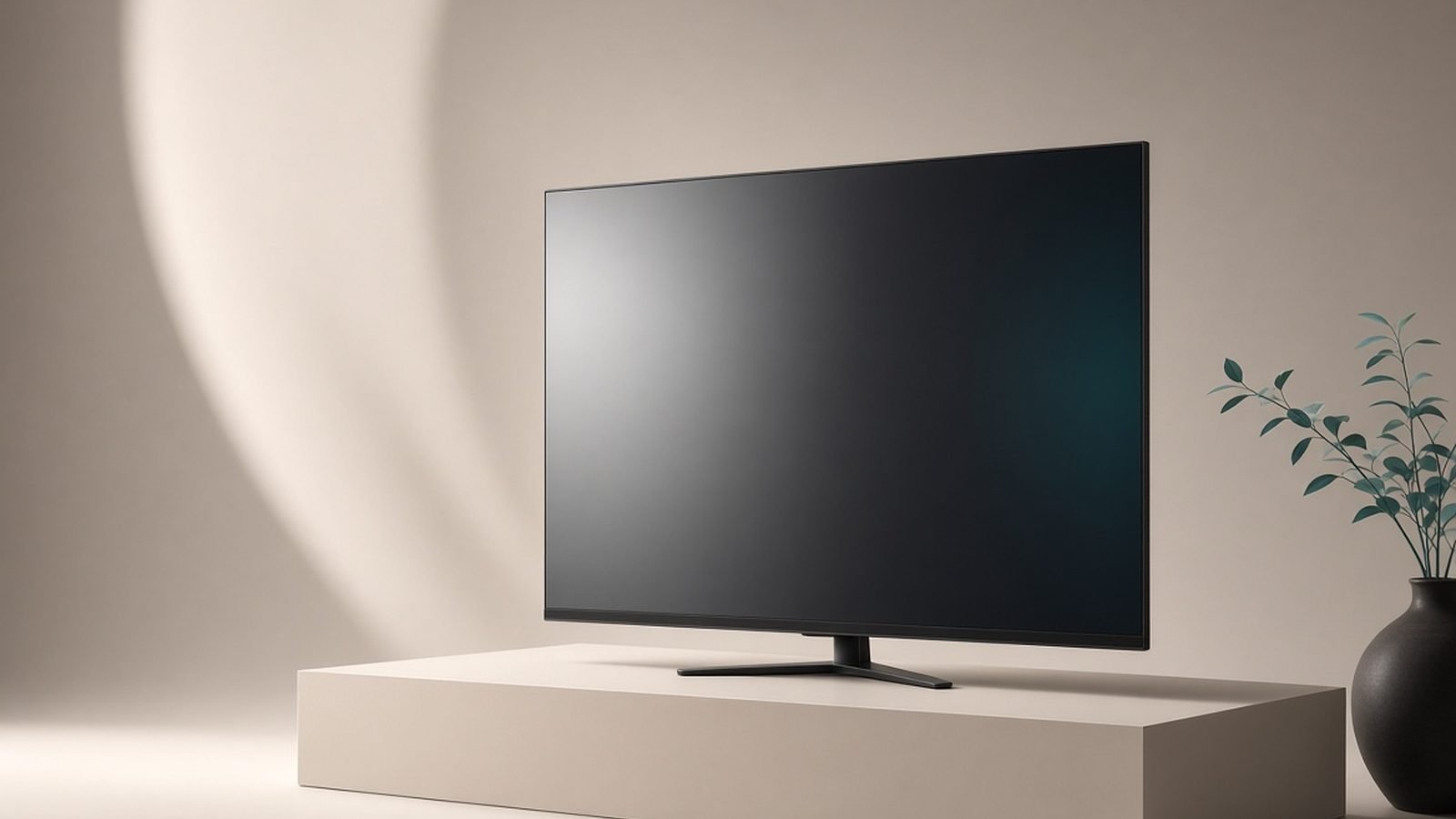
Nobody buys a $499 TV for the chassis, but the QM7K punches above its weight. Bezels are slim, the finish is clean, and the central pedestal stand keeps the footprint tight enough for narrower media units — a real win over rivals with wide-set feet.
Build is plastic-heavy, as expected at the price, but nothing feels flimsy. The panel is thicker because of the mini-LED backlight, so wall-mounters should budget for a slightly proud profile. The anti-reflective coating is the standout physical feature: in our research it’s one of the more effective matte treatments in the class, which feeds directly into how well this set copes with daylight.
Picture quality: halo control and HDR pop
This is where the QM7K earns its recommendation. TCL’s Halo Control backlight — trickled down from the flagship QM8K/QM9K line — pairs a healthy mini-LED zone count with smart local dimming algorithms. The result is deep blacks that hold up in a dark room and highlights that stay tight instead of ballooning into halos around bright objects.
Blooming isn’t fully eliminated — no LCD does that — but it’s controlled well enough that most viewers won’t notice it in normal content. HDR is the party trick: peak brightness is high enough to make specular highlights and neon-lit scenes genuinely pop, and the quantum-dot layer delivers rich, saturated color across a wide gamut. Dolby Vision, HDR10+ and HLG are all supported. SDR is handled cleanly and upscaling copes well with older sources — this is a picture that looks a class above its price.
Recommended TCL QM7K settings
Dialing in the right TCL QM7K settings matters more on a mini-LED than on OLED, because the aggressive processing defaults can look artificial. Based on owner reports and calibration guidance, this is a sensible starting point:
Picture mode: Movie / Filmmaker Mode for accuracy; leave Standard for bright rooms only
Local dimming: High (Medium if you find blooming distracting)
Peak brightness: High for HDR, Medium for dim-room SDR
Motion / clarity: Turn off soap-opera smoothing (Action Smoothing / MEMC) for film; a low setting is fine for sports
Gaming: Enable Game Mode / Game Master and turn on VRR from your console
Treat these as a baseline, not gospel — every room is different. Our Best TV Picture Settings 2026: Calibrate Any Brand guide walks through the why behind each of these.
Gaming performance: 144Hz, Game Accelerator 288
TCL QM7K gaming is a highlight, not an afterthought. The panel is native 144Hz at 4K over HDMI 2.1, with Game Accelerator 288 letting you push refresh rates as high as 288Hz at reduced resolution for competitive titles. You also get VRR (including AMD FreeSync and support for HDMI Forum VRR), ALLM, and low input lag in Game Mode.
For PS5 Pro, Xbox Series X and PC players, that combination is close to what you’d expect from a dedicated gaming monitor, on a screen this size. TCL’s Game Master menu surfaces a frame-rate counter, shadow enhancement and aiming aids. The one caveat is the same off-axis weakness that affects everything else: sit centered and it’s superb; share the couch at a wide angle and color uniformity slips.
Google TV, remote and everyday use
The QM7K runs Google TV, and it’s fast enough to stay out of your way — app launches are snappy and the interface is familiar. You get Google Cast built in, hands-free voice via the included remote, and broad app support.
The one gripe, echoed across owner feedback, is that the Google TV home screen leans heavily on recommendations and promoted content. It’s manageable, but if you want a clean, app-first launcher, you’ll spend a few minutes reorganizing rows.
Weaknesses: viewing angles, reflections, sound
Three honest caveats. First, viewing angles: like most VA-based mini-LED panels, color and contrast fall off noticeably as you move off-center. In a wide living room with seating spread out, edge seats get a duller image.
Second, reflections: the anti-reflective coating is good, but it isn’t magic. Direct sunlight opposite the screen will still throw glare, though far less than on a glossy rival.
Third, sound: the built-in speakers are the weakest part of the package — thin, bass-light and easily overwhelmed. Onkyo tuning helps for dialogue, but any decent soundbar is a night-and-day upgrade. Budget for one.
TCL QM7K vs Hisense U7 and last year’s QM7
The TCL QM7K vs Hisense U7 matchup is the one most buyers wrestle with. The Hisense U7 series (around $549 / £699 for 55 inches) is the direct rival, and it’s slightly brighter on paper. But in our research the QM7K generally edges it on dimming precision and halo control, so blacks look cleaner and blooming is better contained. Hisense counters with punchier peak brightness and its own strong gaming feature set. Both are excellent; we lean QM7K for mixed dark-room and bright-room use, U7 if raw brightness in a sunny room is your top priority.
Check price: Hisense U7 series (55-inch)
Versus TCL’s own lineup, the TCL QM7K vs QM6K question is simpler: the QM6K is cheaper but has fewer dimming zones, lower brightness and a weaker gaming spec. Against last year’s QM7, the Halo Control backlight is the meaningful upgrade — better zone transitions and tighter highlights. If you own a recent QM7 it’s not a mandatory jump; buying new, spend up to the QM7K.
For the broader field, see our Best 55-Inch TVs Under $500 in 2026 (Mini-LED for Less) roundup, and if you’re torn between panel technologies, OLED vs Mini-LED TVs: Which Should You Buy in 2026? lays out the trade-offs.
Should you buy it?
So, is the TCL QM7K worth it? For most people shopping the $500 bracket, yes — emphatically. If you want the best HDR punch and contrast per dollar, watch mostly from a centered seating position, and plan to add a soundbar, this is the easy pick. It’s especially strong for gamers who want a big-screen 144Hz display without paying flagship prices.
Skip it if your couch is wide and seating is spread out (an IPS-style or OLED panel handles off-axis better), or if you refuse to add external audio. Everyone else: the QM7K is the mid-range mini-LED to beat.
Explore more comparisons and buying guides on our TVs & Displays.
FAQ
Is the TCL QM7K worth it in 2026? Yes, for most buyers. At around $499 for the 55-inch it delivers contrast, HDR brightness and gaming features that typically cost more. The main compromises — narrow viewing angles and weak speakers — are easy to work around if you sit centered and add a soundbar. For value per dollar in the mid-range, it’s hard to beat.
What is the TCL C7K and how does it relate to the QM7K? The TCL C7K is the UK and European name for essentially the same QD-Mini LED TV sold as the QM7K in the US. Panel tech, Halo Control dimming, 144Hz gaming and the off-axis limitations all carry over. If you’re reading a TCL C7K UK review, the conclusions here apply directly.
Is the TCL QM7K good for gaming? Very. It’s a native 144Hz 4K panel with HDMI 2.1, VRR/FreeSync, ALLM, low input lag and Game Accelerator 288 for high-refresh esports. TCL’s Game Master overlay adds a frame counter and aiming aids. Just game from a centered seat to avoid the panel’s off-axis color shift.
TCL QM7K vs Hisense U7 — which should I buy? Both are top mid-range mini-LEDs. The Hisense U7 is a touch brighter; the QM7K generally has cleaner dimming and better halo control. Choose the U7 for maximum brightness in a sunny room, or the QM7K for the best all-round dark- and bright-room balance and a slightly lower price.
Do I need to change the TCL QM7K settings out of the box? It’s worth a few minutes. Switch to Movie or Filmmaker Mode, set local dimming to High, disable motion smoothing for film, and enable Game Mode plus VRR for consoles. These tweaks tame the aggressive default processing and get you a more natural, accurate image.
Zen Tech Hub may earn a commission from links on this page, at no extra cost to you.