If you want the most picture quality per dollar in 2026, Hisense is one of the first brands you should look at — its mini-LED TVs routinely undercut Samsung, Sony, and LG while delivering brightness and contrast that punch far above their price. The trade-off is less polish: motion processing, viewing angles, and long-term software support trail the premium Japanese and Korean names, and Hisense’s cheaper sets can be genuinely mediocre. Verdict: buy Hisense for its flagship U-series and ULED mini-LED TVs, where the value is outstanding; skip the bottom-tier models and manage your expectations on software and support.
Hisense has spent the last few years turning itself from a budget afterthought into a brand serious buyers cross-shop against the big names. This profile separates the genuinely excellent Hisense products from the ones that are cheap for a reason.
Company overview
Hisense is a Chinese multinational headquartered in Qingdao, Shandong. It began in 1969 as a state-linked radio factory and is today one of the world’s largest television manufacturers by volume, alongside fellow Chinese giant TCL and Korea’s Samsung and LG. Hisense Group is partly state-owned through its holding structure but operates its consumer business globally and independently.
The brand’s global footprint expanded through acquisitions: Hisense bought Toshiba’s TV business (Toshiba Visual Solutions) in 2018, and it owns the Sharp TV brand rights in the Americas as well. It also sponsors major sporting events — you have likely seen Hisense boards at the World Cup and European Championships — which is a big part of how a value brand bought its way into mainstream awareness.
In plain terms: Hisense is a high-volume, value-first electronics maker that has moved decisively upmarket in TVs while still selling plenty of budget models and appliances. It is a mainstream brand you will find in Best Buy, Costco, Amazon, and big-box retailers worldwide.
What Hisense makes
Hisense’s catalog is broad, but a few categories matter most to a tech buyer:
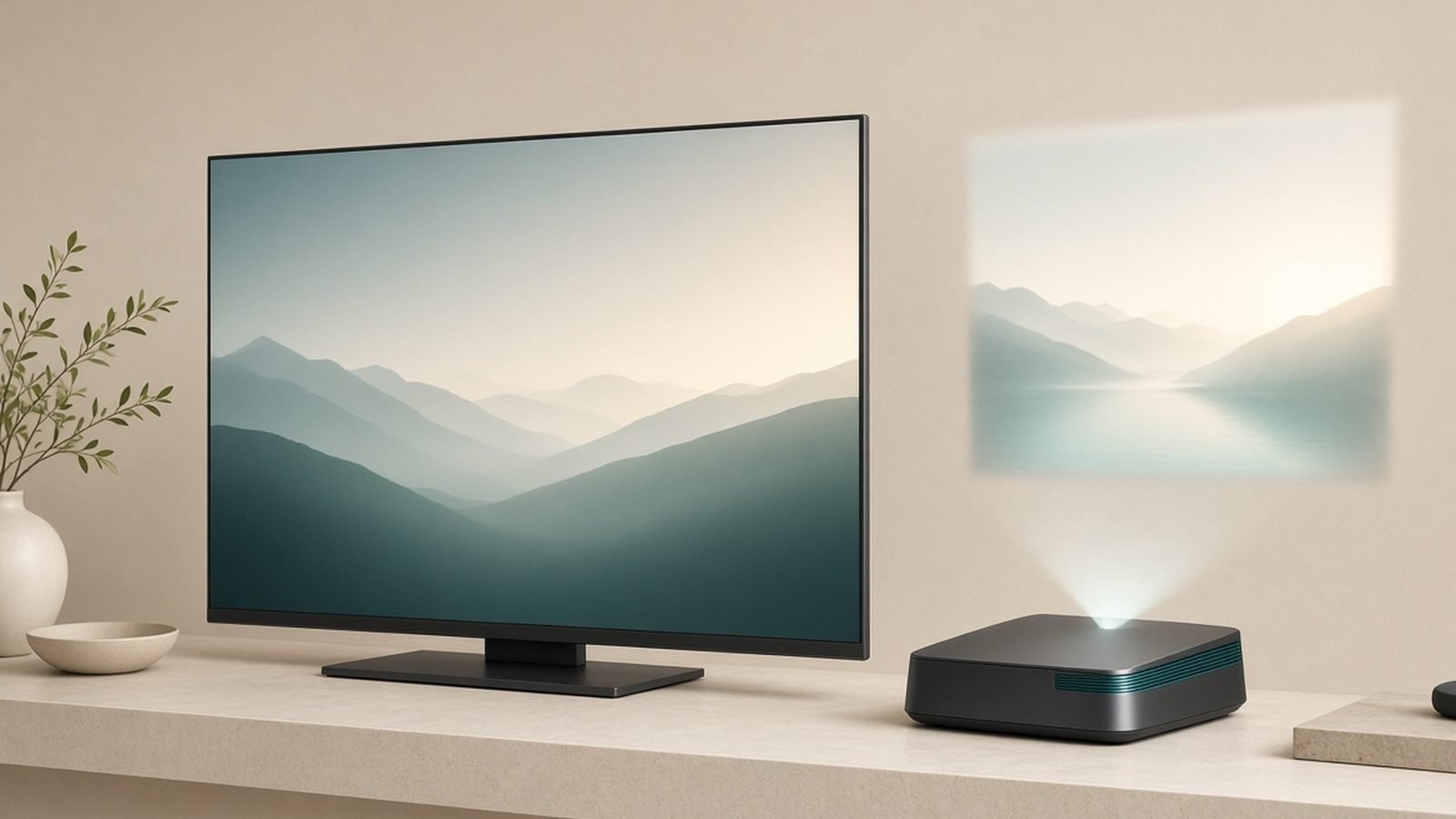
- Televisions: This is the flagship category. Hisense spans entry-level LED sets, its mid-range and premium ULED (Hisense’s marketing name for its enhanced LCD tech) mini-LED TVs, and short-throw and standard Laser TV projectors.
- Laser TVs / projectors: Hisense is unusually invested in ultra-short-throw laser projectors, a niche where it is one of the market leaders.
- Home appliances: Refrigerators, freezers, washing machines, and — through its ownership of the brand — Gorenje kitchen appliances in Europe.
- Air conditioning and climate: Window units, portable ACs, and dehumidifiers, a strong category for the brand in North America.
- Small electronics: Soundbars to pair with its TVs, plus some monitors and phones in select markets.
For most readers, “Hisense” effectively means “Hisense TVs,” and that is where the brand earns its reputation.
Standout Hisense products in 2026
Hisense U8-series (U8QG and successors). This is the flagship that made Hisense a household name among enthusiasts. The U8 pairs a very bright mini-LED backlight with quantum-dot color, high native contrast, and a 144Hz+ panel with full gaming features (VRR, ALLM, low input lag). It regularly appears in our Best TVs 2026: OLED, Mini-LED & Budget Picks Compared roundup and anchors our value picks in Best Budget TVs 2026: Great Picture for Less. We cover it in depth in our Hisense U8QG Review: Flagship Brightness for $899, and pit it against its closest rival in Hisense U8QG vs TCL QM8K: 2026 Mini-LED Battle.
Hisense U7-series. A step down from the U8 in brightness and dimming zones but often the sweet spot for gamers on a budget — 144Hz, mini-LED, and strong HDR for the money. It is a frequent contender in our gaming-TV comparisons.
Hisense U6-series. The entry point into mini-LED. It gives you a taste of quantum-dot color and local dimming at a genuinely low price, and it is one of the best sub-$600 / £550 TVs we recommend for typical living rooms.
Hisense Laser TV / Laser Cinema (UST projectors). For big-screen fans who cannot fit or afford a 100-inch panel, Hisense’s ultra-short-throw laser projectors throw a huge image from inches away. They are a real strength of the brand and worth a look if you want cinema scale.
If you buy one Hisense product, make it a current U8-series set — it captures everything the brand does well.
Strengths
Exceptional price-to-performance. This is the headline. Hisense’s mini-LED TVs deliver brightness, contrast, and color that would have cost twice as much from a premium brand a few years ago. Dollar for dollar, few brands compete.
Genuinely bright HDR. The U-series sets get very bright, which makes HDR highlights pop and helps in sunlit rooms — an area where cheaper OLEDs and older LCDs struggle.
Strong gaming features on mid and high tiers. 120–165Hz panels, VRR, ALLM, and low input lag show up even on reasonably priced models, making Hisense a smart pick for PS5, Xbox Series X, and PC gamers watching their budget.
Leadership in laser projectors. Hisense’s UST Laser TVs are among the best and most affordable ways to get a 100-inch-plus image, a category most rivals barely contest.
Wide availability and aggressive pricing. Broad retail distribution and frequent sales mean you can almost always find a Hisense set at a compelling price.
Weaknesses & criticisms
Processing and motion trail the premium brands. Hisense’s image processing — upscaling, motion handling, and near-black control — is good for the money but not on the level of Sony or the best LG and Samsung sets. Difficult content can reveal blooming around bright objects and less refined motion.
Narrow viewing angles on LCD sets. Like most VA-panel LCDs, Hisense TVs lose contrast and color when viewed off-center, so a wide seating arrangement can be a problem.
Quality varies a lot across the range. The excellent U-series shares a name with genuinely mediocre entry-level Hisense TVs. The brand’s reputation is uneven precisely because the cheap models are only okay, and buyers who grab the lowest-priced set can come away unimpressed.
Software and smart-platform inconsistency. Depending on region and model, Hisense ships Google TV, Fire TV, Roku, or its own VIDAA OS. VIDAA in particular can feel less polished and gets fewer years of meaningful updates than the platforms on premium sets.
Support and QC feedback is mixed. Owner reports include panel uniformity issues (dirty-screen effect, backlight bloom) and occasional frustrating warranty or customer-service experiences, which is the flip side of buying at aggressive prices.
Reliability & support
Hisense’s reliability is best described as “good for the price, with more variance than premium brands.” Its flagship U-series sets are generally dependable and review well, but across the wider range you will find more scattered reports of panel uniformity problems and dead-on-arrival units than you would from a top-tier maker. That variance is the practical cost of the low prices.
Warranty is typically one year on TVs in the US and one to two years in the UK and EU under consumer law, which is standard but not generous. The bigger caveat is after-sales: customer-service and repair experiences get mixed reviews, and getting a large panel serviced or replaced can be slower and more frustrating than with a premium brand’s network. Software support also varies — VIDAA and the licensed platforms receive updates, but do not expect the multi-year cadence of a flagship Samsung or LG.
Practical advice: buy a well-reviewed specific model (not just “a Hisense”), buy from a retailer with a good return policy, and check recent owner feedback for your exact model and panel lottery before committing.
Who should buy Hisense
Buy Hisense if you want the most picture quality your money can buy and you are happy to prioritize brightness, contrast, and gaming features over the last few percent of processing polish. The U8 and U7 series are outstanding value for movie nights and console gaming in typical rooms, and the U6 is a smart budget choice. If you want a huge screen, Hisense’s Laser TVs are one of the best-value routes to 100 inches.
Look elsewhere if you sit at wide angles (consider an OLED for its viewing angles — see Best OLED TVs 2026: Picture-Quality Kings), if you want reference-grade processing and out-of-box accuracy (Sony leads there), or if long-term software support and a premium after-sales network are non-negotiable. Cross-shoppers should also read our profile on Hisense’s closest rival, TCL, and our Best Gaming TVs for PS5 & Xbox 2026: 120Hz Top Picks guide before deciding.
FAQ
Is Hisense a good brand?
Yes, especially for TVs — with the important caveat that quality varies by tier. Hisense’s mid-range and flagship mini-LED sets (U6, U7, U8) are among the best-value TVs you can buy. Its cheapest models are more ordinary, and its software and support trail premium brands. Judge Hisense by the specific model, not the badge.
Is Hisense reliable?
Its flagship sets are generally reliable, but the wider range shows more variance than premium brands — more scattered reports of panel-uniformity issues and occasional QC misses. Buying a well-reviewed model from a retailer with a good return policy is the best way to manage the risk.
Where is Hisense from and who owns it?
Hisense is a Chinese company headquartered in Qingdao, founded in 1969. Hisense Group is partly state-linked through its ownership structure but operates globally. It also owns Toshiba’s TV business and holds the Sharp TV brand rights in the Americas.
Is Hisense better than TCL?
They are close rivals with a similar value-first strategy. Hisense often edges ahead on brightness and its flagship U8, while TCL competes hard on dimming zones and price. The winner changes year to year and model to model — we compare their top sets directly in Hisense U8QG vs TCL QM8K: 2026 Mini-LED Battle.
Are Hisense TVs good for gaming?
Yes. Mid-range and flagship Hisense sets offer 120–165Hz panels, VRR, ALLM, and low input lag, making them strong value for PS5, Xbox Series X, and PC. See Best Gaming TVs for PS5 & Xbox 2026: 120Hz Top Picks for our current picks.
Which Hisense TV should I buy?
For most people the U8-series is the standout — bright mini-LED HDR with full gaming features at a great price. Step down to the U7 or U6 to save money, and consider a Laser TV if you want a 100-inch-plus image. Avoid the very cheapest entry models if you care about picture quality.
Zen Tech Hub may earn a commission from links on this page, at no extra cost to you.