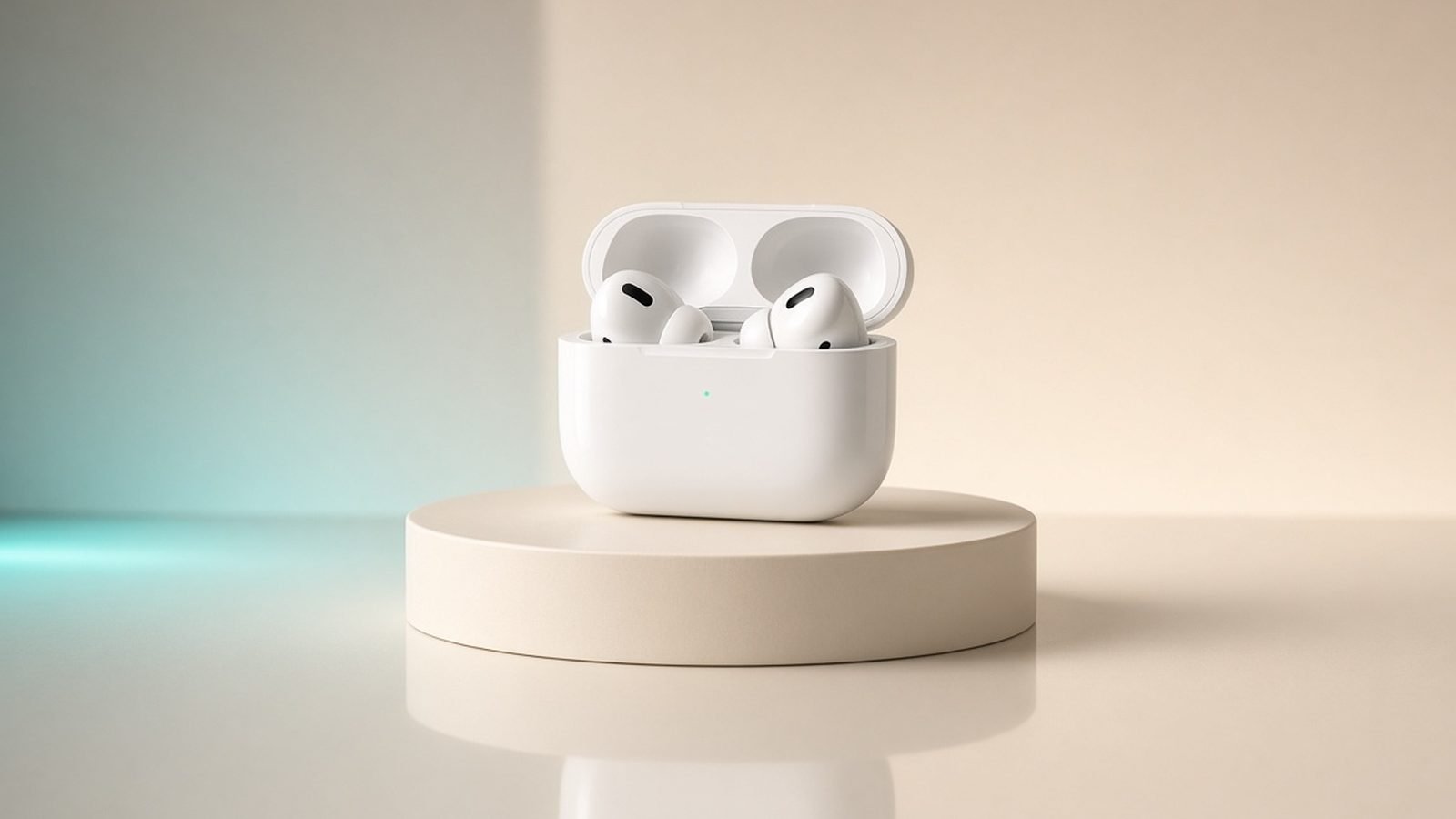
Launch reviews are easy. Everything is shiny, the battery is fresh, and the firmware hasn’t had a chance to break anything yet. An AirPods Pro 3 long-term review is a different exercise: nine months after Apple’s September 2025 launch, we’ve tracked firmware updates, aggregated hundreds of owner reports on battery health and reliability, and watched street prices settle. The short version — these are still the best earbuds you can buy for an iPhone, but a few cracks have appeared that launch coverage never mentioned.
If you’re deciding between buying now, grabbing discounted AirPods Pro 2, or holding out for the Pro 4, this is the honest picture in mid-2026.
Verdict after 9 months: still the iPhone earbuds to beat
Rating: 4.5/5 — down half a star from launch consensus, entirely because of case scratching and a handful of firmware quirks.
The AirPods Pro 3 have aged better than most flagship earbuds. Active noise cancellation remains best-in-class — SoundGuys measured roughly double the low-frequency attenuation of the Pro 2, and nothing released since has clearly beaten it. The hearing health features (clinical-grade hearing test, hearing-aid mode) have quietly become the most-praised feature in long-term owner threads, and heart rate tracking during workouts has proven more accurate than most people expected from an earbud.
The negatives are real but livable: the glossy case scratches badly, battery runtime has slipped noticeably for heavy users, and Android owners still get a deliberately hobbled experience.
| AirPods Pro 3 | AirPods Pro 2 | |
|---|---|---|
| Street price (July 2026) | around $199–249 / £189–219 | around $169 / £149 (clearance) |
| ANC | Best-in-class, ~2x Pro 2 low-end attenuation | Still excellent |
| Battery (buds, ANC on) | Up to 8 hrs rated | Up to 6 hrs rated |
| Heart rate sensor | Yes | No |
| Hearing test / hearing-aid mode | Yes | Yes (via firmware) |
| Live Translation | Yes | Yes (via firmware, needs newer iPhone) |
| Chip / codec | H3, AAC only | H2, AAC only |
| IP rating | IP57 | IP54 |
| Best for | iPhone owners who work out or want top ANC | Budget-minded iPhone owners |
Check price: Apple AirPods Pro 3
Price now vs launch: the deal tracker
Apple launched the AirPods Pro 3 at $249 / £219 and, true to form, has never officially discounted them. Retailers have. Based on price-tracking data through the first half of 2026:
- Typical street price: around $219–229 / £199–209 at Amazon and big-box retailers most weeks.
- Regular sale price: around $199 / £189, which has appeared repeatedly — Black Friday 2025, Presidents’ Day, spring sales events.
- Floor so far: brief drops to around $189 / £179 during flash sales.
The practical advice: never pay full price. If you see $199 / £189 or lower, that’s a buy-now price in 2026. Meanwhile the AirPods Pro 2 have hit clearance pricing of around $169 / £149 as stock winds down, which changes the upgrade math — more on that below.
Check price: Apple AirPods Pro 3
What still impresses after 9 months
ANC that hasn’t been dethroned
Nine months is a long time in earbuds, and the Pro 3’s noise cancellation is still the benchmark. The redesigned foam-infused ear tips (five sizes now, including XXS) do a lot of the work — a better passive seal means the ANC has less to fight. Long-haul flyers in owner communities consistently rank it ahead of the Bose QuietComfort Ultra 2nd gen for low-frequency drone, even where Bose wins on high-frequency hiss. For the full head-to-head against Sony’s flagship, see our comparison. AirPods Pro 3 vs Sony WF-1000XM6: Which Earbuds Win in 2026?
Hearing health: the sleeper hit
In our research, no feature shows up more often in “glad I bought them” posts than the hearing test and hearing-aid functionality. It takes about five minutes, produces an audiogram your iPhone stores in the Health app, and can then boost the frequencies you struggle with — in calls, media, and live conversation. For anyone with mild-to-moderate hearing loss who isn’t ready for a $2,000 hearing aid, this feature alone justifies the price. Regulators in both the US and UK now permit the hearing-aid feature, so the experience is consistent for our whole audience.
AirPods Pro 3 heart rate accuracy: better than expected
Skepticism about ear-based heart rate was justified — early optical ear sensors from other brands were rough. But aggregated comparisons from runners and cyclists who wear both the Pro 3 and a chest strap suggest the Pro 3 tracks within a few beats per minute during steady-state cardio, which is comparable to a good wrist wearable. The known weakness: rapid intervals and heavy strength training, where clenching and jaw movement can throw readings. If you don’t wear an Apple Watch, this turns workouts logged through the Fitness app into genuinely useful data. If you do wear one, the Watch takes priority automatically and the earbud sensor is mostly redundant.
What’s aged badly: battery, scratches, and quirks
AirPods Pro 3 battery degradation: the honest numbers
Apple rates the Pro 3 at up to 8 hours of listening with ANC on — a big jump from the Pro 2’s 6. Nine months in, based on hundreds of owner reports, the pattern looks like this:
- Light users (under an hour a day): most still report near-rated runtimes.
- Daily heavy users (3+ hours a day, frequent top-ups in the case): commonly report 6–6.5 hours where they started near 8 — roughly a 15–20% effective decline.
- Worst cases: a small minority report one bud draining faster than the other, a classic lithium-cell lottery issue that also plagued the Pro 2.
That trajectory is normal for tiny lithium cells charged multiple times daily, and it’s better than the Pro 2’s first year, where heavy users saw similar percentage drops from a smaller starting number. But be clear-eyed: by year three, heavy users should expect closer to 4–5 hours per charge. AirPods batteries are not user-replaceable; Apple’s battery service effectively swaps the buds.
Mitigation that works: enable Optimized Battery Charging, don’t store them at 0%, and avoid leaving the case in a hot car. Owners who did this consistently report noticeably better retention.
The case scratches. A lot.
This is the most common cosmetic complaint in long-term threads, and it’s deserved. The glossy polycarbonate case picks up micro-scratches from keys and pocket grit within weeks, and by month nine most naked cases look frosted around the lid. The buds themselves hold up fine — the IP57 rating has also meant almost zero sweat-death reports, a real improvement over the IP54 Pro 2. Buy a case cover on day one; it’s a $10 fix for the Pro 3’s single biggest aging problem.
Firmware quirks
Apple’s firmware updates have been a net positive — but not spotless. Owner threads flagged a period in early 2026 where a firmware release caused intermittent ANC “pressure pulsing” for some users, later resolved. Automatic device switching between iPhone, iPad, and Mac remains the most complained-about software behavior: it works brilliantly until it confidently connects to the wrong device mid-call. Nine months on, that’s improved but not solved.
Sound quality revisited after firmware updates
At launch, the consensus was that the Pro 3 sounded meaningfully better than the Pro 2 — a warmer, bassier default tuning with better dynamics from the new multiport acoustic architecture. Two things have changed since.
First, firmware updates through late 2025 and 2026 subtly refined the tuning; multiple reviewers who remeasured found slightly tamer upper-bass and cleaner mids than launch units. Second, Adaptive EQ plus the foam-infused tips means real-world sound depends heavily on fit — more than one “these sound muffled” complaint in our research traced back to the wrong tip size. Run the ear tip fit test; it matters more on this generation than any previous AirPods.
The ceiling remains the codec. It’s AAC only — no LDAC, no aptX, no lossless over Bluetooth (lossless works only with Apple’s Vision Pro via a proprietary link). Audiophiles with a hi-res library and an Android phone should look at Sony instead — the comparison in AirPods Pro 3 vs Sony WF-1000XM6: Which Earbuds Win in 2026? makes the case. Everyone else genuinely won’t miss it.
Living with them on Android: the honest answer
They pair. They play. ANC and transparency work, and you can cycle modes with the stem. That’s roughly where the good news ends.
On Android you lose: heart rate tracking, the hearing test and hearing-aid mode, spatial audio with head tracking, Live Translation, automatic switching, Find My, in-ear detection reliability, and firmware updates without borrowing an iPhone. You also can’t check battery percentages without a third-party app. And you’re stuck with AAC, which is exactly the codec many Android phones handle least gracefully.
The honest answer: if you carry an Android phone, don’t buy AirPods Pro 3 at full price — most of what you’re paying for is switched off. Sony’s WF-1000XM6 or a strong budget pick makes far more sense. Best Wireless Earbuds Under $100 (£80) in 2026: Ranked
Reliability and common AirPods Pro 3 problems
Across nine months of aggregated owner feedback, these are the AirPods Pro 3 problems that come up most, roughly in order of frequency:
- Case scratching — cosmetic, universal, preventable with a cover.
- Automatic switching misfires — improved by firmware, not eliminated.
- Uneven battery drain between buds — affects a small minority; Apple support has replaced affected buds under warranty.
- One earbud cutting out or not connecting — usually fixable with a reset before you panic. One Earbud Not Working? 9 Fixes That Actually Work (2026)
- Crackling/static reports — rarer than on the Pro 2, which had a well-documented crackling saga, but not zero.
- Foam tips wearing out — the infused-foam tips compress over 6–9 months of heavy use; replacements are cheap, but budget for them.
The big picture is genuinely positive: hardware failure rates appear lower than the Pro 2 at the same age, and the IP57 rating has nearly eliminated the sweat-related failures that dogged earlier generations.
AirPods Pro 3 vs AirPods Pro 2: the upgrade math
The AirPods Pro 3 vs AirPods Pro 2 question is really two questions.
Coming from the Pro 2? Upgrade only if at least one of these applies: you fly or commute a lot (the ANC jump is the single biggest generational improvement Apple has shipped), you’ll actually use heart rate tracking, or your Pro 2 batteries are cooked. Otherwise hold — the Pro 2 received the hearing test, hearing-aid mode, and Live Translation via software updates, which erased a surprising amount of the gap.
Buying your first pair? At around $169 / £149 on clearance, the Pro 2 is the value play for casual listeners. But the gap to a $199 / £189 sale-priced Pro 3 is small enough that we’d pay it for the better ANC, double the water resistance, longer rated battery, and several extra years of firmware support ahead of it.
Apple AirPods Pro 3 — around $249 / £219, often $199 / £189
Pros
- Best-in-class ANC, still unbeaten in mid-2026
- Hearing test and hearing-aid mode are quietly life-changing
- Accurate heart rate for steady-state cardio
- IP57; sweat failures nearly eliminated
- 8-hour rated battery is a real-world improvement
Cons
- Case scratches almost immediately
- Heavy users report 15–20% battery decline at 9 months
- AAC only — no LDAC/aptX, no Bluetooth lossless
- Severely feature-limited on Android
- Automatic switching still misbehaves
Who it’s for: iPhone owners who commute, fly, or work out — and anyone curious about the hearing features. Verdict: Buy, ideally on sale at $199 / £189.
Apple AirPods Pro 2 — around $169 / £149 (clearance)
Pros
- Excellent ANC, merely no longer the best
- Gained hearing health and Live Translation via firmware
- Clearance pricing is the cheapest way into the AirPods Pro experience
Cons
- No heart rate sensor; IP54 only
- Shorter battery life, and used stock may already be degraded
- Stock is drying up as Apple winds it down
Who it’s for: iPhone owners who want 90% of the experience for a third less money and don’t care about fitness sensors. Verdict: Great value while clearance stock lasts — buy new, not used.
Should you buy AirPods Pro 3 now or wait for the AirPods Pro 4?
Here’s the rumor math. Apple’s Pro cadence has been roughly three years: Pro (2019), Pro 2 (2022), Pro 3 (2025). On that pattern, the AirPods Pro 4 most plausibly lands in 2027 or 2028 — supply-chain chatter points to next-gen health sensing (temperature, possibly early blood-pressure trend work) and tiny camera/IR sensors for Apple Intelligence features, but nothing credible suggests a 2026 launch.
So the answer to “should I buy AirPods Pro 3 or wait for AirPods Pro 4” is straightforward in July 2026: buy now if you need earbuds this year. You’d be waiting 12–24 months for a product that doesn’t officially exist, while the Pro 3 sits mid-lifecycle with regular sub-$200 pricing and years of firmware support ahead. The only people who should wait are Pro 2 owners whose current pair still works fine — you’re the ones the Pro 4 will actually be for.
Whatever you choose, keep them alive longer with our maintenance and troubleshooting guides in the audio hub. Audio
FAQ
Are the AirPods Pro 3 still worth it in 2026?
Yes — for iPhone owners. Nine months after launch they still have the best ANC in any earbud, the hearing health features are unmatched at this price, and street pricing regularly dips to around $199 / £189. Android users should skip them; too many headline features are iPhone-only. That’s the core finding of this AirPods Pro 3 long-term review.
How bad is AirPods Pro 3 battery degradation?
Normal, not alarming. Light users report near-rated 8-hour runtimes at nine months. Heavy daily users commonly report 6–6.5 hours — roughly a 15–20% decline, in line with any small lithium cell charged several times a day. Enable Optimized Battery Charging and avoid heat to slow the slide. Batteries aren’t user-replaceable, so factor that into a 3–4 year ownership plan.
Is AirPods Pro 3 heart rate accuracy good enough to replace a watch?
For steady-state cardio — running, cycling, elliptical — owner comparisons against chest straps show accuracy within a few beats per minute, comparable to a good wrist wearable. It’s less reliable during intervals and strength training, and it only works with an iPhone. If you already wear an Apple Watch, the Watch’s readings take priority anyway.
What are the most common AirPods Pro 3 problems?
Case scratching (cosmetic, universal), automatic device switching connecting to the wrong device, occasional uneven battery drain between buds, and one earbud dropping out — usually fixable with a reset. Hardware failure rates appear lower than the Pro 2 at the same age, helped by the IP57 rating.
Should I buy AirPods Pro 3 or AirPods Pro 2 in 2026?
Buy the Pro 3 if you fly or commute (the ANC gap is large), want heart rate tracking, or sweat heavily (IP57 vs IP54). Buy the Pro 2 at around $169 / £149 clearance if you’re a casual listener — firmware updates gave it the hearing test and Live Translation, so the everyday gap is smaller than the spec sheet suggests.
When will the AirPods Pro 4 come out?
Nothing is confirmed. Apple’s three-year Pro cadence points to 2027 at the earliest, with rumors centering on advanced health sensors and camera-assisted AI features. There is no credible evidence of a 2026 launch, so waiting means holding off 12–24 months for an unannounced product.
Zen Tech Hub may earn a commission from links on this page, at no extra cost to you.