If you want the quietest true wireless earbuds you can buy in 2026, this Bose QuietComfort Ultra Earbuds review lands on a clear answer: yes, Bose still owns in-ear noise cancelling, and these are the pair to beat for silence. At around $299 / £299, they’re premium-priced — but based on published specs, Bose’s documentation and aggregated owner feedback, nothing in-ear hushes a plane cabin or a rumbling train quite as completely, and the CustomTune system that calibrates ANC to your ear each time you insert them is a genuine real-world advantage.
The honest catch: the Sony WF-1000XM6 sound more detailed and offer LDAC hi-res audio, the AirPods Pro 3 integrate far better with an iPhone, and both of those rivals now come close on noise cancelling. So the verdict is straightforward — buy the Bose if in-ear silence and comfort are your top priorities; look elsewhere if you want the best sound or the deepest ecosystem features. Here’s the full breakdown.
Bose QuietComfort Ultra Earbuds at a Glance
Around $299 / £299 · ~6 hrs battery (ANC on), ~24 hrs with case · Bluetooth 5.3 · aptX Adaptive · CustomTune ANC · Immersive Audio · IPX4
Pros:
- Best-in-class in-ear noise cancelling, especially on low-frequency rumble
- CustomTune calibrates ANC and sound to your ears on every insertion
- Secure, comfortable fit thanks to the stability-band system
- Natural, easy-to-listen default tuning
- Genuinely useful Immersive Audio spatial mode
- Strong call clarity in quiet and moderate noise
Cons:
- Average ~6-hour bud battery life
- No LDAC — aptX Adaptive only, a note for hi-res Android fans
- Less detailed and less customizable sound than the Sony WF-1000XM6
- Expensive and rarely discounted early in its life
Design, Build and Comfort
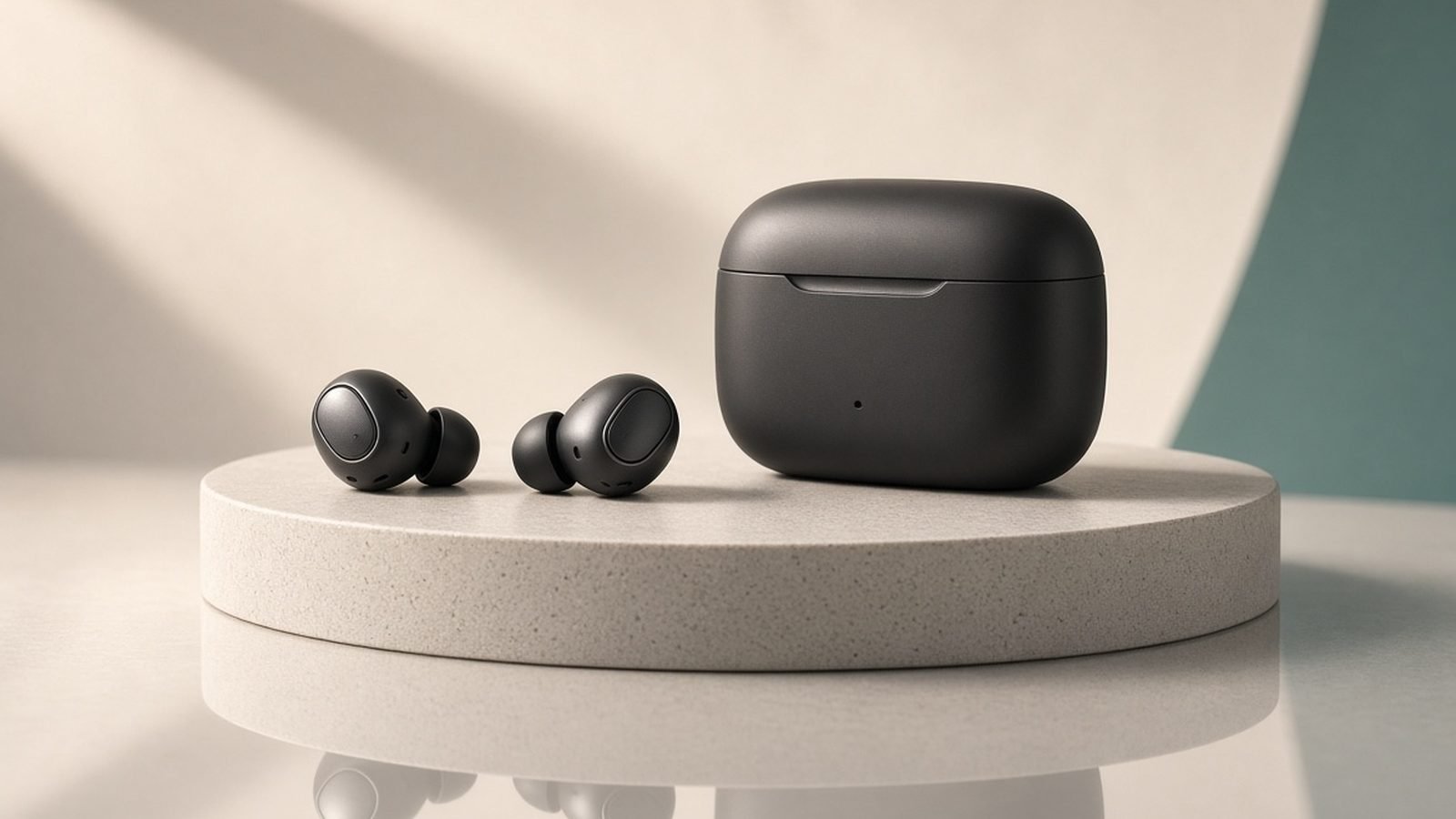
Bose has never chased flash, and the QuietComfort Ultra Earbuds continue that understated approach. The buds are on the larger side, with a rounded body and a short nozzle, but the clever part is the fit system: interchangeable ear tips paired with separate stability bands that anchor the bud in the outer ear. The result is a pair that stays put without being jammed deep into the canal — a recurring highlight in owner reports, especially for people who find deep-insertion earbuds uncomfortable.
Comfort over long sessions is a genuine strength. Because the seal doesn’t rely on cramming the bud in, pressure fatigue is low, and many owners note they can wear these through a full long-haul flight without the ache that some rivals cause. If you wear earbuds for hours at a stretch, this matters more than any spec on the box.
Build quality feels appropriately premium, with an IPX4 rating that covers sweat and light rain for gym and commute use. The case is chunkier than the AirPods or Samsung equivalents and supports wireless charging on the current model. Controls use a capacitive touch surface with a reliable swipe-for-volume gesture, though, as with most touch earbuds, there’s a short learning curve before the taps become second nature.
Noise Cancelling and Immersive Audio
Noise cancelling is the whole point of these earbuds, and it delivers. CustomTune runs a quick calibration tone each time you seat the buds, measuring your ear canal and fit to optimize both the ANC and the sound. In practice this means the cancellation adapts to imperfect seals — a real advantage, because in-ear ANC lives or dies on how well the bud fits, and no two ears are identical. On low-frequency drone — jet engines, train carriages, HVAC, road noise — these are the most effective earbuds we’re aware of, level with or ahead of the Sony depending on the environment.
Mid-band noise, the harder job, is handled well but not perfectly; loud nearby voices still filter through more than the deep rumble does, which is true of every earbud on the market. Aware Mode, Bose’s transparency setting, is among the most natural and un-hissy available, and there’s an adjustable ActiveSense feature that ducks sudden loud sounds. If your buying decision hinges purely on in-ear silence, this is the product to choose. For the wider category and cheaper options, see our roundup of the Best Noise Cancelling Headphones Under $200 in 2026 and the budget-focused Best Wireless Earbuds Under $100 (£80) in 2026: Ranked.
Immersive Audio, Bose’s spatial mode, is more convincing than most rivals’ equivalents. It adds a sense of space and can pin the sound in front of you with optional head tracking, which suits films and some live recordings. It’s not magic, and it slightly dents battery life, but unlike many spatial gimmicks it’s one you might actually leave on.
Sound Quality
Bose tunes the QuietComfort Ultra Earbuds for a natural, balanced signature that’s easy to listen to for hours rather than one engineered to impress in a five-minute demo. Bass is full and controlled, the midrange is clear, and the treble is smooth without being dull. CustomTune’s per-fit calibration also helps the sound stay consistent, since a poor seal is the usual culprit behind thin, bass-light earbud audio.
Where the Sony pulls ahead is detail retrieval and customization. The WF-1000XM6 support LDAC for hi-res streaming on compatible Android phones, and Sony’s app offers a deeper EQ; the Bose app gives you a simpler three-band adjustment and a handful of presets. Codec support here centers on aptX Adaptive alongside SBC and AAC — great for compatible Android and Snapdragon Sound devices, but there’s no LDAC, which hi-res-focused Android listeners sometimes want. For most people streaming Spotify, Apple Music or YouTube, that’s a non-issue; if codecs are new to you, our Bluetooth Codecs Explained: AAC vs aptX vs LDAC vs LC3 guide is worth a read.
The short version: these sound very good, just not class-leading. If you want the most detailed, most tweakable earbud sound, the Sony is the pick. If you want a pleasant, fatigue-free tuning that pairs with the best ANC in the business, the Bose delivers.
Battery, Calls and Everyday Use
Battery life is the most obvious compromise. Around six hours per bud with ANC on is average for the flagship class — fine for a commute or a workout, less impressive on a long flight — and the case brings the total to roughly 24 hours. Turning on Immersive Audio shaves that further. The Sony’s ~8-hour figure is the clear leader here, so if all-day-without-the-case runtime matters, note the gap.
Call quality is good in quiet and moderately noisy settings, with clear voice pickup, though in very loud environments the flagship over-ears and the AirPods edge ahead. Connectivity is Bluetooth 5.3 with multipoint, so you can stay linked to a laptop and a phone at once and switch between them, and pairing is quick and stable across owner reports.
Day to day, these behave like a mature, well-sorted product. Wear detection pauses and resumes reliably, the touch controls work once learned, and the IPX4 rating covers real-world sweat and drizzle. There’s nothing experimental here — just a refined execution of Bose’s core strengths.
Alternatives
The obvious rival is Sony. The WF-1000XM6 match or beat the Bose on some ANC scenarios, clearly win on sound detail and customization, add LDAC and last longer per charge — the better all-round pick for Android audiophiles. Read our full Sony WF-1000XM6 Review: The New Earbuds King? (2026) for the details.
For iPhone owners, the AirPods Pro 3 are the more sensible buy. Their noise cancelling has closed most of the gap, and the ecosystem integration — instant pairing, auto-switching, Spatial Audio, hands-free Siri — is something the Bose can’t match on Apple devices. Our AirPods Pro 3 Long-Term Review: 9 Months Later (2026) covers where they land.
Want to see how all four flagships compare side by side, or spend less? Our Best Wireless Earbuds 2026: Top Picks Compared & Ranked roundup ranks them, and the Best Wireless Earbuds Under $100 (£80) in 2026: Ranked guide covers strong budget alternatives that deliver most of the everyday experience for far less.
Verdict
The Bose QuietComfort Ultra Earbuds are the best true wireless earbuds in 2026 for one specific, important thing: silence. Nothing in-ear cancels low-frequency noise as thoroughly, the CustomTune calibration is a real advantage in the messy real world of imperfect fits, and the comfort holds up over long sessions. If you fly often, commute on loud transit, or work in a noisy space and want earbuds rather than over-ears, these are the pair to buy.
Just go in clear-eyed about the trade-offs. The sound is very good but not the most detailed, there’s no LDAC, and the battery is merely average. If you want the best in-ear sound and hi-res audio on Android, buy the Sony; if you own an iPhone and value seamless integration, buy the AirPods. But if in-ear ANC and comfort top your list, the Bose earn the premium.
FAQ
Are the Bose QuietComfort Ultra Earbuds worth it in 2026?
Yes, if noise cancelling and comfort are your priorities. They offer the best in-ear ANC available, with CustomTune calibration that adapts to your fit, plus a secure, fatigue-free design. At around $299 / £299 they’re expensive, and rivals sound more detailed, but for pure silence in an earbud they’re the benchmark.
Do the Bose QuietComfort Ultra Earbuds beat the AirPods Pro 3?
For raw noise cancelling and cross-platform use, the Bose have a slight edge and work equally well on Android and iPhone. But for iPhone owners, the AirPods Pro 3 win overall thanks to ecosystem integration, Spatial Audio and hands-free Siri. Choose the Bose for silence, the AirPods for Apple convenience.
How is the battery life on the Bose QuietComfort Ultra Earbuds?
Around six hours per bud with ANC on, and roughly 24 hours total including the charging case. That’s average for the flagship class — fine for commutes and workouts but behind the Sony WF-1000XM6’s ~8 hours. Immersive Audio reduces runtime further, so turn it off when you need to stretch the battery.
Do the Bose QuietComfort Ultra Earbuds support LDAC?
No. They use aptX Adaptive alongside SBC and AAC, which sounds great on compatible Android and Snapdragon Sound devices but isn’t the LDAC hi-res codec some Android listeners want. If LDAC matters to you, the Sony WF-1000XM6 are the better choice. For most streaming, the difference is negligible.
Are the Bose QuietComfort Ultra Earbuds good for the gym?
Yes. The IPX4 rating covers sweat and light rain, and the stability-band fit system keeps the buds secure during movement without jamming them deep into your ears. They’re comfortable for long sessions, though for high-intensity running some prefer a smaller, lighter bud. Wipe them down after workouts to keep the tips clean.
Bose QuietComfort Ultra Earbuds vs Sony WF-1000XM6 — which should I buy?
Buy the Bose for the best in-ear noise cancelling and long-session comfort. Buy the Sony for more detailed, more customizable sound, LDAC hi-res audio and longer battery life. On Android both are excellent; the Sony is the audiophile pick, the Bose the silence-first pick. See our Best Wireless Earbuds 2026: Top Picks Compared & Ranked guide for the full ranking.
Zen Tech Hub may earn a commission from links on this page, at no extra cost to you.