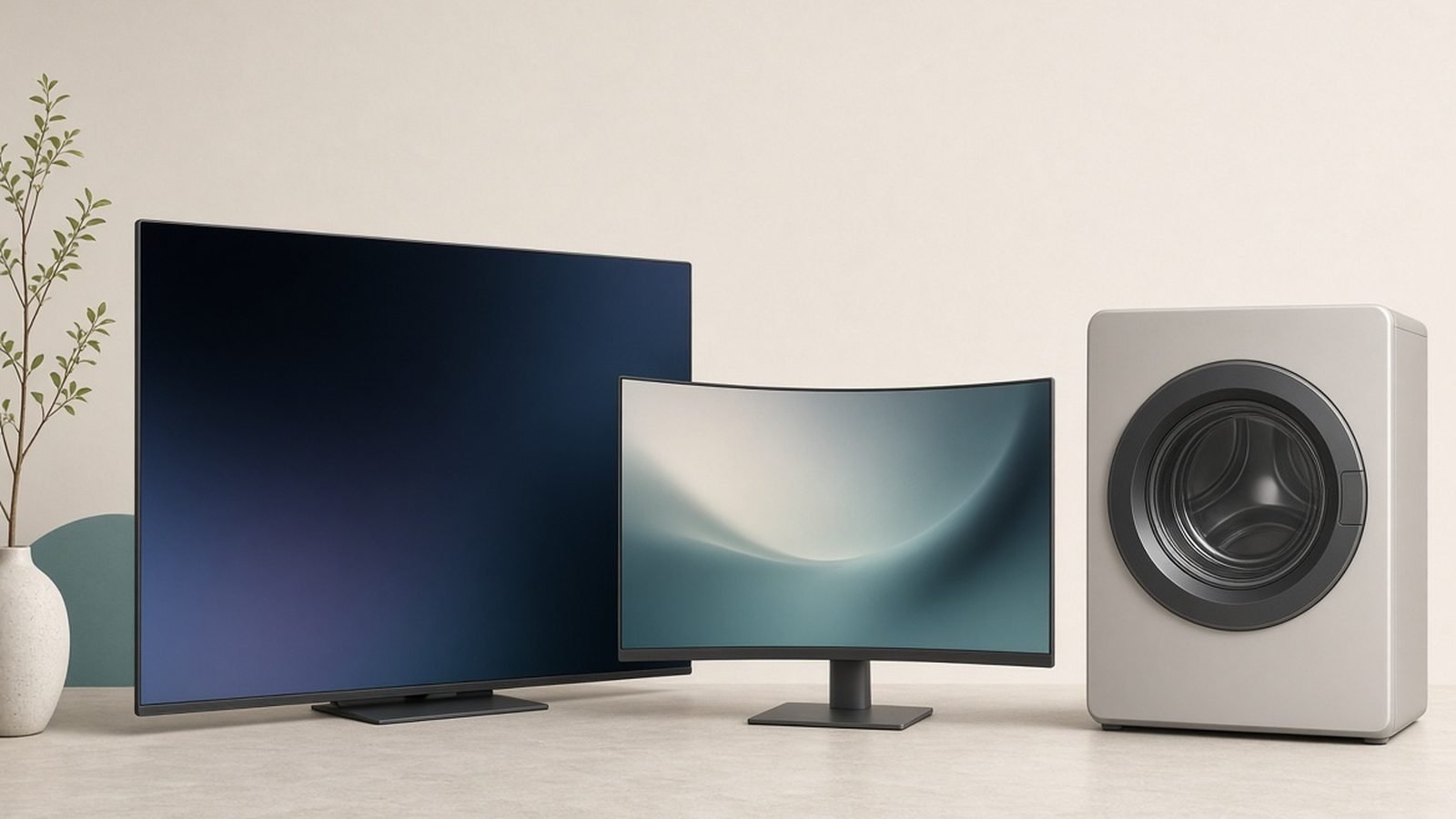
If you are shopping for a premium TV in 2026, LG is one of the safest names you can buy — its OLED panels remain the reference point that reviewers and rival brands measure themselves against. LG Electronics is a genuine leader in televisions and a strong contender in gaming monitors and home appliances, with the trade-off being an inconsistent software experience (ad-heavy webOS) and appliance repair support that varies a lot by region. Verdict: buy LG with confidence for OLED TVs and UltraGear monitors; approach its large appliances with more homework, checking local service coverage before you commit.
LG is not a boutique brand — it is a sprawling Korean conglomerate that makes everything from the panel in your phone-sized monitor to the compressor in your fridge. That breadth is a strength and a weakness, and this profile separates the parts of LG worth your money from the parts where a rival may serve you better.
Company overview
LG Electronics is the consumer-electronics arm of South Korea’s LG Corporation, one of the country’s largest business groups. The electronics division traces back to 1958 (originally GoldStar) and today operates globally across home entertainment, home appliances, IT displays, and vehicle components. It is headquartered in Seoul.
A crucial fact for TV buyers: LG Display, a separate but affiliated company, is the world’s dominant manufacturer of large white-OLED (WOLED) television panels. For years LG Display supplied the OLED panels used not only in LG’s own sets but in many competitors’ OLED TVs too. That vertical position is why LG has led the OLED TV category for over a decade. In appliances, LG competes head-to-head with Samsung and Whirlpool and has pushed hard on inverter compressors, connected features, and its ThinQ smart-home platform.
LG is a mainstream, high-volume brand rather than a luxury one. You will find its products in big-box retailers, carrier stores, and appliance showrooms worldwide, with pricing that spans budget to premium.
What LG makes
LG’s consumer catalog is unusually wide. The main lines relevant to a tech buyer:
- Televisions: OLED (the flagship C-series and G-series, plus the entry B-series), premium QNED mini-LED LCDs, and mainstream LED TVs. This is LG’s crown jewel category.
- Monitors: The UltraGear gaming line (including OLED gaming monitors), UltraWide productivity displays, UltraFine 4K/5K panels aimed at creators and Mac users, and the portable StanbyME lifestyle screens.
- Home appliances: Refrigerators, washing machines and dryers (including the WashTower stacked units), dishwashers, air conditioners, and robot vacuums. Many use LG’s inverter compressors and motors.
- Audio: Soundbars (often co-engineered with Meridian), and portable/party speakers under the XBOOM name.
- Other: Projectors (the CineBeam line), the ThinQ smart-home app and platform, and business/commercial displays.
LG exited the smartphone business in 2021, so if you remember LG phones, that division is gone.
Standout products in 2026
LG OLED evo (C-series and G-series). The C-series remains the enthusiast default: superb per-pixel contrast, near-perfect black levels, four HDMI 2.1 ports, 4K/144Hz support, and full gaming features (VRR, ALLM, G-Sync and FreeSync compatibility). The step-up G-series uses a brighter panel design for rooms with more ambient light. Together they anchor most of our OLED coverage in Best OLED TVs 2026: Picture-Quality Kings and Best Gaming TVs 2026: 4K 120Hz & Low Lag. If you want the OLED look for less, LG’s older-generation and B-series sets frequently appear in Best Budget OLED TVs 2026: Cheapest Ways Into OLED.
LG UltraGear OLED monitors. LG’s 240Hz+ OLED gaming monitors (27-inch 1440p and larger 34-inch ultrawide 800R curves) are among the most recommended enthusiast displays, and they show up regularly in Best Gaming Monitors 2026: OLED, 4K & High Refresh. For desktop and creative work, the UltraFine and UltraWide LCD lines feature in Best 4K Monitors 2026: Work & Creative Displays.
LG QNED mini-LED TVs. For bright living rooms or buyers who want a large screen on a tighter budget than OLED allows, QNED delivers strong brightness and good value.
LG appliances (WashTower, InstaView fridges). The WashTower stacked washer-dryer and InstaView “knock-to-see” refrigerators are the appliances people cross-shop most, valued for inverter efficiency and quiet operation.
For most buyers the single best entry point to the brand is a current C-series OLED — it captures what LG does better than almost anyone.
Strengths
Class-leading OLED picture quality. This is the headline. LG’s OLED TVs deliver perfect blacks, per-pixel dimming, wide viewing angles, and excellent motion handling. For film and dark-room viewing, they are hard to beat at any price.
Best-in-class gaming TV features. LG was early and thorough on HDMI 2.1, and its high-end sets support 4K/144Hz, VRR, ALLM, and low input lag, making them a favorite for PlayStation 5, Xbox Series X, and PC gamers.
Strong monitor lineup across price tiers. From affordable UltraGear panels to high-refresh OLED gaming displays and color-accurate UltraFine screens, LG covers gamers, creators, and office users well.
Energy-efficient appliance engineering. LG’s inverter compressors and motors are genuinely good, often quiet and efficient, and many appliances carry long warranties on those key components (frequently 10 years in the US).
Wide availability and choice. With products at nearly every price point and broad retail distribution, LG is easy to buy, compare, and service in most markets.
Weaknesses & criticisms
webOS is ad-heavy and gets pushier over time. LG’s smart-TV platform is fast and capable, but the home screen has become increasingly cluttered with sponsored content and ads, and LG has drawn criticism for adding advertising via software updates on TVs people already own. Many buyers end up connecting an external streamer.
OLED still carries burn-in risk. For typical mixed viewing it is a non-issue for most people, but static logos, news tickers, or using an OLED as a PC monitor for many hours can, over years, cause uneven wear. LG includes mitigation features, but the risk is real and worth knowing.
Appliance repair and reliability are inconsistent. LG appliances review well on paper, but owner feedback and third-party surveys sometimes flag reliability and, more often, frustrating repair experiences — long waits for parts or technicians in some regions. Certain refrigerator compressor issues have generated notable complaints and legal action in the past.
Peak brightness trails the best mini-LED/QLED sets. In very bright rooms, LG OLEDs can look less punchy than top Samsung or Sony mini-LED TVs, though the G-series narrows this gap.
Reliability & support
LG’s reliability picture is category-dependent. Its TVs and monitors are generally regarded as dependable, and the OLED panels have matured over many generations. The main long-term caveat for displays is OLED wear, which LG mitigates but cannot eliminate.
Appliances are the area to research locally. LG offers competitive warranties — commonly one year overall plus a long (often 10-year) warranty on the inverter compressor or motor in the US — but the real-world experience hinges on service availability in your area. Before buying a big-ticket LG appliance, check local repair coverage and recent owner reviews for your specific model. On the software side, LG provides multi-year webOS updates for its TVs, though the update cadence and feature parity vary by model year.
Support channels include phone, chat, and an authorized service network, plus the ThinQ app for diagnostics on connected appliances. Overall: strong product engineering, uneven after-sales experience depending on where you live.
Who should buy
Buy LG if you want a premium TV and care most about picture quality, contrast, and gaming features — its OLEDs are among the best purchases in home entertainment, and its QNED sets are a sensible bright-room alternative. Buy LG monitors if you want high-refresh OLED gaming panels or spacious ultrawides. LG appliances are worth strong consideration for their efficiency and features, but only after you confirm local service is good.
Look elsewhere if you need the absolute brightest image for a sunlit room (compare premium mini-LED), if an ad-free smart-TV interface is a dealbreaker (plan to add an external streamer), or if you live somewhere with weak LG appliance service. Gamers cross-shopping the components that feed these displays should also read our brand profiles for Nvidia Brand Profile 2026: GeForce RTX GPUs & AI and AMD Brand Profile 2026: Ryzen CPUs & Radeon GPUs.
FAQ
Is LG a good brand overall?
Yes, with nuance. LG is excellent for TVs and strong for monitors, thanks largely to its OLED leadership. Its appliances are well-engineered and efficient but have a more mixed reputation for repair support. Judge LG by category rather than as a single brand.
Are LG OLED TVs better than Samsung and Sony?
LG generally leads on value and gaming features, Sony often wins on processing and out-of-box accuracy, and Samsung’s QD-OLED and mini-LED sets push higher brightness. For most buyers seeking reference contrast at a fair price, an LG C-series is the safest OLED pick. See our roundup in Best OLED TVs 2026: Picture-Quality Kings.
Does LG OLED get burn-in?
It can, but for typical varied viewing it is unlikely to be a problem within a normal ownership span. Risk rises with lots of static content (news tickers, game HUDs, desktop use). LG includes pixel-shifting and panel-refresh features to reduce it.
Is webOS good, or should I use a separate streamer?
webOS is fast and has all the major apps, but it has become ad-heavy. If a clean interface matters to you, adding a dedicated streaming device gives a tidier experience while keeping LG’s excellent panel.
Are LG appliances reliable?
Engineering is solid — inverter compressors are efficient and often come with long warranties. The variable is service: owner satisfaction dips most around repair speed and parts availability, which differ by region. Check local reviews before buying.
Did LG stop making phones?
Yes. LG exited the smartphone business in 2021 and no longer makes phones. Its consumer focus is now TVs, monitors, appliances, and audio.
Zen Tech Hub may earn a commission from links on this page, at no extra cost to you.