If you want the fastest gaming graphics, the best upscaling and ray tracing, and the most polished software, Nvidia is the default choice in 2026 — its GeForce RTX GPUs and DLSS technology set the pace the rest of the industry chases. The important buying nuance: Nvidia is a components brand, and for most desktop graphics cards you actually buy a version built by a board partner (ASUS, MSI, Gigabyte, Zotac, PNY and others), or Nvidia’s own Founders Edition where available. Verdict: buy Nvidia for top-tier performance, ray tracing and DLSS, and pick a well-cooled partner card in your budget — but expect to pay a premium, and cross-shop AMD if raw value matters more than features.
Nvidia is no longer just a gaming company. It is one of the most valuable companies in the world, driven by the AI data-center boom. For a consumer, though, the brand still means one thing above all: GeForce.
Company overview
Nvidia Corporation was founded in 1993 and is headquartered in Santa Clara, California. It pioneered the modern GPU with the GeForce 256 in 1999 and has led consumer graphics for most of the time since. Over the last decade its CUDA software platform turned GPUs into the engine of the AI revolution, and Nvidia’s data-center business now dwarfs its gaming revenue — which is why the company’s valuation has soared.
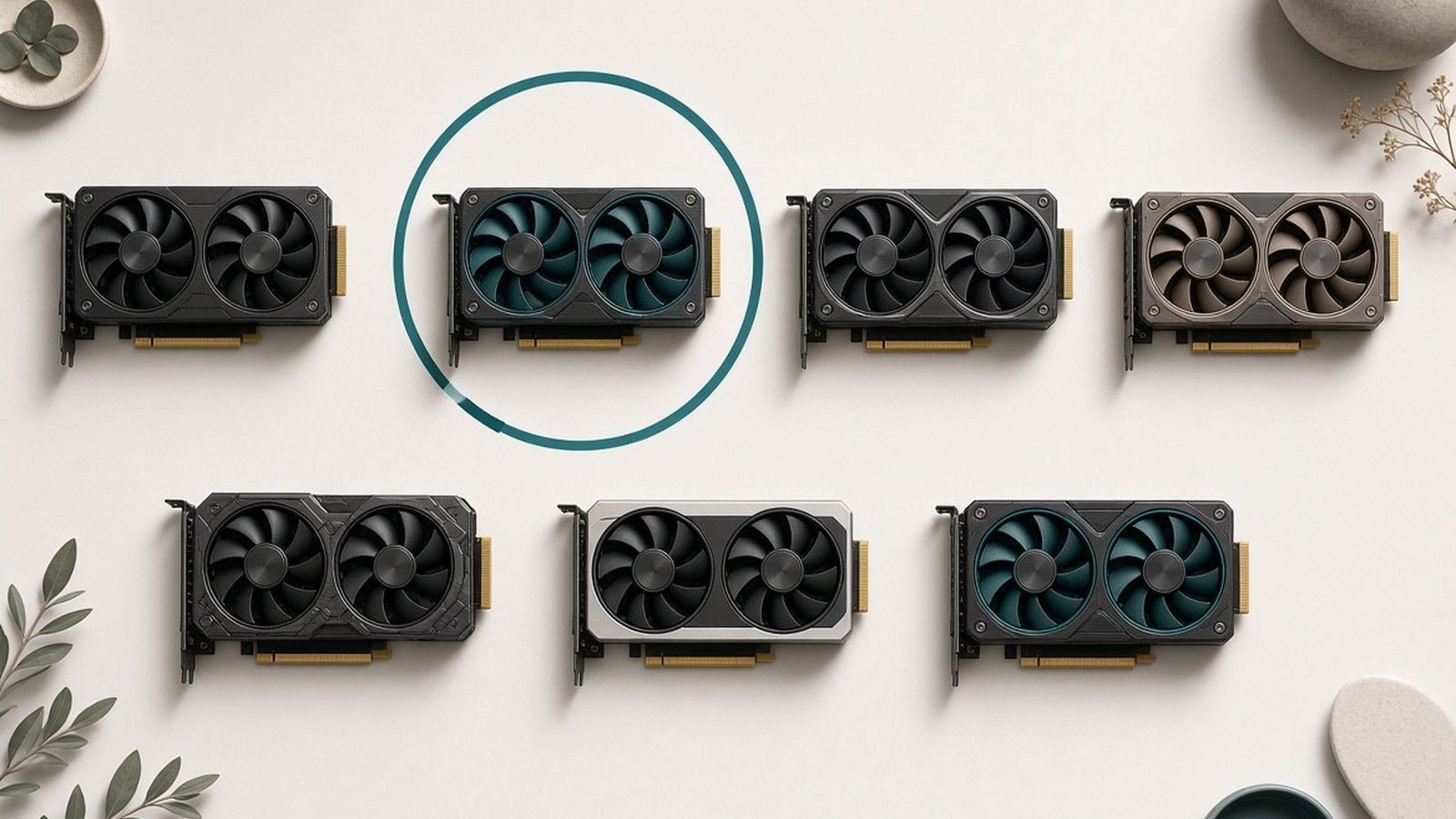
Nvidia is a “fabless” designer: it designs the chips and the reference software, then contracts manufacturing (primarily to TSMC) and, for consumer graphics cards, works through add-in-board (AIB) partners who build and sell the retail cards. Nvidia also sells its own Founders Edition cards directly in some regions and generations. This structure is why “Nvidia GPU” and the physical card in your PC are related but not identical — the silicon is Nvidia’s, the cooler, board, warranty and support are usually the partner’s.
What Nvidia makes
For consumers and enthusiasts, Nvidia’s relevant products are:
- GeForce RTX graphics cards: The gaming and creator GPU line, spanning affordable models to halo flagships. This is the brand most readers care about.
- DLSS and software: DLSS (AI upscaling and frame generation), Nvidia Reflex (latency reduction), Broadcast (AI webcam/mic effects), and the GeForce app for drivers and optimization. This software stack is a major reason people choose Nvidia.
- Studio drivers and creator features: Optimized drivers and hardware acceleration for video editing, 3D, and AI workloads in creative apps.
- Handheld and mobile chips: Nvidia supplies the custom chip inside the Nintendo Switch family and makes laptop GPUs.
- Data-center and AI accelerators: The H100/Blackwell-class chips behind modern AI. Not consumer products, but they explain the company’s priorities and pricing power.
- Automotive and robotics platforms (DRIVE, Jetson): Embedded AI computing for cars and robots.
The through-line is parallel computing: the same GPU architecture that renders games also trains AI models.
Standout products in 2026
GeForce RTX 50-series (Blackwell). Nvidia’s current gaming generation leads on ray tracing and on DLSS 4, which adds multi-frame generation to boost frame rates substantially in supported games. The flagship delivers the highest 4K gaming performance available, while mid-range 50-series cards target 1440p gaming. These GPUs anchor most of our picks in Best Graphics Cards 2026: GPUs for Every Budget, and if you are pairing one with a high-refresh display, see Best Gaming Monitors 2026: OLED, 4K & High Refresh.
DLSS 4. The standout “product” is arguably software. DLSS Super Resolution plus Frame Generation lets mid-range cards punch above their raw horsepower in supported titles, and it remains ahead of rival upscalers in image stability for many games. It is a core reason buyers pay the Nvidia premium.
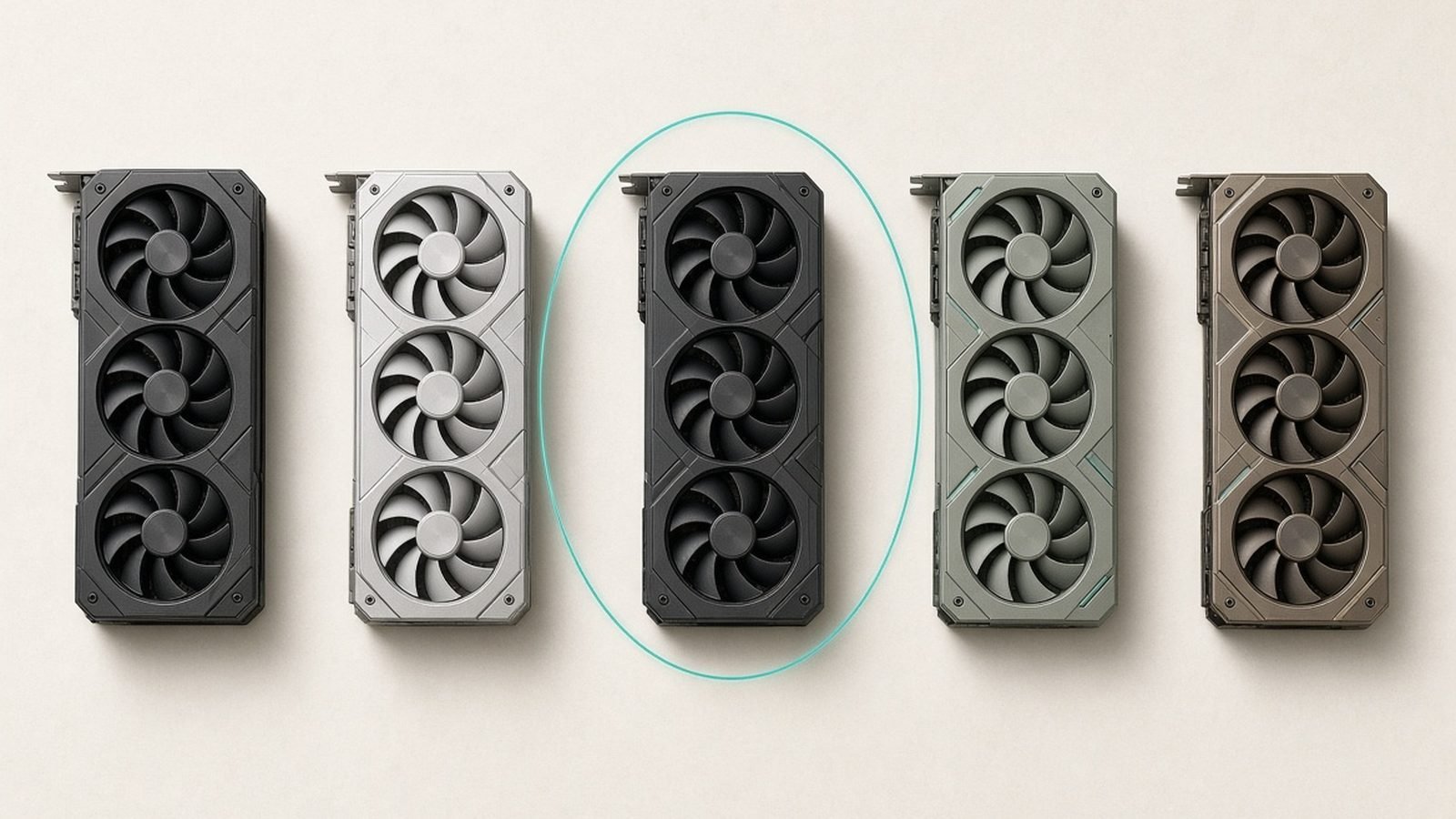
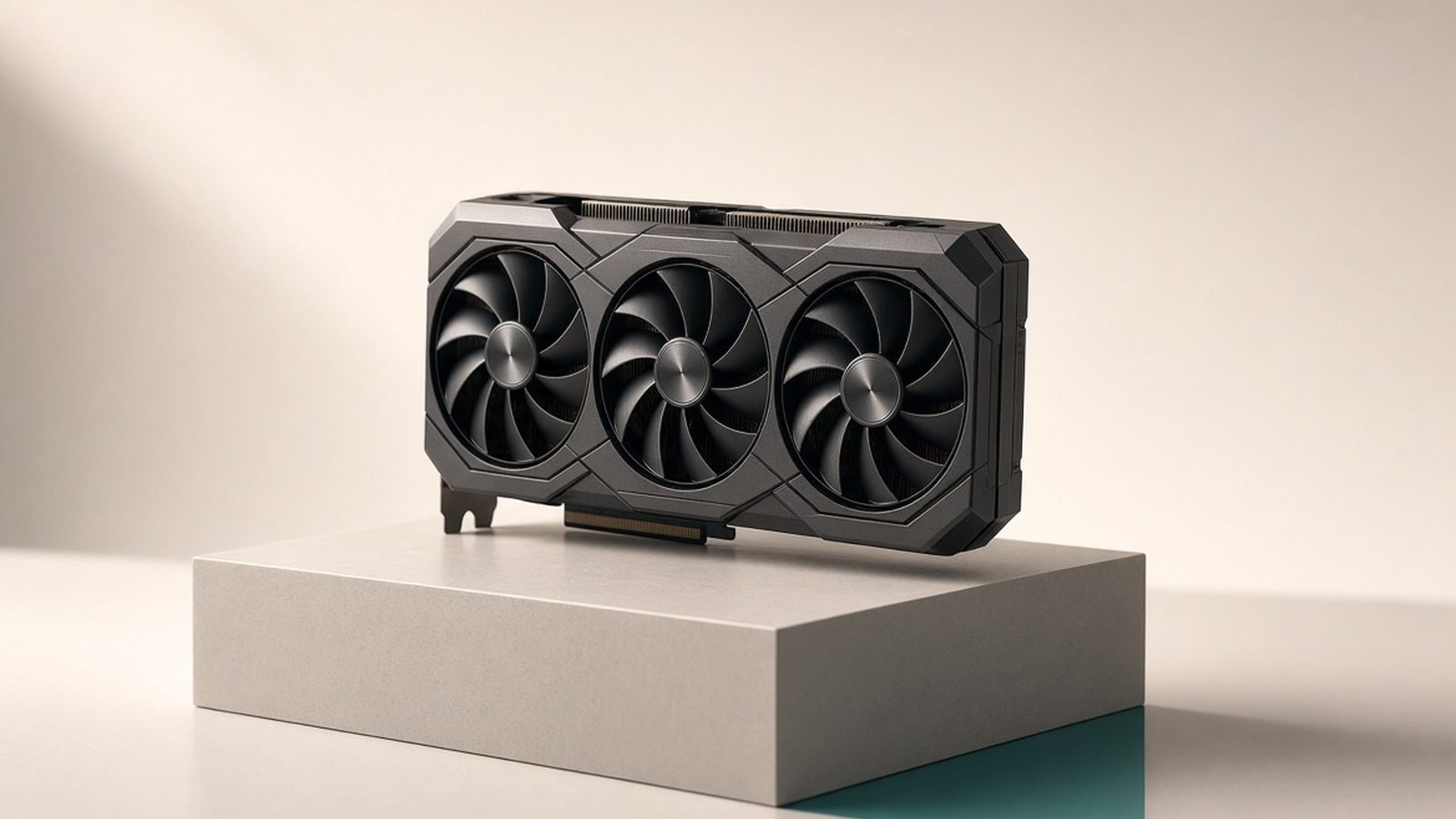
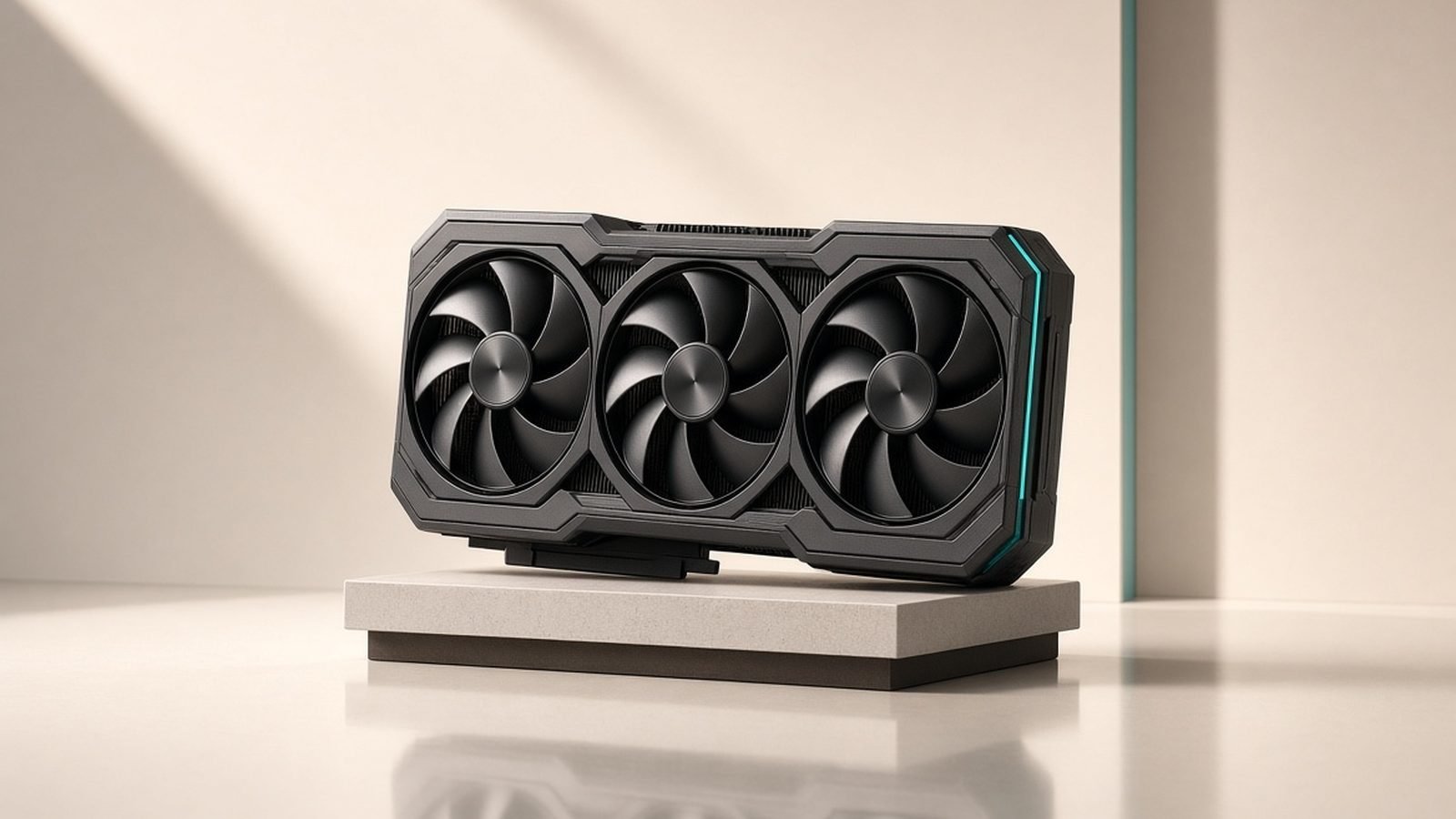
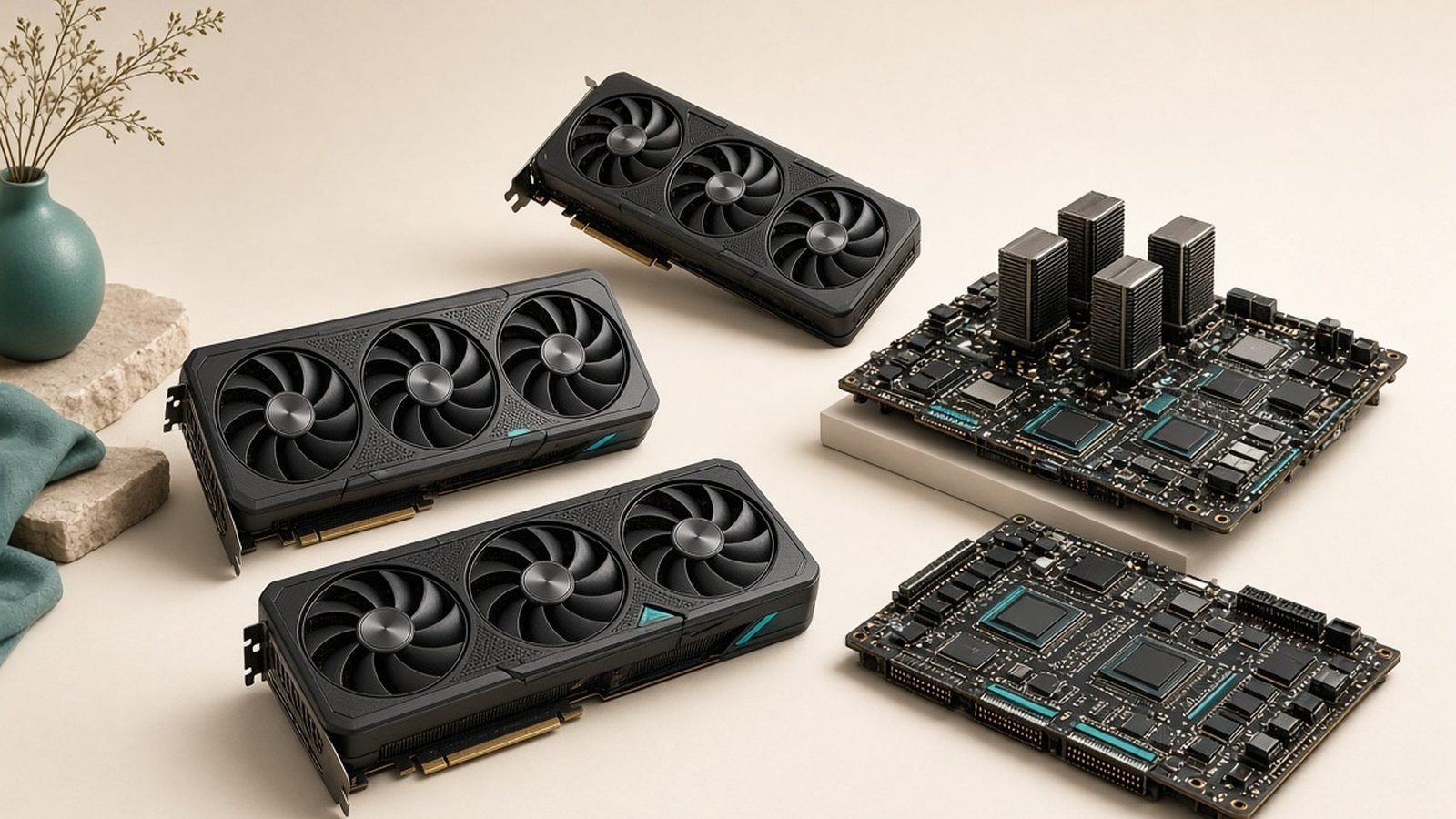
Board-partner cards. Because you buy a physical card, the model matters: partner cards differ in cooler size, noise, factory overclock, and warranty. A larger triple-fan model runs cooler and quieter than a compact one at the same GPU tier. Nvidia’s Founders Edition, where sold, is a clean reference option.
If you want the strongest single upgrade for a gaming PC, a current-generation RTX 50-series card in your budget is it — choose the partner model with the cooling and warranty you prefer.
Strengths
Top performance and ray tracing. Nvidia holds the outright performance crown at the high end and leads in ray-traced games, where its hardware and denoising are ahead.
DLSS and the software ecosystem. DLSS 4, Reflex, Broadcast, and strong driver support form the most complete software stack in consumer graphics. Frame generation and upscaling extend the useful life of a card.
Excellent creator and AI support. Wide app optimization, CUDA acceleration, and strong performance in video, 3D, and local AI workloads make Nvidia the safe pick for creators and hobbyist AI users.
Broad partner choice. Multiple board partners mean many designs, sizes, and price points for each GPU tier, so you can match a card to your case and noise tolerance.
Mature drivers and features. The GeForce app, frequent game-ready drivers, and features like G-Sync give a polished day-to-day experience.
Weaknesses & criticisms
Price and value. Nvidia commands a premium, and recent generations have pushed prices high, especially at the top end. Dollar-for-dollar raster performance often favors AMD, so value-focused buyers can feel squeezed. Compare directly in our AMD Brand Profile 2026: Ryzen CPUs & Radeon GPUs profile.
VRAM stinginess on some tiers. Nvidia has faced ongoing criticism for equipping certain mid-range cards with less video memory than rivals, which can limit longevity at higher resolutions and with heavy texture packs.
Availability and pricing volatility. Popular models can sell above list price at launch, and stock can be thin, partly because Nvidia prioritizes lucrative data-center production.
Proprietary lock-in. DLSS, CUDA, and G-Sync are Nvidia-specific. That polish comes with ecosystem lock-in; open alternatives exist but are less mature.
Consumer graphics is not the priority. With AI accelerators driving most revenue, some enthusiasts worry gaming gets less strategic focus than it once did.
Reliability & support
Nvidia’s GPU silicon is dependable, and the software drivers are among the most actively maintained in the industry, with regular game-ready updates and long support tails for older architectures. Because desktop graphics cards are usually made by board partners, though, your warranty and RMA experience come from that partner, not Nvidia — warranty length (commonly two to three years, sometimes longer with registration) and service quality vary by brand. Founders Edition cards are supported directly by Nvidia where sold.
Practical advice: buy from a reputable board partner with good regional RMA support, keep your proof of purchase, and check the specific model’s warranty terms. Driver support is a genuine Nvidia strength — cards typically receive optimized drivers for many years. The main friction points owners report are launch pricing/availability and, occasionally, individual partner cooler or coil-whine quality rather than the underlying Nvidia chip.
Who should buy
Buy Nvidia if you want the best ray tracing, the strongest upscaling via DLSS 4, top-end 4K performance, or reliable creator and local-AI acceleration — and you accept paying a premium for that polish. It is the low-risk default for a high-refresh gaming build or a workstation.
Consider AMD instead if you want more raster performance and VRAM per dollar and can live with a less mature upscaler, or Intel Arc for tight budgets — see the AMD Brand Profile 2026: Ryzen CPUs & Radeon GPUs and Intel Brand Profile 2026: Core CPUs & Arc GPUs profiles. Whatever GPU you choose, our current rankings and price context live in Best Graphics Cards 2026: GPUs for Every Budget.
FAQ
Is Nvidia a good brand for GPUs?
Yes — it is the performance and feature leader in consumer graphics in 2026, with the best ray tracing and the DLSS software advantage. The main downside is price. For raw value, AMD is often more competitive.
Do I buy directly from Nvidia?
Usually not. Nvidia designs the GPU, but most retail graphics cards are built and sold by board partners like ASUS, MSI, Gigabyte, and Zotac. Nvidia also sells its own Founders Edition cards in some regions. Pick the partner model with the cooling and warranty you want.
What is DLSS and why does it matter?
DLSS is Nvidia’s AI upscaling and frame-generation technology. It renders at a lower internal resolution and reconstructs a sharp image, and DLSS 4 can insert AI-generated frames, boosting frame rates in supported games. It is a key reason buyers choose Nvidia.
Is Nvidia or AMD better value?
AMD typically offers more traditional (raster) performance and VRAM per dollar, while Nvidia leads on ray tracing, upscaling, and software. Value-focused gamers should price both; feature-focused buyers usually lean Nvidia. See Best Graphics Cards 2026: GPUs for Every Budget.
How much VRAM do I need in 2026?
For 1080p, 8GB is a workable minimum; for 1440p aim for 12GB or more; for 4K and future headroom, 16GB and up is safer. Nvidia has been criticized for tight VRAM on some mid-range cards, so check the spec before buying.
Which board partner should I pick?
Prioritize cooling and warranty over branding. A larger triple-fan card at a given GPU tier runs cooler and quieter, and a longer regional warranty reduces risk. Brand-specific factory overclocks make only a small real-world difference.
Zen Tech Hub may earn a commission from links on this page, at no extra cost to you.