Vizio built its name on one promise: a big, decent TV for less money than the household brands, and in 2026 it still largely delivers on that. Its mid-range and flagship Quantum sets offer a lot of screen and respectable picture quality for the price, and its soundbars are a long-standing value pick. The catch has grown, though — Vizio is now owned by Walmart, and its business increasingly runs on advertising and viewing data through the SmartCast platform, which is the real product behind those low sticker prices. Verdict: buy Vizio if you want maximum screen size and features per dollar and you are comfortable with an ad-driven smart platform; look elsewhere if you want top-tier picture processing, strong privacy, or the best long-term software support.
Vizio is a value-first American brand with a clear identity. This profile is honest about both the real bargains and the data-and-ads model that makes them possible.
Company overview
Vizio is an American company founded in 2002 in California (headquartered in Irvine). It disrupted the flat-panel TV market by selling large LCD TVs at aggressive prices through big-box retailers, especially Costco and Walmart, and quickly became one of the best-selling TV brands in the United States.
The most important recent development: in late 2024, Walmart acquired Vizio for roughly $2.3 billion. Walmart’s motivation was not primarily the hardware — it was Vizio’s advertising and data business. Vizio operates SmartCast, its own smart-TV operating system, plus WatchFree+, a free ad-supported streaming (FAST) service. Together these generate advertising revenue and viewing data, which is exactly the kind of high-margin, retail-media business Walmart wanted. In plain terms, Vizio’s TVs are increasingly a delivery vehicle for ads and data, subsidized to keep hardware prices low.
Vizio is a US-focused brand — its presence is overwhelmingly in North America, sold through Walmart, Costco, Target, Best Buy, and Amazon. It is a mainstream value player, not a premium or global brand.
What Vizio makes
Vizio’s catalog is narrow and focused, which is part of its appeal:
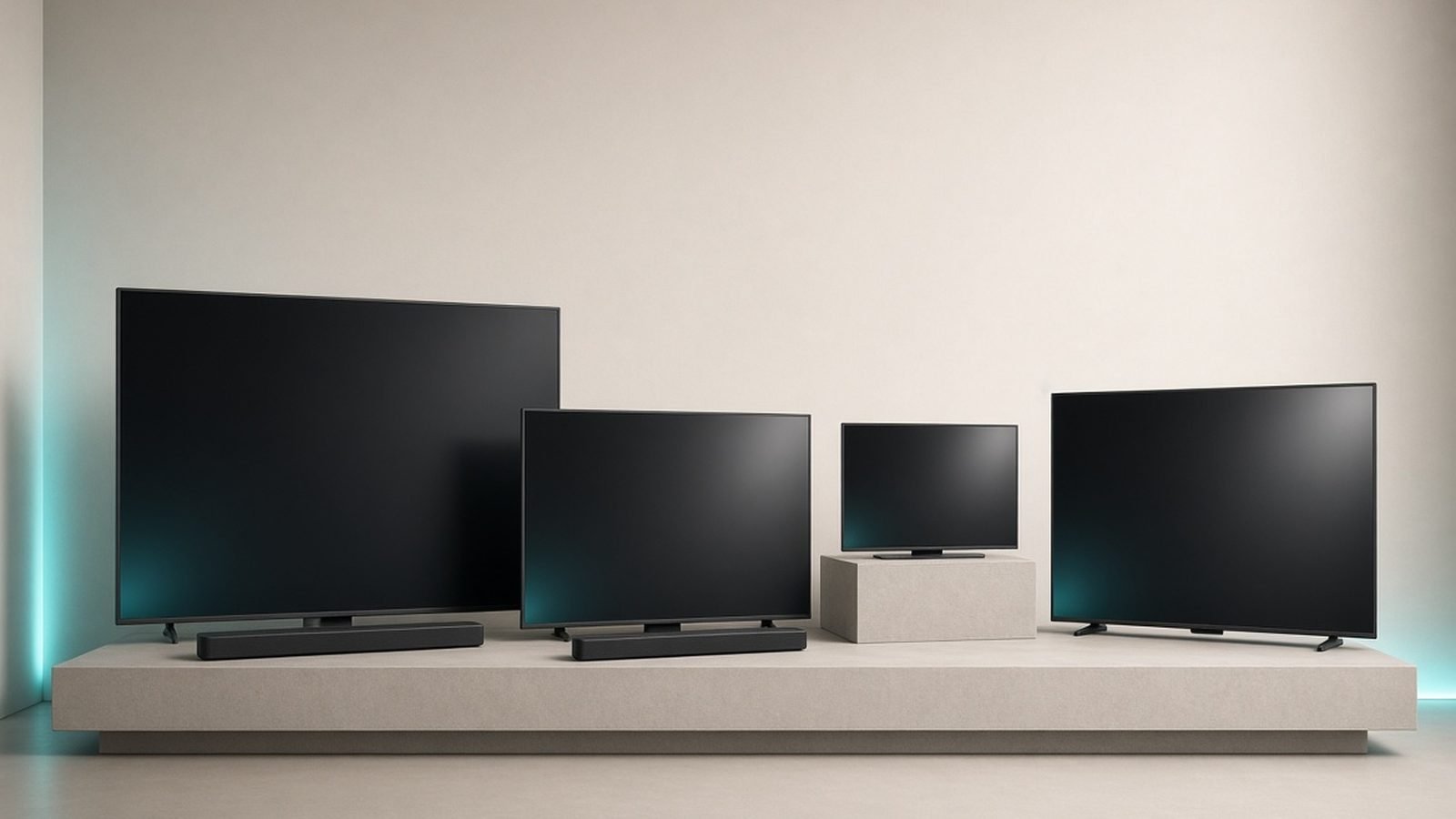
- Televisions: LED, quantum-dot (Quantum and Quantum Pro), and mini-LED LCD TVs across budget and mid-range tiers, with a strong emphasis on large screen sizes at low prices. Vizio has generally not competed at the true premium/OLED top end.
- Soundbars: A core category — Vizio soundbars, including Dolby Atmos and full surround systems, are among the most recommended budget and mid-range audio upgrades.
- SmartCast platform & WatchFree+: Vizio’s in-house smart-TV OS and its free ad-supported streaming service, which increasingly define the ownership experience (and the business model).
- Accessories: Streaming and casting support (SmartCast has Chromecast and AirPlay built in), plus a small range of related home-entertainment gear.
For most buyers, Vizio means an affordable large TV and a value soundbar to go with it.
Standout Vizio products in 2026
Vizio Quantum Pro / mini-LED TVs. Vizio’s flagship LCD sets pair a mini-LED backlight with quantum-dot color, higher brightness, and local dimming, plus gaming features like 120Hz, VRR, and low input lag on the better models. They are a genuine value play against Hisense and TCL and earn consideration in our Best TVs 2026: OLED, Mini-LED & Budget Picks Compared roundup.
Vizio V-Series and M-Series. The V-Series is the budget workhorse — a lot of screen for very little money — and appears regularly in our Best Budget TVs 2026: Great Picture for Less guide. The M-Series steps up to quantum-dot color and better dimming for a modest premium, a sensible mid-range pick.
Vizio soundbars (Elevate and Atmos models). Vizio’s soundbars are a long-time value favorite. The higher-end Elevate models with rotating up-firing Atmos speakers punch above their price, and the entry bars are among the best cheap ways to beat built-in TV audio.
Large-format Vizio TVs (75-inch and up). Where Vizio shines most is big screens on a budget — its 75-inch and 85-inch sets are often among the cheapest ways to get a very large, decent TV, ideal for buyers prioritizing size over the last word in processing.
Strengths
Excellent screen-size-per-dollar. Vizio’s core strength. If you want the biggest TV your budget allows, Vizio is consistently one of the cheapest routes to a large, capable panel.
Good mid-range picture quality. The Quantum and mini-LED sets deliver bright, colorful HDR and respectable contrast that comfortably exceeds their modest prices.
Strong, affordable soundbars. Vizio’s audio lineup is a genuine highlight, offering Atmos and surround options that undercut Sonos, Samsung, and Bose while sounding good.
Simple, integrated smart platform. SmartCast has the major apps, Chromecast, and AirPlay built in, plus free live and on-demand content via WatchFree+ — convenient if you like ad-supported free TV.
Solid gaming value. Better Vizio sets include 120Hz, VRR, and low input lag, making them a reasonable budget choice for PS5 and Xbox Series X — see Best Gaming TVs for PS5 & Xbox 2026: 120Hz Top Picks.
Weaknesses & criticisms
An ad- and data-driven business model. This is the central caveat. SmartCast surfaces ads, and Vizio’s business (now Walmart’s) monetizes viewing data through its advertising and ACR (automatic content recognition) systems. The low prices are subsidized by that model, and privacy-conscious buyers should note Vizio’s history here — it paid a $2.2 million settlement to the FTC in 2017 over collecting viewing data without adequate consent.
Processing and motion trail premium brands. Vizio’s image processing, upscaling, and motion handling are fine for the money but clearly behind Sony, LG, and Samsung. Difficult content can show blooming and less refined motion.
SmartCast can be buggy and ad-heavy. Owners report occasional sluggishness, ads on the home screen, and update issues. Many pair a Vizio TV with an external streamer for a cleaner experience.
No true premium tier. Vizio does not make OLED TVs and does not compete at the very top of picture quality. If you want reference-grade performance, it is not the brand.
US-only and reliability variance. Vizio is essentially a North American brand with little global presence, and, like most value makers, it shows more reliability and QC variance than premium names, with mixed customer-service feedback.
Reliability & support
Vizio’s reliability is typical of the value tier: generally acceptable, with more variance than premium brands. Many owners get years of trouble-free use, but there are more scattered reports of panel issues, backlight problems, and SmartCast glitches than you would see from a top-tier maker. That is the trade-off for the low prices.
Warranty is typically one year on TVs and soundbars in the US, which is standard but not generous. Customer-service feedback is mixed — some buyers report smooth replacements, others describe frustrating experiences — and because Vizio is US-centric, support outside North America is minimal. Software support comes through SmartCast updates; the platform gets ongoing updates (it is central to Vizio’s ad business, so it is maintained), but update quality and app longevity are less certain than on a flagship platform, and updates have at times added or changed advertising behavior.
Practical advice: buy a specific well-reviewed model, buy from a retailer with a good return policy (Costco’s is a common reason people trust Vizio purchases), and consider an external streamer if you want to sidestep SmartCast’s quirks.
Who should buy Vizio
Buy Vizio if your priority is maximum screen size and features for the lowest price, you are shopping in North America, and you are comfortable with an ad-supported smart platform. Its mid-range Quantum and mini-LED sets are strong value, its big 75-inch-plus TVs are among the cheapest large screens around, and its soundbars are an easy, affordable audio upgrade. For a budget living-room setup, Vizio is a sensible one-brand solution.
Look elsewhere if you want reference-grade picture processing (Sony and premium LG/Samsung lead), if an ad-driven, data-collecting smart platform bothers you (a privacy-minded buyer may prefer a “dumb” setup with a chosen streamer), or if you want an OLED or a globally supported brand. Cross-shoppers should compare Vizio against Hisense and TCL — its closest value rivals — and check our Best Budget TVs 2026: Great Picture for Less and Best TVs 2026: OLED, Mini-LED & Budget Picks Compared guides before deciding.
FAQ
Is Vizio a good brand?
For value, yes. Vizio offers a lot of screen and decent picture quality for the money, and good soundbars, making it a solid budget and mid-range choice in North America. The trade-offs are weaker processing than premium brands and an ad- and data-driven smart platform.
Is Vizio reliable?
It is reasonably reliable for the price, but shows more variance than premium brands — more scattered reports of panel and software issues, and mixed customer-service feedback. Buying a well-reviewed model from a retailer with a strong return policy is the best way to manage the risk.
Who owns Vizio, and where is it from?
Vizio is an American company founded in 2002 and headquartered in Irvine, California. In late 2024, Walmart acquired Vizio (for about $2.3 billion), largely for its advertising and viewing-data business built around the SmartCast platform.
Is Vizio owned by Walmart now?
Yes. Walmart completed its acquisition of Vizio in late 2024. Walmart’s main interest was Vizio’s SmartCast advertising and data business, which fits its retail-media strategy — the TV hardware is secondary.
Is Vizio better than TCL or Hisense?
They are close value rivals. Hisense and TCL often edge ahead on flagship brightness and dimming, while Vizio competes hard on price, big-screen value, and soundbars. The best pick depends on the specific models and current prices — compare them in our Best Budget TVs 2026: Great Picture for Less guide.
Does Vizio collect my viewing data?
Vizio’s business, especially post-Walmart, relies heavily on advertising and viewing data via SmartCast and ACR technology. It paid a $2.2 million FTC settlement in 2017 over data collection. You can limit some tracking in settings, but the ad-and-data model is core to how Vizio keeps prices low.
Zen Tech Hub may earn a commission from links on this page, at no extra cost to you.