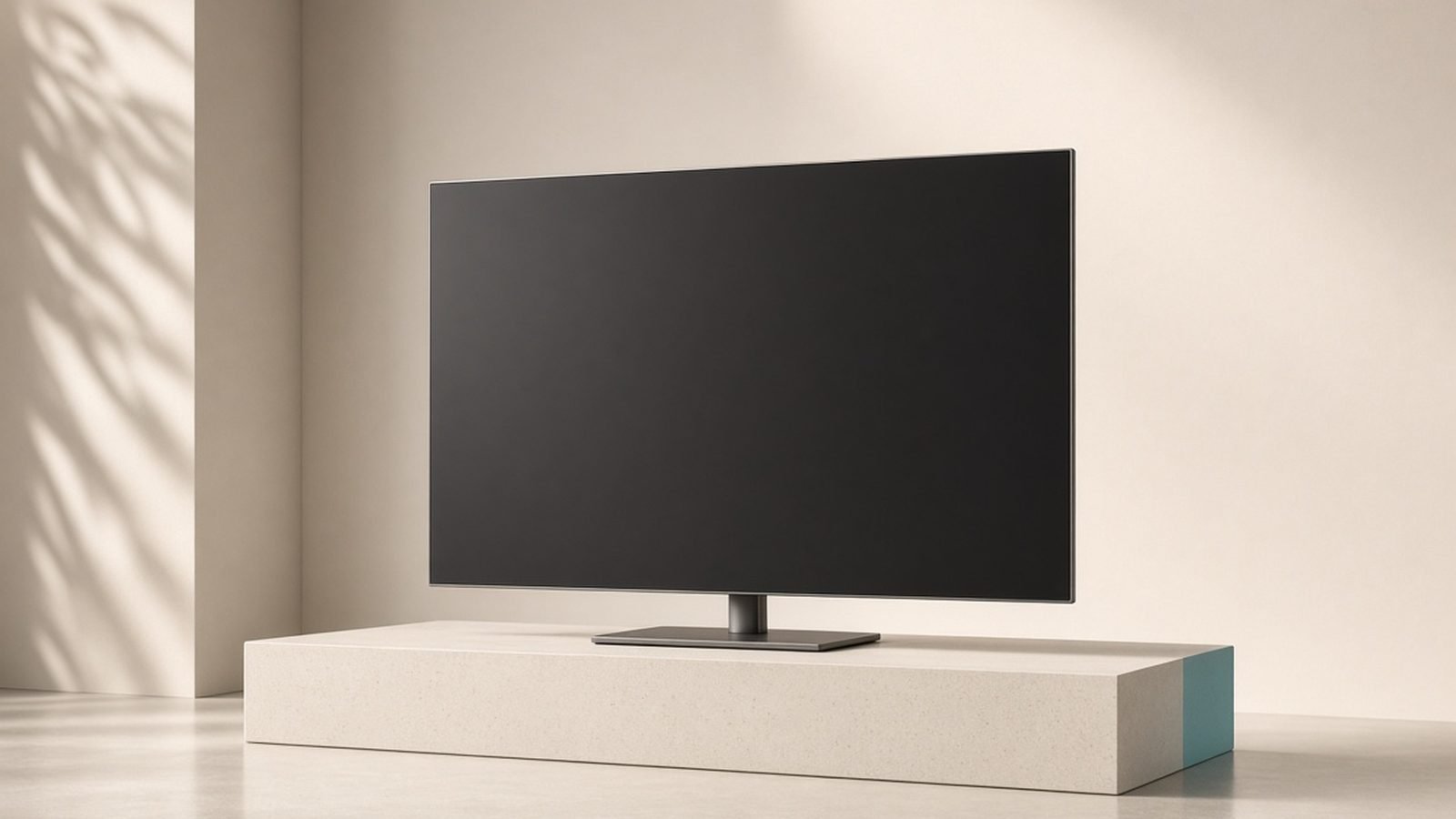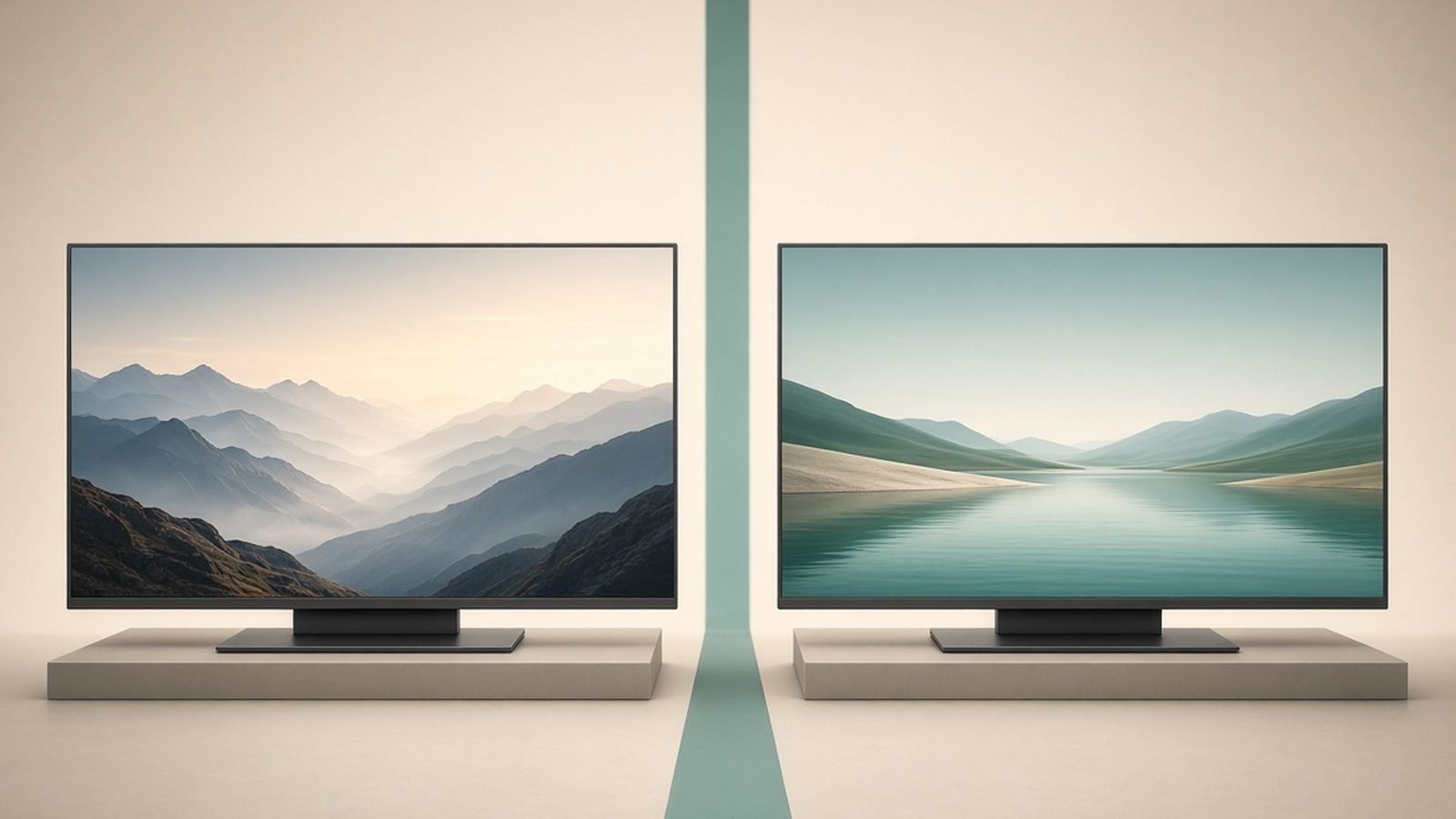
Choosing a TV in 2026 comes down to one question before any spec sheet: how much light is in your room. In a dim or controllable room, an OLED’s per-pixel blacks and off-angle consistency win, and the LG C5 is the set this guide points most people to. In a sunlit lounge a bright mini-LED fights glare that leaves a mid-range OLED looking flat, and does so for far less money. Every pick below names the room it suits and the trade-off you accept.
Update, 9 October 2026: every price in this guide was re-read at the makers’ US stores, Newegg, Currys and PriceSpy UK. Three of the six picks are 2025 models that their makers’ US stores now list as out of stock in every size - the LG C5 (65-inch listed at $1,499.99), the LG G5 ($3,399.99) and the Samsung S95F ($3,299.99; Newegg’s $2,319 listing was out of stock too) - while their 2026 successors were in stock: C6 65-inch $1,499.99, G6 $2,499.99 and S95H $2,499.99. TCL’s US store no longer sells the QM8K at all; it lists a QM8L (65-inch $1,079.99) and the QM9K (65-inch $999.99) instead. In the UK the 2025 sets are still on sale: C5 65-inch from £1,479 on PriceSpy against £1,899 for the C6 at Currys, G5 from £1,799 against £2,699 for the G6, and the Sony Bravia 8 II at £2,399 at Currys. Sony’s and Hisense’s US prices could not be read from here and keep their July labels. The picks have not been re-ranked and none of the successor models has been assessed - each section says what was read. The same UK-clearance pattern is covered in our Best Budget OLED TVs 2026 guide.
This guide ranks six TVs across three real-world situations: the OLED perfectionist, the bright-room brightness hunter, and the budget buyer who still wants a picture worth watching. Each pick names who it’s for and the trade-off you accept, so you can match a set to your room rather than to a marketing spec sheet.
Best TV 2026 at a glance
| Pick | TV | Best for | Price US / UK (read 9 Oct 2026) |
|---|---|---|---|
| Best overall | LG C5 OLED (65”) | Most people, mixed use | $1,499.99 list, out of stock at LG US / from £1,479 (PriceSpy) |
| Best premium OLED | Samsung S95F QD-OLED (65”) | Bright rooms + top picture | $3,299.99 list, out of stock at Samsung US / no 65-inch UK listing read |
| Best step-up OLED | LG G5 OLED (65”) | Wall-mount, brightest OLED | $3,399.99 list, out of stock at LG US / from £1,799 (PriceSpy) |
| Best all-rounder | Sony Bravia 8 II / Bravia 9 (65”) | Film + processing | US not re-read (~$2,199 in July 2026) / Bravia 8 II £2,399 at Currys, Bravia 9 £2,299 (PriceSpy) |
| Best value mini-LED | TCL QM8 (65”) | Big, bright, cheap | QM8K no longer sold at TCL US; QM8L $1,079.99, QM9K $999.99 / no UK model |
| Best bright-room value | Hisense U8 (65”) | Brightness for the money | US not re-read (~$899 in July 2026) / no U8 model at Currys |
Prices read 9 October 2026: LG US, Samsung US and TCL US stores (list price and stock status), Newegg, Currys and PriceSpy UK. One retailer, one day - not averages or guaranteed lows; Sony and Hisense US figures are July 2026 checks that could not be re-read. Treat every figure as a guide, not a guarantee.
How we picked
We are an editorial team, not a measurement lab. This guide is built from manufacturer specifications, professional review measurements from outlets we trust, and aggregated owner feedback across retailer reviews and AV forums. We do not run our own bench tests, and we never invent numbers.
We weighted four things: picture quality in the conditions each TV will actually be used in (a dark-room OLED score is meaningless in a sunny lounge); gaming readiness (HDMI 2.1, 4K 120Hz and beyond, VRR, input lag); the software and long-term usability owners report living with; and value at real street prices, which in this category move monthly. For the deeper panel-technology background, see OLED vs QLED 2026: Which TV Tech Is Better?.
Best overall: LG C5 OLED
65-inch WOLED, 144Hz, 4x HDMI 2.1; $1,499.99 list and out of stock at LG US, from £1,479 in the UK (9 October 2026).
Price and stock, 9 October 2026: LG’s US store listed the 65-inch C5 at $1,499.99 but showed every C5 size as out of stock, while the 2026 C6 was in stock at the same $1,499.99 (55-inch $1,299.99); a Newegg listing carried the C5 at $1,499.99. US vs UK: the picture is reversed in the UK, where the C5 is now the clearance bargain - from £1,479 on PriceSpy, while Currys no longer lists it and returns the C6 at £1,899 instead - so a UK buyer saves about £420 by taking the 2025 set and a US buyer gets the newer model for the same money. Our LG C6 vs LG C5 comparison covers what the extra year buys; the C6 was not assessed for this guide.
The LG C5 is the TV we recommend to the most people because it gets the fundamentals right and rarely overreaches. As a WOLED panel it delivers the perfect blacks and infinite contrast that define the category, and LG’s Alpha 11 processor handles motion, upscaling and tone-mapping with a light, natural touch. Nothing about the image shouts for attention — it just looks correct.
It is also the most complete gaming TV in this guide for the money. All four HDMI ports are full 2.1, so you can connect a PS5, an Xbox Series X and a gaming PC without juggling cables, and every input supports 4K 120Hz (up to 144Hz from PC), VRR and near-instant input lag. The webOS platform is quick, though the ad-laden home screen is a mild irritant.
The honest limitation is brightness. The C5 is brighter than older C-series OLEDs but still trails QD-OLED and mini-LED in a sunlit room, and its glossy coating mirrors windows. In a light-controlled space it is superb; in a conservatory it struggles.
Pros:
- Perfect blacks, infinite contrast, excellent out-of-box accuracy
- Four full HDMI 2.1 ports — the best gaming connectivity here
- Natural, class-leading processing and motion handling
- Strong value for a flagship-tier OLED
Cons:
- Trails mini-LED and QD-OLED for peak brightness
- Glossy screen reflects bright windows
- webOS home screen pushes ads
Who it’s for: the buyer with a normally-lit living room who wants the best picture-per-pound without paying flagship money. Read our full LG C5 OLED Review 2026: The Best All-Round TV? for the deep dive.
Check price: LG C5 OLED (65-inch)
Best premium OLED: Samsung S95F QD-OLED
65-inch QD-OLED, 165Hz, matte glare-free coating; $3,299.99 list and out of stock at Samsung US, no 65-inch UK listing read (9 October 2026).
Price and stock, 9 October 2026: Samsung’s US store listed the 65-inch S95F at $3,299.99 and out of stock, the 55-inch at $2,199.99 and out of stock, and Newegg’s $2,319 listing was out of stock too. Samsung’s 2026 glare-free S95H was in stock at $2,499.99 for the 65-inch - below the S95F’s list price, but not assessed here. US vs UK: no 65-inch S95F listing was found at Currys or on PriceSpy’s TV page (the 55-inch was £1,349 on PriceSpy); Currys sells the 65-inch S95H at £2,699, the S90H at £2,099 and the S85H at £1,899. The July figure of ~$2,299 / £2,299 no longer describes anything on sale.
The Samsung S95F is the OLED to buy when you refuse to compromise. Its QD-OLED panel produces brighter, more saturated colour than a standard WOLED, and its standout trick is a matte “glare-free” coating that dissolves reflections into a faint haze instead of a sharp mirror. It is the first OLED we would confidently put in a bright room, which is rare praise for the technology.
Colour volume is the technical headline: QD-OLED holds saturation as it brightens, so daytime HDR stays vivid rather than pastel. Add a 165Hz refresh rate, four HDMI 2.1 ports and Samsung’s slick (if busy) Tizen platform and you have a set that does everything the C5 does with more brightness and better glare handling.
The trade-offs are price and Dolby Vision. Samsung continues to back HDR10+ instead of Dolby Vision, so some streaming HDR renders in a lesser format, and the S95F costs meaningfully more than the C5. In a pitch-black room a glossy OLED shows marginally inkier blacks, as the matte layer trades a sliver of contrast for glare immunity.
Pros:
- Brightest, most colour-rich OLED image here
- Genuinely glare-free matte coating for bright rooms
- 165Hz, four HDMI 2.1 ports, excellent for gaming
- Perfect blacks once the lights go down
Cons:
- No Dolby Vision (HDR10+ only)
- Premium, flagship pricing
- Matte coating slightly lifts blacks in a dark room
Who it’s for: the enthusiast who wants OLED contrast and real daytime usability in one set, and has the budget. See our full Samsung S95F OLED Review 2026: QD-OLED Flagship and the Best OLED TVs 2026: Picture-Quality Kings round-up.
Check price: Samsung S95F OLED (65-inch)
Best step-up OLED: LG G5
65-inch four-stack WOLED, 165Hz, wall-flush design; $3,399.99 list and out of stock at LG US, from £1,799 in the UK (9 October 2026).
Price and stock, 9 October 2026: LG’s US store listed the 65-inch G5 at $3,399.99 with every size out of stock, and Newegg returned only remotes; the 2026 G6 was in stock at $2,499.99 for the 65-inch, wall mount supplied. US vs UK: the G5 remains on sale in the UK from £1,799 on PriceSpy, while Currys returned only the G6 at £2,699 (its wall-mount version awaiting stock) - so in the UK the 2025 set is £900 cheaper than its successor, the opposite of the US, where the G6 is the one you can actually buy. The G6 was not assessed for this guide.
The LG G5 is the C5’s brighter, pricier sibling. Its four-stack “Primary RGB Tandem” WOLED panel pushes significantly higher peak and full-screen brightness than the C5, closing much of the gap to QD-OLED while keeping WOLED’s slightly cleaner near-black handling. It ships without a stand — the Gallery design is meant to sit flush on a wall — which suits mounted installations and irritates anyone who wanted feet in the box.
For picture quality it is the brightest OLED LG makes, and in a mixed room it splits the difference between the affordable C5 and the glare-fighting S95F. Gaming support mirrors the C5: four HDMI 2.1 ports, 4K 165Hz, VRR and low lag.
The catch is value. You pay a clear premium over the C5 for extra brightness that only matters in brighter rooms, and unless you wall-mount, the standless design means budgeting for a mount or a separate stand.
Pros:
- Brightest OLED in LG’s line-up
- Clean near-black detail and natural processing
- Full four-port HDMI 2.1, 165Hz gaming
- Elegant wall-flush design
Cons:
- No stand included as standard
- Expensive next to the C5 for the brightness gain
- Still trails mini-LED for pure daytime punch
Who it’s for: the buyer wall-mounting in a brighter room who wants maximum OLED brightness without switching to QD-OLED. Compare it against the rest in Best OLED TVs 2026: Picture-Quality Kings.
Check price: LG G5 OLED (65-inch)
Best all-rounder: Sony Bravia (Bravia 8 II / Bravia 9)
65-inch QD-OLED or mini-LED, HDMI 2.1, Sony processing; US ~$2,199 (July 2026, not re-read), Bravia 8 II £2,399 at Currys (9 October 2026).
Price and stock, 9 October 2026: Sony’s US store could not be read from here and Newegg returned no Bravia 8 II or Bravia 9 TV listing, so the US figure of ~$2,199 is a July 2026 check and is not re-dated. In the UK, Currys listed the 65-inch Bravia 8 II (model K65XR8M25B, a 2025 set) at £2,399 and available for delivery, with PriceSpy showing it from £2,198.99; PriceSpy listed the 65-inch Bravia 9 (K-65XR90, a 2024 set) at £2,299. Those model years come from the retailers’ listings.
Sony’s current line splits into two flavours of excellent. The Bravia 8 II is a QD-OLED with Sony’s renowned processing laid over a bright, colour-rich panel; the Bravia 9 is Sony’s flagship mini-LED, with best-in-class local dimming for people who want LCD brightness with near-OLED contrast. Both share the same strength: Sony’s picture processing is the most cinematic here, with motion and upscaling that make messy streams watchable.
Where Sony wins is fidelity to the source. Film in particular looks more natural — skin tones, film grain and camera motion are handled with restraint the others sometimes lack. Both models support Dolby Vision, and both are strong, if not class-leading, gaming TVs (two HDMI 2.1 ports rather than four is the recurring Sony compromise).
The downside is value and connectivity. Sony charges a premium for its processing, and only two of the HDMI ports are full 2.1 — one of which doubles as the eARC output, a real annoyance if you own two consoles and a soundbar.
Pros:
- Best-in-class processing, motion and upscaling
- Dolby Vision support across the range
- Bravia 9 mini-LED offers superb brightness and dimming
- The most “cinematic” picture in this guide
Cons:
- Only two HDMI 2.1 ports, one shared with eARC
- Premium pricing for the processing
- Fewer gaming extras than LG or Samsung
Who it’s for: the film-first viewer who values processing and Dolby Vision over gaming port count. Pair either with a good soundbar from our Best Soundbars Under $300 (£300) in 2026: Big TV Sound, Small Price guide.
Check price: Sony Bravia 8 II (65-inch)
Best value mini-LED: TCL QM8
65-inch mini-LED, 144Hz, thousands of dimming zones; ~$999 in July 2026 - QM8K no longer sold at TCL US, no UK model (9 October 2026).
Price and stock, 9 October 2026: TCL’s US store no longer sells the QM8K: every size was listed as unavailable, the 65-inch at $2,499.99, its original list price. In its place TCL lists the QM8L, an “SQD-Mini LED” series it rates at up to 6,000 nits with 4,000-plus dimming zones, at $1,079.99 for the 65-inch (compare-at $2,499.99) and $2,149.99 for the 85-inch, and the higher-numbered QM9K at $999.99 for the 65-inch (compare-at $2,999.99). Neither has been assessed for this guide; everything below describes the 2025 QM8K. US vs UK: none of the UK sources read - TCL UK’s TV page, Currys, PriceSpy - lists a QM8; TCL sells C-series models in the UK, so the £1,099 this guide quoted was a conversion with no UK product behind it and has been withdrawn. TCL UK’s 65-inch SQD-Mini LED sets at Currys were the C8L at £1,899 and the C7L at £1,299, with the C6K from £649 on PriceSpy - listings, not assessments.
The TCL QM8 is how you get a big, bright, feature-loaded TV without spending OLED money. Its mini-LED backlight with thousands of local dimming zones pushes very high peak brightness — enough to make HDR highlights pop and to overpower glare in a sunny room — and it does so at roughly half the price of a flagship OLED. For a bright living room on a budget, it is the obvious pick alongside the Hisense U8.
You also get a genuinely capable gaming panel: 144Hz support, VRR, Dolby Vision gaming and low input lag, plus Dolby Vision for film. At 65 and 75 inches it is one of the best pounds-per-inch deals in the market.
The compromises are the ones mini-LED always brings. Blooming — a faint halo around bright objects on dark backgrounds — is visible in the hardest scenes, off-axis viewing washes contrast, and the Google TV interface is cluttered with ads. None of it undoes the value, but an OLED still looks cleaner in a dark room.
Pros:
- Very high brightness — excellent for bright rooms and HDR
- Superb value at 65” and up
- 144Hz, VRR and Dolby Vision gaming
- Dolby Vision and HDR10+ support
Cons:
- Blooming in high-contrast dark scenes
- Contrast drops when viewed off-angle
- Ad-heavy Google TV platform
Who it’s for: the budget buyer who wants the biggest, brightest screen for the money and watches mostly in a lit room. See how it stacks up in Best Budget TVs 2026: Great Picture for Less.
Check price: TCL QM8 (65-inch)
Best bright-room value: Hisense U8
65-inch mini-LED, 165Hz, 3,000+ nit peak; ~$899 in July 2026 (US not re-read), no U8 model at Currys (9 October 2026).
Price and stock, 9 October 2026: Hisense’s US store renders its prices in script that could not be read from here, Best Buy’s results would not load and Newegg had no 65U8QG listing, so the ~$899 US figure is a July 2026 check and is not re-dated. US vs UK: Currys lists Hisense’s UK range under different model names (U7S, Q7S, E7S Pro) and a search for the 65-inch U8Q returned no U8 at all - the closest Hisense mini-LEDs were the 65-inch U7S at £999 (reduced from £1,499) and the 165Hz U7S Pro at £1,299 - so the £1,199 this guide quoted had no UK product behind it and has been withdrawn. Those sets are listings, not assessments.
The Hisense U8 (the U8QG generation) answers the bright-room problem with brute force. Its mini-LED backlight pushes past 3,000 nits in professional measurements — enough to bulldoze glare that leaves a mid-range OLED looking flat — for around a third of flagship OLED money. If daytime brightness is your single biggest concern and the budget is tight, this is the value champion.
It is also a strong gaming panel, with a 165Hz mode, VRR and Dolby Vision that Samsung’s OLEDs lack. Full-screen brightness is excellent for all-day viewing and bright sport, and in July 2026 it undercut the TCL QM8 at 65 inches while trading blows on features.
The weaknesses mirror the QM8’s. Aggressive local dimming can crush or pump shadow detail in mixed scenes, the semi-gloss coating still shows some direct reflections, and Google TV brings the same ad bloat. But for pure brightness-per-pound, nothing here beats it.
Pros:
- 3,000+ nit peak — one of the brightest TVs of 2026
- Outstanding value versus flagship OLED
- Dolby Vision and HDR10+, 165Hz gaming
- Excellent full-screen brightness for daytime
Cons:
- Dimming can be overzealous in mixed content
- Semi-gloss coating still shows some reflections
- Cluttered Google TV home screen
Who it’s for: the value hunter who wants raw daytime punch and Dolby Vision without spending flagship money.
Check price: Hisense U8 (65-inch)
How to choose the best TV for you
Five factors decide this more than any spec-sheet number.
Your room’s light. This is the biggest one. A dark or dimmable room lets an OLED like the C5 shine. A bright, multi-window room wants either a matte QD-OLED (S95F) or a very bright mini-LED (U8, QM8). Buy for the room you have, not the reviews written in a dark studio.
Screen technology. OLED wins on contrast, black level and off-angle viewing; mini-LED wins on brightness, price-per-inch and burn-in peace of mind. Our OLED vs QLED 2026: Which TV Tech Is Better? explainer breaks down which suits your habits.
Gaming needs. If you own a PS5, Xbox Series X or gaming PC, count the HDMI 2.1 ports. LG and Samsung give you four; Sony gives you two. 4K 120Hz, VRR and low input lag matter more than any “gaming mode” badge.
Size and distance. Bigger is almost always the upgrade people notice most. For a normal sofa distance, 65 inches is the current sweet spot; 75-plus is where value mini-LEDs like the QM8 pull ahead of OLED on price.
Sound. Every flat TV has thin built-in speakers. Budget for a soundbar — our Best Soundbars Under $300 (£300) in 2026: Big TV Sound, Small Price guide covers picks that transform any set on this list.
FAQ
What is the best TV to buy in 2026?
For most people it is the LG C5 OLED — the best balance of picture quality, gaming features and price. If your room is bright, step to the Samsung S95F QD-OLED for glare-free viewing, or save money with the Hisense U8 or TCL QM8 mini-LED, which fight daylight with sheer brightness. Note that on 9 October 2026 TCL’s US store no longer sold the QM8K; its QM8L and QM9K successors have not been assessed here.
Is OLED or mini-LED better in 2026?
Neither is universally better; it depends on your room. OLED delivers perfect blacks, infinite contrast and superb off-angle viewing, ideal for dark or dimmable spaces. Mini-LED goes far brighter and costs less per inch, which wins in sunlit rooms. Our OLED vs QLED 2026: Which TV Tech Is Better? guide walks through the decision in detail.
Which TV is best for PS5 and Xbox Series X?
The LG C5 and Samsung S95F lead for gaming because all four HDMI ports are full 2.1, so multiple consoles and a soundbar coexist without compromise. Both support 4K 120Hz, VRR and near-instant input lag. Sony’s Bravia sets are excellent performers but limited to two HDMI 2.1 ports.
How much should I spend on a TV in 2026?
On 9 October 2026 the cheapest routes into this guide’s classes were TCL’s QM9K and QM8L mini-LEDs at $999.99 and $1,079.99 for 65 inches at TCL’s US store (not assessed here) and, in the UK, the 65-inch Hisense U7S at £999 at Currys. A flagship-tier OLED ran from $1,499.99 (LG C6 in stock, or the C5’s list price) to $2,499.99 (LG G6, Samsung S95H) in the US, and from £1,479 (C5, PriceSpy) to £2,699 (G6 and S95H at Currys) in the UK. Above that you are paying for brightness, glare handling and processing rather than a night-and-day picture jump.
Do I need a Dolby Vision TV?
Dolby Vision helps most in dark-room HDR, where its scene-by-scene tone-mapping is visible. Sony, LG, TCL and Hisense support it; Samsung uses HDR10+ instead. It is a nice-to-have rather than a dealbreaker — a brighter panel and good reflection handling affect everyday viewing far more.
Is it worth buying a 2026 TV over a discounted 2025 model?
It depends on where you shop, and on 9 October 2026 the answer split by country. In the US, LG’s and Samsung’s stores had sold through the 2025 C5, G5 and S95F, and the 2026 C6 cost the same $1,499.99 as the C5’s list price, so the newer set was the one to buy. In the UK the 2025 sets were still on sale at real discounts: C5 65-inch from £1,479 against £1,899 for the C6, G5 from £1,799 against £2,699 for the G6. Panel improvements year to year are incremental, so a discounted 2025 flagship that is actually in stock is usually the better value; check that gaming features and brightness meet your needs first.
Zen Tech Hub may earn a commission from links on this page, at no extra cost to you.