If your footage looks great but nobody watches past the first ten seconds, the problem is almost always the audio. Choosing the best wireless microphone for video is the single upgrade that separates content that feels amateur from content that feels professional — and it costs a fraction of a new camera. Viewers forgive soft focus. They do not forgive echoey, hollow, wind-battered sound.
This guide ranks the wireless mics worth buying in 2026 for vlogging, YouTube, interviews and phone-first content. We have pulled apart the specs, cross-checked pricing on both sides of the Atlantic, and weighed aggregated owner feedback to tell you exactly who each mic is for — and where it falls short.
Quick Comparison
| Mic | Best for | Onboard recording | Approx. price (US / UK) |
|---|---|---|---|
| DJI Mic 3 | Best overall all-rounder | Yes (safety track) | ~$329 / £299 |
| DJI Mic Mini | Phones & casual creators | No | ~$169 / £155 |
| Rode Wireless Micro | Budget / phone shooters | No | ~$149 / £139 |
| Rode Wireless GO III | Pros & backup-proof audio | Yes (32-bit float) | ~$299 / £259 |
Why Your Camera’s Built-In Mic Isn’t Enough
Built-in mics are omnidirectional afterthoughts wedged next to fans, buttons and your own hands. They grab everything: room reverb, traffic, the hum of your fridge, the clatter of your fingers on the body. Because the mic sits at the camera and you stand a metre or two away, your voice arrives thin and distant while the room arrives loud.
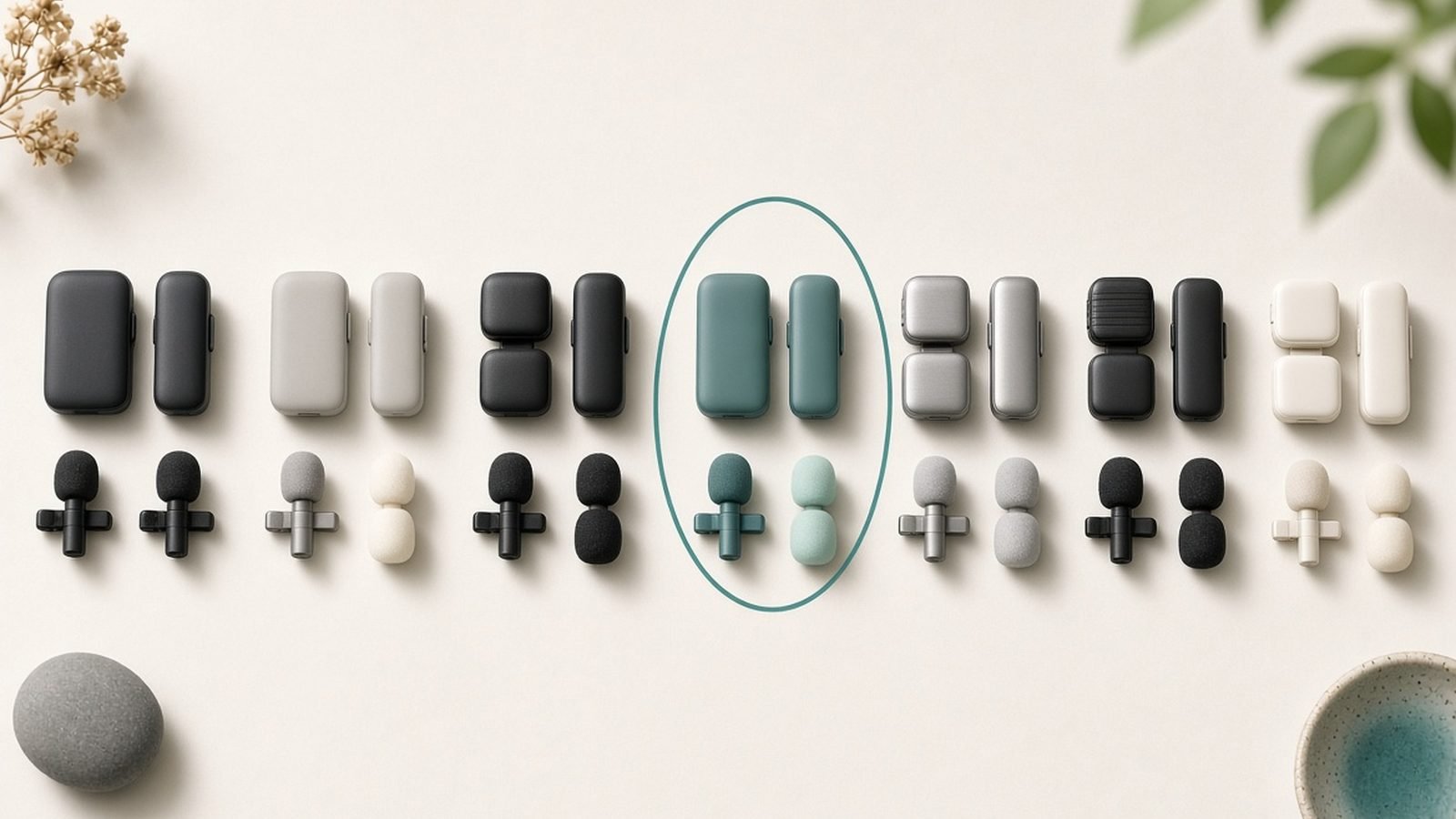
A wireless microphone puts the capsule on your body — usually a small clip-on transmitter or a lavalier — so your voice is close, warm and dominant. That proximity is physics you cannot fake in post. It is why a $150 wireless mic beats the internal mic on a $2,000 camera every single time.
What to Look For (Range, Battery, Onboard Recording)
A few specs matter more than the marketing sheet suggests.
Range. Most modern systems claim 200–300m line-of-sight. Real-world range through walls and bodies is far shorter, but any of these kits will comfortably cover a room, a market stall or a talking-head setup.
Battery life. Look for 6+ hours per charge on the transmitter, plus a charging case that tops you up between takes. All-day shooters should treat the case as non-negotiable.
Onboard recording and a safety track. This is the feature that saves careers. If the transmitter records a backup file (or a second, quieter “safety” track), a dropout or a moment of clipping won’t ruin an un-repeatable take. It is the dividing line between the casual tier and the pro tier.
Adaptive gain. Auto-levelling keeps a whispering interviewee and a laughing one both usable without you riding a dial.
Now, the picks.
Best Overall: DJI Mic 3
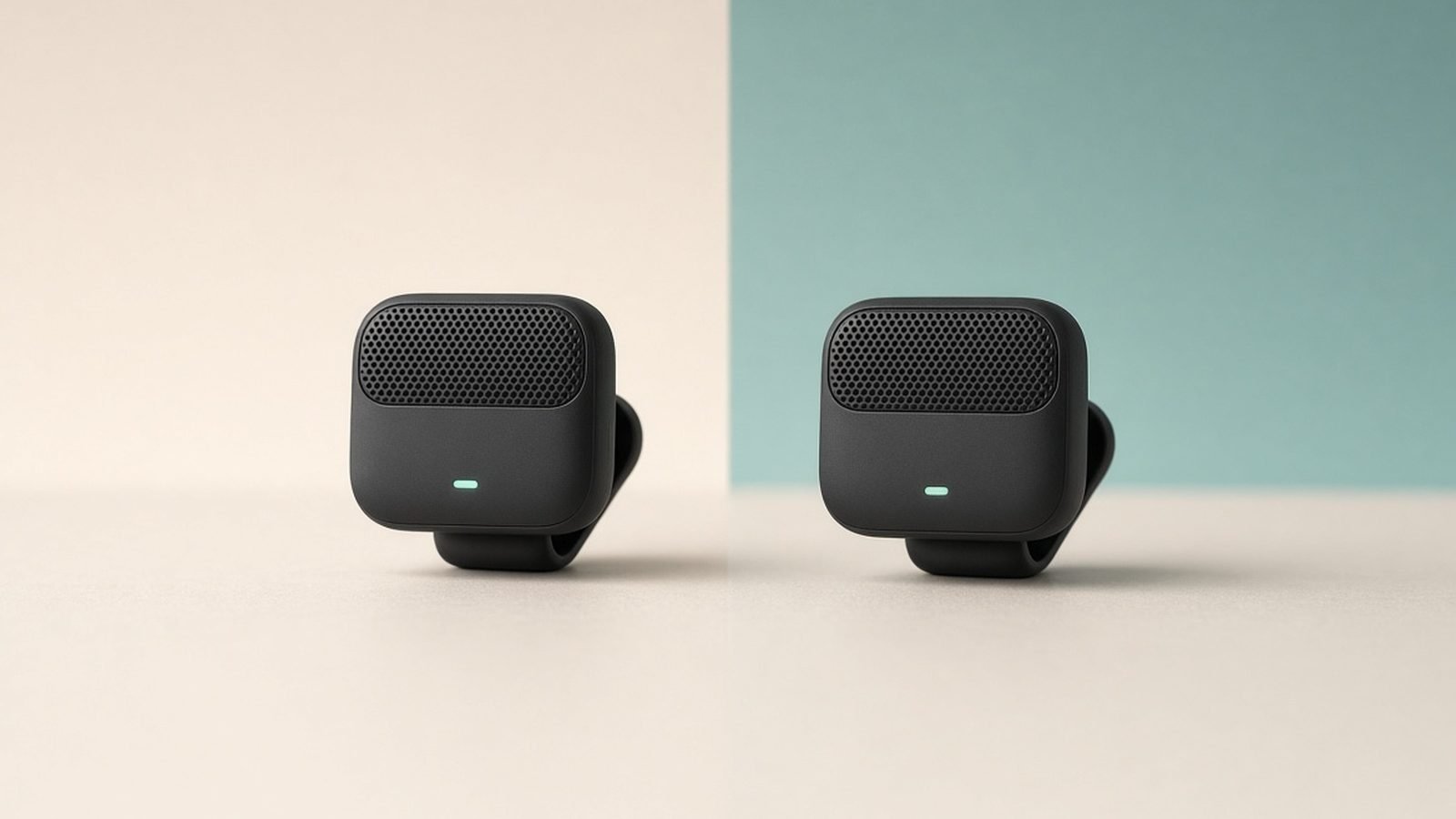
The DJI Mic 3 is the wireless kit we would hand to most creators without hesitation. The full bundle — two transmitters, one receiver and a charging case — is a complete two-person interview rig out of the box.
In our research, the standout upgrades over the previous generation are the longer, more stable range and smarter adaptive gain that rides your levels intelligently rather than pumping. Crucially, it records a safety track, so a sudden shout or a laugh that would otherwise clip has a rescue copy waiting. Owner reports consistently praise how quickly it pairs with DJI cameras, phones and the Osmo ecosystem.
The transmitters are tiny and magnetic, the case charges everything, and the receiver talks to cameras, iPhones and Android alike. If you shoot a mix of solo pieces, interviews and run-and-gun vlogs, this is the one kit that does all of it.
Pros - Two-transmitter kit ready for interviews straight away - Safety track protects against clipping and dropouts - Long, stable range and genuinely smart adaptive gain - Charging case keeps you shooting all day
Cons - The full kit is a real investment - Deepest features favour users already in DJI’s ecosystem
Who it’s for: creators who want one do-everything kit and won’t outgrow it. In the perennial dji mic vs rode debate, the Mic 3 is DJI’s strongest all-round answer.
Best for Phones and Creators: DJI Mic Mini
If the Mic 3 is more mic than you need, the DJI Mic Mini is the best wireless mic for vlogging on a phone-first workflow. It is astonishingly small and light — clip it on, forget it’s there — and the two-transmitter kit undercuts most rivals while still covering a host and a guest.
It pairs directly with phones and Osmo gear, which makes it a natural wireless mic for iPhone shooters and anyone building content on the DJI ecosystem. Battery life is strong for the size, and the sound quality punches well above the price.
The compromise is honest: there is no onboard recording. If the signal drops mid-sentence, there is no backup file to fall back on. For casual creators, talking-to-camera vlogs and social clips, that trade is easy to accept for the size and price.
Pros - Tiny, light and easy to forget you’re wearing - Excellent value in a two-transmitter kit - Pairs directly with phones and Osmo gear
Cons - No onboard/safety recording - Fewer manual controls than pricier kits
Who it’s for: casual and phone-first creators who want great sound with zero fuss.
Best Budget: Rode Wireless Micro
The Rode Wireless Micro is the best budget wireless microphone for anyone who just wants it to work. There is no display, no gain dial and almost nothing to configure — you power it on, it auto-connects, and you shoot. For phone shooters intimidated by menus, that simplicity is the whole appeal.
Rode’s audio pedigree shows in the clarity, and the bundled adapters make it a clean wireless mic for iPhone or Android setup. It comes as a two-transmitter kit, so you get a second channel for interviews at a genuinely low price.
The catch is control. Without a screen or gain adjustment, you are trusting the auto-levelling, and there is no onboard recording safety net. For its price and audience, that is a fair deal — but power users will feel boxed in.
Pros - Effortless auto-connect, near-zero setup - Clean Rode sound at a budget price - Two transmitters for phone-based interviews
Cons - No display or manual gain control - No onboard recording
Who it’s for: phone creators and beginners who value simplicity over control. It’s also a strong shout for anyone chasing the best lavalier mic 2026 value on a tight budget.
Check price: Rode Wireless Micro
Best for Pros: Rode Wireless GO III
When the take cannot be repeated — a wedding, a paid interview, a live event — the Rode Wireless GO III is the safe choice. Its headline feature is onboard 32-bit float recording: in practice, that means audio so forgiving you can pull back a clipped shout or lift a whisper in the edit with the file still intact. Combined with GainAssist and dual channels, it is the closest thing to insurance for your sound.
Owner reports rate it as the backup-proof workhorse for professionals who need redundancy. It records internally even if the wireless link stutters, so you always walk away with a usable file.
The trade-off is size. The transmitters are chunkier than DJI’s near-invisible clips, which matters for tight framing or discreet lavalier work. If you prioritise bulletproof reliability over pocketability, that is a price worth paying.
Pros - Onboard 32-bit float recording rescues clipped or quiet takes - GainAssist and dual channels for demanding shoots - Records internally even through link dropouts
Cons - Transmitters are bulkier than DJI’s - More capability than casual creators need
Who it’s for: pros, event shooters and anyone who cannot afford to lose a take.
Check price: Rode Wireless GO III
On-Camera Shotgun Alternative
Wireless isn’t the only route. If your subject stays a fixed distance from the camera — a desk setup, a cooking bench, a static talking-head — an on-camera shotgun mic is simpler and cheaper. It mounts to the hot shoe, needs no transmitter to charge or pair, and rejects off-axis room noise well.
The limit is movement. Walk away from the camera and your voice drops with you. For run-and-gun vlogging or interviews, wireless wins. For a controlled, seated shoot, a good shotgun can be the smarter buy — and there’s no batteries-in-two-places juggling. Many creators end up owning both. For a full rundown of dialling in levels whichever route you pick, see our guide below.
Verdict: Which Should You Buy?
Most people: the DJI Mic 3 is the best wireless microphone for video overall — a complete, future-proof kit with a safety track.
Phone-first and casual: the DJI Mic Mini delivers the best value with barely any bulk.
Tight budget: the Rode Wireless Micro just works, for less.
Professionals: the Rode Wireless GO III and its 32-bit float recording is the backup-proof best mic for YouTube pros.
Whichever tier you land in, upgrading your sound is the highest-return change you can make to your video. For a deeper head-to-head, read DJI Mic 3 vs Rode Wireless Micro 2026: Best Creator Mic?, and to squeeze the most from your new kit, see How to Get Better Audio for YouTube Videos. More gear picks live on the Cameras & Creator Gear.
FAQ
Do I need onboard recording? If you shoot one-off, un-repeatable moments — weddings, paid interviews, live events — yes. Onboard recording (especially a 32-bit float track) saves takes that clip or drop out. For casual vlogs and social clips where you can always reshoot, it’s a nice-to-have rather than essential, and skipping it saves money.
DJI Mic vs Rode — which is better? Neither wins outright. DJI’s Mic 3 and Mic Mini are smaller, cheaper and pair effortlessly with phones and Osmo gear. Rode’s Wireless GO III leads on bulletproof 32-bit float recording and pro reliability. Choose DJI for size and value, Rode for redundancy and control. Both brands make genuinely excellent kits in 2026.
Can I use these wireless mics with an iPhone? Yes. Every mic here works as a wireless mic for iPhone, either with a bundled USB-C adapter or a direct-pairing receiver. The DJI Mic Mini and Rode Wireless Micro are built phone-first, making them the easiest to set up. Check that your kit includes the right connector for your phone before buying.
What’s the best budget wireless microphone? The Rode Wireless Micro is our top budget pick — clean audio, effortless auto-connect and a two-transmitter kit at a low price. The DJI Mic Mini is a close second and adds direct Osmo pairing. Both skip onboard recording to hit their price, which is a fair trade for beginners and phone creators.
Is a lavalier mic better than a clip-on transmitter? It depends on framing. A lavalier hides discreetly under clothing for formal or interview work, while a built-in clip-on transmitter is faster and fine when it’s visible in vlogs. Most kits here support both — you can plug a lav into the transmitter — so you’re not locked into one style.
Zen Tech Hub may earn a commission from links on this page, at no extra cost to you.