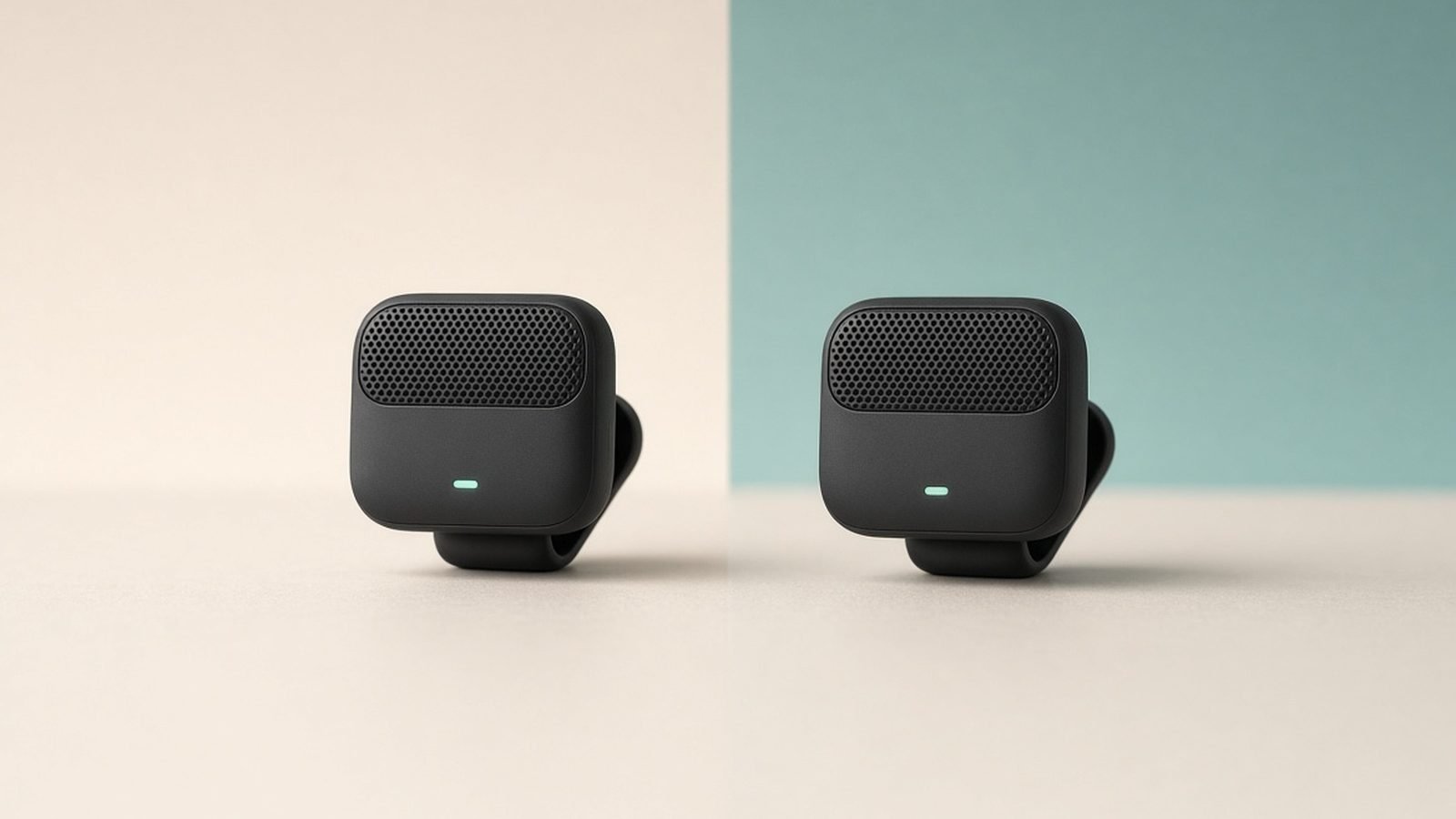
If you are weighing the DJI Mic 3 vs Rode Wireless Micro, here is the short answer: buy the Rode Wireless Micro if you shoot on a phone and want the simplest wireless clip-on that just works, and buy the DJI Mic 3 if you shoot on a camera, film two people, or need the safety net of onboard 32-bit float recording. They are not really competing for the same buyer. One is a set-and-forget phone accessory at around $149 / £139; the other is a semi-pro two-person kit at around $329 / £299.
Both are 2.4GHz wireless lav systems from the two biggest names in creator audio, but they aim at opposite ends of the market. Below is a quick verdict table, then a section-by-section breakdown of where each pulls ahead, and a clear “who should buy which” at the end.
Quick Verdict
| DJI Mic 3 (2 TX kit) | Rode Wireless Micro (dual kit) | |
|---|---|---|
| Price (approx) | $329 / £299 | $149 / £139 |
| Best for | Camera shooters, interviews, pros | Phone creators, beginners, solo vloggers |
| Transmitters | 2 | 2 |
| Onboard recording | Yes, 32-bit float internal | No |
| Receiver screen | OLED touchscreen | None (uses phone/no display) |
| Stated range | Up to ~400m line of sight | Up to ~100m line of sight |
| Safety track | Yes | No |
| External mic input | Yes (lav in) | No, built-in capsule only |
| Direct-to-phone | Yes, with adapters | Yes, USB-C and Lightning included |
| Battery (TX) | ~8 hrs | ~7 hrs, ~21 hrs with case |
Bottom line: the Rode Wireless Micro wins on price, size and sheer simplicity for phone-first creators. The DJI Mic 3 wins on flexibility, reliability and rescue features for anyone whose audio cannot fail. Neither is “better” in a vacuum, they are built for different jobs.
Check price: Rode Wireless Micro
Price and What You Get
This is the first place the two split. The Rode Wireless Micro dual kit lands at around $149 / £139 and includes two tiny transmitters, a receiver, a charging case, and both USB-C and Lightning adapters so it plugs straight into almost any phone. There is a single-transmitter version for less if you only ever film yourself.
The DJI Mic 3 two-transmitter kit sits at around $329 / £299 and includes two transmitters, a receiver with an OLED touchscreen, a charging case, and mounting hardware for cameras. DJI also sells the receiver and transmitters separately, so you can start with one transmitter and add the second later.
So you are paying roughly double for the DJI. The question is whether the extra money buys features you will actually use, or capability you will never touch. For a lot of phone creators, it is the latter, and that matters.
Ease of Use and Setup
The Rode Wireless Micro was designed around one idea: remove every decision. There is no screen, no gain dial, and no menu. You pull the transmitters and receiver out of the case, they are already paired, and Rode’s intelligent GainAssist sets levels automatically. Plug the receiver into your phone and you are recording. For a beginner, or anyone who has ever ruined a take by forgetting to check a setting, that is genuinely liberating.
The DJI Mic 3 is more capable, which inevitably means more to think about. Its receiver has a bright touchscreen with adaptive gain, manual gain, noise cancelling toggles and channel controls. None of it is hard, and the defaults are sensible, but it is a device you configure rather than one you ignore. That is the correct trade for the audience it targets, people who want control, but it is more than a casual creator needs.
If your priority is “clip it on and talk,” the Rode is the friendlier tool. If you like dialing things in and want options on set, the DJI feels like the grown-up kit. This ease-versus-control split runs through the whole comparison.
Recording, Safety and the 32-bit Float Question
Here is the DJI Mic 3’s headline advantage. Each transmitter records its own audio internally in 32-bit float, independent of the connection to the receiver. That does two enormous things. First, 32-bit float means you can effectively fix clipping in post, a shout or a laugh that would distort on a normal recorder can be pulled back down. Second, the internal recording is a backup, so even if the wireless link drops for a moment, the transmitter has the clean file. On a paid shoot or a one-time event, that is real insurance.
The Rode Wireless Micro has no onboard recording and no safety track. Whatever the receiver captures on your phone is what you get. Rode’s GainAssist works hard to keep levels safe automatically, and in normal talking-head use it does a good job, but there is no backup file and no post-clipping rescue. For casual content that is usually fine. For work you cannot reshoot, it is a meaningful gap.
If you regularly record interviews, events or client work, the DJI’s safety features alone can justify the price difference. If you are filming yourself talking to a phone for social media, you will likely never miss them.
Range, Connection and Reliability
DJI rates the Mic 3 at up to around 400m line of sight, and while real-world range in a room full of walls and Wi-Fi is always lower, the headroom means rock-solid stability at normal distances. Rode rates the Wireless Micro at up to around 100m line of sight, which is still far more than you need for a subject standing a few feet away, but leaves less margin in congested environments.
In practice, based on published specs and aggregated owner reports, both hold a stable connection at typical creator distances of a few feet to a few metres. The DJI’s larger range budget and its internal recording make it the safer bet when the subject wanders further away or when radio conditions are messy. The Rode is reliable within its intended use, which is a person on camera close to the receiver.
Neither system is fragile. But if “will this drop out at the back of the room” keeps you up at night, the DJI’s margin and its backup file are the reassurance you are paying for.
Sound Quality and Flexibility
Both systems sound clean and clear, and for spoken-word content most viewers could not tell the two apart in a blind listen. Both include windshields for outdoor use and both apply intelligent noise reduction. This is not a night-and-day audio quality gap; it is a features and workflow gap.
Where the DJI pulls ahead is flexibility. Its transmitters accept an external lavalier mic, so you can hide a discreet lav under clothing instead of clipping the whole transmitter in shot, useful for interviews and pieces to camera where you do not want visible gear. The Rode Wireless Micro uses its built-in capsule only, so the transmitter itself is what shows on your collar. Rode keeps these transmitters extremely small to compensate, and they are genuinely unobtrusive, but you cannot swap in a separate lav.
For the cleanest, most invisible on-camera look with the option of a professional lav, the DJI wins. For a tiny, tidy clip-on you never have to route or hide, the Rode is elegant in its own way. If you want the wider context on mic types and placement, our guide on How to Get Better Audio for YouTube Videos covers the whole chain.
Cameras vs Phones
This is the cleanest way to decide. The Rode Wireless Micro is phone-first. It ships with USB-C and Lightning adapters, powers on and connects the moment you plug in, and is built for creators shooting on iPhones and Android phones. You can use it with some cameras, but the phone is its natural home. If you shoot vertical video for TikTok, Reels or Shorts on a phone, this is arguably the most frictionless wireless mic you can buy.
The DJI Mic 3 spans both worlds. Its receiver mounts to a camera hot shoe with a 3.5mm output, and DJI offers phone-facing connectivity too, so the same kit follows you from a mirrorless camera to a phone to a laptop. That versatility is part of what you are paying for. If you own a mirrorless or DSLR and want one mic system that also works for calls and streaming, the DJI is the more universal buy, and it pairs well with the tips in our How to Improve Mic Quality for Calls & Meetings guide.
Which Should You Buy?
Here is the honest split.
Buy the Rode Wireless Micro if you shoot mostly on a phone, want the simplest possible setup, film yourself or one other person, and would rather spend $149 than $329. It is the best budget wireless microphone for social creators and beginners, and its automatic levels remove the most common way people ruin audio.
Pros: very affordable; tiny and discreet; effortless auto-gain setup; phone adapters in the box; charging case. Cons: no onboard recording or safety track; built-in capsule only; shorter rated range; no receiver screen or manual control.
Buy the DJI Mic 3 if you shoot on a camera, record interviews or events, need 32-bit float and a backup file, or want one flexible kit for camera, phone and desk. It is the stronger choice for semi-pro and pro creators whose audio has to be right the first time.
Pros: internal 32-bit float recording; safety backup; long range; external lav input; touchscreen control; works across cameras, phones and computers. Cons: roughly double the price; more to configure; larger and more than a casual phone creator needs.
If you would rather sit at a desk than clip on a lav, a wired option can beat both for the money, see our Best USB Microphones in 2026 for Streaming and Podcasting roundup. And for the fuller picture on video sound, the How to Get Better Audio for YouTube Videos walkthrough pairs well with either mic here.
FAQ
Is the DJI Mic 3 worth double the price of the Rode Wireless Micro?
It depends entirely on your work. If you film interviews, events or anything you cannot reshoot, the DJI’s 32-bit float recording and backup safety track are worth the premium on their own. If you shoot casual phone content by yourself, you will likely never use those features, and the Rode Wireless Micro delivers the same clean spoken audio for far less money.
Which wireless mic is easier for beginners?
The Rode Wireless Micro, clearly. It has no screen, no gain dial and no menus, so there is nothing to misconfigure. It pairs out of the case, sets its own levels with GainAssist, and plugs straight into a phone. The DJI Mic 3 is not hard to use, but it has more controls and options, which is more than a first-time creator needs to think about.
Can both mics record two people at once?
Yes. Both the DJI Mic 3 kit and the dual Rode Wireless Micro kit include two transmitters, so you can mic a host and a guest simultaneously. The DJI adds an internal backup recording for each transmitter, which is reassuring for interviews. The Rode captures both channels to your phone but without individual backup files.
Do these work with an iPhone?
Both do. The Rode Wireless Micro includes a Lightning adapter (and USB-C) in the box and is built phone-first, making it the more seamless iPhone option. The DJI Mic 3 also connects to phones with the appropriate adapter, and its wider ecosystem means the same kit also works with cameras and computers, so it is the more flexible choice if you shoot on more than a phone.
Which has better range and reliability?
The DJI Mic 3, on paper and in tricky conditions. It is rated to around 400m line of sight versus roughly 100m for the Rode, and its internal recording means a brief dropout does not cost you the audio. For a subject standing a few feet away, both are reliable. The DJI’s advantage shows up at distance or in radio-congested spaces.
Zen Tech Hub may earn a commission from links on this page, at no extra cost to you.