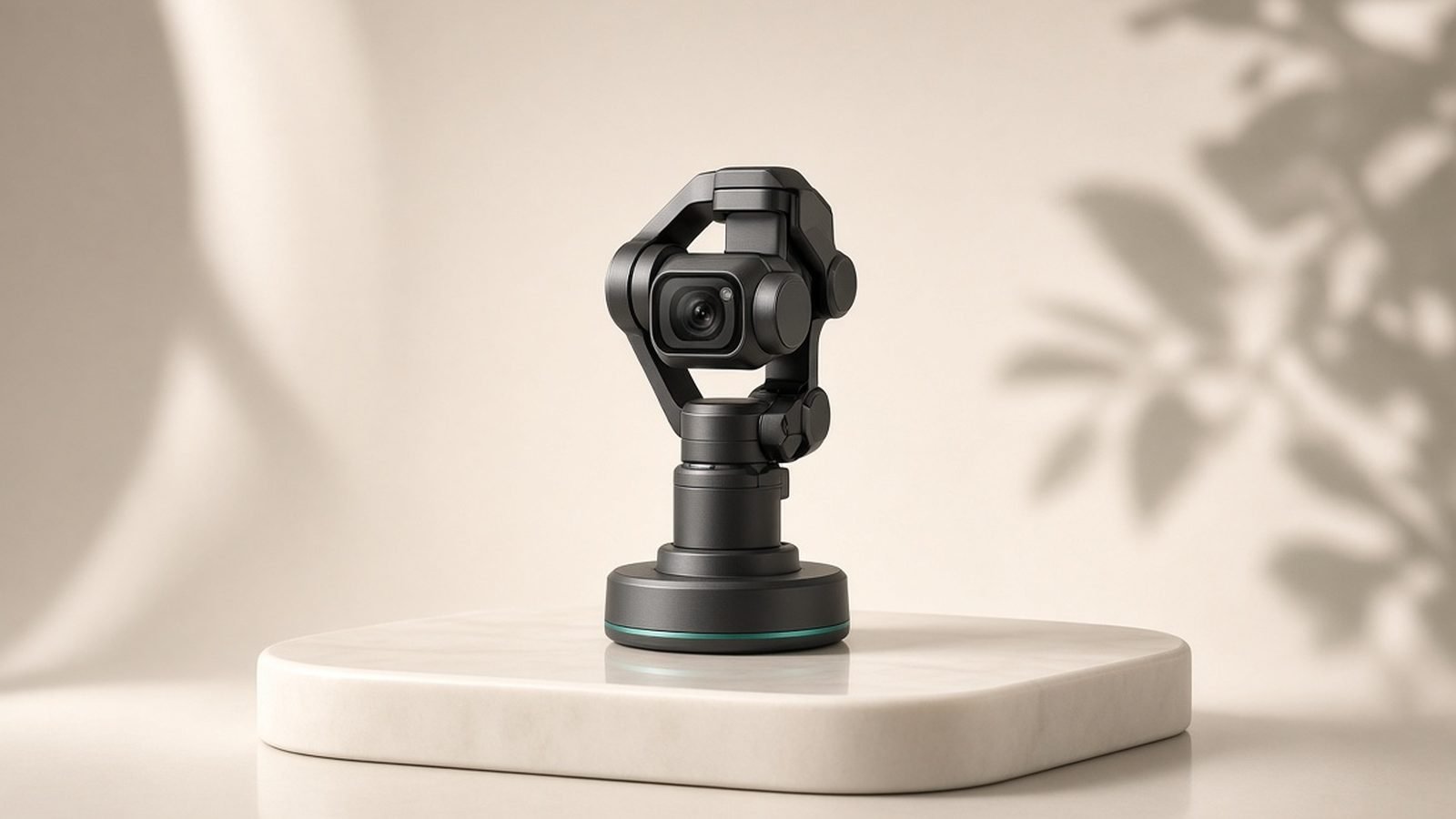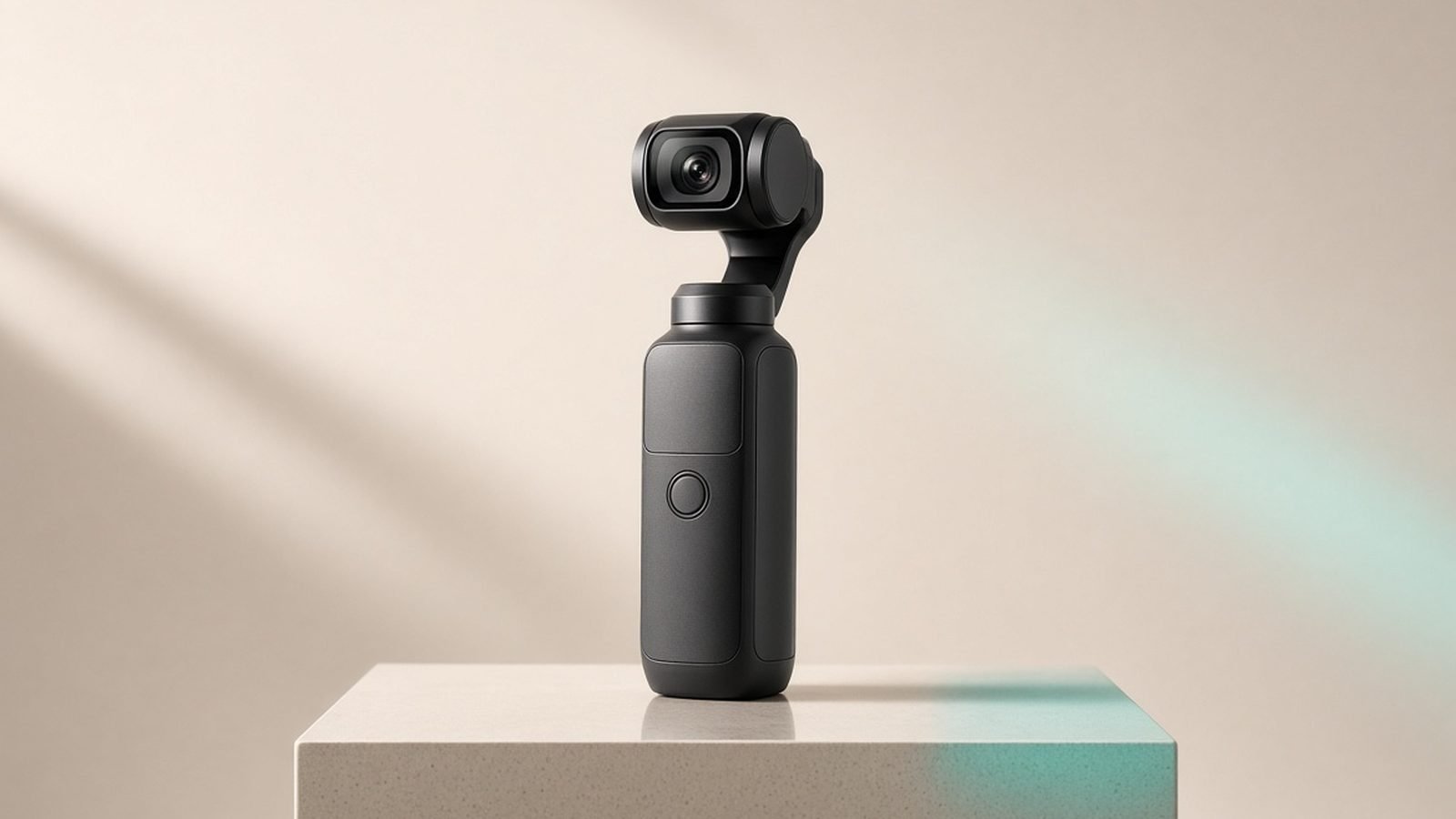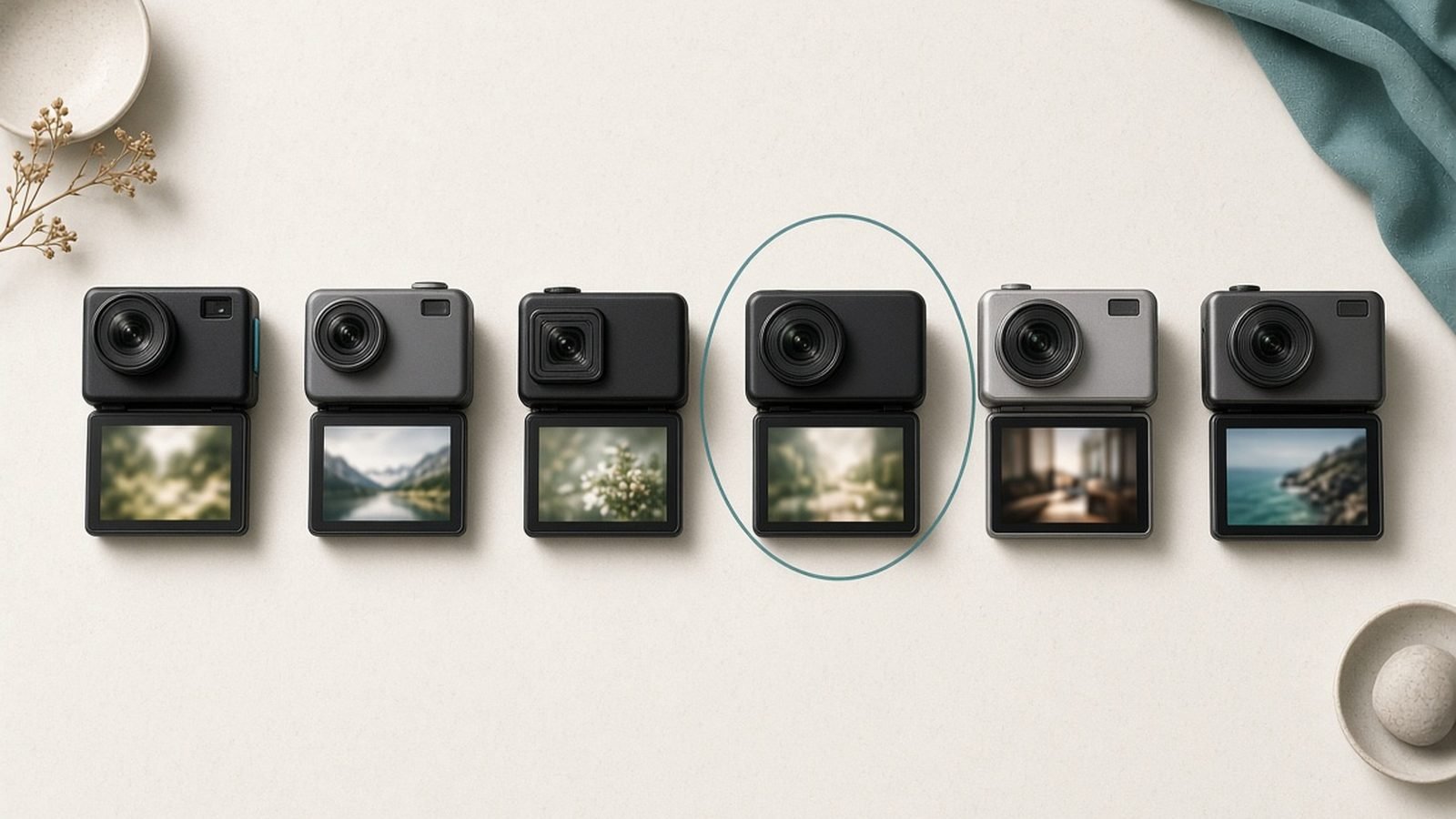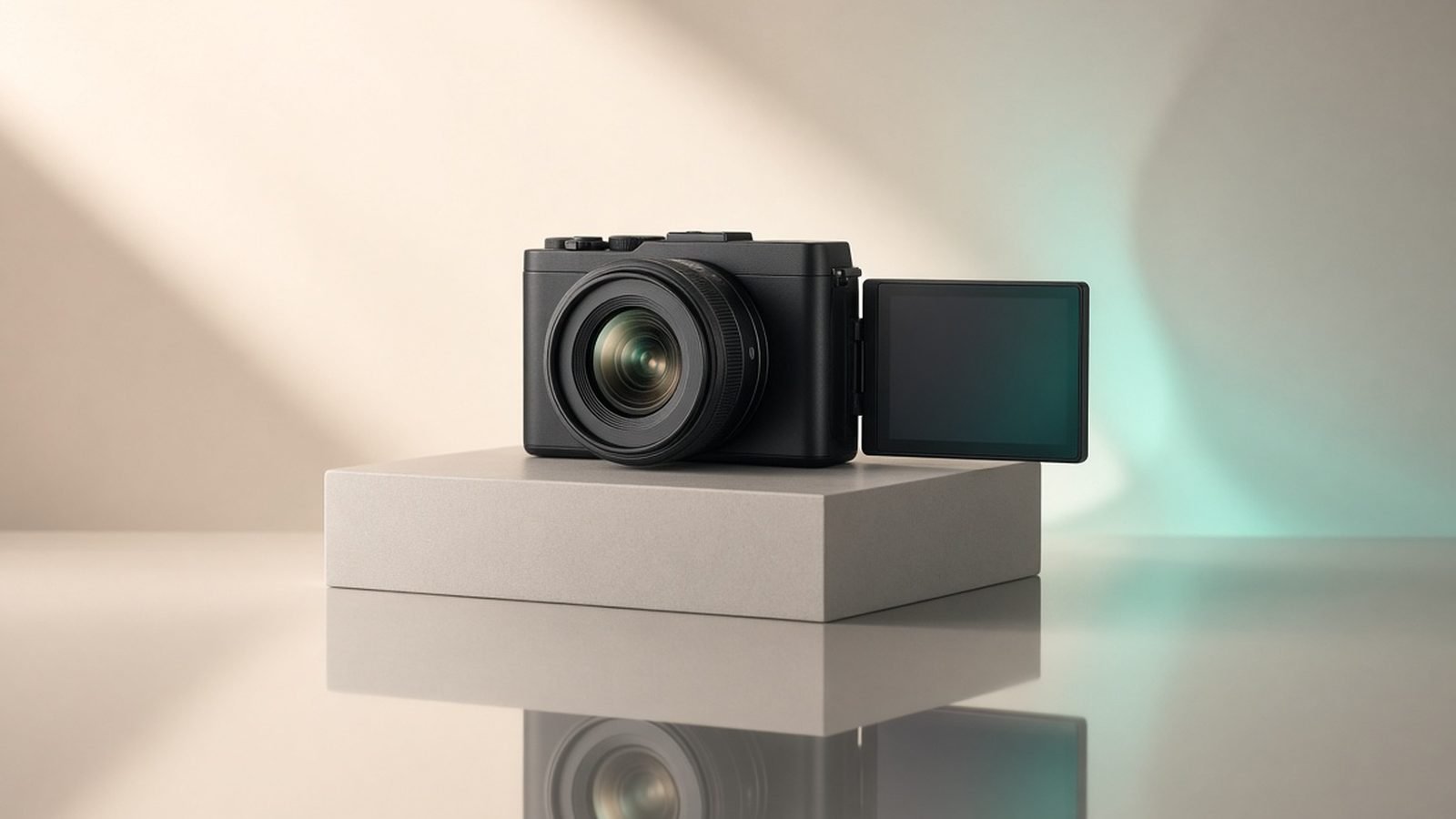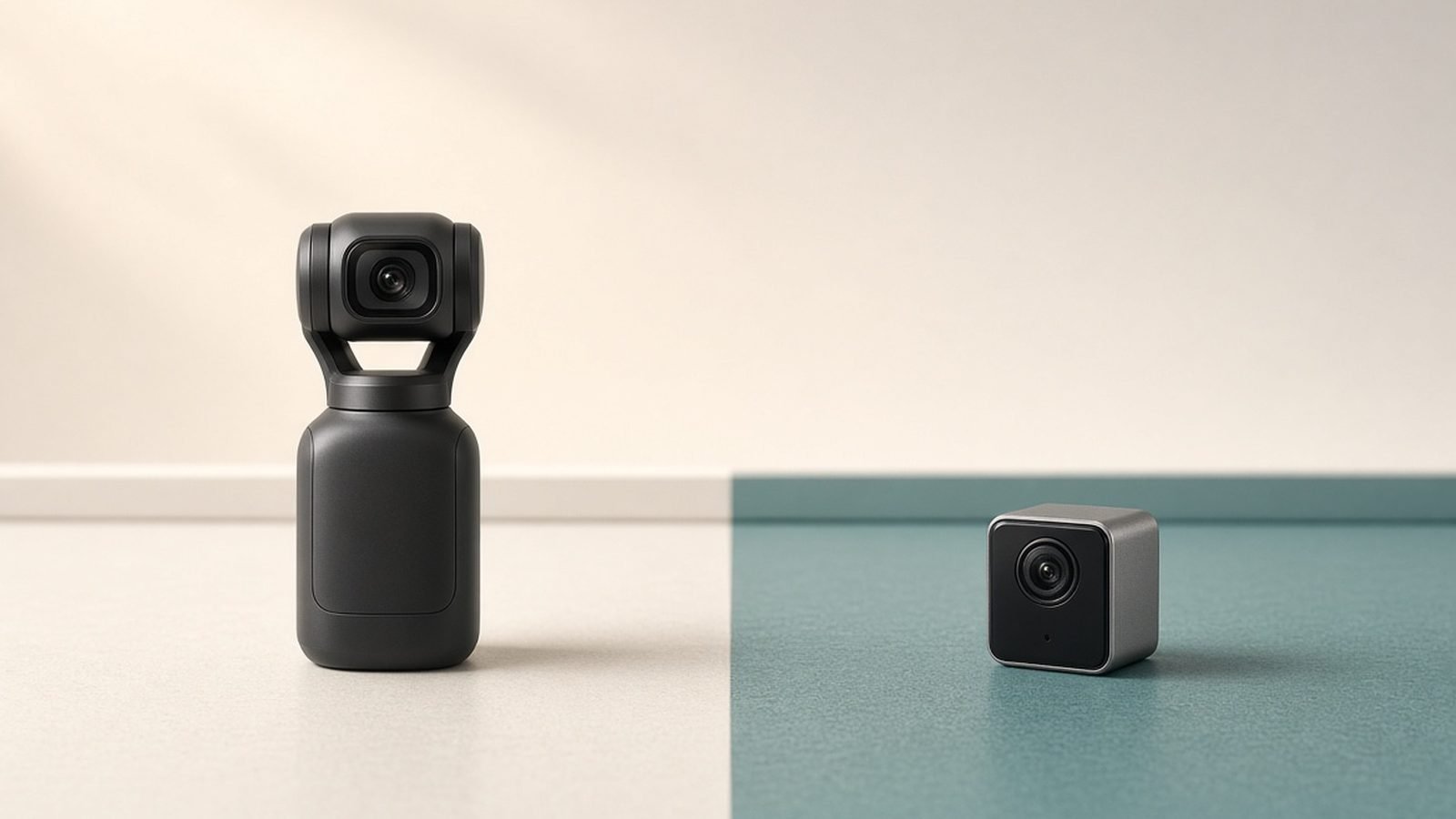
If you have landed on the DJI Osmo Pocket 3 vs Osmo Nano question, you are choosing between two very different tools that happen to share a brand. The Pocket 3 is a handheld gimbal camera built for the best image quality DJI can fit in your pocket. The Nano is a tiny wearable made for hands-free point-of-view clips at a much lower price. This DJI creator camera comparison breaks down where each one wins so you can buy the right one first time.
Quick Verdict
Buy the Osmo Pocket 3 if image quality is your priority: bigger sensor, mechanical gimbal, and a proper screen make it the better sit-down vlogging and travel camera. Buy the Osmo Nano if you want the smallest vlogging camera for wearable, hands-free POV and you care more about convenience and price than outright quality.
Most creators asking “pocket 3 or nano” are really asking a form-factor question, not a quality one. Decide how you want to hold the camera and the answer falls out quickly.
| Osmo Pocket 3 | Osmo Nano | |
|---|---|---|
| Sensor | 1-inch CMOS | 1/1.3-inch CMOS |
| Stabilisation | Mechanical 3-axis gimbal | Electronic (RockSteady) |
| Max video | 4K/120fps | 4K/120fps |
| Screen | 2-inch rotating OLED | Small status screen (uses magnetic clip/app) |
| Form factor | Handheld, pocketable | Wearable, ~52g |
| Best for | Sit-down vlogs, travel, low light | Hands-free POV, action, everyday carry |
| Price (approx) | around $429–$519 / £519 | around $299 / £289 |
Price and Positioning
The Osmo Pocket 3 launched at around $519 / £519 but now regularly streets closer to $429 in the US as newer models loom. The Osmo Nano comes in lower at around $299 / £289, which is a meaningful gap for a first camera or a gift.
DJI positions these as complementary rather than competing. The Pocket 3 is the flagship pocket vlogging camera; the Nano is the entry into wearable POV. If budget is the deciding factor, the Nano saves you well over £200 while still shooting 4K. If quality is the deciding factor, the Pocket 3 justifies the premium.
Form Factor and Wearability
This is the single biggest difference, and for many buyers it settles the whole question of which DJI vlogging camera to get.
The Pocket 3 is a handheld stick with a rotating 2-inch screen. You hold it, point it, and frame yourself on the display. It slips into a jacket pocket but it is not something you clip on and forget.
The Nano is genuinely tiny, around 52g, and modular. It splits into a camera unit and a “Vision Dock,” and the camera can sit on a magnetic necklace, a cap clip, or a headband for true first-person footage. Based on owner reports, this is where it shines: cooking, cycling, parenting, and walk-and-talk clips where holding a camera is impractical. If “smallest vlogging camera you will actually wear” is your brief, the Nano wins outright.
Image Quality and Sensor
The Pocket 3 uses a 1-inch sensor; the Nano uses a smaller 1/1.3-inch sensor. On paper both hit 4K/120fps, and both can shoot 10-bit D-Log M for grading. In practice, the larger sensor gives the Pocket 3 the edge in dynamic range and, most noticeably, in low light.
In our research and across aggregated owner feedback, the Pocket 3 holds up far better indoors and after sunset, while the Nano is very good in daylight but gets noisier as the light drops. For a sit-down talking-head vlog under normal room lighting, that difference is easy to see.
If your footage is mostly bright, outdoor, and casual, the gap narrows and the Nano looks great. If you shoot indoors, at events, or in mixed light, the Pocket 3’s sensor is the safer choice.
Stabilisation and Tracking
The Pocket 3’s mechanical 3-axis gimbal is the headline feature. It physically moves the camera to counter your hand movement, delivering that floating, glassy-smooth look and enabling reliable subject tracking as the lens rotates to follow you. For pieces to camera and smooth panning shots, nothing on the Nano matches it.
The Nano relies on electronic stabilisation (DJI’s RockSteady-style processing). It is impressively steady for such a small body and ideal for action and POV, but it crops the frame slightly and cannot replicate the gimbal’s cinematic float. For a stabilisation-first comparison in the osmo nano vs pocket 3 debate, the Pocket 3 leads; for rugged, strap-it-on movement, the Nano’s electronic approach is more practical.
Battery and Storage
The Nano leans on its modular Vision Dock design, and owner reports point to solid all-day, clip-and-go stamina for short POV bursts, with fast top-ups from the dock. Some configurations include built-in storage alongside a microSD slot, which is handy for grab-and-go shooting.
The Pocket 3 offers respectable runtime for a gimbal camera and uses a microSD card. Because it drives a larger sensor, a bright screen, and a motorised gimbal, expect it to work harder on longer sessions. Neither is a marathon runner, so a spare charging option is wise for a full day out with either.
Who Each One Is For
Choosing between the two comes down to how and what you shoot.
Osmo Pocket 3
Best for sit-down vloggers, travel creators, and anyone who wants the highest handheld quality DJI offers in a pocket size.
Pros - Larger 1-inch sensor with the best low-light performance of the two - Mechanical gimbal for genuinely cinematic stabilisation and tracking - Rotating 2-inch screen makes framing yourself easy
Cons - Noticeably more expensive - Bigger and not wearable - More of a deliberate “pick it up and shoot” device
Verdict: The Pocket 3 is the image-quality winner and the better all-round creator camera if you can stretch the budget.
Osmo Nano
Best for POV creators, action and lifestyle shooters, and anyone who wants the smallest, cheapest way into DJI 4K.
Pros - Tiny, wearable ~52g body for true hands-free POV - Much lower price at around $299 / £289 - Still shoots 4K and 10-bit D-Log M for a modern look
Cons - Smaller sensor struggles more in low light - Electronic-only stabilisation, no gimbal float - No large rotating screen for easy self-framing
Verdict: The Nano is the wearability and value winner, and the smart pick if hands-free is how you actually create.
For more on where the flagship sits against rivals, see our DJI Osmo Pocket 3 Review: Still the Best Vlog Camera? and our roundup of the Best Vlogging Camera Under $500 in 2026. You can also browse everything in the Cameras & Creator Gear.
FAQ
Is the Osmo Nano better than the Pocket 3?
Not in raw quality. The Pocket 3 has a larger 1-inch sensor and a mechanical gimbal, so it wins on image quality and stabilisation. The Nano is “better” only if wearability and price matter more to you than outright footage quality, which for POV creators it often does.
Can the Osmo Nano replace the Pocket 3 for vlogging?
For hands-free, on-the-move POV vlogging, yes. For traditional sit-down vlogs where you frame yourself and want the cleanest low-light footage, the Pocket 3 remains the stronger tool thanks to its screen, larger sensor, and gimbal-based tracking.
Do both cameras shoot 4K?
Yes. Both the Osmo Pocket 3 and Osmo Nano record up to 4K/120fps and support 10-bit D-Log M for colour grading. The difference is in sensor size and stabilisation method, which affects how that 4K footage actually looks, especially in challenging light.
Which DJI camera is best for beginners?
For pure ease and lowest cost, the Nano is a friendly, grab-and-go starting point. For beginners who want one camera that grows with them and produces the best-looking results, the Pocket 3 is the more future-proof buy despite the higher price.
Is a newer Pocket model coming?
There are ongoing rumours of a next-generation Pocket, which is part of why the Pocket 3 now streets below its launch price. If you need a camera today, the Pocket 3 remains excellent value; if you can wait, keep an eye on announcements before committing.
Zen Tech Hub may earn a commission from links on this page, at no extra cost to you.