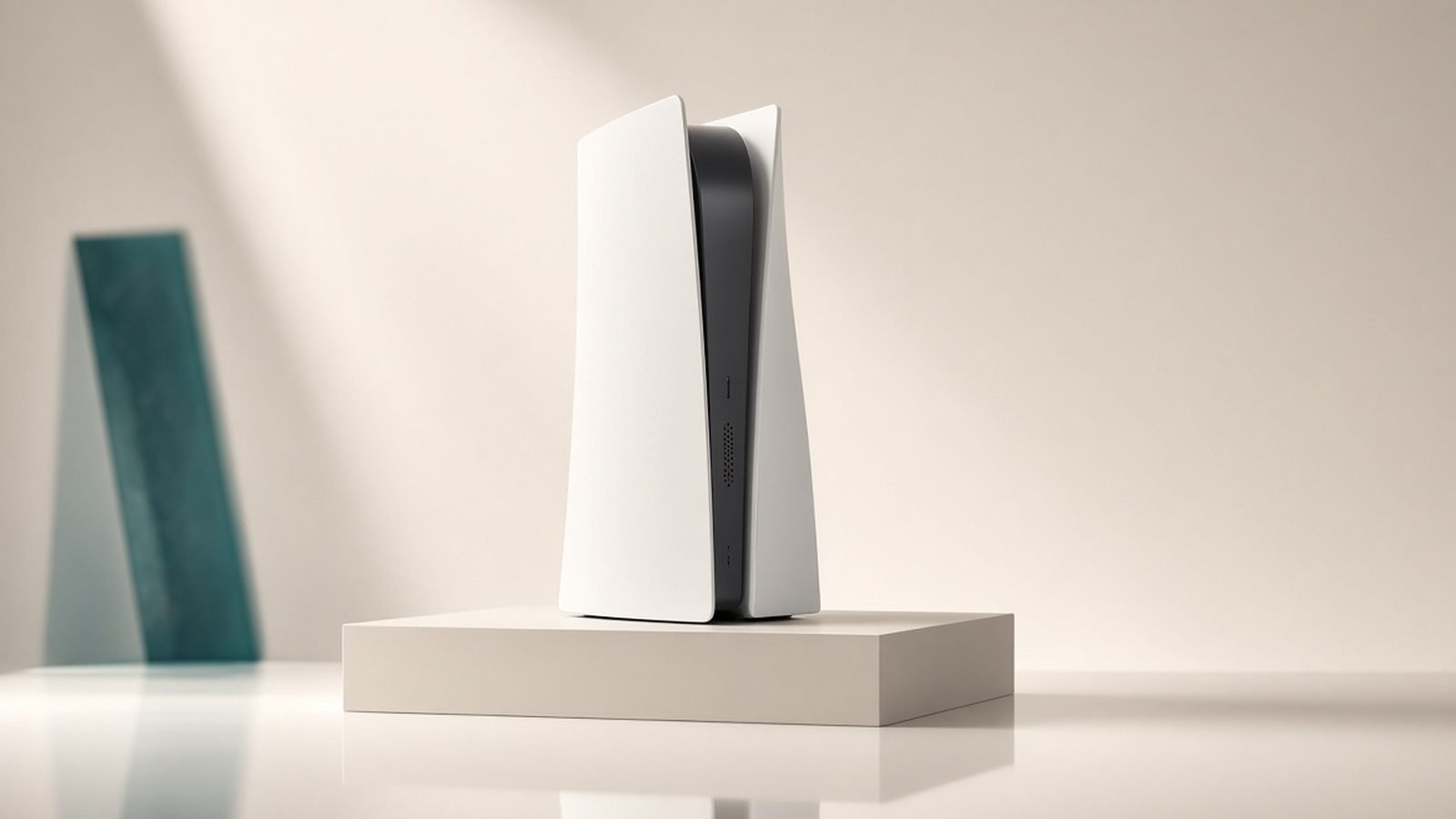
The PS5 Pro is a real upgrade over the standard PS5, but at around $699 / £699 it is one only some players should make. What you are buying is a bigger GPU, faster ray tracing, and Sony’s AI-driven PSSR upscaling, which together let supported games hit higher resolutions and steadier frame rates without forcing the old “quality vs performance” compromise. What you are not buying is a disc drive — that costs extra — or a night-and-day difference on a smaller TV. Short version: if you have a 4K TV, care about image quality, and play graphically heavy games, it is a worthwhile upgrade. If you play on a 1080p set or mostly play competitive and indie titles, keep the standard PS5.
We have not run our own lab bench. This review is expert analysis built from Sony’s published specs, developer documentation, current pricing, and aggregated owner feedback.
PS5 Pro at a glance
Custom RDNA-based GPU (~67% more compute units than PS5) | PSSR AI upscaling | faster ray tracing | 2TB SSD | no disc drive (optional add-on) | ~$699 / £699
Pros:
- Meaningfully better ray tracing and higher resolutions
- PSSR upscaling reduces the quality-vs-performance trade-off
- Large 2TB SSD as standard
- Runs the entire existing PS5 library, with Pro patches on many titles
Cons:
- Expensive at $699 / £699
- No disc drive in the box — the drive is a separate purchase
- Gains depend heavily on per-game Pro support
- Little benefit on a 1080p TV
What the PS5 Pro actually upgrades
Three things changed under the hood. First, the GPU is substantially larger — Sony quotes roughly 67% more compute units than the base PS5 and faster memory — which is the raw horsepower behind higher resolutions and frame rates. Second, ray tracing hardware is more capable, so reflections, shadows, and lighting run faster and can be pushed further in supported games. Third, and most interesting, is PSSR: PlayStation Spectral Super Resolution, an AI-based upscaler broadly comparable in concept to DLSS on PC.
PSSR is the feature that defines the Pro. The base PS5 usually made you choose between a sharp 4K “quality” mode and a smoother 60fps “performance” mode. PSSR’s goal is to reduce that compromise — upscaling a lower internal resolution to a clean 4K image while holding a higher frame rate. When it works well, you get something close to the best of both modes at once.
The catch is that all three gains depend on developers patching their games. A title with a proper PS5 Pro patch can look and run noticeably better; a game without one runs essentially as it did on the base console, sometimes with modestly higher frame rates in unlocked modes. The library of Pro-enhanced games has grown steadily, but it is not universal.
Performance in practice
Based on aggregated owner feedback and developer documentation, the Pro’s improvements are most visible in graphically demanding, single-player games on a 4K display. Titles that previously forced a choice between fidelity and frame rate can, with a Pro patch, deliver both — sharper images that hold 60fps where the base console dipped or capped at 30. Ray-traced reflections and lighting that were reserved for 30fps quality modes become more viable at 60.
PSSR is impressive when implemented well, though owner reports note it is not flawless: some early Pro patches showed shimmering or artefacting in fine detail, and results vary by game and by how much effort the developer put in. It is a real, meaningful technology, not a magic switch, and its quality is still improving as developers gain experience with it.
Where the Pro matters least is on smaller or lower-resolution TVs, and in games that were never GPU-bound — competitive shooters, most indies, and 2D titles already ran fine on the base PS5. If that is most of your library, the Pro’s headline features have little to grab onto.
Value and the disc-drive problem
At around $699 / £699, the PS5 Pro costs meaningfully more than a standard PS5, and the pricing has a sting in the tail: there is no disc drive in the box. If you want to play physical games or 4K Blu-rays, the detachable drive is a separate purchase, pushing the real cost higher. For a console pitched at enthusiasts, many of whom own disc collections, that omission has drawn justified criticism.
The 2TB SSD is a genuine plus — double the base console’s older storage, and welcome given modern game sizes. But the overall value equation is narrow. The Pro is a premium upgrade for people who will actually see and value its gains: 4K TV owners who play graphically heavy games and care about image quality. For everyone else, the standard PS5 delivers the same games and the same library at a much lower price.
Who should buy the PS5 Pro
Buy it if you own a good 4K TV, play a lot of graphically demanding single-player games, care about ray tracing and image sharpness, and are frustrated by the base PS5’s quality-vs-performance compromise. For that player, the Pro is the most polished way to experience the PlayStation library.
Keep the standard PS5 if you play on a 1080p TV, favour competitive, indie, or 2D games, or simply do not want to spend $699 / £699 (plus a disc drive) for gains that are real but incremental. The base console plays every same game — you are paying purely for presentation.
If you are weighing a console against a portable PC instead, our Best Gaming Handhelds 2026: Steam Deck & Rivals guide and the Nintendo Switch 2 Review 2026: Worth the Upgrade? cover the other side of that decision.
Verdict
The PS5 Pro delivers on its core promise: better ray tracing, higher resolutions, and PSSR upscaling that softens the old fidelity-versus-frame-rate compromise on supported games. It is a genuine, well-engineered mid-generation upgrade. But it is also expensive, disc-drive-free out of the box, and only as good as each game’s Pro patch — so its appeal is narrower than the price suggests.
Buy it if you have the 4K TV and the demanding library to justify it and you value image quality highly. Skip it if you do not — the standard PS5 remains the smarter buy for most people, and nothing about the Pro changes which games you can play. For a good pad to go with either console, see our Best Game Controllers 2026: PC, Xbox & PlayStation picks.
FAQ
Is the PS5 Pro worth it in 2026?
For some players, yes. If you own a 4K TV, play graphically demanding single-player games, and care about ray tracing and image sharpness, the Pro’s PSSR upscaling and stronger GPU deliver a visibly better experience on supported titles. If you play on a 1080p set or mostly play competitive and indie games, the gains are minor and the standard PS5 is the better value.
PS5 Pro vs PS5 — what is the real difference?
The Pro has a substantially larger GPU (Sony cites around 67% more compute units), faster ray tracing, and PSSR AI upscaling, plus a 2TB SSD. In practice, on Pro-patched games and a 4K TV, it delivers sharper images at higher frame rates without the base console’s quality-vs-performance compromise. Both play the exact same library — the difference is presentation, not the games themselves.
Does the PS5 Pro come with a disc drive?
No. The PS5 Pro ships without a disc drive in the box; the detachable drive is a separate purchase if you want physical games or 4K Blu-ray playback. For a $699 / £699 console aimed at enthusiasts, that omission has drawn criticism, and it pushes the real cost higher for anyone with a disc collection.
What is PSSR on the PS5 Pro?
PSSR (PlayStation Spectral Super Resolution) is Sony’s AI-based upscaler, broadly comparable in concept to DLSS on PC. It renders a game at a lower internal resolution and upscales it to a clean 4K image while holding a higher frame rate, reducing the base PS5’s quality-vs-performance trade-off. It is impressive when well implemented, though results vary by game and some early patches showed minor artefacting.
Do all games benefit from the PS5 Pro?
No — the biggest gains require developers to release a PS5 Pro patch for a game. Patched titles can look and run noticeably better; unpatched ones run essentially as they did on the base console, sometimes with modestly higher frame rates in unlocked modes. The library of Pro-enhanced games keeps growing, but support is not universal, so check whether your favourites are patched.
Zen Tech Hub may earn a commission from links on this page, at no extra cost to you.