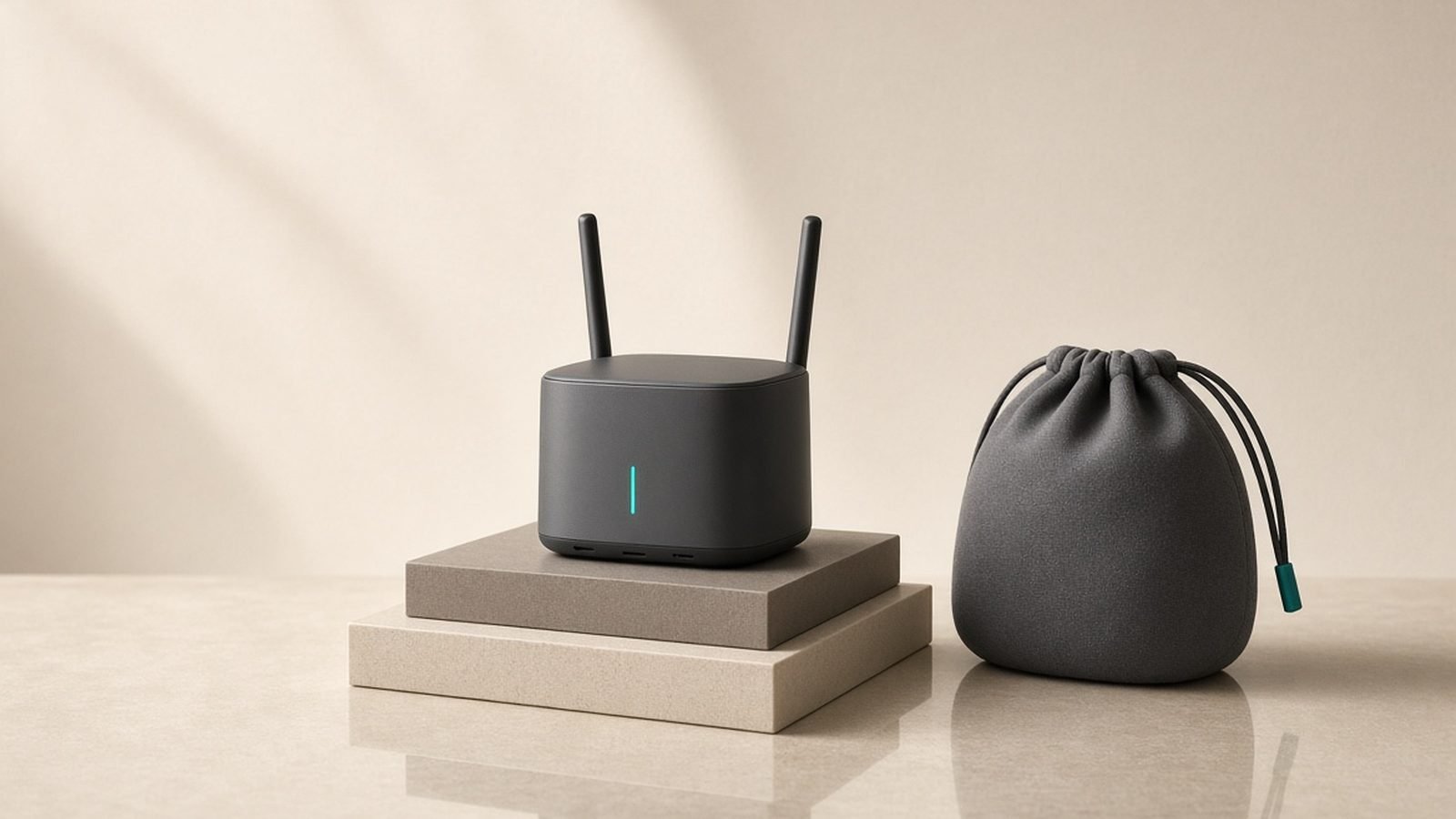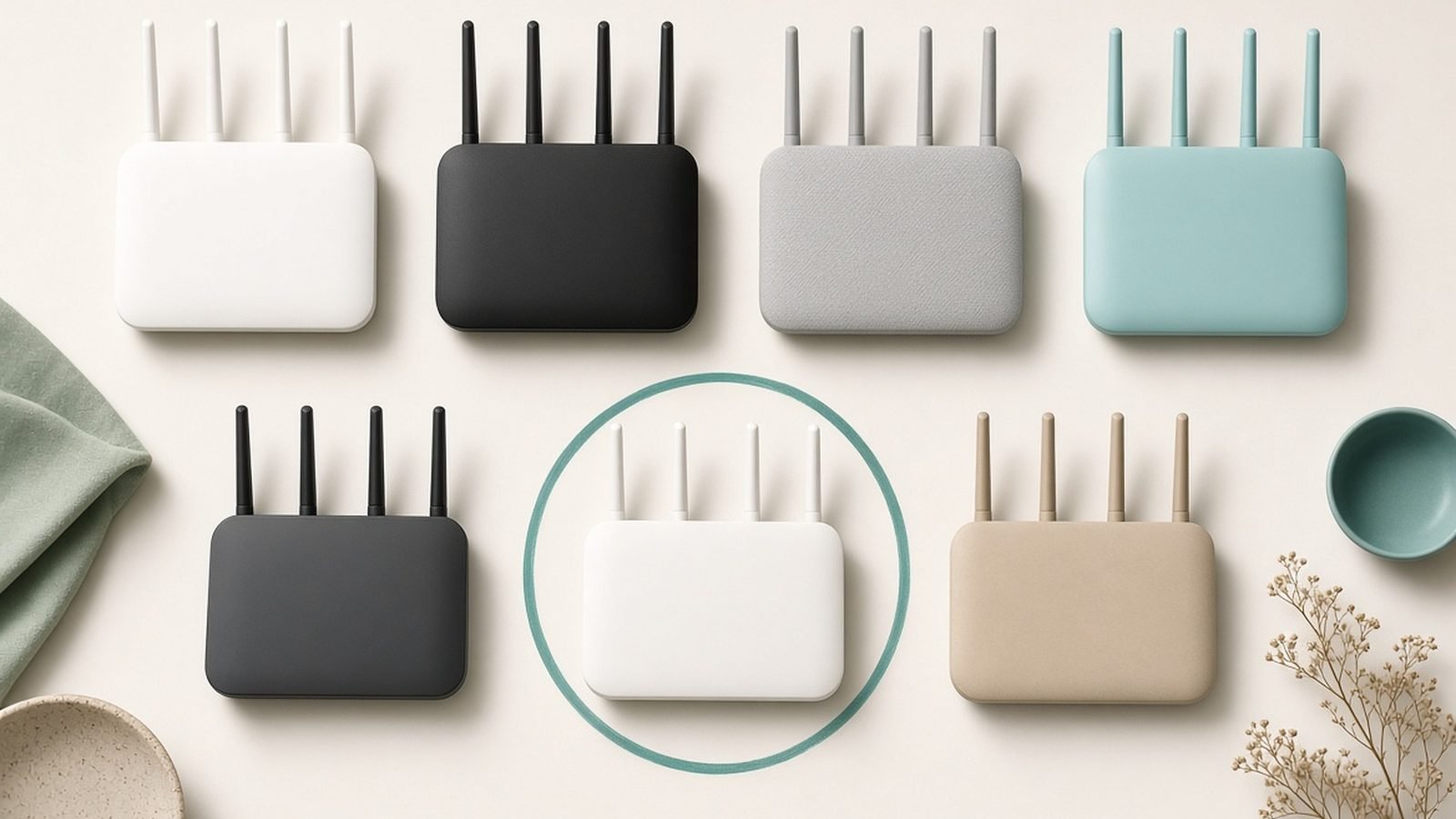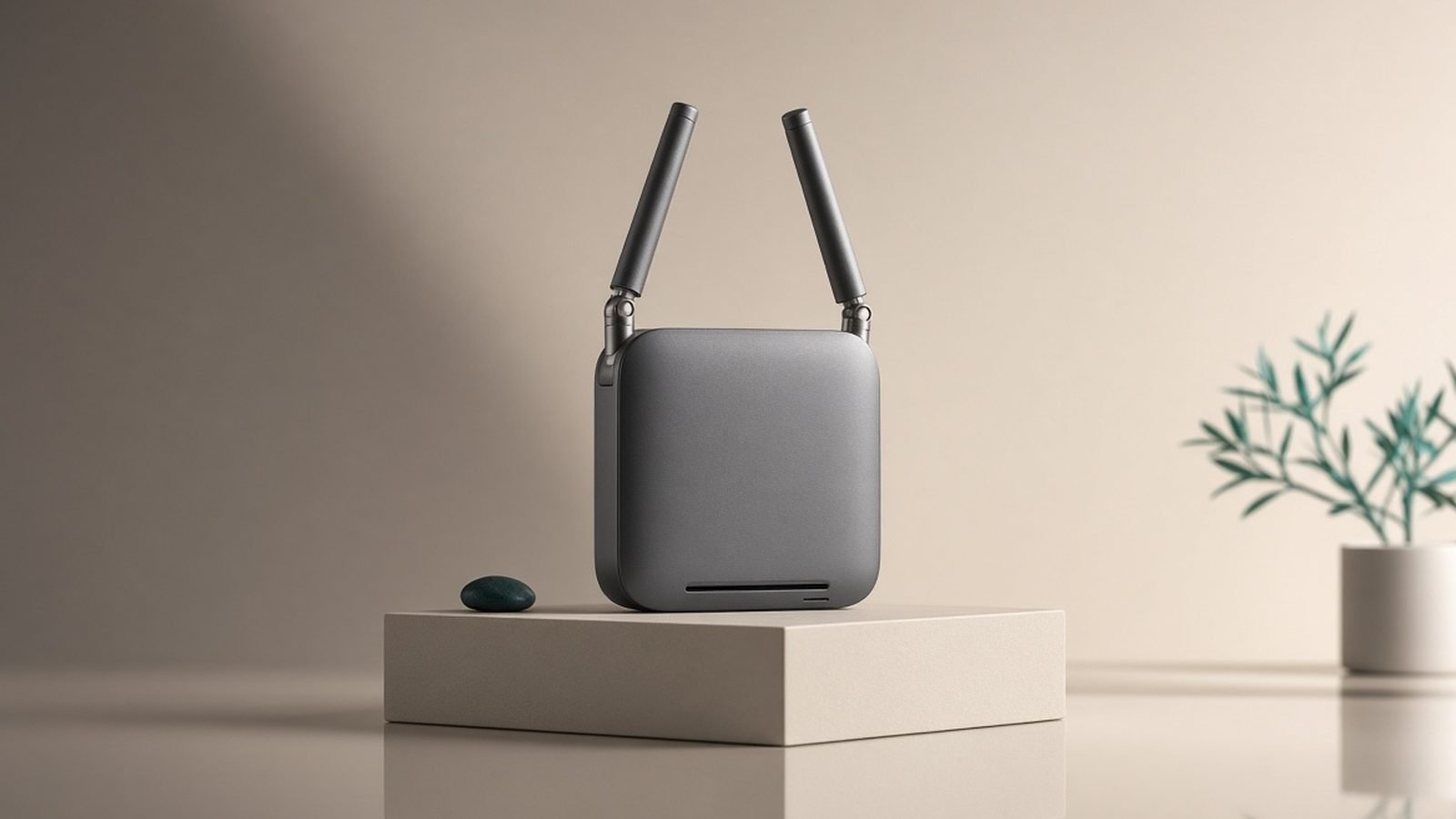
If you’ve been waiting for a travel router that doesn’t choke the moment you switch WireGuard on, this GL.iNet Slate 7 review has good news. The Slate 7 (GL-BE3600) is the first Wi-Fi 7 travel router from GL.iNet, and in our research it’s the fastest pocket VPN router you can currently buy — dual 2.5G Ethernet ports, a genuinely useful touchscreen, and WireGuard throughput that owner reports consistently place in the 450–490Mbps range.
It’s not perfect. It’s dual-band only (no 6GHz), it’s bigger and thirstier than the Beryl AX, and at around $170 / £150 it costs nearly twice as much. But if a VPN is non-negotiable when you travel, this is the one to beat.
Our Verdict Up Front
The Slate 7 is the best Wi-Fi 7 travel router for VPN power users, and the only one with dual 2.5G ports. Buy it if you routinely see hotel or rental connections faster than ~150Mbps and you want to keep most of that speed through WireGuard. Skip it — and save roughly $80 — if your trips involve 50Mbps hotel Wi-Fi, where the cheaper Beryl AX delivers an identical experience.
| GL.iNet Slate 7 (GL-BE3600) | GL.iNet Beryl AX (GL-MT3000) | |
|---|---|---|
| Wi-Fi | Wi-Fi 7, dual-band (BE3600) | Wi-Fi 6, dual-band (AX3000) |
| Ethernet | 2× 2.5G | 1× 2.5G WAN + 1× 1G LAN |
| WireGuard (real-world reports) | ~450–490Mbps | ~250–300Mbps |
| Display | Touchscreen | Status LEDs only |
| Power | USB-C PD (needs ~20W+) | USB-C (runs on 15W) |
| Typical price | around $170 / £150 | around $90 / £80 |
| Best for | Fast connections + heavy VPN use | Budget travellers, lighter loads |
Check price: Slate 7 (GL-BE3600)
Price and Where to Buy (US and UK)
The Slate 7 lists at around $170 in the US and £150 in the UK, and GL.iNet runs frequent promotions that knock $20–30 off — it launched with aggressive early-bird pricing and has dipped below $140 during sale events. Check both the official GL.iNet store and Amazon before buying, because they take turns being cheaper.
Buying direct from GL.iNet usually gets you first access to stock and bundle deals; Amazon gets you faster shipping and easier returns in both the US and UK. Either way, you’re getting the same hardware and the same firmware support.
Check price: Slate 7 (GL-BE3600) Check price: Slate 7 (GL-BE3600)
Slate 7 Specs: Wi-Fi 7, Dual 2.5G Ports and a Touchscreen
The headline: this is a dual-band Wi-Fi 7 router (BE3600 class) — roughly 688Mbps on 2.4GHz and 2,882Mbps on 5GHz — built around a quad-core Qualcomm platform with 1GB of RAM. Wi-Fi 7 features like 4K-QAM and Multi-Link Operation (MLO) are here, which matters more than the raw numbers: MLO lets compatible devices use both bands simultaneously for a steadier connection.
What no other travel router offers is two 2.5G Ethernet ports. That means you can take a fast wired hotel or apartment connection in on one port and feed a laptop or dock at full multi-gig speed on the other — no gigabit bottleneck anywhere in the chain. There’s also a USB 3.0 port for tethering a phone or plugging in storage.
Then there’s the touchscreen, which sounds like a gimmick and isn’t. From the display you can toggle the VPN, flip between router modes, show a QR code for guests to join your network, and check the WAN status — all without opening the admin panel. Based on hundreds of owner reports, it’s the feature people expected to ignore and ended up using daily.
The compromise to know about: no 6GHz band. GL.iNet made the right call for a travel product — 6GHz has short range and you’d rarely benefit in a hotel room — but if you expected tri-band Wi-Fi 7, this isn’t that.
GL.iNet Slate 7 pros and cons
Pros
- Fastest VPN throughput of any travel router in its class (~450–490Mbps WireGuard in aggregated owner and reviewer testing)
- Only travel router with dual 2.5G Ethernet ports
- Touchscreen makes daily VPN toggling and guest sharing genuinely easier
- OpenWrt underneath: SSH access, plugins, full control
- Excellent captive portal handling, MAC cloning and USB tethering for travel
Cons
- Dual-band only — no 6GHz
- Larger and heavier than the Beryl AX; needs a 20W+ USB-C PD source
- No battery or cellular modem built in
- Around $170 / £150 is a lot if your hotel Wi-Fi tops out at 50Mbps
Setup and Software: OpenWrt With a Friendly Face
GL.iNet’s admin panel remains the best in the business for this category. First-time setup takes about five minutes: power it from USB-C, join the default network, set your passwords, and connect to upstream Wi-Fi in “repeater” mode. The panel puts the things travellers actually need — VPN client, repeater settings, tethering, guest network — on the first screen instead of burying them.
Underneath sits OpenWrt, and GL.iNet doesn’t lock it away. You can SSH in, install packages, or drop to the LuCI interface for advanced configuration. That combination — beginner-friendly UI on top, full open-source control underneath — is the core reason GL.iNet dominates every serious gl.inet travel router review roundup, ours included. See our full guide to the Best Travel Routers 2026: Wi-Fi 7 & VPN-Ready Picks for how the ecosystem compares.
VPN setup deserves special mention. The panel has one-tap integrations for major providers, and you can import WireGuard or OpenVPN configs in seconds. Policy-based routing lets you send only certain devices or domains through the tunnel — handy when your work laptop needs the VPN but your streaming stick needs your home country’s Netflix… or the other way round.
If you don’t have a VPN subscription yet, WireGuard-native providers make the most of this hardware:
Slate 7 VPN Speed: WireGuard and OpenVPN-DCO
This is the section that justifies the price, and the reason “slate 7 vpn speed” is what most buyers search before checking out.
WireGuard: GL.iNet’s own lab figure for the GL-BE3600 is roughly 540Mbps. In our research across independent reviews and owner reports, real-world results cluster between 450 and 490Mbps — server distance, provider load and upstream quality all shave a little off. For context, that’s roughly double what the Beryl AX manages and 4–5x what older travel routers like the original Slate AX-era competition could sustain. Unless your hotel connection exceeds ~450Mbps, the Slate 7 effectively makes the VPN penalty disappear.
OpenVPN-DCO: the quieter headline. Classic OpenVPN has always been the travel router’s weak spot — often crawling below 100Mbps because it runs in userspace. The Slate 7 supports OpenVPN Data Channel Offload (DCO), which moves encryption into the kernel. GL.iNet quotes around 190Mbps with DCO enabled, and reviewer reports back up a multi-fold improvement over classic OpenVPN. If your workplace or provider forces OpenVPN, that difference is the whole ballgame.
One honest caveat: sustained gl.inet slate 7 wireguard throughput at these speeds makes the unit warm to the touch. Owner reports describe it as warm, not alarming, and we found no credible pattern of thermal throttling in normal travel use — but don’t bury it under clothes in a hot room while pushing 400Mbps for hours.
Travel Use: Captive Portals, MAC Cloning and USB Tethering
A travel router lives or dies on the boring stuff, and the Slate 7 handles it well:
- Captive portals: hotel and airline login pages are the classic travel router headache. The Slate 7’s cloning and portal-detection handling is among the most reliable we’ve seen reported, and the touchscreen’s quick repeater controls make re-authenticating on day two less painful. Full walkthrough in our How to Use a Travel Router With Hotel Wi-Fi (2026) guide.
- MAC cloning: one tap copies your laptop’s MAC address so networks that limit “one device per guest” see a single device while your whole family connects behind the router.
- USB tethering: plug in an Android phone or iPhone and share its cellular data across every device — often faster and safer than hotel Wi-Fi entirely.
- AdGuard Home ships in the firmware for network-wide ad and tracker blocking, which meaningfully speeds up browsing on slow connections.
What’s missing: there’s no battery and no cellular modem. GL.iNet sells other models for that; the Slate 7 assumes you’ll have USB-C power and an upstream connection.
Slate 7 vs Beryl AX vs Beryl 7 (and Slate AX)
Slate 7 vs Beryl AX: the most common decision, and it comes down to your upstream speed. The Beryl AX (GL-MT3000) is a Wi-Fi 6 unit that owners report sustaining ~250–300Mbps over WireGuard — still excellent — for around $90 / £80. If your typical hotel, Airbnb or conference Wi-Fi runs under ~150Mbps, the Beryl AX gives you an identical day-to-day experience, in a smaller package that runs happily from a 15W USB-C port. The Slate 7 earns its premium only when your connections are fast enough to expose the Beryl’s ceiling.
Slate 7 vs Beryl 7: GL.iNet’s newer Beryl 7 (GL-MT3600BE) complicates things. It’s also dual-band Wi-Fi 7, built on a MediaTek platform, launched at a lower price, and GL.iNet claims peak VPN speeds up to 1,100Mbps in ideal conditions. What it lacks is the Slate 7’s dual 2.5G ports and touchscreen. If you’re wireless-first and price-sensitive, the Beryl 7 is worth a look; if you use wired connections or love the on-device controls, the Slate 7 remains the more complete tool.
Slate 7 vs Slate AX: the older Slate AX (GL-AXT1800) was the previous flagship, but the Slate 7 beats it in every dimension — roughly double the VPN throughput, faster ports, newer Wi-Fi. Buy the Slate AX only at a deep discount.
Beryl AX (GL-MT3000): the smart budget alternative
Pros: around $90 / £80; compact and light; runs from almost any USB-C source; ~250–300Mbps WireGuard is plenty for most hotel Wi-Fi; same excellent GL.iNet software.
Cons: Wi-Fi 6 not 7; single 2.5G port; no touchscreen; will bottleneck fast fibre connections through a VPN.
Check price: Beryl AX (GL-MT3000)
Power Draw and Packing Size
The Slate 7 has no internal battery, and it’s hungrier than its siblings: budget a 20W+ USB-C PD power bank or charger. Typical draw sits well below that in normal use, but underpowered ports cause the classic symptoms — random reboots, dropped radios — so don’t run it from an old 10W phone brick.
Owner reports confirm it runs fine from a decent PD power bank, with a 10,000mAh pack good for several hours of untethered use on a train or in a departure lounge. Physically it’s noticeably larger than the Beryl AX — closer to a thick passport stack than a deck of cards, at just under 300g with its antennas folded flat. It still disappears into a backpack pocket; it no longer disappears into a jeans pocket.
Who Should Buy the GL-BE3600?
Buy the Slate 7 if:
- You travel with fast connections — fibre Airbnbs, modern hotels, conference venues — and want your VPN to keep up
- You need wired multi-gig, for a work laptop, dock or console, in serviced apartments or long stays
- Your employer or provider forces OpenVPN, where DCO support is a genuine unlock
- You’re a digital nomad who treats the router as core work equipment, not a gadget
Buy the Beryl AX instead if you mostly face sub-150Mbps Wi-Fi, pack light, and want to spend half as much. Consider the Beryl 7 if you want Wi-Fi 7 on a budget and can live without dual 2.5G ports and the touchscreen.
Any gl-be3600 review that ends “just buy it” isn’t being straight with you — plenty of travellers will never saturate this thing. But for its target buyer, the Slate 7 is the best wifi 7 travel router on the market and the most future-proof VPN box GL.iNet has made. For more picks across every budget, browse our Networking & Wi-Fi.
FAQ: GL.iNet Slate 7
How fast is WireGuard on the GL.iNet Slate 7?
GL.iNet rates the Slate 7 at roughly 540Mbps over WireGuard in lab conditions. In our research, independent reviews and owner reports consistently land between 450 and 490Mbps in real-world use, depending on server distance and upstream quality. That’s about double the Beryl AX and enough to make VPN overhead invisible on most travel connections.
Does the Slate 7 have Wi-Fi 7 with 6GHz?
No. The Slate 7 is dual-band Wi-Fi 7 (2.4GHz + 5GHz) with 4K-QAM and Multi-Link Operation, but no 6GHz radio. For travel use that’s a sensible trade — 6GHz range is short and hotel interference lives on the lower bands — but tri-band shoppers should know before buying.
Can the Slate 7 run from a power bank?
Yes, with one condition: use a USB-C PD power bank or charger rated 20W or higher. Owner reports show a quality 10,000mAh PD bank runs it for several hours. Weak 10W phone chargers cause reboots and dropped connections, which is the most common “faulty unit” complaint that turns out to be a power problem.
Is the Slate 7 worth it over the Beryl AX?
Only if your connections are fast. The Beryl AX handles ~250–300Mbps over WireGuard for around $90 / £80, which fully covers typical hotel Wi-Fi. The Slate 7’s extra ~$80 buys dual 2.5G ports, Wi-Fi 7, a touchscreen, and nearly double the VPN throughput — worth it for fibre-speed travel, overkill below ~150Mbps.
Does the Slate 7 work with NordVPN, Surfshark and other providers?
Yes. The GL.iNet panel imports standard WireGuard and OpenVPN configuration files from virtually any provider, and includes streamlined setups for major services. Policy-based routing lets you choose which devices or websites go through the tunnel. OpenVPN users get a bonus: DCO support pushes speeds far beyond typical travel router OpenVPN performance.
Does the Slate 7 bypass hotel captive portals?
It handles them properly rather than bypassing them: the router detects the login page so you authenticate once, and every device behind it gets online. Combined with MAC cloning, networks with per-device limits see a single connection. It’s one of the most reliable implementations reported by frequent travellers.
Zen Tech Hub may earn a commission from links on this page, at no extra cost to you.