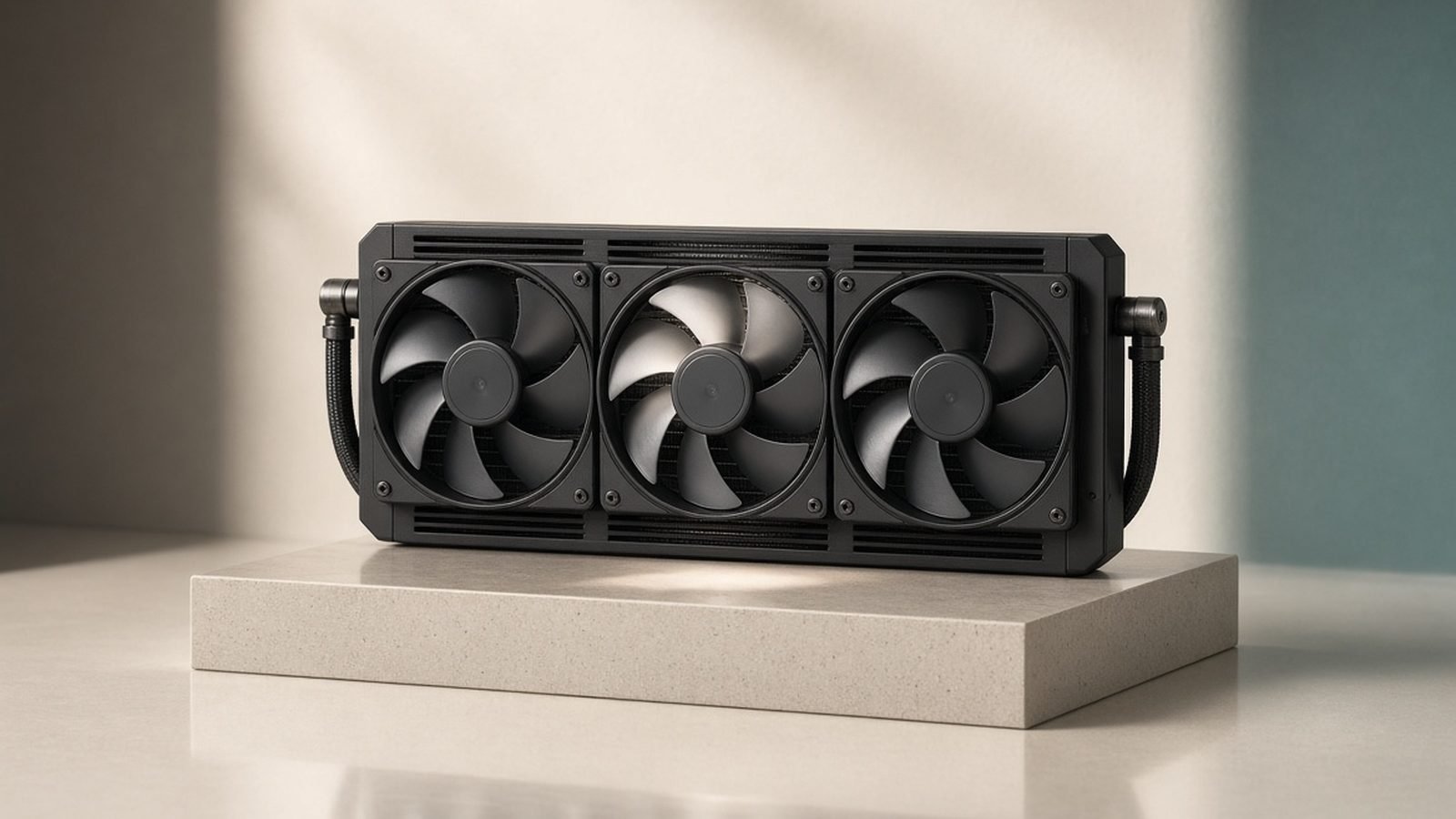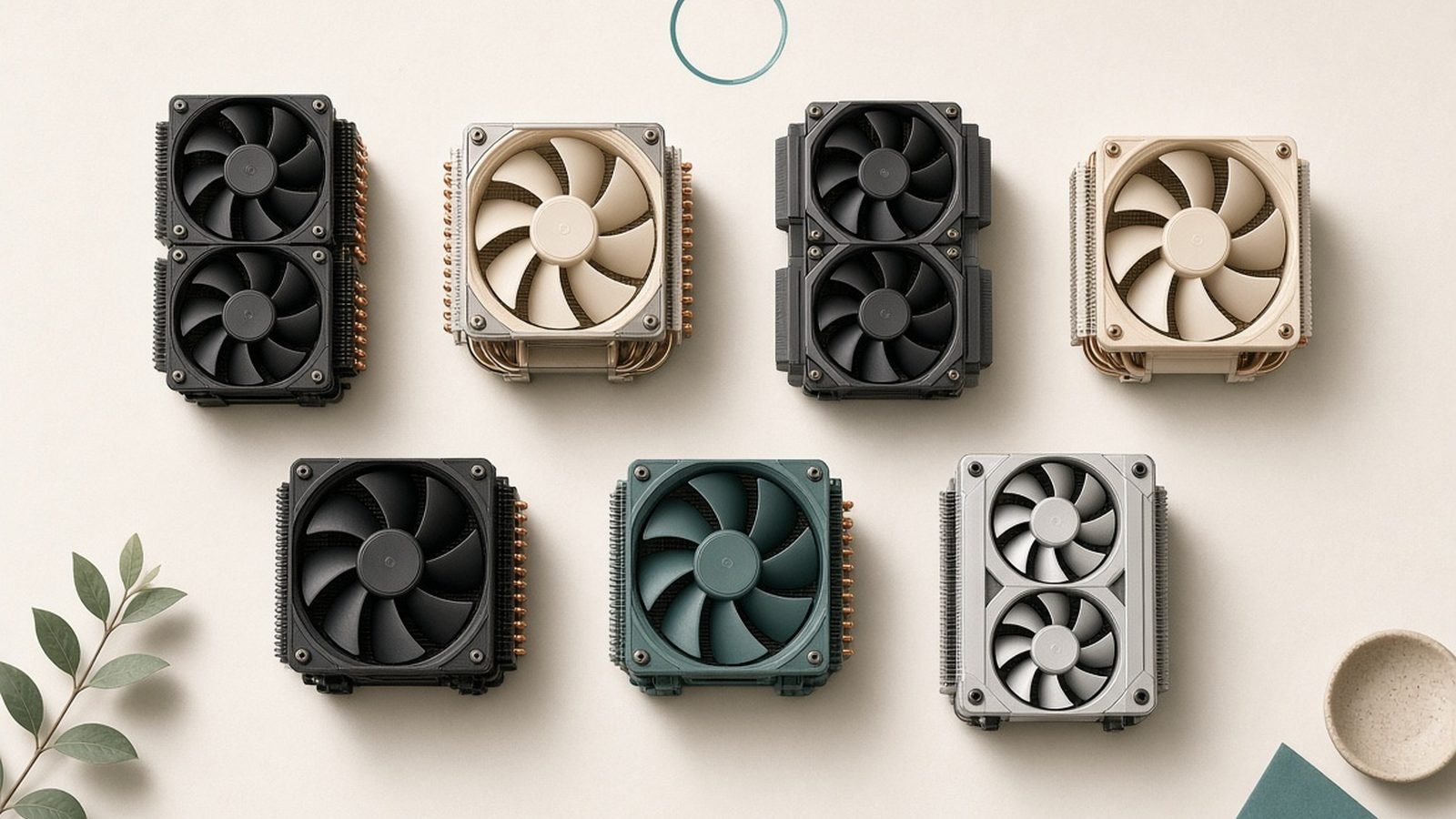
The best CPU cooler for 2026 for most people is the Arctic Liquid Freezer III 360 — a 360mm AIO that cools like premium units costing far more, runs quiet, and undercuts nearly everything on price. If you prefer the fit-and-forget reliability of air, the Noctua NH-D15 G2 is the top-tier pick, and the Thermalright Phantom Spirit 120 SE delivers frankly ridiculous value for a fraction of the money.
Cooling matters more than ever this generation. AMD’s X3D chips reward good cooling because their stacked cache is heat-sensitive, and high-core Ryzen and Intel Core Ultra parts push real heat under load. We have not run these on a bench ourselves; this guide is built from published specs, third-party review data and aggregated owner feedback to tell you which cooler fits your chip, case and budget.
Best CPU coolers 2026 at a glance
| Pick | Cooler | Best for | Price US/UK |
|---|---|---|---|
| Best overall AIO | Arctic Liquid Freezer III 360 | Most high-end builds | ~$90 / £85 |
| Best air cooler | Noctua NH-D15 G2 | Top air performance | ~$150 / £140 |
| Best value air | Thermalright Phantom Spirit 120 SE | Budget builds | ~$40 / £38 |
| Best premium AIO | Corsair iCUE Link Titan 360 RX | Clean RGB builds | ~$180 / £170 |
| Best quiet air | be quiet! Dark Rock Pro 5 | Silent builds | ~$110 / £105 |
| Best low-profile | Noctua NH-L12S | Small-form-factor | ~$60 / £55 |
How we picked
We filtered on the metrics that actually matter: sustained cooling performance under all-core load, noise at those temperatures, socket support for AM5 and LGA 1851, case and RAM clearance, and price relative to results. We weighted aggregated third-party thermal data and long-run owner reliability reports over marketing claims. Every pick here supports current AMD and Intel sockets. Crucially, we judged coolers on the balance of performance and noise — a cooler that wins by 2°C while screaming is not a better cooler for most people.
Best overall AIO: Arctic Liquid Freezer III 360
360mm AIO · AM5 + LGA 1851 · around $90 / £85
The Liquid Freezer III 360 is the cooler we would put in most high-performance builds without overthinking it. Arctic’s thicker-than-average radiator and effective pump deliver cooling that matches or beats AIOs costing twice as much, and a bundled VRM fan helps keep the surrounding motherboard components cool — a genuinely useful touch. Our full Arctic Liquid Freezer III 360 Review: Best AIO Value? digs into the numbers.
It is not the flashiest unit — RGB is limited and the aesthetic is functional rather than showy — and the stiff tubing and offset mounting can make installation slightly fiddly in tight cases. But on the only things that count, cooling and noise for the money, nothing at this price beats it. It comfortably tames a Ryzen 9 9950X3D or Core Ultra 9 285K.
Pros: exceptional cooling for the price, quiet under load, thick high-performance radiator, bundled VRM fan, strong reliability reports.
Cons: limited RGB and plain looks, stiff tubing, offset mount can complicate tight installs.
Who it’s for: anyone building a high-end Ryzen or Core Ultra system who wants top-tier cooling without paying a premium.
Best air cooler: Noctua NH-D15 G2
Dual-tower air · AM5 + LGA 1851 · around $150 / £140
If you distrust pumps and leaks, the NH-D15 G2 is the finest air cooler you can buy in 2026. This second-generation dual-tower design pushes air cooling about as far as it goes, rivalling many 360mm AIOs on raw performance while running whisper-quiet, and Noctua’s fit-and-forget reliability and six-year warranty are the best in the business.
The trade-offs are physical. It is a large, heavy cooler that can block tall RAM and demands real case width — check clearance before buying. It is also expensive for air. But you get a cooler that will outlast several builds, never needs refilling, and stays near-silent. For an X3D chip in a quiet tower, it is superb.
Pros: near-AIO cooling from air, extremely quiet, outstanding reliability and warranty, no pump to fail.
Cons: expensive for an air cooler, very large, can clash with tall RAM and narrow cases.
Who it’s for: builders who want maximum air cooling and long-term reliability, and have the case clearance for it.
Best value air: Thermalright Phantom Spirit 120 SE
Dual-tower air · AM5 + LGA 1851 · around $40 / £38
This is the value bombshell of the category. For roughly a quarter of the NH-D15 G2’s price, the Phantom Spirit 120 SE delivers dual-tower cooling that punches absurdly above its cost, handling mid-range and even many high-end chips with ease. Owner reports consistently rank it as the best performance-per-dollar cooler on the market.
You give up a little polish. The included fans and mounting hardware are not quite Noctua-grade, the acoustics are good rather than class-leading, and long-term fan longevity is less proven. None of that undermines the core proposition: excellent cooling for pocket money. For a value gaming build — see our Best Gaming CPU Under $300 in 2026 (AMD vs Intel) pairings — it is the obvious choice.
Pros: extraordinary value, strong dual-tower cooling, easy to recommend for almost any budget build, AM5 and LGA 1851 support.
Cons: fans and hardware feel budget, acoustics good not great, less proven long-term.
Who it’s for: value builders who want high-end air cooling without spending high-end money.
Best premium AIO: Corsair iCUE Link Titan 360 RX
360mm AIO · AM5 + LGA 1851 · around $180 / £170
If you want a showpiece cooler in a clean RGB build, the iCUE Link Titan 360 RX is the premium pick. Corsair’s iCUE Link system dramatically simplifies cabling — fans and pump daisy-chain into a single connector — and the cooling and acoustics are excellent. It looks the part in a glass-panel case and integrates tidily with other Corsair gear.
The cost is the catch. You pay a clear premium over the Arctic unit for a few degrees you will rarely notice, plus the software and ecosystem lock-in. Thermally it does not beat the Liquid Freezer III in a way most people would feel. But if aesthetics, cable-free builds and ecosystem integration matter to you, it earns its price.
Pros: excellent cooling and noise, elegant single-cable iCUE Link system, premium looks and RGB, tidy builds.
Cons: expensive, marginal thermal gain over cheaper AIOs, pulls you into Corsair’s ecosystem.
Who it’s for: builders of clean, RGB-forward showcase PCs who value looks and cable management.
Best quiet air: be quiet! Dark Rock Pro 5
Dual-tower air · AM5 + LGA 1851 · around $110 / £105
be quiet! built its name on silence, and the Dark Rock Pro 5 is the pick when acoustics come first. It cools strongly for a big air tower while staying among the quietest units under load, with a understated all-black finish that suits sleeper builds. If a near-silent desk matters as much as temperatures, this is the one.
Like all large dual-tower coolers it is bulky and can complicate RAM and case clearance, and installation is a touch more involved than some rivals. It also does not quite match the NH-D15 G2 on peak cooling. But for the quiet-build crowd it strikes an excellent balance, and the dark aesthetic is a welcome change from silver towers.
Pros: exceptionally quiet, strong cooling, sleek all-black design, solid build quality.
Cons: large with clearance caveats, fiddlier install, slightly behind the best on peak thermals.
Who it’s for: silent-build enthusiasts who want strong air cooling with minimal noise.
Best low-profile: Noctua NH-L12S
Low-profile air · AM5 + LGA 1851 · around $60 / £55
Small-form-factor builds need a different answer, and the NH-L12S is the go-to low-profile cooler. At just 70mm tall (or slightly more with the fan on top), it slips into compact ITX cases where tower coolers and thick AIOs will not fit, yet it cools mid-range chips surprisingly well and stays quiet doing it. Noctua’s reliability applies here too.
It is not built to tame a flagship X3D chip under sustained all-core load — that is not its job. Push a high-TDP CPU hard and it will thermal-throttle where a big tower would not. But within its remit — quiet, capable cooling in tight spaces — it is the class leader, and it makes cramped builds far easier.
Pros: genuinely low-profile, quiet, strong cooling for its size, excellent SFF compatibility, Noctua reliability.
Cons: not for flagship chips under heavy load, limited headroom for overclocking, premium price for its size.
Who it’s for: small-form-factor and HTPC builders who need cooling in a tight height budget.
How to choose a CPU cooler
Match the cooler to the chip. A flagship Ryzen 9 or Core Ultra 9 under all-core load wants a 360mm AIO or a top dual-tower air cooler. A mid-range gaming chip is happily served by the Phantom Spirit 120 SE.
Check clearance first. Measure RAM height, cooler height and radiator space in your case before buying — the most common cooler headache is a unit that does not physically fit. Our Best PC Cases 2026: Airflow, Looks & Value guide notes clearance for each case.
Air vs AIO. Air means no pump to fail and decades of reliability; AIO means better looks, lower RAM interference and slightly higher peak cooling. Both are excellent in 2026 — choose on preference, not fear.
Noise matters. A cooler that wins by a couple of degrees while running loud is not a better cooler for daily use. Weigh acoustics alongside temperatures.
Socket support. Every pick here supports AM5 and LGA 1851, but always confirm the exact mounting kit is included for your platform.
FAQ
Do I need a 360mm AIO or is air enough?
For most builds, a top air cooler like the NH-D15 G2 or even the value Phantom Spirit 120 SE is enough — air cooling has closed most of the gap. A 360mm AIO like the Arctic Liquid Freezer III makes sense for flagship chips under sustained all-core load, for cleaner RAM clearance, or if you want the look. Neither is wrong; it comes down to your chip and preferences.
What is the best cooler for a Ryzen 7 9800X3D?
The Arctic Liquid Freezer III 360 or the Noctua NH-D15 G2 are both excellent for the 9800X3D. X3D chips are heat-sensitive because of the stacked cache, so they reward strong cooling, but they do not draw enormous power — so even the value Phantom Spirit 120 SE handles one well in a gaming build. Match the cooler to your case and budget.
Are AIO liquid coolers reliable?
Modern sealed AIOs from reputable brands are very reliable, typically lasting five-plus years, and leaks are rare. That said, an AIO has a pump that can eventually fail, whereas a quality air cooler has no such part and can outlast several builds. If absolute long-term reliability is your priority, high-end air like the NH-D15 G2 is the safest choice.
Will a big air cooler block my RAM?
It can. Large dual-tower coolers like the NH-D15 G2 and Dark Rock Pro 5 may overhang the first RAM slot and clash with tall heat-spreader kits. Check the cooler’s RAM clearance spec against your memory height, or choose low-profile RAM. AIOs avoid this issue entirely, which is one reason some builders prefer them. See Best 32GB DDR5 RAM for Gaming in 2026 for lower-profile kits.
Does the stock cooler work for gaming CPUs?
Some AMD chips include a capable stock cooler, but many high-end gaming CPUs — including X3D parts and Intel Core Ultra chips — either ship without one or benefit clearly from an upgrade. For quiet operation and sustained performance under load, an aftermarket cooler from this list is worth the modest extra cost.
Zen Tech Hub may earn a commission from links on this page, at no extra cost to you.