If you want near-flagship 4K gaming without the eye-watering price of an RTX 5090, this RTX 5080 review lands on a clear verdict: it is the most sensible high-end GPU of 2026 for the majority of enthusiasts. Nvidia’s second-tier Blackwell card pairs 16GB of fast GDDR7 with excellent rasterization, class-leading ray tracing, and DLSS 4 with Multi Frame Generation. It is not flawless — the 16GB buffer looks conservative at this price, and it sits far behind the 5090 in raw horsepower — but for high-refresh 1440p and mainstream 4K, it is the card most people should actually buy.
The short version: around $999 / £949 at MSRP (partner cards run higher), 10,752 CUDA cores, 16GB GDDR7 on a 256-bit bus, roughly 360W board power. Below we break down performance from aggregated benchmarks and owner reports, where the 16GB question really bites, and how it stacks up against the 5090 and AMD’s RX 9070 XT.
RTX 5080 at a glance
The 5080 is built on Nvidia’s Blackwell architecture (the GB203 die) and slots directly beneath the RTX 5090. It is a big step down from that halo card in core count and memory, but it also costs less than half as much, which is the entire point.
| Spec | RTX 5080 | RTX 5090 |
|---|---|---|
| Architecture | Blackwell (GB203) | Blackwell (GB202) |
| CUDA cores | 10,752 | 21,760 |
| Memory | 16GB GDDR7 | 32GB GDDR7 |
| Bus width | 256-bit | 512-bit |
| Board power | ~360W | ~575W |
| Upscaling | DLSS 4 + MFG | DLSS 4 + MFG |
| Connector | 12V-2x6 | 12V-2x6 |
| MSRP | around $999 / £949 | around $1,999 / £1,899 |
Pros: class-leading ray tracing, DLSS 4 Multi Frame Generation, strong 4K raster, quiet efficient coolers, excellent creator/CUDA performance.
Cons: 16GB VRAM is stingy at this tier, partner cards drift well above MSRP, only an incremental raster gain over the previous generation, no meaningful value case against the RX 9070 XT in pure raster.
Design and build
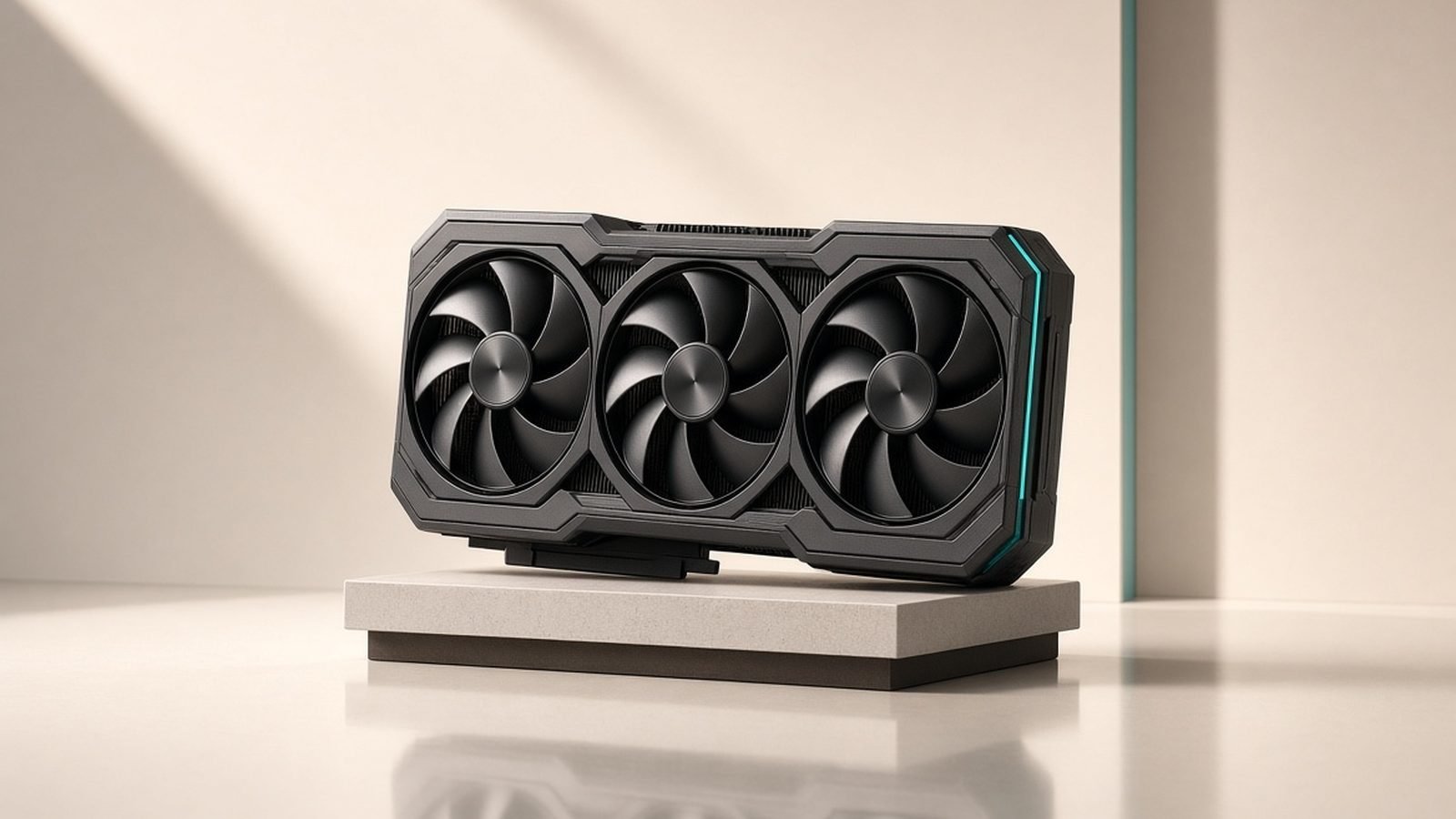
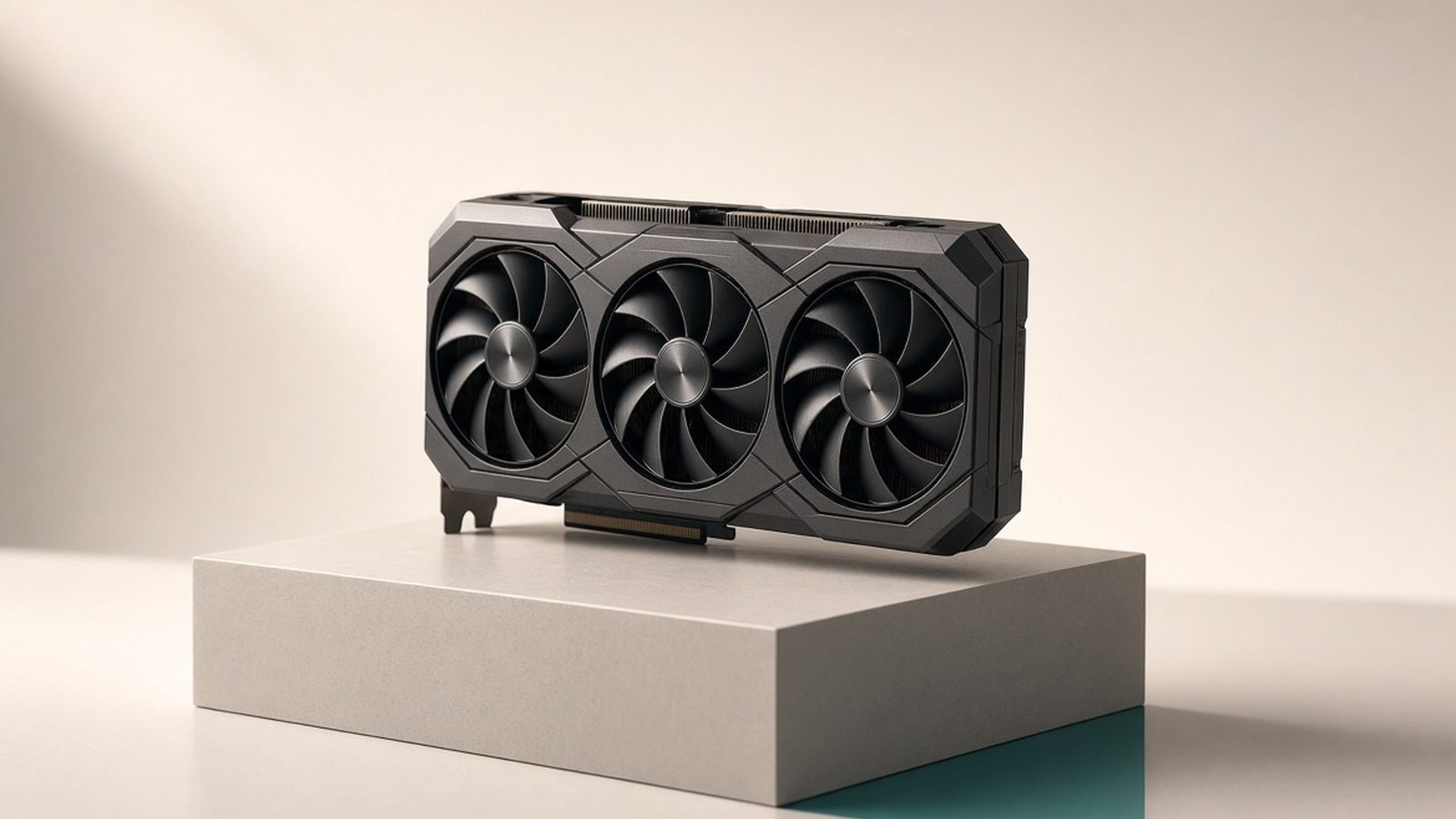
Most people will buy a partner card from Asus, MSI, Gigabyte or Zotac rather than a Founders Edition, and the physical story varies. Founders Edition and compact models are surprisingly restrained for a card this fast; the big triple-fan overclocked designs are chunky three-slot units that need real case clearance.
Every RTX 5080 uses the 12V-2x6 power connector, the refined successor to the 12VHPWR design that caused early melting-cable scares. Seat it fully until it clicks — the vast majority of connector failures trace back to a cable that was not pushed home. If you are pairing this with a new build, make sure your case can swallow a long, tall card and that airflow reaches the front intake. Our Best PC Cases 2026: Airflow, Looks & Value roundup flags the models with genuine GPU clearance, and Best Power Supplies 2026: Reliable PSUs Ranked covers the ATX 3.1 units that feed a 5080 without tripping on transient spikes.
Cooling, in general, is a non-issue. Based on aggregated review data and owner reports, both Founders and premium partner cards hold sustained clocks while staying quiet. The heat still has to leave your case, though, so a couple of decent exhaust fans matter more than they did two generations ago.
Performance: 4K and 1440p
This is where the 5080 justifies its tier. Across aggregated RTX 5080 benchmarks, it delivers a comfortable native-4K experience in the overwhelming majority of modern titles, and at 1440p it is effectively overkill — you will be CPU-limited before the GPU breaks a sweat in most games.
For RTX 5080 4K gaming, expect triple-digit frame rates in lighter and esports titles at maxed settings, and a smooth 60-plus experience in demanding open-world and AAA games natively. Turn on DLSS 4 Quality and even the heaviest ray-traced showcases climb back into high-refresh territory. Paired with a 4K 144Hz panel — see our Best Gaming Monitors 2026: OLED, 4K & High Refresh guide — it is a genuinely no-compromise setup for anything short of full path tracing at native resolution.
At 1440p, the 5080 is arguably more card than you need unless you are chasing a 240Hz or 360Hz display. It will happily saturate high-refresh 1440p monitors in almost everything. If your target is 1440p and budget matters, the honest advice is to look one tier down; the 5080’s strengths are wasted below 4K.
The generational caveat: in pure rasterization, the uplift over the last-gen 80-class card is real but not enormous. The bigger leaps are in ray tracing and AI features, not brute raster throughput. If you already own a strong previous-generation card, the raster-only reason to upgrade is thin.
DLSS 4 and ray tracing
Nvidia’s software stack remains the 5080’s trump card. DLSS 4 upgrades the upscaler to a transformer-based model that produces cleaner, more temporally stable images than earlier versions, and Multi Frame Generation can insert multiple AI-generated frames between rendered ones to multiply on-screen smoothness.
The honest framing: MFG dramatically lifts the frame counter, and in fast single-player titles the result looks and feels excellent on a high-refresh display. It does add a little latency and can show minor artifacts in some scenes, so competitive players should lean on native frames or Reflex rather than max frame generation. Used where it shines — visually rich, single-player games — it is a legitimate reason to choose Nvidia.
Ray tracing is the other pillar. The 5080 is the strongest ray-tracing card in its price class by a clear margin. In heavy RT and path-traced titles it pulls comfortably ahead of AMD’s RX 9070 XT, and DLSS 4 shares the load to keep frame rates high. If your must-play list is full of path-traced showcases, this is the card that handles them best without stepping up to a 5090.
The 16GB VRAM question
The single most-debated point in any RTX 5080 review is the 16GB frame buffer. It is enough today — 16GB comfortably runs 4K with high-resolution textures in current games — but it is not generous for a card at this price, and it is identical to what much cheaper cards offer.
The concern is longevity. As texture budgets and path tracing inflate memory use, a card meant to last several years at 4K would have been more future-proof with 20GB or 24GB. Based on current titles this is not a problem you will hit soon, but it is the reason some buyers feel the 5080 was engineered to a price rather than to leave headroom. If you keep GPUs for four or five years at 4K, weigh that honestly. Our How Much VRAM Do You Need for Gaming in 2026? explainer goes deeper on how much you actually need in 2026.
Power, efficiency and value
RTX 5080 power draw sits around 360W under gaming load. That is a step up from the previous generation but well managed by Blackwell’s efficiency, and it is far more approachable than the 5090’s ~575W. Based on owner reports, a quality 850W ATX 3.1 power supply is the comfortable recommendation, giving headroom for transient spikes and a strong CPU.
On value, the picture is nuanced. Against the RTX 5090, the 5080 is the smart buy for most people: you give up a lot of raw performance but save roughly a thousand dollars/pounds, and outside 4K-ultra-path-tracing you rarely feel the difference. Against AMD’s RX 9070 XT, the value math flips — in pure rasterization the Radeon delivers similar frames for meaningfully less money. The 5080 earns its premium through ray tracing, DLSS 4 and CUDA, not raster-per-dollar. For where it sits in the wider stack, see our Best Graphics Cards 2026: GPUs for Every Budget roundup, and if you are also choosing a processor, Best CPUs 2026: Gaming & Productivity Processors pairs neatly.
Alternatives
RTX 5090 — if you genuinely want native-4K path tracing with zero compromise and the budget is there, the 5090 is the uncompromised choice. For most people it is overkill at twice the price.
RX 9070 XT — the value counterpoint. Similar rasterization for much less, with a 16GB buffer of its own, at the cost of weaker heavy ray tracing and less mature upscaling. Our Radeon RX 9070 XT Review: The 1440p Value Champ covers it in full.
RTX 5070 Ti — a step down that still handles 1440p brilliantly and 4K capably, for less money. If the 5080’s price stings, this is the sensible pivot.
Verdict
The RTX 5080 is the high-end GPU most enthusiasts should buy in 2026. It delivers a near-no-compromise 4K experience, the best ray tracing and upscaling in its class, and quiet, efficient operation — all for roughly half the price of a 5090. The 16GB buffer and above-MSRP partner pricing are real caveats, and pure-raster value hunters are better served by the RX 9070 XT. But if you want Nvidia’s feature set and 4K performance without paying flagship money, this is the sweet spot.
Who it’s for: 4K and high-refresh 1440p gamers who value ray tracing, DLSS 4 and CUDA, and want near-flagship performance without the 5090 tax.
Who should skip it: pure-raster value buyers (look at the RX 9070 XT) and no-compromise 4K path-tracers with the budget for a 5090.
FAQ
Is the RTX 5080 good for 4K gaming?
Yes. The RTX 5080 handles native 4K in the vast majority of modern titles at high or maxed settings, and DLSS 4 Quality lifts the heaviest ray-traced games back into high-refresh territory. Paired with a 4K 144Hz monitor it is a near-no-compromise setup for everything short of native-resolution path tracing, where a 5090 pulls ahead.
How much better is the RTX 5090 than the 5080?
Substantially, on paper — the 5090 has roughly double the CUDA cores, 32GB of VRAM and a wider bus. In real games the gap is largest at native 4K with heavy ray tracing, where the 5090 stretches its legs. But it costs about twice as much and draws far more power, so for most players the 5080 delivers the better balance of price, performance and efficiency.
Is 16GB of VRAM enough on the RTX 5080?
For today’s games, yes — 16GB comfortably runs 4K with high-resolution textures. The concern is longevity: as texture budgets and path tracing grow, a card at this price would have aged better with more memory. If you keep GPUs for four or five years at 4K, factor that in. For most buyers on a normal upgrade cycle it is a non-issue for now.
What power supply does the RTX 5080 need?
With a board power draw around 360W, a quality 850W ATX 3.1 unit with a native 12V-2x6 connector is the safe recommendation for most builds. That leaves headroom for transient spikes and a strong CPU. You can run a good 750W unit in a modest system, but 850W removes the guesswork.
RTX 5080 or RX 9070 XT — which should I buy?
Choose the 5080 if you want the best ray tracing, DLSS 4 Multi Frame Generation and CUDA performance, and are targeting 4K. Choose the RX 9070 XT if pure rasterization value matters most — it delivers similar raster frames for meaningfully less money, at the cost of weaker heavy ray tracing and less mature upscaling.
Zen Tech Hub may earn a commission from links on this page, at no extra cost to you.