The Philips Hue vs Govee choice is really a choice between two philosophies: pay more for rock-solid reliability and a polished ecosystem (Hue), or pay far less for vivid effects and huge variety at the cost of some consistency (Govee). In 2026, Philips Hue wins on reliability, app quality, and ecosystem depth, while Govee wins on price, dazzling effects, and sheer product range. For a whole-home system you’ll rely on daily, Hue is the safer buy; for accent lighting, gaming, and value, Govee is hard to beat.
Here’s the short version. Choose Hue if you want lights that respond instantly every time, a bridge-based system that doesn’t clog your Wi-Fi, deep smart-home integration (including proper HomeKit and Matter), and years of reliable service. Choose Govee if you want the most color effects and light-strip variety for your money, you’re lighting a gaming setup or accent wall, and you’re comfortable trading a little polish for a lot of savings. Let’s break down exactly where each wins.
Philips Hue vs Govee at a Glance
| Philips Hue | Govee | |
|---|---|---|
| Price | Premium (~$45–60 / £40–55 per color bulb) | Budget (~$15–25 / £13–22 per bulb) |
| Hub | Hue Bridge (Zigbee) recommended | Mostly Wi-Fi/Bluetooth, no hub needed |
| Reliability | Excellent — instant, consistent response | Good, but more variable over Wi-Fi |
| App | Polished, stable, powerful | Feature-packed but busier, more ads |
| Effects | Refined, tasteful; scenes and sync | Vibrant, dramatic; huge effect library |
| Ecosystem | Alexa, Google, HomeKit, Matter (strong) | Alexa, Google, some HomeKit/Matter (varies) |
| Product range | Bulbs, strips, fixtures, outdoor, sync | Enormous — strips, panels, curtains, neon |
| Best for | Whole-home reliability + integration | Value, gaming, accent and effect lighting |
Two Philosophies: Premium System vs Budget Variety
Understanding the core difference settles most of the govee vs philips hue smart lights debate before you compare a single bulb.
Philips Hue is a premium, bridge-based system. Most Hue setups run through the Hue Bridge, which talks to bulbs over Zigbee — a low-power mesh network separate from your Wi-Fi. That architecture is the secret to Hue’s legendary reliability: lights respond instantly and consistently, they don’t compete for Wi-Fi bandwidth, and the mesh gets stronger as you add bulbs. You pay a premium per bulb and for the bridge, and in return you get a system that simply works, year after year.
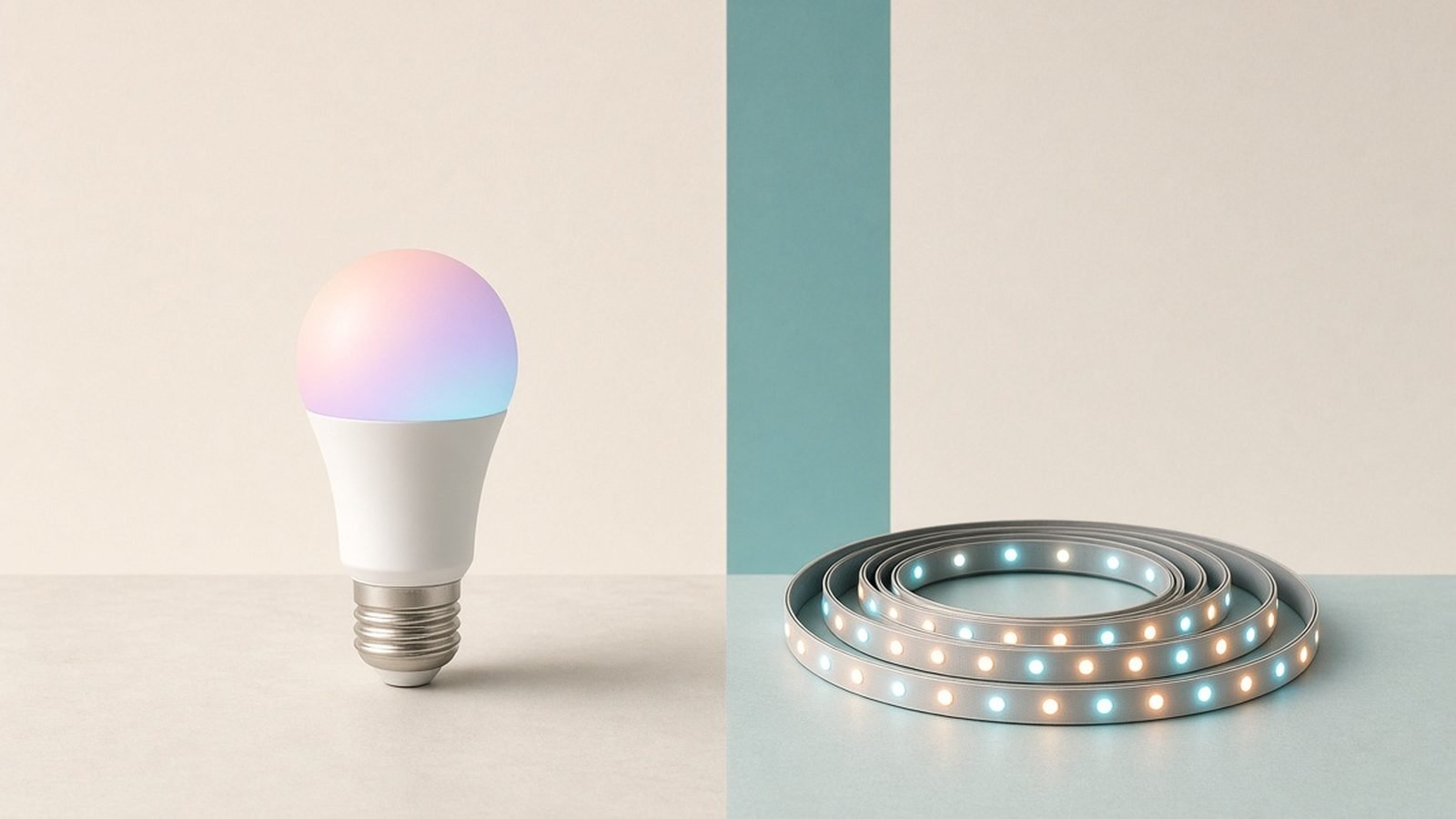
Govee is a budget-first, Wi-Fi/Bluetooth brand with an enormous product range. Most Govee lights connect directly over Wi-Fi or Bluetooth with no hub required, which lowers the entry cost and simplifies setup. Govee’s calling card is vivid, dramatic effects and an astonishing variety of form factors — light strips, hexagon and triangle wall panels, “curtain” lights, neon rope, TV backlights, floor lamps — often at a third of Hue’s price. The trade-off is that Wi-Fi lighting is inherently a little less consistent than Zigbee, and the experience is less refined.
Neither is “better” in the abstract. Hue is the reliability-and-integration choice; Govee is the value-and-effects choice.
Reliability: Hue’s Biggest Advantage
If there’s one reason to pay Hue’s premium, this is it. Because Hue runs on a dedicated Zigbee mesh via the Bridge, based on aggregated owner reports its lights respond instantly and consistently — flick a switch or say a command and every bulb reacts together, every time. The mesh doesn’t burden your home Wi-Fi, and it scales gracefully to dozens of bulbs across a house without lag or dropouts.
Govee, running mostly over Wi-Fi, is generally reliable but more variable. On a strong network with a handful of lights, it’s fine. Load up many Wi-Fi bulbs, or push them to the edge of your router’s range, and owners more often report occasional lag, a light that doesn’t respond to a group command, or a device that needs re-pairing. Bluetooth-only control has limited range. It’s not unreliable — it’s just not the metronome-consistent experience Hue delivers.
For whole-home lighting you depend on daily — hallways, living areas, lights tied to routines and automations — Hue’s reliability is worth the premium. For accent lighting in one room, Govee’s occasional hiccup matters far less.
Reliability winner: Philips Hue, decisively, thanks to its Zigbee bridge architecture.
App and Software Experience
The Philips Hue app is one of the best in smart lighting: stable, polished, and powerful without being cluttered. Scene creation, room grouping, schedules, and automations are intuitive, and Hue rarely pushes ads or upsells at you. It’s the kind of app you set up once and trust.
The Govee Home app is feature-packed — arguably it does more than Hue’s, with a massive library of effects, a community scene marketplace, and music-sync modes. But it’s busier, less consistent in layout, and more prone to promotional nudges. Power users enjoy the depth; newcomers can find it overwhelming. Neither app is bad, but Hue’s is the more refined daily experience.
App winner: Philips Hue for polish and stability; Govee for sheer feature depth if you like tinkering.
Effects, Color and Gaming
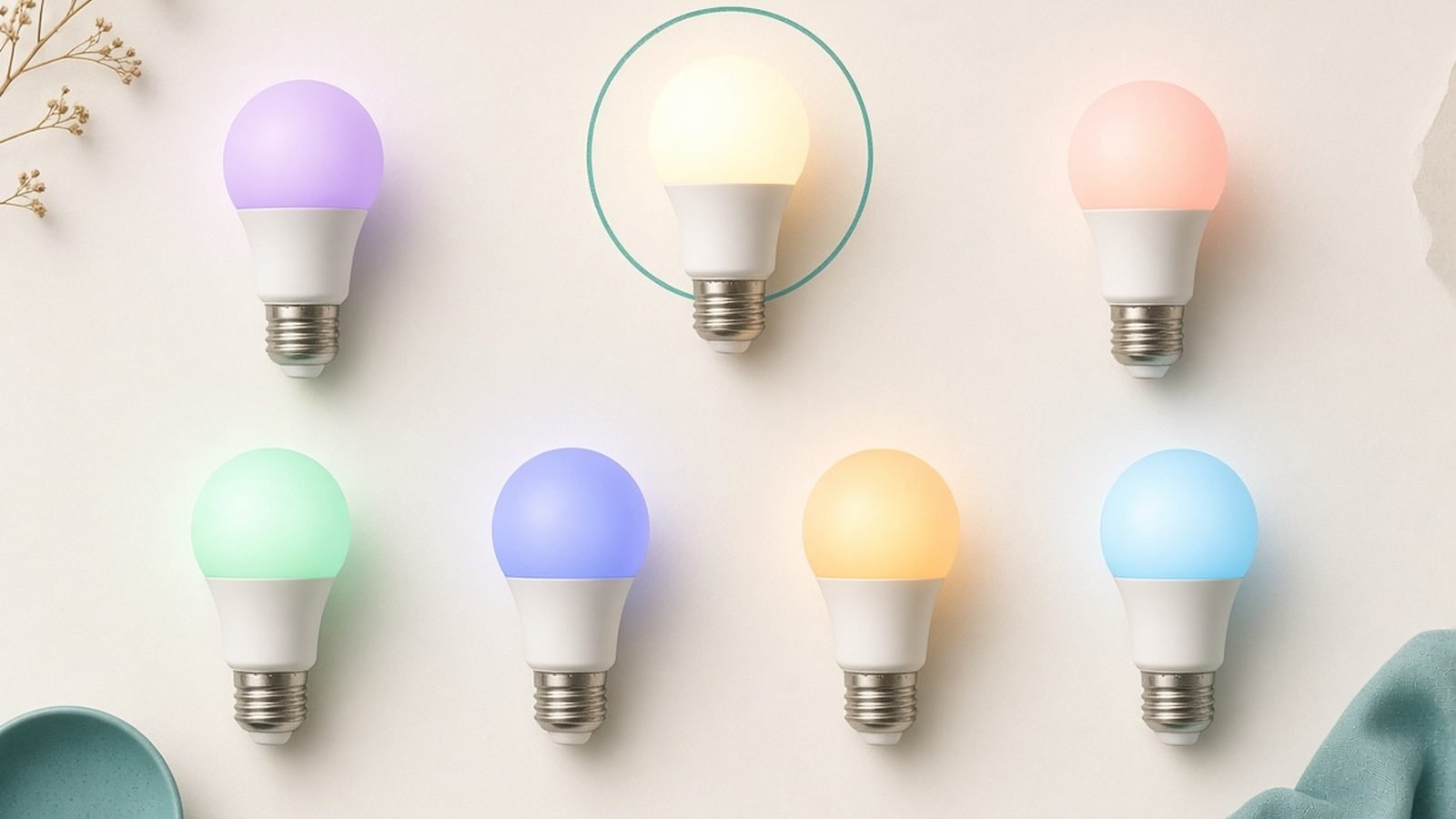
Here’s where Govee fights back hard. If you want dramatic, vivid effects — a wall that pulses to music, a gaming setup bathed in reactive color, a TV backlight that extends the on-screen image onto your wall — Govee is exceptional and far cheaper. Its effect library is enormous, its music-sync is genuinely fun, and products like its wall panels, neon rope, and TV backlights deliver eye-catching results for a fraction of Hue’s cost. For a philips hue vs govee for gaming setup on a budget, Govee is often the smarter pick.
Hue’s effects are more refined and tasteful — beautifully calibrated scenes, smooth transitions, and the excellent (if pricey) Hue Sync for mirroring PC or TV content onto your lights. Hue’s color accuracy and white-tuning are top-tier, and its scenes look considered rather than gaudy. But you pay a lot more, and for pure effect drama Govee gives you more spectacle per dollar.
Effects winner: Govee for value, variety, and gaming spectacle; Hue for refinement and color accuracy.
Ecosystem and Smart Home Integration
This matters more than any single feature if you’re building a connected home.
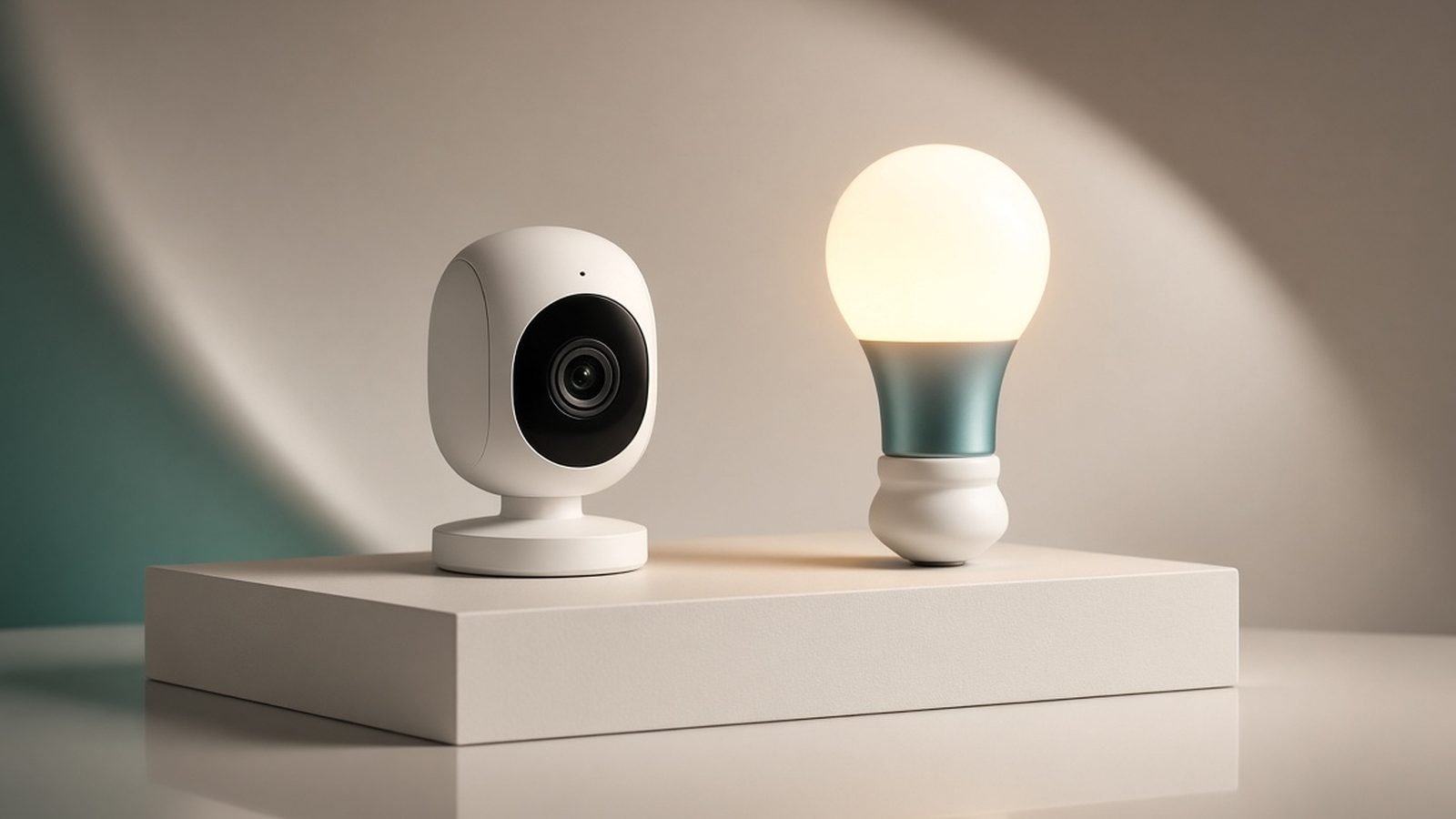
Philips Hue has deep, reliable integration with Amazon Alexa, Google Home, and — importantly — proper Apple HomeKit support via the bridge, plus solid Matter support. Hue is a first-class citizen in every major ecosystem, its integrations are stable, and it even extends into security: the Hue Secure cameras can trigger your bulbs as an alarm, which we cover in our Philips Hue Secure Camera Review 2026: Lights Meet Security. If you want lighting that slots cleanly into HomeKit, Matter routines, or a broader smart home, Hue is the dependable choice.
Govee works with Alexa and Google Home, and a growing (but not universal) subset of its products support HomeKit and Matter — it varies by model, so check the specific device before buying if platform support matters to you. Govee’s integrations are generally good but less uniformly deep than Hue’s, and the per-product variation means you can’t assume every Govee light behaves the same way in your ecosystem.
Ecosystem winner: Philips Hue, for uniform, reliable support across Alexa, Google, HomeKit, and Matter.
Price and Value: Govee’s Trump Card
There’s no contest on upfront cost: Govee is dramatically cheaper. A Govee color bulb runs roughly $15–25 / £13–22, versus $45–60 / £40–55 for a Hue color bulb — and Hue also wants you to buy a bridge. Kitting out a whole home with Hue is a serious investment; doing the same with Govee costs a fraction, and Govee’s light strips and panels in particular deliver enormous visual impact per pound.
The value verdict depends on what you’re buying:
- Accent lighting, one room, gaming, effects: Govee wins easily. You’re not relying on it for daily whole-home function, so the price savings dominate.
- Whole-home, automation-driven, must-work-every-time lighting: Hue’s reliability and integration justify the premium over years of use — the “buy once, works forever” argument.
If Hue’s prices are the sticking point but you like the ecosystem idea, our Best Philips Hue Alternatives in 2026: Cheaper Smart Bulbs guide covers cheaper systems (including Govee) that get you most of the way, and our Best Smart Light Bulbs 2026: Philips Hue & Alternatives roundup compares the whole field.
Value winner: Govee, comfortably, on upfront cost and effects-per-dollar.
Which Should You Buy?
- Best for whole-home reliability: Philips Hue. The Zigbee bridge delivers instant, consistent response and deep ecosystem integration. Buy Hue if lighting is core infrastructure you rely on daily and budget allows.
- Best value: Govee. A third of the price for vivid lighting and huge variety. Buy Govee to light a room, a setup, or an accent wall without spending a fortune.
- Best for gaming and effects: Govee. Dramatic music-sync, reactive gaming modes, TV backlights, and wall panels for far less than Hue’s equivalents.
- Best for Apple HomeKit / Matter homes: Philips Hue. Uniform, reliable support across every major platform, versus Govee’s model-by-model variation.
- Best app experience: Philips Hue, for polish and stability; Govee if you want maximum features and don’t mind the clutter.
- Best mixed approach: many owners run both — Hue for reliable whole-home lighting, Govee for cheap accent and gaming effects. It’s a perfectly sensible combination.
FAQ
Is Philips Hue or Govee better in 2026?
It depends on your priority. Philips Hue is better for reliability, app polish, and ecosystem integration — its Zigbee bridge makes lights respond instantly every time, and it supports Alexa, Google, HomeKit, and Matter uniformly. Govee is better for value and effects — a third of the price, dramatic music-sync and gaming modes, and huge product variety. Buy Hue for whole-home dependability; buy Govee for affordable accent and effect lighting.
Are Govee lights as good as Hue?
For effects and value, often better — Govee’s vivid modes and variety beat Hue per dollar. For reliability and integration, no — Hue’s Zigbee bridge delivers more consistent response and deeper, more uniform smart-home support than Govee’s mostly Wi-Fi lights. Govee is excellent for accent and gaming lighting; Hue is the safer choice for lights you rely on across a whole home every day.
Why is Philips Hue so much more expensive than Govee?
You’re paying for the Zigbee bridge architecture, build quality, refined software, and uniform ecosystem integration. Hue’s separate Zigbee mesh delivers the instant, consistent reliability that Wi-Fi lights can’t quite match, and its app and HomeKit/Matter support are best-in-class. Govee keeps costs low by using Wi-Fi/Bluetooth with no required hub. The premium buys dependability and polish; whether it’s worth it depends on how central lighting is to your home.
Do Govee and Hue work with Apple HomeKit and Matter?
Philips Hue supports both fully and uniformly — HomeKit via the bridge and solid Matter support across the range. Govee support varies by product: many newer Govee lights support HomeKit and Matter, but not all, so check the specific model before buying if platform compatibility matters. For guaranteed, consistent HomeKit and Matter behavior across every bulb, Hue is the more reliable choice.
Which is better for gaming, Hue or Govee?
Govee is usually the better gaming value — its reactive music-sync, TV backlights, and wall panels create dramatic, immersive effects for far less than Hue’s equivalents. Hue offers the excellent Hue Sync for mirroring screen content onto your lights, with more refined results, but it’s considerably pricier. For a budget-conscious gaming setup with maximum spectacle, Govee wins; for premium, tasteful sync you’ll pay more with Hue.
Can I use Philips Hue and Govee together?
Yes, and many people do. They’re separate systems with separate apps, but both connect to Alexa and Google Home, so you can control both through a common voice assistant or smart-home hub. A popular approach is Hue for reliable whole-home lighting and Govee for cheap accent, gaming, and effect lighting — getting Hue’s dependability where it matters and Govee’s value where it doesn’t.
Zen Tech Hub may earn a commission from links on this page, at no extra cost to you.