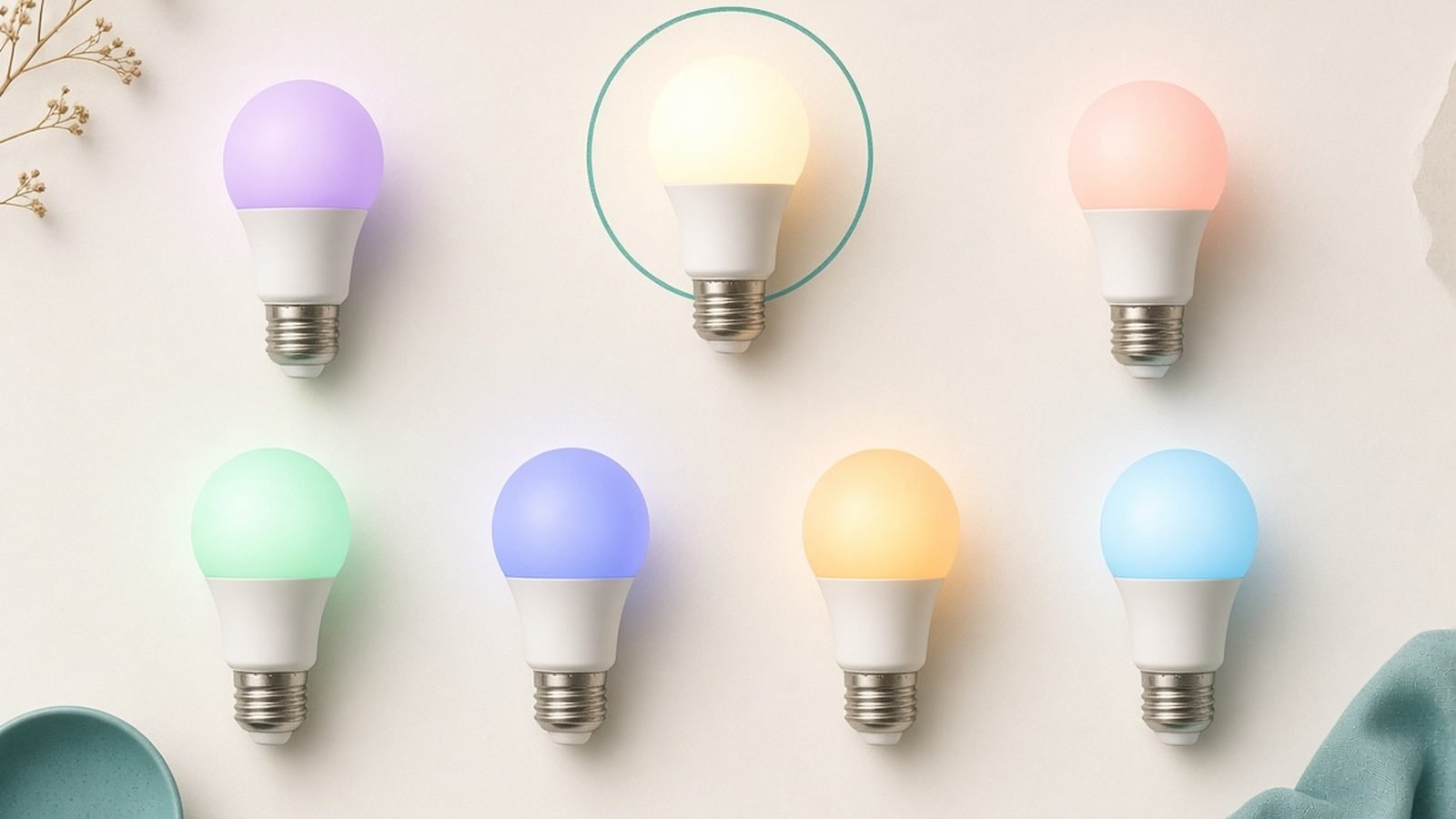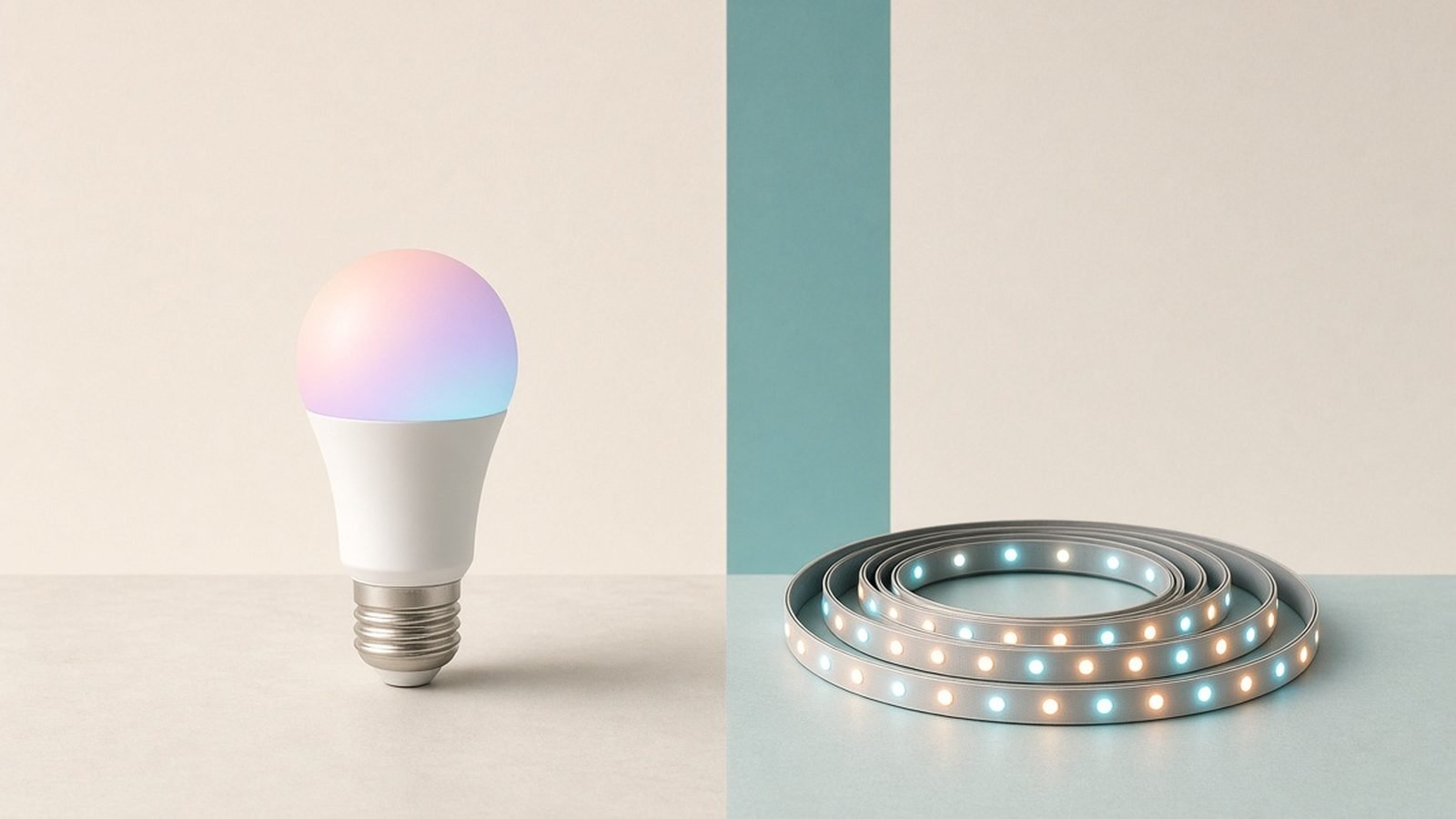
The best smart light bulbs for most people in 2026 are Philips Hue — they’re the most reliable, most compatible, and best-supported bulbs you can buy, and the new generation ships Matter-ready. But Hue is also the most expensive way to light a room, and for many homes a TP-Link Tapo or Wiz bulb does 90% of the job for a third of the price. This guide sorts the field by what you actually want: reliability, color quality, budget, or effects.
We’ve researched the current smart-bulb market — Matter and Thread support, color accuracy specs, hub requirements, and hundreds of owner reports across the US and UK — to pick the best bulbs at every price. Whether you want a bulletproof whole-home system or a single $10 color bulb to try the idea, one of these fits. If you’re weighing a bulb against a cheaper entry point, our Best Smart Plugs 2026: Cheapest Way Into Home Automation guide covers the other low-cost route into automation.
Best smart light bulbs at a glance
| Pick | Bulb | Best for | Hub needed? | Matter | Price (US / UK) |
|---|---|---|---|---|---|
| Best overall | Philips Hue White & Color (Gen 4) | Reliability + ecosystem | Bridge (recommended) | Yes | around $50 / £50 (single) |
| Best value color | TP-Link Tapo L535 | Cheap, no hub, Matter | No | Yes | around $13 / £11 |
| Best budget | Wiz Color A19/A60 | Bargain whole-home | No | Yes (newer SKUs) | around $12 / £10 |
| Best for effects | Govee Smart Bulbs (Matter) | Dynamic scenes, fun | No | Yes (Matter line) | around $15 / £13 |
| Best design/panels | Nanoleaf Essentials Matter A19 | Thread + light-panel homes | No (Thread router) | Yes | around $20 / £18 |
| Best premium alt | Philips Hue via Tapo mix | Hybrid setups | Optional | Yes | mixed |
Prices move constantly, especially multi-packs — Tapo, Wiz, and Govee routinely drop 30-40% in sales.
How we picked the best smart light bulbs for 2026
Our analysis is based on published specs, Matter/Thread documentation, and aggregated owner feedback across US and UK retailers — not lab color measurements we didn’t take. Four things separated the winners.
Reliability and response time. A light you tell to turn on should turn on, instantly, every time. Hub-based systems (Hue) and Thread bulbs are generally the most responsive; cheap Wi-Fi bulbs occasionally lag or drop off the network.
Color and white quality. Cheap bulbs can look garish in color and greenish in “warm white.” We favored bulbs with a wide, accurate color range and genuinely warm 2000-2700K lows.
Matter and future-proofing. Matter support means a bulb can work across Alexa, Google, and Apple Home without lock-in. We treated it as close to essential in 2026 — see our What Is Matter? The Smart Home Standard Explained (2026) explainer for why.
Total cost to light a home. A single bulb price is misleading. We considered the cost to light 8-10 fixtures, including any hub.
Best smart light bulbs overall: Philips Hue White & Color
Around $50 / £50 per bulb (cheaper in multi-packs) — the reliability and ecosystem benchmark.
Philips Hue remains the smart lighting standard, and the current generation earns it. Paired with the Hue Bridge, the bulbs run on Zigbee for rock-solid, near-instant response that Wi-Fi bulbs can’t match at scale, and the app is the most mature in the category — scenes, schedules, automations, and effects all just work. The latest bulbs are brighter (up to ~1,100 lumens on some SKUs), and Hue now supports Matter, so your bulbs play nicely with Alexa, Google, and Apple Home.
The reason to buy the whole Hue system is scale and reliability: once you have twenty-plus lights, the Bridge’s dedicated Zigbee network keeps everything snappy and off your Wi-Fi. Hue’s build quality and multi-year firmware support are also unmatched — owners regularly report bulbs running fine after five-plus years.
The catch is price. Hue costs two to four times what Tapo or Wiz charge, and to get the best experience you need the Bridge (around $60 / £50). For one or two lamps, that math doesn’t work — buy Tapo. For a whole home you’ll expand over years, Hue’s reliability justifies the premium. We break down the cheaper routes in our Best Philips Hue Alternatives in 2026: Cheaper Smart Bulbs guide.
Pros:
- Most reliable, most responsive system at scale (Zigbee via Bridge)
- Best app, scenes, and automation ecosystem
- Matter support for cross-platform control
- Excellent build quality and long firmware support
Cons:
- Most expensive bulbs on the market
- Best experience needs the Hue Bridge
- Overkill and poor value for one or two lights
Who it’s for: People lighting a whole home who want it to work flawlessly for years and will pay for it.
Check price: Philips Hue White & Color Ambiance
Verdict: The best smart bulbs if reliability at scale matters more than price — buy the Bridge and never look back.
Best value color: TP-Link Tapo L535
Around $13 / £11 — Matter-ready color for a third of Hue’s price, no hub.
The Tapo L535 is the bulb we recommend to most people trying smart lighting for the first time. It’s a full-color, Matter-compatible bulb that connects straight to your Wi-Fi — no hub, no extra box — and costs a fraction of a Hue. Setup through the Tapo app is quick, color range is genuinely good for the money, and Matter means it works with Alexa, Google, and Apple Home.
This is the pragmatic pick. You lose the rock-solid Zigbee reliability of Hue and, in very large setups, Wi-Fi bulbs can strain your router and occasionally lag. But for the average home with a handful of color bulbs, the L535 delivers the smart-lighting experience most people actually want at a price that makes kitting out several rooms painless.
Trade-offs: warm-white tone is a touch cooler than Hue’s, and TP-Link’s ecosystem, while good, isn’t as deep on advanced automations. For most buyers, neither will matter.
Pros:
- Full color and Matter support with no hub
- Outstanding price — easy to light multiple rooms
- Quick setup and reliable for typical home sizes
- Works across all major platforms
Cons:
- Wi-Fi bulbs can lag or drop in very large setups
- Warm white slightly cooler than Hue
- Fewer advanced automation features
Who it’s for: First-time buyers and anyone lighting a normal home who wants color and Matter without the Hue tax.
Check price: TP-Link Tapo L535
Verdict: The best-value smart bulb in 2026 and the right starting point for most homes.
Best budget whole-home: Wiz Color
Around $12 / £10 — Signify’s cheaper, hub-free lighting line.
Wiz is made by Signify, the same company behind Philips Hue, but takes the opposite approach: Wi-Fi bulbs, no hub, budget pricing. The Color A19/A60 gives you a wide color range, decent brightness, and a surprisingly capable app with scenes and schedules, and newer SKUs add Matter support. If you want to light a whole house cheaply and don’t need Hue-grade reliability, Wiz is a smart buy.
The appeal is value at scale: multi-packs make lighting eight or ten fixtures affordable, and features like “SpaceSense” motion detection (using Wi-Fi signal disturbance) are unusual at this price. As with any Wi-Fi bulb, expect the occasional need to reconnect a bulb, and check the specific SKU for Matter before buying, since older Wiz stock predates it.
Pros:
- Very cheap, especially in multi-packs
- No hub required; good app for the price
- Newer versions add Matter support
- Novel Wi-Fi motion features
Cons:
- Not all SKUs support Matter — check before buying
- Wi-Fi reliability trails Zigbee at scale
- Color accuracy good, not Hue-great
Who it’s for: Budget-focused buyers lighting many fixtures who want cheap color without a hub.
Check price: Wiz Color A19/A60
Verdict: The cheapest sensible way to light a whole home — just confirm the Matter SKU.
Best for effects and fun: Govee Smart Bulbs (Matter line)
Around $15 / £13 — the bulbs to buy if you want dynamic, playful lighting.
Govee built its reputation on vivid, effect-heavy lighting, and its bulbs bring that energy to standard sockets. Expect punchy colors, a huge library of dynamic scenes, music-sync modes, and one of the more entertaining apps around. Govee’s Matter line adds cross-platform control, so you get the fun without total lock-in.
If your priority is atmosphere — gaming rooms, parties, kids’ rooms, seasonal color — Govee is more fun out of the box than Hue or Tapo. The trade-off is that the app pushes its own ecosystem hard and can feel busy, and Govee’s strength is vibrancy rather than the precise, natural whites you’d want for a home office. Pair Govee color bulbs where you want mood, and a cleaner white bulb where you want to work.
Pros:
- Best-in-class dynamic scenes and music sync
- Vivid, saturated color
- Matter line for cross-platform use
- Fun, feature-rich app
Cons:
- App is busy and pushes Govee’s ecosystem
- Whites less natural than Hue/Tapo
- Not all Govee products are Matter — pick the Matter line
Who it’s for: People who want atmosphere, effects, and music sync more than clinical accuracy.
Check price: Govee Smart Bulbs (Matter)
Verdict: The most fun smart bulbs in 2026 — ideal for mood lighting, less so for a home office.
Best for Thread and design homes: Nanoleaf Essentials Matter A19
Around $20 / £18 — Thread-based bulbs that fit a design-led smart home.
Nanoleaf’s Essentials Matter bulbs run on Thread, the low-power mesh network Matter loves, which means fast, resilient response without hammering your Wi-Fi — provided you have a Thread border router (an Apple HomePod, newer Echo, or Nanoleaf hub). Color quality is good, prices are reasonable, and they slot neatly alongside Nanoleaf’s famous light panels if you’re building a coordinated setup.
The Thread advantage is real: as your smart home grows, Thread devices form a self-healing mesh that stays responsive where big Wi-Fi bulb networks can bog down. The requirement is that you own a Thread border router — most Matter/Apple households already do, but it’s worth confirming. If Thread and Matter are new to you, our How to Set Up Matter Devices (Without the Headache) walkthrough explains border routers step by step.
Pros:
- Thread-based for fast, low-power, resilient response
- Full Matter support
- Good color and sensible pricing
- Coordinates with Nanoleaf panels and design products
Cons:
- Needs a Thread border router to shine
- App less mature than Hue’s
- Fewer bulk-pack deals than Tapo/Wiz
Who it’s for: Matter/Thread households and design-minded buyers building a coordinated lighting setup.
Check price: Nanoleaf Essentials Matter A19
Verdict: The best Thread bulb for a modern Matter home — just make sure you have a border router first.
How to choose smart light bulbs
Four questions get you to the right bulb.
Hub or no hub? Hue’s Bridge buys you reliability at scale but adds cost and a box. Tapo, Wiz, Govee, and Nanoleaf skip the hub (Nanoleaf wants a Thread router). For a few lights, go hub-free; for a whole home you’ll expand, a hub-based system pays off.
Color or white-only? Full-color bulbs are fun but cost more and are overkill for a hallway. Mix: color where you want mood, cheaper tunable-white where you just need good light. You rarely need every bulb to do rainbow.
Matter matters. Buy Matter-compatible bulbs so you’re not locked to one assistant. Nearly every pick here supports it, but double-check the exact SKU on budget lines like Wiz.
Count the sockets. Price the whole project, not one bulb. Ten Hue bulbs plus a Bridge is a serious sum; ten Tapo bulbs is a night out. Match ambition to budget.
FAQ: smart light bulbs
Do I need a hub for smart light bulbs?
Not necessarily. Wi-Fi bulbs (Tapo, Wiz, Govee) connect directly to your router with no hub. Philips Hue works best with its Bridge for reliability at scale, and Nanoleaf’s Thread bulbs want a Thread border router. For a few lights, hub-free is simplest; for a large home, a hub-based system stays more responsive.
What is the best Philips Hue alternative?
The TP-Link Tapo L535 is our top pick for most people wanting Hue-like features for far less. Wiz (also made by Signify) is the budget whole-home choice, and Nanoleaf suits Thread/Matter homes. We compare the full field in our Best Philips Hue Alternatives in 2026: Cheaper Smart Bulbs guide.
Do smart bulbs work if the wall switch is off?
No — a smart bulb needs constant power to stay connected. If someone flicks the wall switch off, the bulb goes offline and can’t be controlled by app or voice until power returns. The common fix is a smart switch or a switch guard, or simply training the household to leave the switch on and control lights via app/voice.
Are smart bulbs worth it, or should I get smart plugs?
They do different jobs. Smart bulbs give you color, dimming, and scenes for lamps and fixtures. Smart plugs turn dumb appliances (lamps with normal bulbs, fans, heaters) on and off. Many homes use both — start with whichever solves your immediate want. Our Best Smart Plugs 2026: Cheapest Way Into Home Automation guide covers the plug route.
Will smart bulbs raise my electricity bill?
Barely. LED smart bulbs use roughly the same energy as normal LEDs when on (a few extra watts for the wireless radio, mostly negligible), and their standby draw is tiny. The bigger savings come from automation — scheduling and motion turning lights off when rooms are empty, which smart bulbs make easy.
Which smart bulbs have the best warm white for living rooms?
Philips Hue sets the benchmark for natural, cozy warm white down to 2000K, which is why it’s still the pick for living rooms and bedrooms where light quality matters. Tapo and Nanoleaf are close behind. Very cheap bulbs often have a slightly cooler or greener “warm” tone, so prioritize a reputable brand for rooms where you relax.
Zen Tech Hub may earn a commission from links on this page, at no extra cost to you.