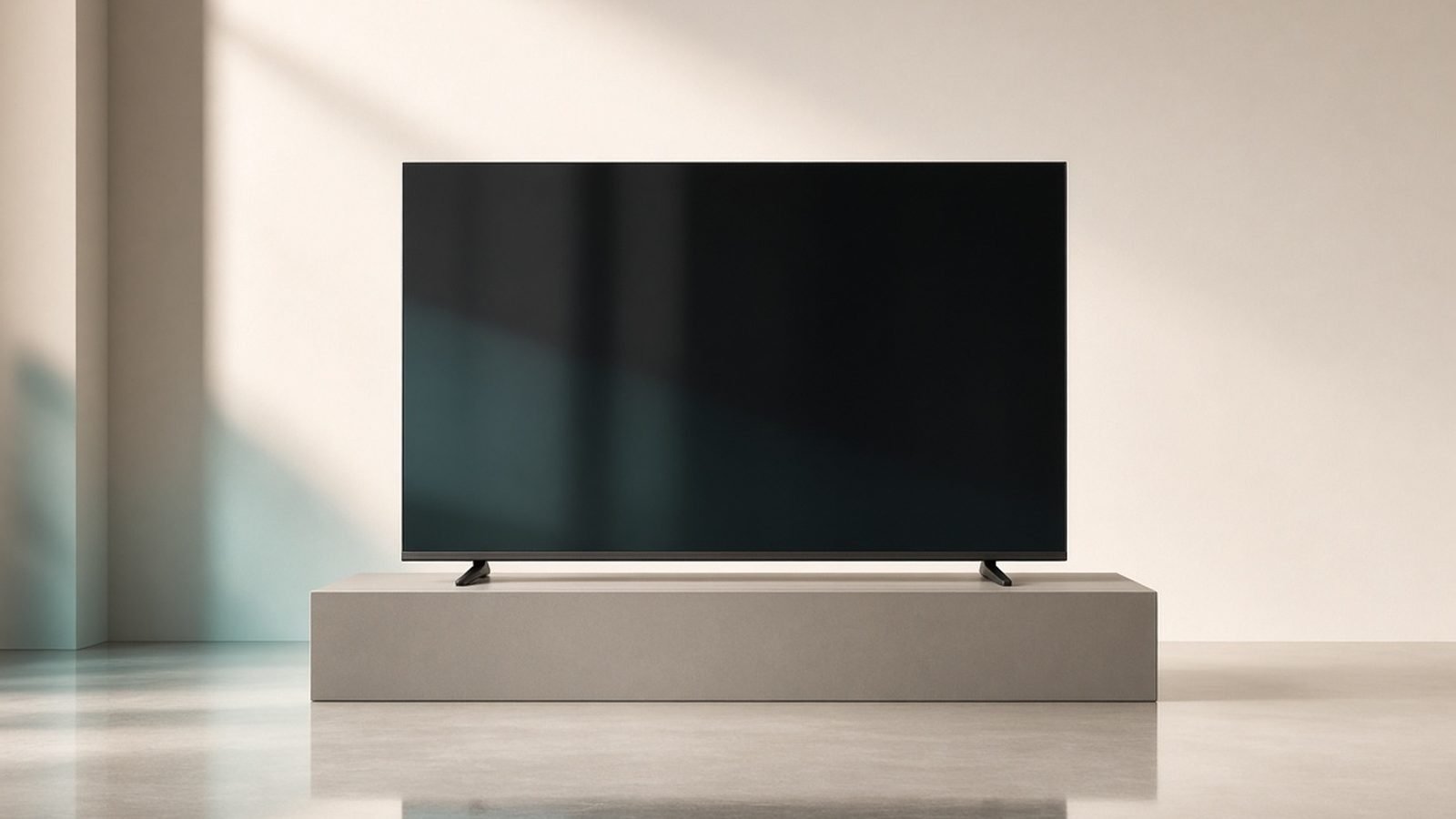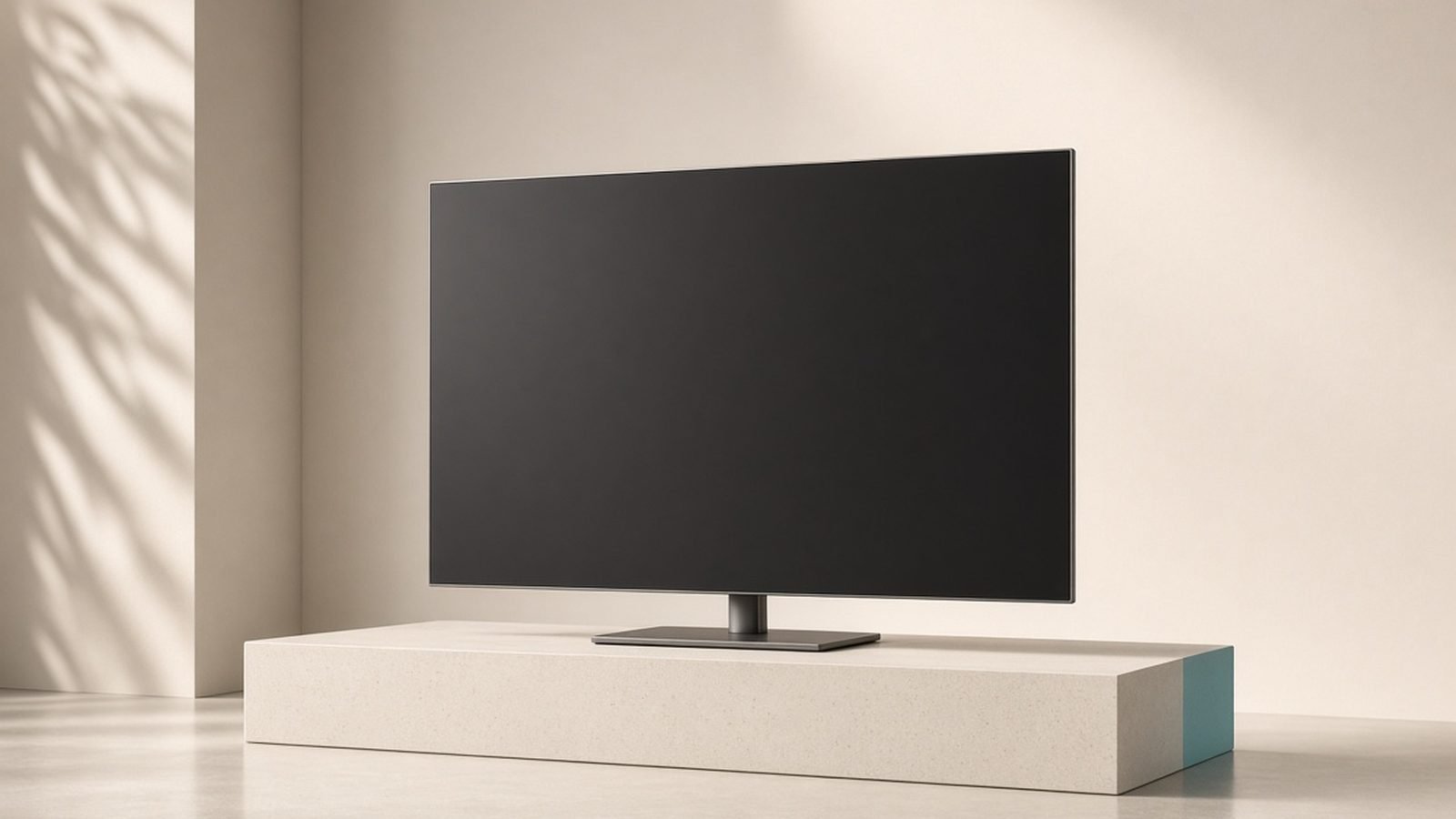
The case for the Samsung S95F rests on two physical facts: a third-generation QD-OLED panel that keeps colour saturated at brightness levels where a white-subpixel OLED washes out, and a matte Glare-Free coating that turns a window into a soft haze instead of a mirror. Together they make this a bright-room television first and a dark-room purist’s television second, before the absence of Dolby Vision even enters the argument. What has changed since this Samsung S95F review was first written is availability: Samsung’s own US store listed every S95F size as out of stock on 9 October 2026, with the 2026 S95H in its place, so for a new buyer the question is now as much where to find one as whether to want one.
Key spec: 65-inch QD-OLED (3rd gen), 165Hz, 4x HDMI 2.1, matte Glare-Free screen, Tizen — $3,299.99 list at Samsung US and out of stock in every size on 9 October 2026; around $1,899 / £2,099 at the July 2026 check.
We base this analysis on Samsung’s published specs and documentation plus aggregated owner and press feedback, not on our own lab measurements. Here is who the S95F is for, and who should look at the LG C5 OLED Review 2026: The Best All-Round TV? instead.
Update, 9 October 2026: Samsung’s US store lists the S95F at $2,199.99 (55-inch), $3,299.99 (65-inch) and $4,299.99 (77-inch) and shows all three as out of stock; its 2026 successor, the S95H, is in stock at $1,999.99 for the 55-inch (marked down from $2,499.99) and $2,499.99 for the 65-inch (from $3,399.99). Newegg listed the 65-inch S95F at $2,319.00, out of stock in both of its listings, and the 55-inch at $2,481.99 through a marketplace seller. In the UK, PriceSpy’s TV listings carried only the 55-inch S95F, from £1,349, and no 65-inch; a Currys search for the 65-inch model code returned no S95F at all and listed the S95H at £2,699 for the 65-inch (save £200) and £2,099 for the 55-inch. The LG C5 this review compares against is also out of stock in every size at LG’s US store (65-inch listed at $1,499.99) but was listed from £1,479 (65-inch) and £1,099 (55-inch) on PriceSpy. We have not assessed the S95H; every judgment on this page concerns the S95F panel.
Samsung S95F at a glance
Pros:
- Exceptional peak brightness for an OLED — outstanding HDR punch
- Matte Glare-Free coating tames reflections better than any glossy rival
- Full gaming stack: 4x HDMI 2.1, 4K/165Hz, VRR, ALLM, Game Bar
- Vivid, high-volume QD-OLED colour
Cons:
- No Dolby Vision (HDR10+ only) — a real gap for movie fans
- Premium price versus discounted 2025 WOLED sets
- Matte finish can slightly lift black levels in a pitch-dark room
- Tizen interface is ad-heavy
Design and build
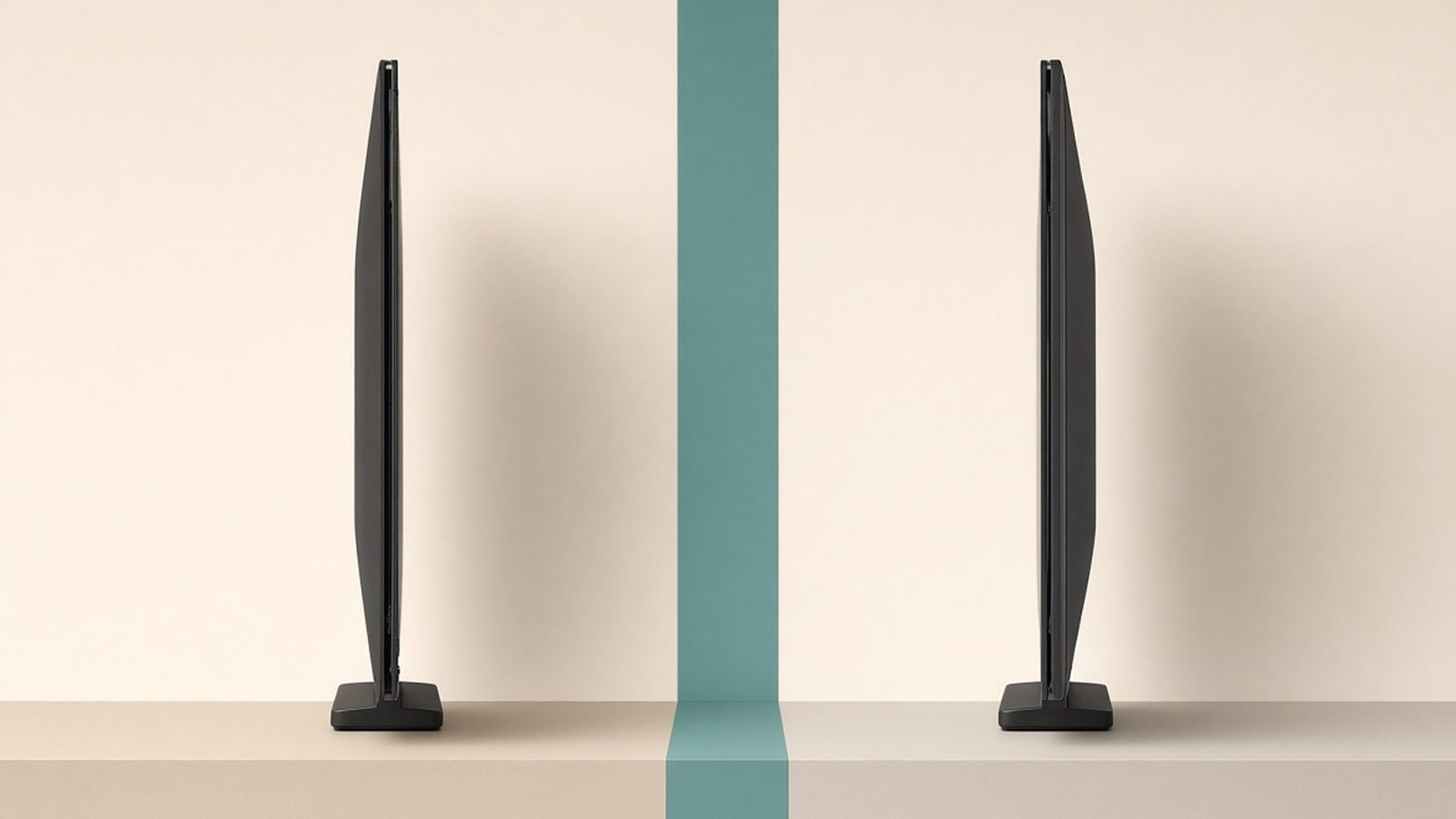
The S95F leans into Samsung’s flagship playbook. The panel itself is remarkably thin because the connections and processing live in a separate One Connect Box, which you can tuck behind the stand or route to a cabinet. That means a single slim cable runs to the screen — a real win for wall-mounters chasing a clean look, and a genuine differentiator versus LG and Sony.
Build quality is excellent, the bezel is barely there, and the central plate stand is stable. The trade-off is practical: the One Connect Box needs its own home, and its cable length limits how far you can separate it from the panel. Most owners find it a fair price for the tidy install.
Picture quality: the QD-OLED brightness advantage
This is the S95F’s headline act. QD-OLED replaces the white sub-pixel of traditional WOLED with quantum dots, producing more saturated colour at high brightness. On samsung s95f brightness nits, Samsung’s third-gen panel is rated among the brightest OLEDs on the market — comfortably beyond the roughly 1,000-nit class of a standard evo WOLED like the LG C5, based on published figures. In practice that means HDR highlights that genuinely sparkle and colour that holds its intensity even in vivid, high-APL scenes.
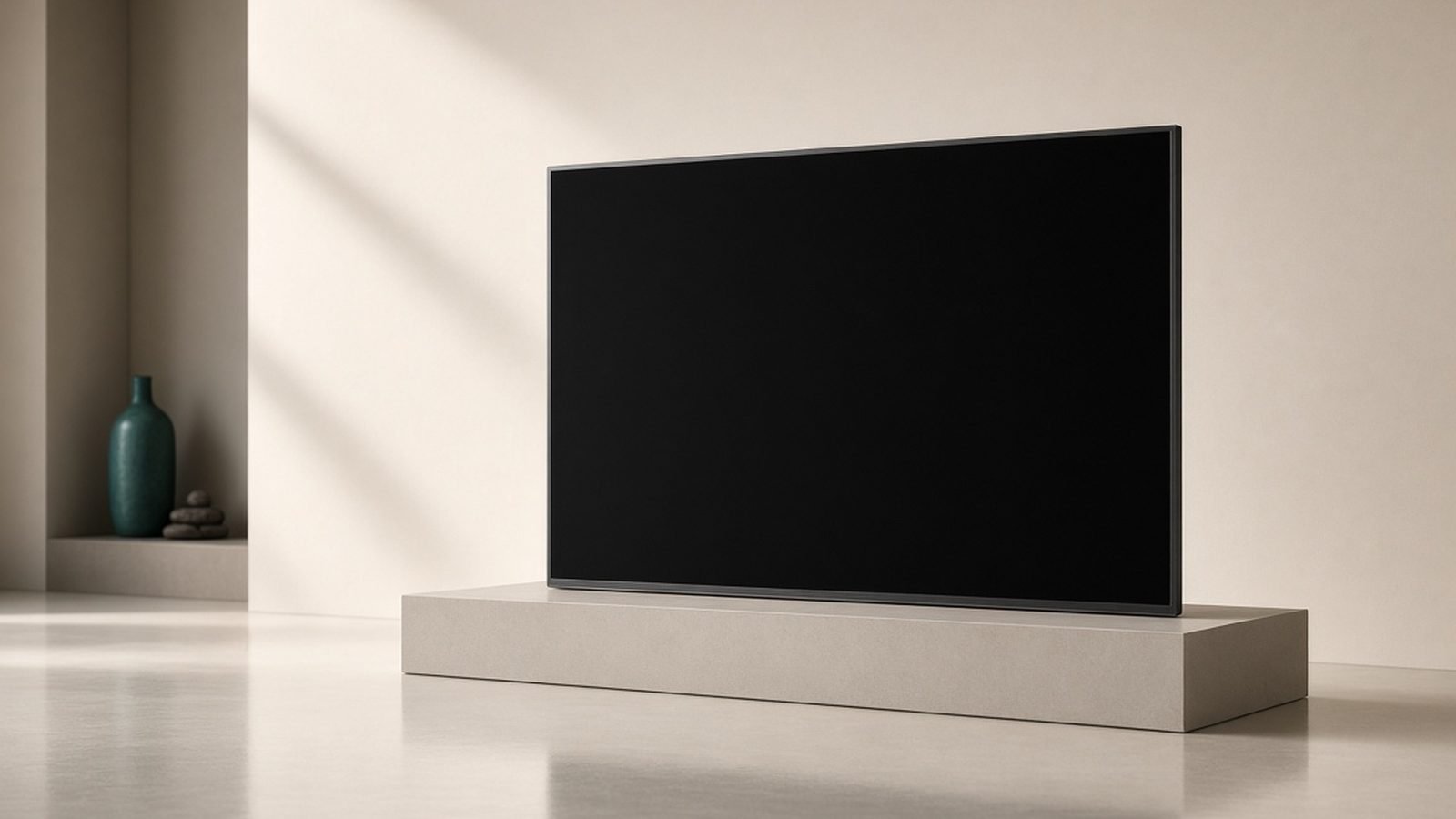
The other star is the samsung s95f glare free matte coating. Rather than a glossy screen that mirrors your windows and lamps, the S95F diffuses reflections into a soft, low-contrast haze. In a bright living room the difference is dramatic — you can watch during the day without hunting for the perfect curtain position. The mild downside: in a fully blacked-out home cinema, the matte layer can very slightly raise perceived black level compared with a glossy OLED. For most rooms, the anti-glare win far outweighs it.
The Dolby Vision problem
Here is the honest catch that defines the S95F. Like all Samsung TVs, it does not support Dolby Vision. It uses HDR10 and HDR10+ instead. Plenty of streaming and disc content is mastered in Dolby Vision, and on those titles the S95F falls back to standard HDR10 rather than the dynamic, scene-by-scene Dolby Vision grade.
In practice the S95F’s own tone-mapping is very good, and HDR10+ is supported by Amazon Prime Video and others, so the gap is smaller than the spec sheet suggests. But if you are a movie enthusiast who values Dolby Vision on 4K Blu-ray and Disney+ and Netflix, this is a real reason to consider an LG OLED instead. It is the single biggest fork in the road when choosing this TV.
Gaming: 4K at 165Hz
For gaming the S95F is superb. All four HDMI ports are 2.1 and the panel runs samsung s95f 165hz gaming — 4K at up to 165Hz — with VRR (including FreeSync Premium Pro), ALLM and very low input lag in Game Mode. The Gaming Hub and on-screen Game Bar make it easy to check frame rate and tweak settings on the fly.
QD-OLED’s near-instant pixel response means no smearing, and the extra brightness makes HDR games look spectacular. Between the 165Hz ceiling and the brightness, competitive PC players get a slight edge over the 144Hz LG C5. If a dedicated desk display is more your thing, our Best Gaming Monitors 2026: OLED, 4K & High Refresh guide covers QD-OLED and mini-LED panels built for that job. For a living-room shortlist, our best gaming TVs guide was re-priced on the same day as this update.
Tizen, sound and living with it
Tizen is quick and feature-rich, with the Gaming Hub, SmartThings integration and Samsung’s ad-supported free TV channels. Like every major platform in 2026 it is ad-heavy on the home screen, which some owners find cluttered. The built-in speakers are better than average for a flat OLED thanks to Samsung’s object-tracking sound, but a soundbar still lifts the experience considerably — especially one from Samsung’s own range for Q-Symphony pairing.
Value and alternatives
At the July 2026 check the S95F was around $1,899 / £2,099 for the 65-inch; on 9 October 2026 Samsung’s US store listed it at $3,299.99 and out of stock in every size, Newegg had the 65-inch at $2,319.00 and out of stock, and the only UK listing on PriceSpy was the 55-inch from £1,349. Its competition therefore comes from two directions that have both moved. Below it, the LG C5 — less bright, glossy rather than matte, but with Dolby Vision — is likewise out of stock at LG’s US store (65-inch listed at $1,499.99), while UK clearance stock was listed from £1,479 for the 65-inch and £1,099 for the 55-inch on PriceSpy. Our full LG C5 OLED Review 2026: The Best All-Round TV? makes that case, and LG C6 vs LG C5 covers its 2026 successor. Above and alongside it sit the 2026 S95H ($2,499.99 at Samsung US and £2,699 at Currys for the 65-inch, in stock), Sony’s Bravia 8 II (65-inch £2,198.99 on PriceSpy; no US price readable from here) and LG’s G5 (65-inch £1,799 on PriceSpy; US price not re-read).
US vs UK: the difference on 9 October was stock, not just price. A US buyer could not order an S95F from Samsung or Newegg and was being offered the S95H at $2,499.99 for the 65-inch; a UK buyer could still find the 55-inch S95F listed from £1,349 on PriceSpy, about £750 below Currys’ £2,099 for the 55-inch S95H, which makes the outgoing set the stronger UK value if the smaller size suits. The 65-inch S95F had no UK listing in the sources read.
If you are still deciding whether QD-OLED, WOLED or premium QLED is right for your room, read our OLED vs QLED 2026: Which TV Tech Is Better? explainer first — it clears up the marketing. And to see how the S95F ranks against every set we rate, it features in both Best OLED TVs 2026: Picture-Quality Kings and the broader Best TVs 2026: OLED, Mini-LED & Budget Picks Compared guide.
| Model | Panel | Peak brightness | Dolby Vision | Price (65”, read 9 Oct 2026) | Best for |
|---|---|---|---|---|---|
| Samsung S95F | QD-OLED (3rd gen) | Class-leading | No | $3,299.99 list, out of stock at Samsung US; UK 55-inch from £1,349, no 65-inch listed | Bright rooms, colour, 165Hz |
| Samsung S95H (2026) | QD-OLED | Not assessed | No | $2,499.99 / £2,699, in stock | The S95F’s replacement — not assessed here |
| LG C5 | evo WOLED | ~1,000 nits | Yes | $1,499.99 list, out of stock at LG US; from £1,479 on PriceSpy | Value, Dolby Vision |
| LG G5 | evo WOLED (4-stack) | Very high | Yes | ~$2,299 (July 2026 check) / £1,799 on PriceSpy | Bright rooms + Dolby Vision |
Prices and stock read 9 October 2026 from samsung.com/us, lg.com/us, newegg.com, pricespy.co.uk and currys.co.uk: one store, one day, not an average. Sony’s US store is not readable from here.
Verdict
So is the Samsung S95F worth it? If you watch in a bright, reflective room and want the most vivid, punchy image an OLED can produce, absolutely — the brightness and the Glare-Free screen are a knockout combination that no glossy rival matches. The 165Hz gaming spec and tidy One Connect install are icing.
The reason to hesitate is Dolby Vision. If your viewing is movie-first and you care about that format on 4K discs and streaming, the LG C5 or LG G5 will serve you better for less or similar money. But taken on its own terms, the S95F is a stunning, bright-room QD-OLED flagship and one of the best TVs of 2026.
One practical caveat as of 9 October 2026: Samsung’s US store and Newegg both showed the S95F out of stock in every size, so a US buyer may have to choose between a retailer’s remaining stock and the 2026 S95H, which we have not assessed. In the UK the 55-inch was still listed from £1,349, and that is the size this review’s value argument now rests on.
FAQ
Is the Samsung S95F brighter than the LG C5?
Yes. Based on published specs, the S95F’s third-generation QD-OLED panel is significantly brighter than the LG C5’s evo WOLED, which sits around the 1,000-nit class on small highlights. The S95F also holds colour saturation better at high brightness, which is why it excels in bright rooms.
Does the Samsung S95F support Dolby Vision?
No. Like all Samsung TVs, the S95F supports HDR10 and HDR10+ but not Dolby Vision. Its own tone-mapping is strong, but content mastered in Dolby Vision plays back in standard HDR10. If Dolby Vision matters to you, an LG OLED is the better fit.
What is the Glare-Free screen and does it help?
It is a matte anti-reflection coating that diffuses light instead of mirroring it. In bright or window-lit rooms it dramatically reduces distracting reflections. The only mild trade-off is that in a fully dark room it can slightly lift perceived black level compared with a glossy OLED.
Is the Samsung S95F good for gaming?
Very. It offers four HDMI 2.1 ports, 4K at up to 165Hz, VRR, ALLM and low input lag, plus the Gaming Hub and Game Bar. The high brightness and instant QD-OLED response make HDR games look excellent, and the 165Hz ceiling edges out 144Hz OLEDs for PC players.
What does the One Connect Box do?
It moves the TV’s inputs and processing into a separate box, so a single slim cable runs to the panel. That makes wall-mounting much cleaner. The trade-off is that the box needs its own space and the connecting cable limits how far you can place it from the screen.
Samsung S95F or LG C5 for most people?
The LG C5 is the better value and adds Dolby Vision, making it the smarter pick for movie-first buyers on a budget. The S95F is the choice for bright rooms, maximum colour and brightness, and 165Hz gaming. On 9 October 2026 both were out of stock at their makers’ US stores, so the choice may come down to which one a retailer still has; in the UK the C5 65-inch was listed from £1,479 and the S95F only in 55-inch form from £1,349. Compare them directly via our LG C5 OLED Review 2026: The Best All-Round TV?.
Zen Tech Hub may earn a commission from links on this page, at no extra cost to you.