If you’re asking what size TV should I buy, here’s the honest 2026 answer: almost certainly bigger than you think. Screen prices have collapsed, 4K resolution hides the pixels, and the number one regret in owner reviews is buying too small. This guide gives you a dead-simple rule, a full viewing distance chart in both feet and metres, and room-by-room picks so you land the right size the first time.
The 30-second answer (the distance ÷ 1.5 rule)
For a 4K TV, take your seating distance in inches and divide by 1.5. That’s the screen size that fills your view the way filmmakers intend, without pixels or strain.
Sitting 6 feet away (72 in / 1.8 m)? 72 ÷ 1.5 = 48, so a 48-55 inch TV is the floor, not the ceiling.
Sitting 8 feet away (96 in / 2.4 m)? 96 ÷ 1.5 = 64, so aim for a 65 inch TV.
Sitting 10 feet away (120 in / 3 m)? 120 ÷ 1.5 = 80, so 75-85 inch is ideal.
This works because 4K packs four times the pixels of 1080p. You can sit twice as close before anything looks soft, which means you can go far larger at the same distance. If you only remember one thing about what size TV should I buy, remember: divide your distance by 1.5, then round up.
TV viewing distance chart by size
Use this TV viewing distance chart as your quick reference. The “ideal” column is the immersive 4K distance (distance ÷ 1.5); the “comfortable max” is the farthest you can sit before the screen starts to feel small.
| TV size | Ideal 4K distance | Comfortable max | Metric (ideal) |
|---|---|---|---|
| 43” | 4.5 ft | 6 ft | 1.4 m |
| 50” | 5.2 ft | 7 ft | 1.6 m |
| 55” | 5.7 ft | 7.5 ft | 1.7 m |
| 65” | 6.8 ft | 9 ft | 2.1 m |
| 75” | 7.8 ft | 10.5 ft | 2.4 m |
| 85” | 8.9 ft | 12 ft | 2.7 m |
Working out how far to sit from a 65 inch TV? Roughly 7 feet (2.1 m) is the sweet spot, and anything up to 9 feet still looks great. This is also the fastest way to settle the classic 55 vs 65 inch TV debate: if your sofa is 7-9 feet from the wall, the 65 wins almost every time.
Why 2026 advice says “go bigger”
A few years ago, jumping up a size meant a real budget hit. Not anymore. The price-per-inch of mid-range Mini-LED and QLED sets has fallen sharply, and the gap between a 55 and a 65 is now often smaller than the cost of a decent soundbar.
Based on aggregated owner feedback across retailer reviews, “I wish I’d sized up” is one of the most common post-purchase comments, while “too big” is rare once the set is on the wall. Your eyes adjust to a larger screen within days. In our research into return and satisfaction patterns, bigger 4K sets at a sensible distance consistently score higher for long-term happiness.
So is a 75 inch TV too big? For a living room where you sit 8 feet or more away, no, it’s arguably the new default. It only becomes “too big” when you’re forced closer than about 6 feet, or when it physically won’t fit the wall or cabinet.
Room-by-room recommendations
Living room (primary viewing). This is where you go big. Most living rooms seat people 8-10 feet from the screen, which points squarely at 65 to 75 inches. A 65 is the safe, universally-loved choice; a 75 is the “wow” upgrade if the wall and budget allow.
Bedroom. Seating is closer, often 5-7 feet from a wall-mounted or dresser-top set, and you may be viewing at an angle from bed. That makes 43 to 55 inches the practical TV size for bedroom use. A smaller OLED here is a genuine luxury.
Kitchen. Glance-and-go viewing from a counter or table, usually under 6 feet. A 32 to 43 inch set is plenty; anything larger dominates the room and wastes money you’d rather spend on the main TV.
When a projector makes more sense
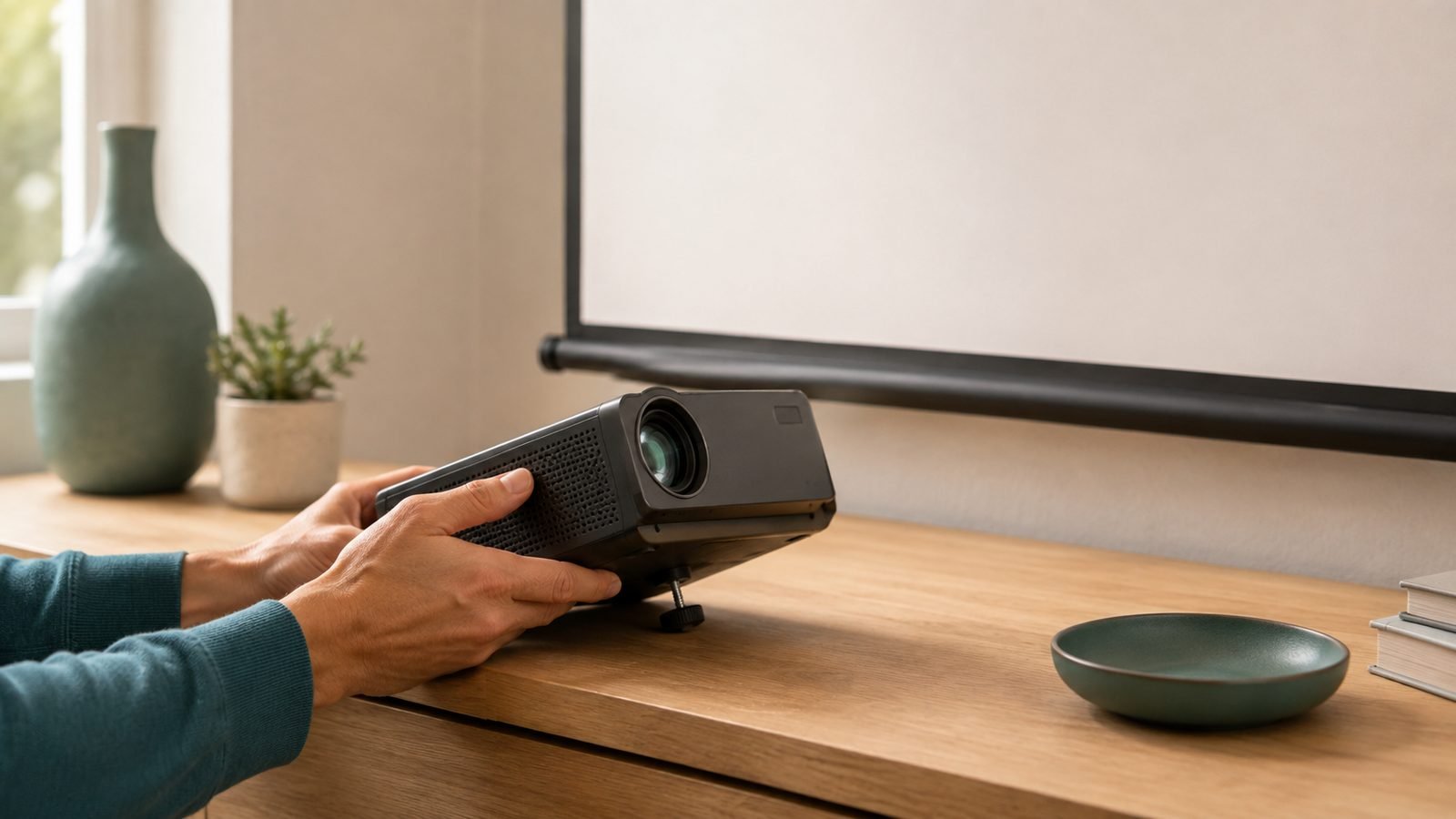
If you want a truly cinematic 100-inch-plus image and you can control the light, a projector can beat any TV on sheer scale per dollar. The trade-offs are real: you need dimming (projectors wash out in bright rooms), a dedicated wall or screen, and you’ll manage bulb or laser life and a separate sound setup.
Our rule of thumb: if your ideal size is 85 inches or below and the room gets daylight, buy a TV. If you’re chasing 100 inches in a room you can darken, read our full breakdown. Projector vs TV for Home Theater: Which in 2026?
Common mistakes to avoid
Forgetting the soundbar. A soundbar sits in front of the screen. If your TV stand is short, a soundbar can creep up over the bottom of the picture. Measure the gap, or wall-mount the bar.
Mounting too high. The single most common ergonomic error. The centre of the screen should sit near eye level when seated, roughly 42 inches (1.05 m) from the floor to screen centre. “Above the fireplace” usually forces your neck up and ruins viewing.
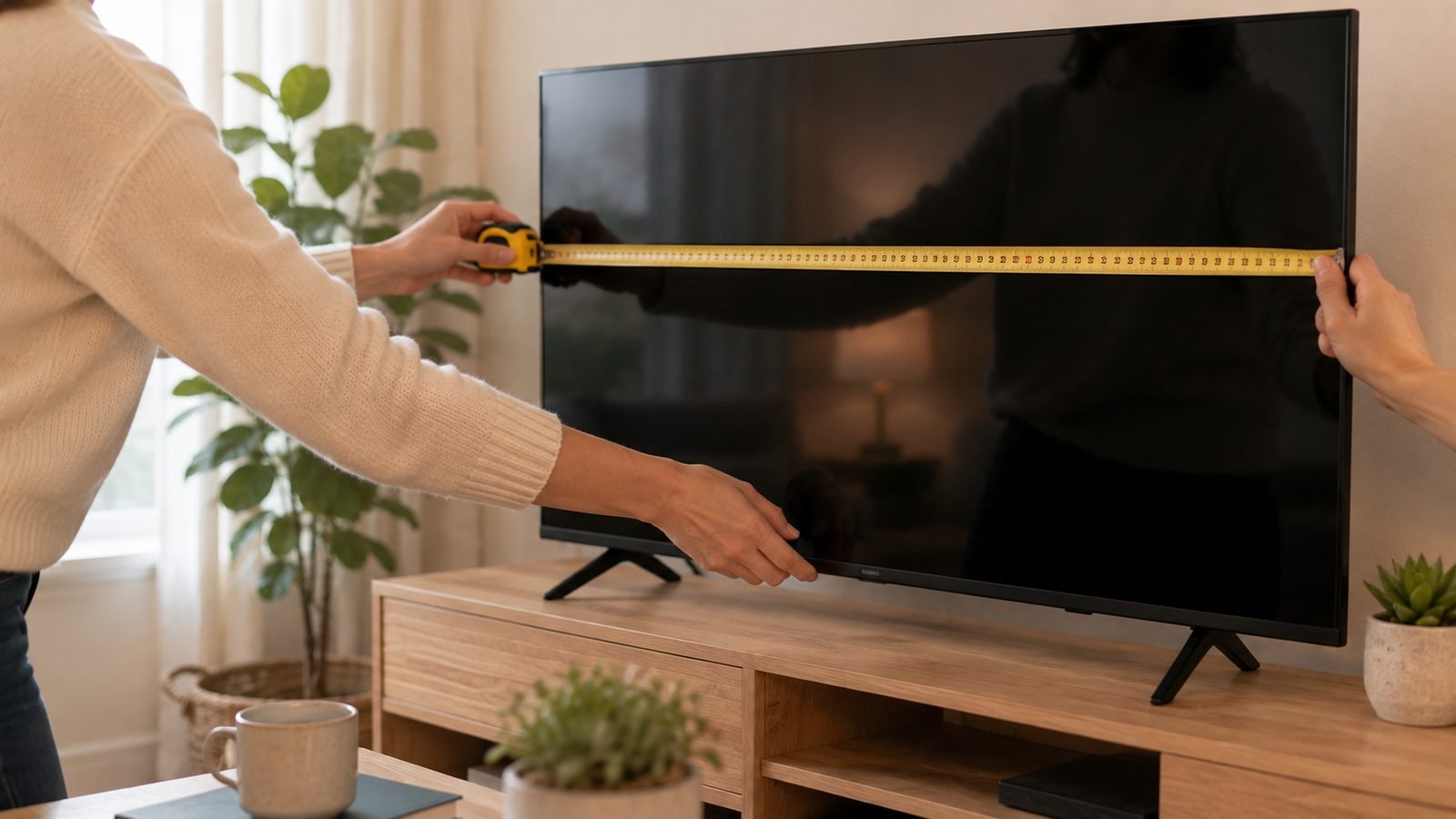
Measuring the old TV, not the space. Your last TV was probably too small. Measure the wall and your seating distance, then use the chart, don’t just match what you had.
Ignoring bright-room performance. Size matters less than brightness in a sunlit room. Best TVs for Bright Rooms 2026: Anti-Glare & High Nits
Best-value TV at each size right now
You’ve picked a size, here are the strongest value anchors we’re tracking in 2026. Prices move constantly, so treat these as “around” figures.
65 inch: TCL QM6K — around $549 / £599
The QM6K is the set that makes the “go bigger” argument for you. QD-Mini LED backlighting delivers punchy HDR and solid brightness at a price that used to buy a basic 55. Ideal for the 7-9 foot living room.
Pros: Excellent price-per-inch; bright, colourful Mini-LED panel; Google TV built in. Cons: Off-angle viewing softens; motion handling is good, not flagship-grade. Best for: Anyone settling the 55 vs 65 inch TV question who wants the 65 without overspending.
Check price: TCL QM6K (65-inch)
75 inch: Hisense U8QG — around $1,299 / £1,599
For large rooms where you sit 10 feet back, the U8QG delivers high brightness and strong contrast that hold up in daylight, making a 75 feel effortless rather than extravagant.
Pros: Very high peak brightness; strong contrast; great big-room value. Cons: Heavy, plan your mount; smart platform can feel busy. Best for: Bright, open-plan living rooms that want cinema scale without OLED money.
Check price: Hisense U8QG (75-inch)
42 inch: LG C5 OLED — around $800 / £899
The size-vs-quality flip. In a bedroom or on a desk you sit close, so a smaller screen with premium OLED contrast beats a bigger, cheaper panel. Perfect near-field picture.
Pros: Reference-grade OLED contrast; gorgeous up close; superb for gaming. Cons: Premium price per inch; less bright than Mini-LED for sunlit rooms. Best for: Bedrooms, studies and gaming desks where you sit 4-6 feet away.
Check price: LG C5 OLED (42-inch)
Verdict: which size wins
For most living rooms in 2026, 65 inches is the new normal and 75 is the aspirational default. Measure your seating distance, divide by 1.5, and round up, not down. Save the smaller OLED for the bedroom, where you sit close enough that picture quality matters more than raw size. When in doubt, go one size bigger than the chart’s minimum. Owner feedback is overwhelmingly clear that people regret small, rarely big.
Ready to shop by size? See our Best 55-Inch TVs Under $500 in 2026 (Mini-LED for Less) and Best Budget OLED TVs 2026: Cheapest Ways Into OLED guides, or start at the TVs & Displays.
FAQ
What size TV should I buy for a living room? For a typical living room where you sit 8-10 feet from the screen, a 65 or 75 inch 4K TV is the sweet spot. Use the distance-divided-by-1.5 rule: 8 feet points to a 65, 10 feet to a 75-85. Most people who buy a 65 wish they had gone to 75; almost nobody regrets sizing up.
Is a 75 inch TV too big? Only if you sit closer than about 6 feet or it won’t physically fit. At 8 feet or more it’s ideal and increasingly the default choice. A 75 inch 4K screen fills your field of view without revealing pixels, and your eyes adapt to the size within a few days of daily viewing.
How far should I sit from a 65 inch TV? Around 7 feet (2.1 m) is ideal for a 65 inch 4K TV, with anything from 6 to 9 feet looking great. Closer than 5 feet and the screen can feel overwhelming; farther than 9 and you lose the immersion. If your sofa sits 7-9 feet from the wall, a 65 is the natural pick.
What TV size is best for a bedroom? Bedroom viewing distances are shorter, often 5-7 feet, so 43 to 55 inches is usually right. A smaller high-quality OLED like a 42 inch panel is a comfortable, premium choice for viewing from bed or a desk, and avoids the wall-dominating bulk of a living-room-sized set.
Are TV sizes measured differently in the UK? No. TV sizes are quoted as the diagonal screen measurement in inches worldwide, so a 55 inch TV is identical in the US and UK. The only difference is that UK listings often add the metric footprint. For viewing distance, use our chart’s metre column, which mirrors the inch and feet figures.
Zen Tech Hub may earn a commission from links on this page, at no extra cost to you.