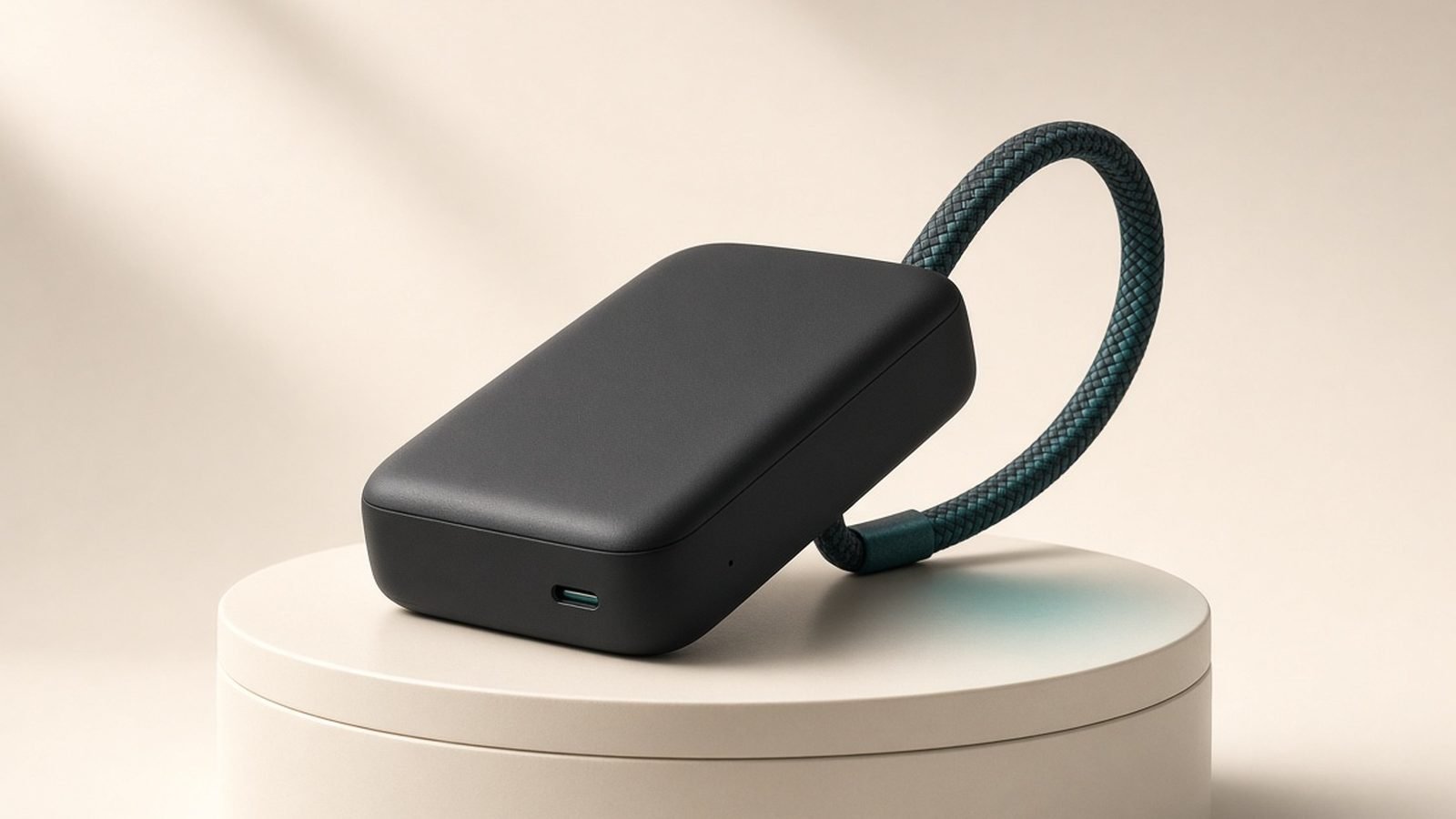
If you’ve searched for an Anker laptop power bank review, you’re probably staring at the same question we were: is a 25,000mAh brick with built-in cables genuinely better than the cheaper, higher-wattage competition? Short answer: for most travellers, yes. The Anker Laptop Power Bank (25,000mAh, 165W) — model number A1695 — has become one of Amazon’s best-selling premium power banks for a reason, and after digging through the specs, the physics, and hundreds of owner reports, we think the reason holds up.
This review covers what the spec sheet won’t tell you: how much of that 25,000mAh you actually get into a laptop, whether the retractable cables survive real use, and where it loses to the UGREEN Nexode 200W and Anker’s own Prime.
Verdict Up Front
Score: 8.5/10. The Anker Laptop Power Bank nails the thing that matters most in a travel battery: you will never arrive somewhere without a cable. Two built-in USB-C cables — one retractable, one doubling as a carry strap — plus 165W of total output and a 99Wh rating that sails through airport security. It’s not the cheapest 25K bank, it’s not the most powerful, and at roughly 595g it’s not light. But it’s the one we’d actually pack.
Score basis: research analysis of official specs, independent testing and owner feedback — not first-party measurement.
| Anker Laptop Power Bank (25K, 165W) | UGREEN Nexode 25K 200W | Anker Prime 26,250mAh 300W | |
|---|---|---|---|
| Capacity | 25,000mAh (~99Wh) | 25,000mAh (~99Wh) | 26,250mAh (~99.6Wh) |
| Max total output | 165W | 200W | 300W |
| Built-in cables | Two USB-C (one retractable) | None | None |
| Display | Yes (basic) | Yes | Yes (detailed) |
| Airline-legal | Yes, under 100Wh | Yes | Yes |
| Typical price | around $110 / £100 | around $95 / £90 | around $200 / £180 |
| Best for | Frequent travellers, one-laptop users | Value hunters with their own cables | Power users charging multiple laptops |
Check price: Anker Laptop Power Bank (25,000mAh, 165W)
Price and Where to Buy (US and UK)
The Anker Laptop Power Bank lists at $119.99 in the US and £99.99 in the UK, but it rarely sits at full price for long. Street pricing routinely dips to around $90–110 during Amazon events and Anker’s own frequent coupon cycles. In the UK, sub-£85 deals appeared multiple times over the past year, so if you’re not in a hurry, set a price alert.
For anyone searching “anker power bank uk” specifically: the UK model is identical hardware to the US version — same A1695 model number, same 99Wh rating — so imported reviews translate directly.
Check price: Anker Laptop Power Bank (25,000mAh, 165W)
Design and the Retractable Cable Party Trick
The headline feature is the pair of built-in cables, and it’s genuinely more than a gimmick. The first is a retractable USB-C cable that pulls out to roughly 0.7m and snaps back into the housing — Anker rates the mechanism for thousands of retractions (the company claims 20,000 pulls in its durability testing). The second is a fixed USB-C cable that doubles as the carry strap, rated to hold the bank’s own weight many times over.
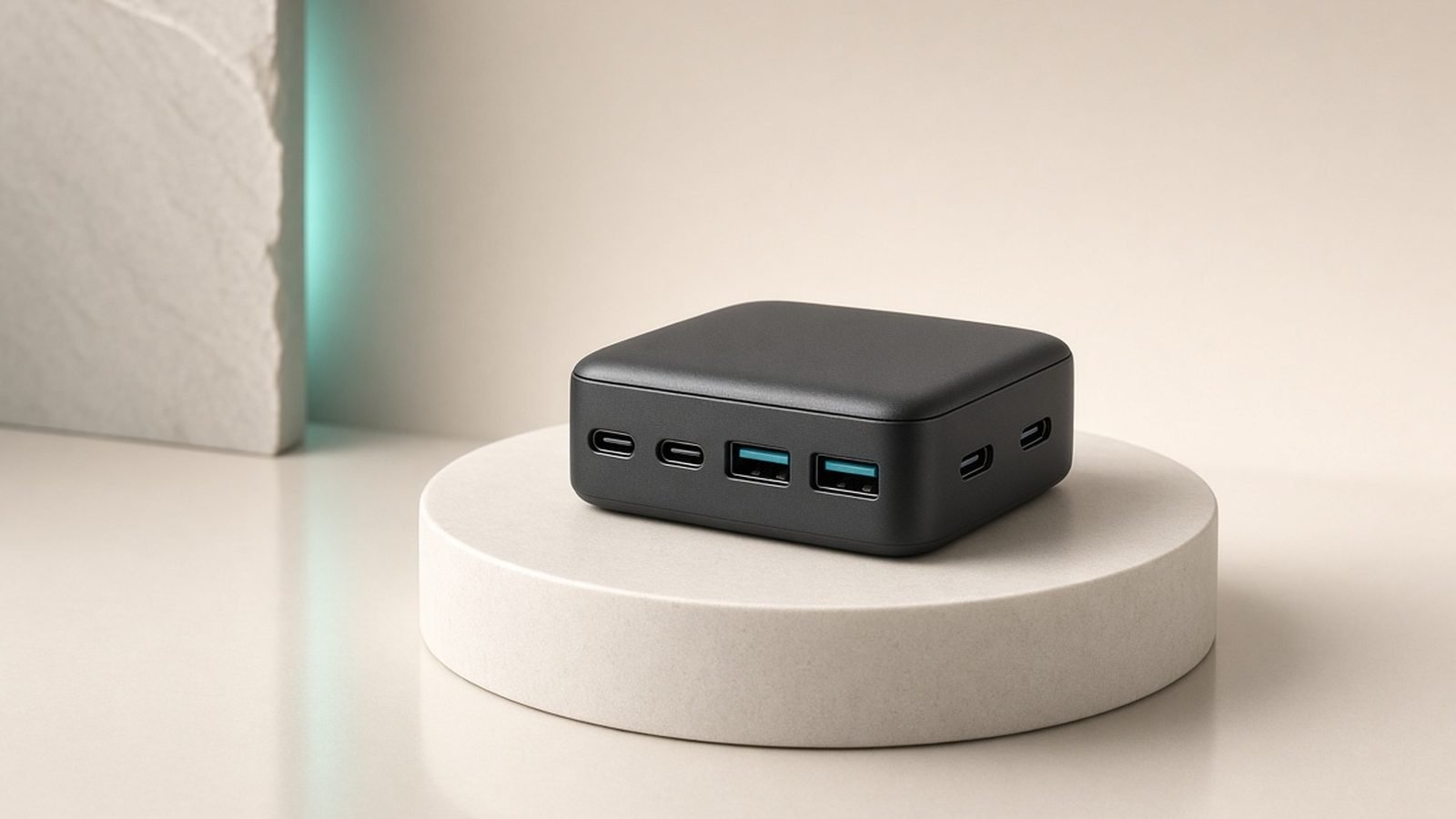
Add a standard USB-C port and a USB-A port and you can charge four devices simultaneously. That’s the real pitch of an Anker power bank built in cable design: the cable you forgot to pack no longer matters. Based on hundreds of owner reports, the retractable mechanism holds up well over the first year of use; the most common gripe isn’t breakage, it’s that the retractable cable is short. At around 0.7m, it works fine with the bank sitting next to your laptop, but you won’t be charging a phone in bed from a socket across the room.
A small display shows charge status, which is welcome at this price — though it’s far more basic than the detailed wattage readouts on Anker’s Prime line.
The trade-off is heft. At approximately 595g (about 1.3lb), this is a dense brick roughly the size of a tall glasses case. That’s normal for 25K-class banks, but if you were hoping for something pocketable, look at 10,000mAh options instead — our Best Power Banks for Laptops in 2026: 100W+ Picks Compared guide covers lighter picks.
Pros
- Two built-in USB-C cables mean you’re never stranded without one
- 165W total output charges a laptop and phone together without throttling to a crawl
- 99Wh rating is airline-legal worldwide, no approval needed
- Charges four devices at once (two cables, one USB-C port, one USB-A)
- Strap-cable design is genuinely useful for carrying
Cons
- Built-in cables are short (~0.7m retractable)
- Around 595g — you’ll notice it in a small bag
- Costs more than higher-wattage rivals like the UGREEN Nexode 200W
- If a built-in cable does eventually fail, it’s not user-replaceable
Real-World Charging Tests: MacBook Pro, iPhone, Steam Deck
We’ll be straight with you: this section is built from spec analysis, efficiency math, and aggregated owner testing rather than our own lab bench — and we’d rather tell you that than invent numbers. Here’s what the evidence consistently shows.
MacBook Pro. The bank delivers up to 100W from its primary USB-C output, enough to charge a 14-inch MacBook Pro at effectively full speed and keep a 16-inch model charging under heavy load. With roughly 96–99Wh inside and real-world conversion losses, owners consistently report getting a 14-inch MacBook Pro from low battery to around 90–100%, or roughly 65–75% added to a 16-inch Pro’s 100Wh battery. That’s one solid laptop rescue per charge — not two.
iPhone. Expect approximately 4–5 full charges for an iPhone 16 or 15 Pro, which matches the efficiency math (more on that below). The USB-A port covers legacy accessories like earbuds and older Kindles.
Steam Deck. With a ~40Wh internal battery, the Steam Deck gets roughly 1.5–1.8 full charges, and the bank’s 100W output means it charges while you play, even in demanding games. Owner reports on this pairing are strongly positive — it’s become a quietly popular Deck accessory.
The 165W figure is the total across all ports. In practice that means 100W to a laptop plus 65W split across other devices simultaneously — a realistic “laptop plus phone plus earbuds” scenario works without anything slowing to a trickle.
Recharge Speed and Pass-Through
The A1695 accepts up to 100W input, and Anker quotes a full recharge in well under two hours with a suitably powerful charger — owner reports back this up, with most landing in the 90-minute-to-two-hour range from a 100W GaN charger. From a weaker 30W phone charger, expect closer to four hours. If you don’t own a 100W wall charger yet, that’s the missing half of this setup; see our Best GaN Chargers 2026: 30W to 160W Compared & Ranked roundup.
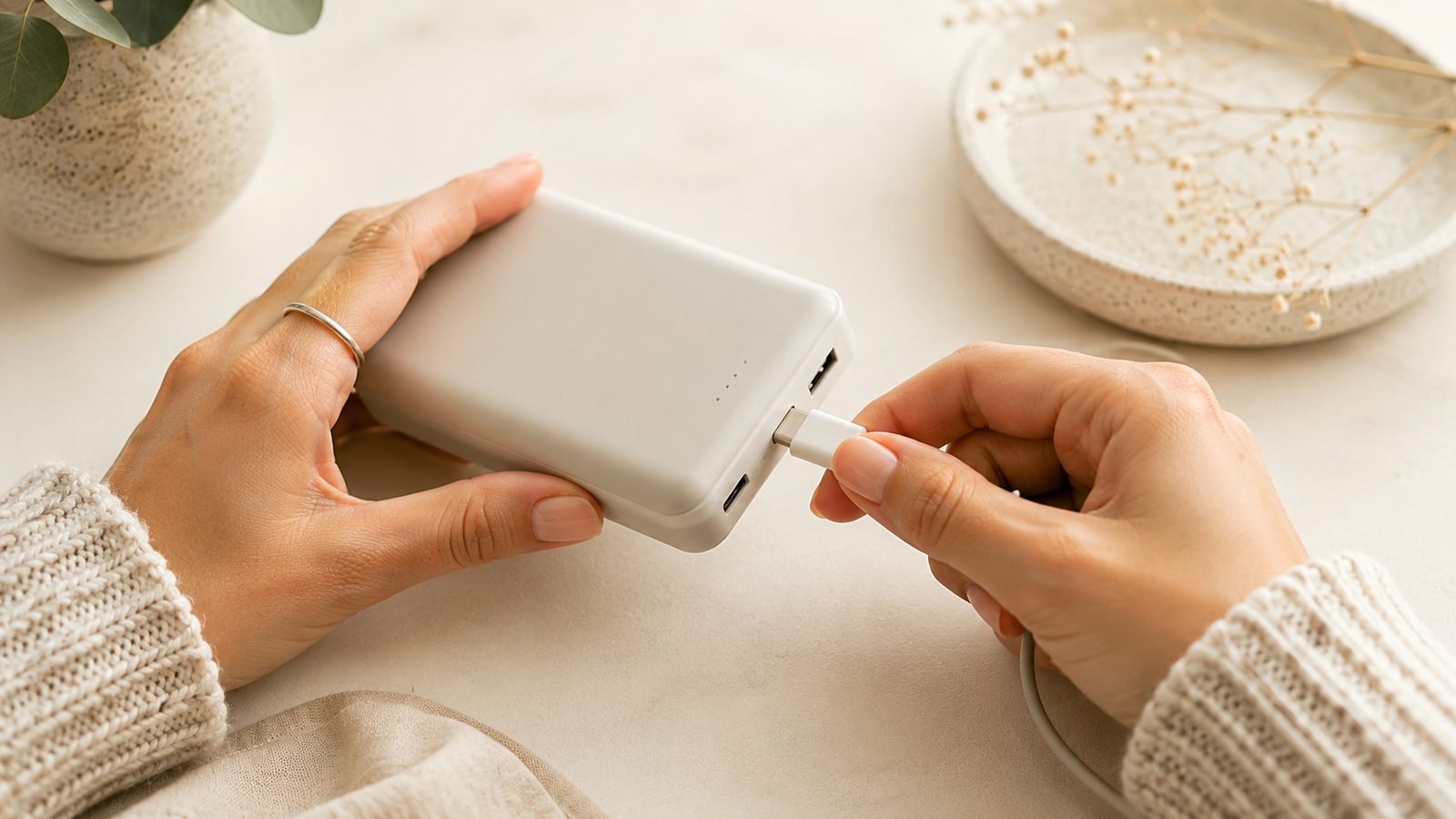
Pass-through charging is supported: plug the bank into the wall and your devices into the bank, and everything charges overnight from one socket. Handy in hotel rooms with exactly one reachable outlet. As with all pass-through setups, the bank runs warm doing this, so don’t bury it under a pillow.
Capacity Reality Check: How Much of 25,000mAh You Actually Get
Here’s the part most anker 25000mah 165w review write-ups skip. The 25,000mAh figure is measured at the battery cells’ nominal voltage — multiply it out and you get the ~99Wh rating on the casing. But you never get 99Wh into your devices, because voltage conversion, cable resistance, and heat all take a cut.
In our research across owner-measured discharge tests, this bank’s usable output lands at roughly 75–85% efficiency depending on load — call it 75–82Wh delivered under typical laptop charging, and a little better at lower phone-charging wattages. That’s normal-to-good for the class; anything above 80% at 100W output is genuinely strong, and the A1695 sits right around the class average rather than leading it.
What that means in plain terms:
- ~75–80Wh usable at laptop wattages
- One full charge of a 13–14-inch ultrabook (50–70Wh battery), with change
- ~70% of a 16-inch MacBook Pro
- 4–5 charges of a current flagship phone
If a listing anywhere implies you’ll get two full laptop charges from any 25K bank, walk away. Physics disagrees.
Flying With It: 99Wh Airline Rules
This is where the capacity choice looks deliberate. Airlines worldwide — per FAA and IATA/CAA rules — allow lithium batteries up to 100Wh in carry-on baggage without any airline approval. The Anker 165W power bank airplane question therefore has a clean answer: at 99Wh, it’s legal on every commercial flight, no paperwork, no gate-agent debate. The Wh rating is printed clearly on the casing, which is exactly what security officers look for.
Two reminders: power banks must go in carry-on, never checked luggage, and a handful of Asian carriers now restrict using power banks in-flight even though carrying them is fine. Check your airline if you planned to top up mid-flight.
How It Compares to UGREEN Nexode 200W and Anker Prime
UGREEN Nexode 25,000mAh 200W — the value rival
The Nexode is the obvious cross-shop: same 25,000mAh capacity, more total output (200W vs 165W), a higher single-port ceiling on paper, and a lower price at around $95 / £90 — frequently less on deal. If you already carry good USB-C cables and want maximum watts per pound, it’s the rational pick, and it’s why our Anker vs UGREEN in 2026: Which Charging Brand Wins? comparison is one of our most-read pages.
Pros: more power for less money; strong display. Cons: no built-in cables, so you’re back to packing (and forgetting) your own; UGREEN’s warranty support gets more mixed owner feedback than Anker’s in our research.
Check price: UGREEN Nexode 25,000mAh 200W
Anker Prime Power Bank (26,250mAh, 300W) — the step-up
The anker laptop power bank vs prime question comes down to how many laptops you’re feeding. The Prime pushes 300W total with 140W on a single port, adds a crisp info display showing per-port wattage, and supports a (separately sold) charging dock. At around $200 / £180 it costs nearly twice as much, weighs more, and includes zero built-in cables.
Pros: enough output for two laptops at full speed; the best status display in the business. Cons: price; weight; you’re paying for headroom most people never use.
Check price: Anker Prime Power Bank (26,250mAh, 300W)
Our take: the Nexode wins on spreadsheet value, the Prime wins on raw power, but the A1695 wins on the trait that decides real trips — it’s self-contained. For a broader field, our Accessories & Charging hub and Best Power Banks for Laptops in 2026: 100W+ Picks Compared guide cover every class from pocket banks to 300W monsters.
Who Should Buy It (and Who Shouldn’t)
Buy the Anker Laptop Power Bank if:
- You travel regularly with one laptop and a phone, and you’ve ever arrived somewhere cableless
- You fly often — the clearly printed 99Wh rating makes security painless
- You own a Steam Deck or tablet and want charge-while-playing headroom
- You want Anker’s generally reliable warranty support behind a battery you’ll use for years
Skip it if:
- You want maximum wattage per pound spent — get the UGREEN Nexode 200W
- You charge two laptops at once — get the Anker Prime 300W
- You mostly top up a phone — a 10,000mAh bank costs a third as much and weighs 200g
- Cable length matters to you — the built-in leads are short, and the fix (carrying a longer cable) undermines the whole pitch
So, is Anker laptop power bank worth it? At street prices around $90–110 / £85–100: yes, comfortably. At full list price, the UGREEN gets harder to ignore.
Check price: Anker Laptop Power Bank (25,000mAh, 165W)
FAQ
Can I take the Anker Laptop Power Bank on a plane?
Yes. It’s rated at 99Wh, under the 100Wh limit that the FAA, UK CAA, and IATA guidelines allow in carry-on baggage without airline approval. The rating is printed on the casing for security checks. It must travel in your carry-on, never in checked luggage, and some Asian airlines restrict in-flight use, so check before topping up mid-air.
How many times will it charge a MacBook Pro?
Roughly once. With around 75–80Wh of usable output after conversion losses, expect a full charge plus spare change on a 14-inch MacBook Pro, or about 65–75% of a 16-inch model’s 100Wh battery. No 25,000mAh power bank can fully charge a 16-inch MacBook Pro twice — treat claims otherwise as marketing.
What is the Anker A1695?
A1695 is the model number of the Anker Laptop Power Bank (25,000mAh, 165W) reviewed here — the version with two built-in USB-C cables, one retractable and one that doubles as a carry strap. You’ll see the same number on US and UK listings, which is useful for confirming you’re buying the current model rather than an older 25K Anker bank.
How long do the retractable cables last?
Anker rates the retractable mechanism for 20,000 retractions — several years of daily use. Aggregated owner feedback over the product’s first years on sale shows very few mechanism failures. The realistic caveat: the cables aren’t user-replaceable, so if one fails outside Anker’s warranty period, you’re down to the standard ports.
Can it charge a laptop and phone at the same time?
Yes. The 165W total budget allows up to 100W to a laptop while other ports share the remaining 65W — enough for a phone at near-full speed plus earbuds. All four outputs (two built-in cables, one USB-C port, one USB-A port) can run simultaneously.
Why has my Anker power bank stopped charging?
Usually it’s a protection circuit tripping, a low-quality cable, or the bank sitting fully drained too long. Most cases resolve with a reset (hold the power button) or a different cable and charger. We’ve collected every fix that actually works in our Power Bank Not Charging? 9 Fixes That Actually Work guide before you contact Anker support.
Final Score
8.5/10. The Anker Laptop Power Bank (25K, 165W) isn’t the most powerful bank you can buy, and this Anker laptop power bank review has been clear about where the UGREEN Nexode and Anker Prime beat it. But it solves the problem travellers actually have — forgotten cables, airport security, one-socket hotel rooms — better than anything near its price. Buy it on sale and it’s an easy recommendation.
Zen Tech Hub may earn a commission from links on this page, at no extra cost to you.