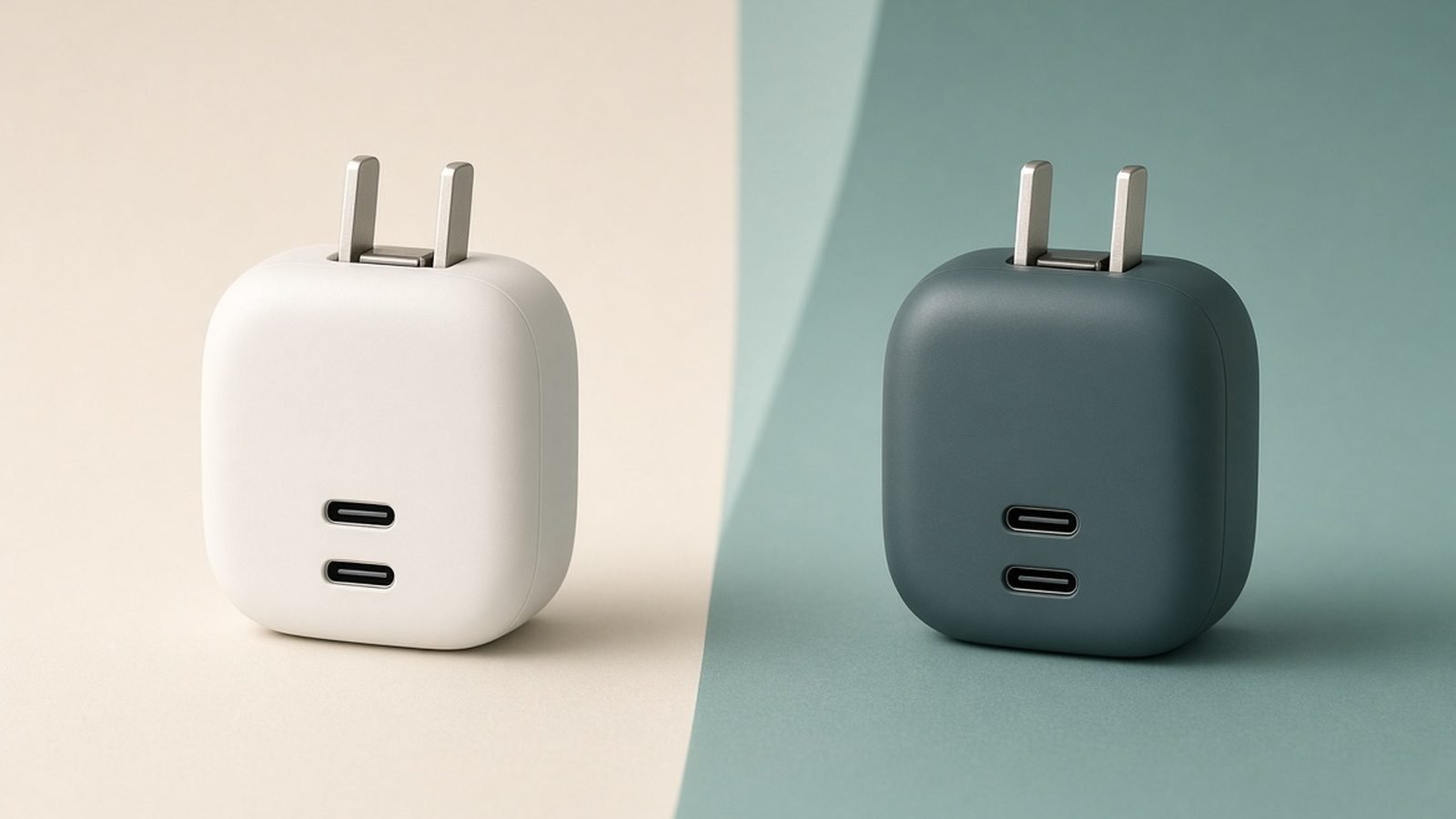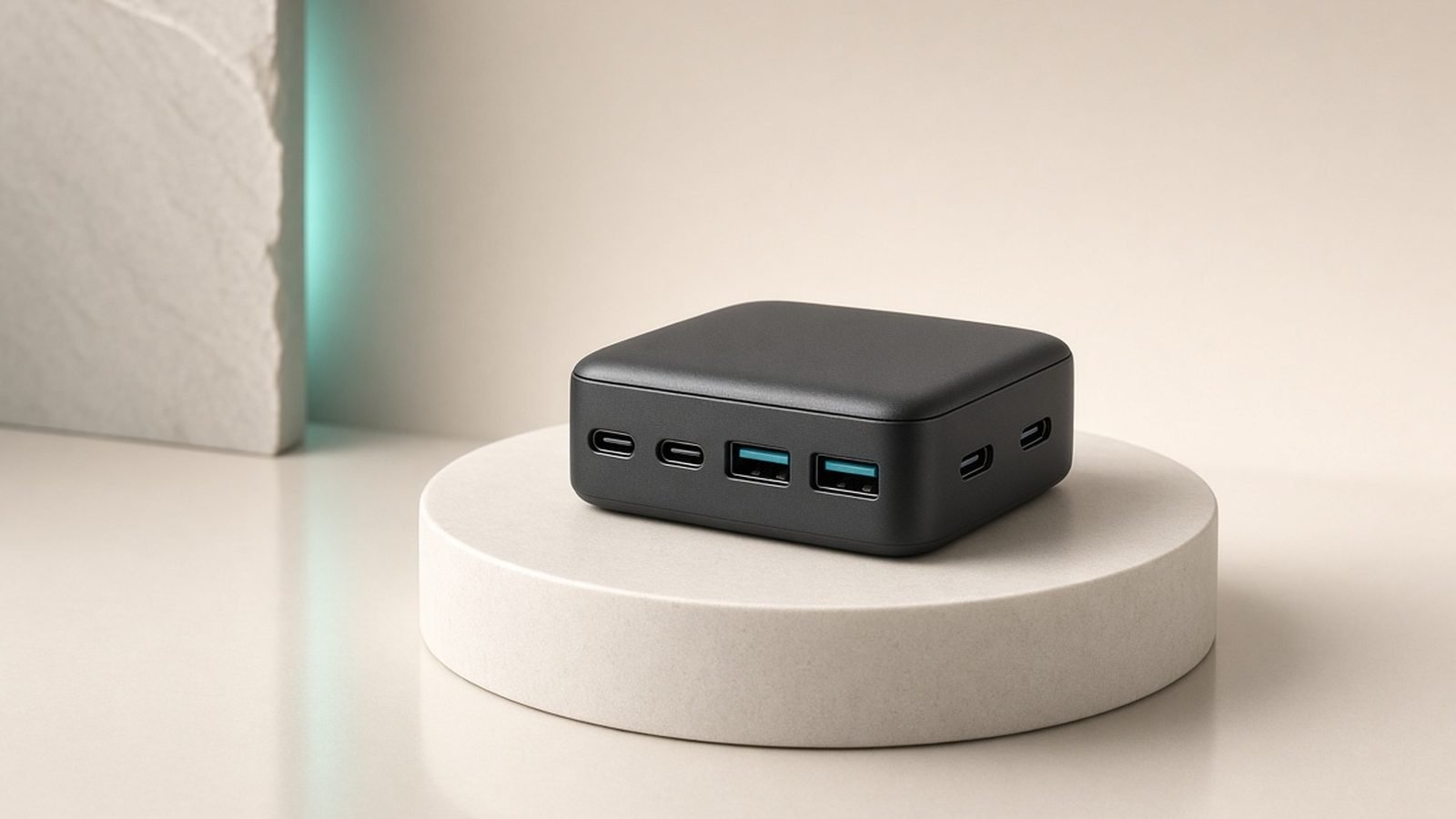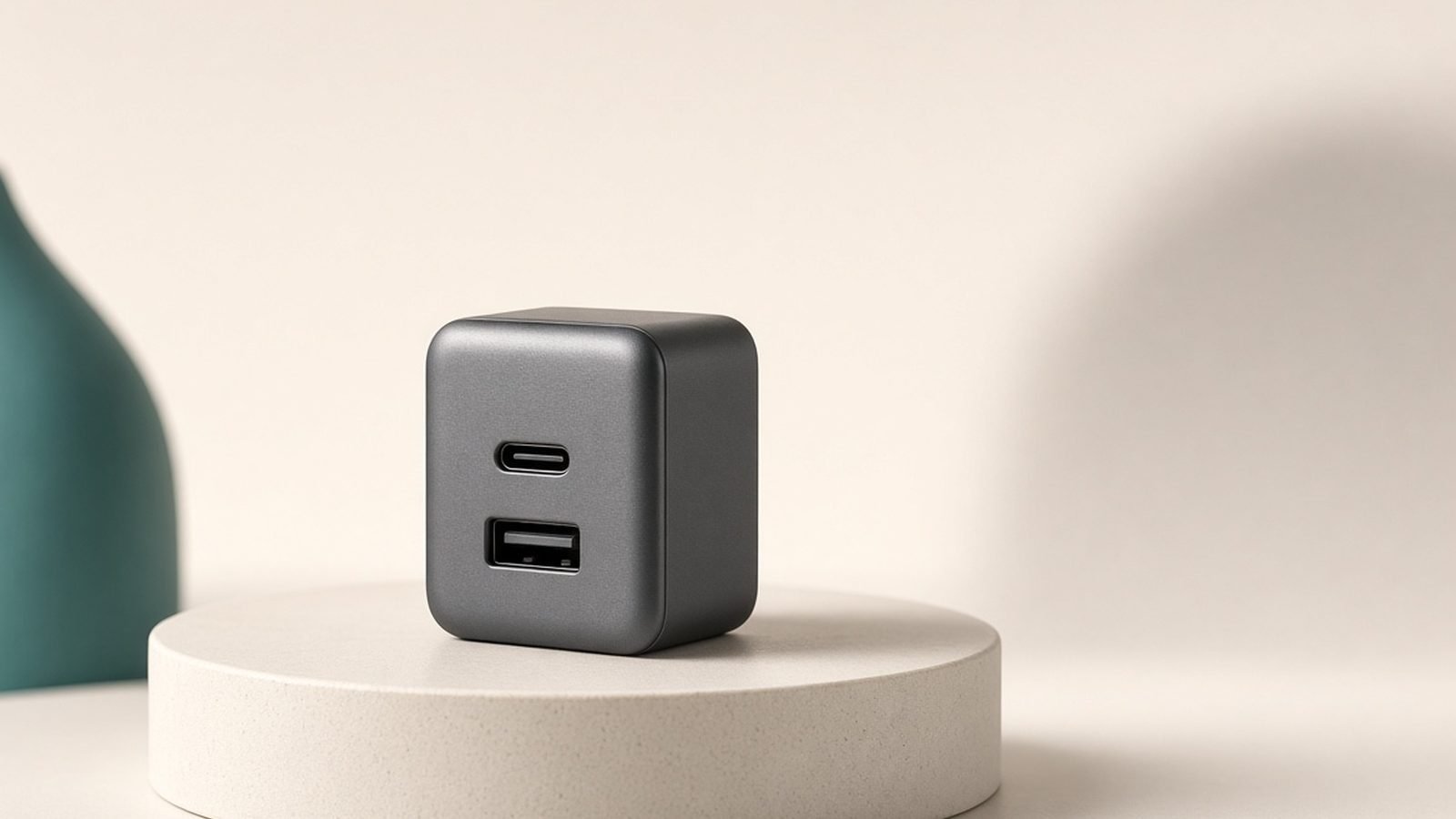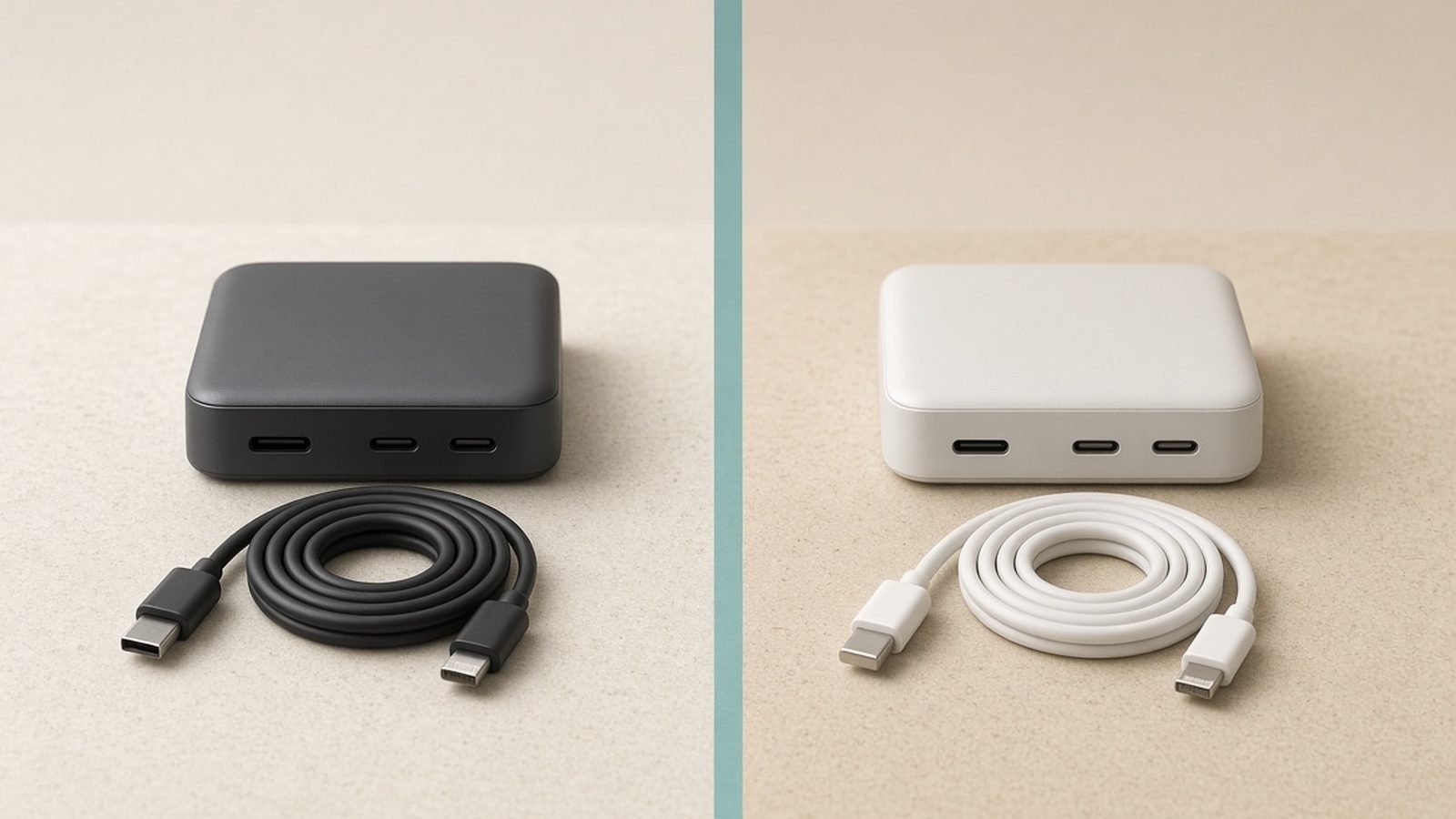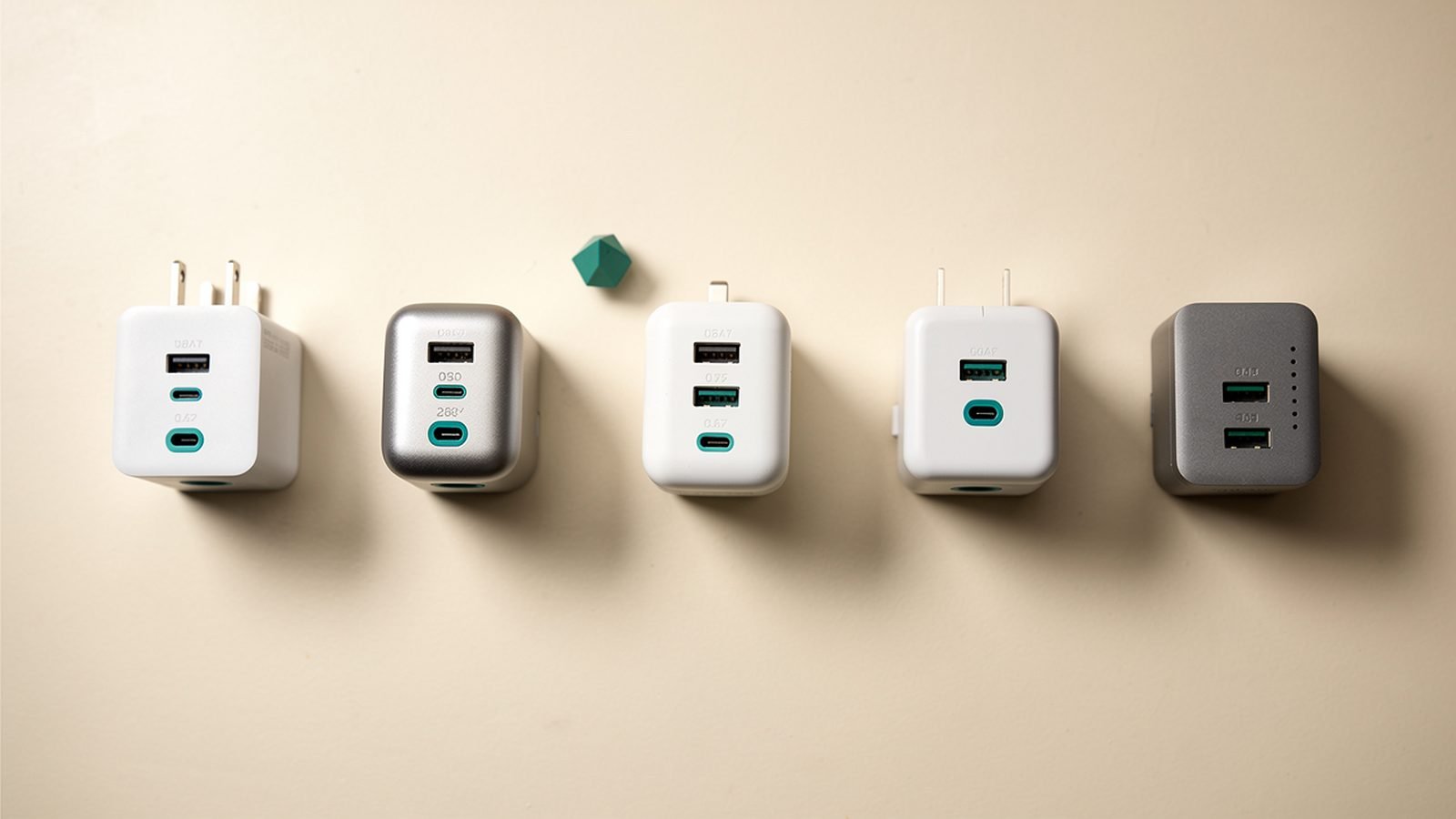
The best GaN charger replaces every power brick in your bag with one block roughly the size of a matchbox — and in 2026 there is no good reason to buy an old-style silicon charger at all. Gallium nitride (GaN) chargers run cooler, waste less energy, and deliver two to three times the wattage of a silicon charger the same size.
The problem is choice. Anker, UGREEN, Baseus and a hundred no-name brands all sell “100W GaN” bricks, and the spec sheets hide the details that actually matter: how power splits across ports, how the charger behaves when you plug in a second device, and whether the brand honours its warranty.
We’ve spent weeks researching the current GaN market — digging through spec sheets, certification databases, teardown reports and hundreds of owner reviews — to rank the six chargers genuinely worth your money, organised by wattage tier so you can jump straight to what you need. This is the second pillar in our charging guide series; for desk setups with four or more devices, see our companion guide. Best Charging Stations for Multiple Devices in 2026
Quick Picks: Best GaN Chargers by Use Case
| Charger | Best For | Max Output | Ports | Price (US / UK) |
|---|---|---|---|---|
| Anker Prime Charger 100W | Best overall | 100W | 2× USB-C, 1× USB-A | around $85 (often $45–60) / £64.99 |
| UGREEN Nexode Pro 100W | Best value 100W | 100W | 2× USB-C, 1× USB-A | around $75 (street ~$56) / £59.99 |
| Anker Nano 65W | Best for travel | 65W | 2× USB-C, 1× USB-A | around $39.99 / £35.99 |
| UGREEN Nexode Pro 160W | Best high-power | 160W (140W single port) | 3× USB-C, 1× USB-A | around $119.99 / £99.99 |
| Baseus PicoGo 100W | Best budget 100W | 100W | 2× USB-C, 1× USB-A | around $59.99 / £49.99 |
| Anker 511 Nano 3 (30W) | Best budget single-port | 30W | 1× USB-C | around $22.99 / £19.99 |
What Is GaN and Why It Beats Old Silicon Chargers
Gallium nitride is a semiconductor material that switches current far faster than the silicon transistors used in traditional chargers. Faster switching means smaller components, less heat, and less wasted energy — which is why a 100W GaN brick can be half the size of Apple’s old 96W silicon charger.
In the gan vs silicon charger debate, the practical differences come down to three things:
- Size and weight. GaN chargers pack roughly 2–3x the power density. A 65W GaN charger is about the size of a 20W silicon iPhone brick.
- Heat. GaN designs typically run noticeably cooler under sustained load, which matters for longevity — heat is what kills chargers and degrades nearby cables.
- Efficiency. Modern GaN chargers hit 92–95% conversion efficiency versus roughly 87–90% for silicon. Trivial on one phone; meaningful if you charge a laptop daily for years.
The one caveat: GaN is a premium on the price tag, usually $10–20 over an equivalent silicon unit. Every pick below earns that premium. If you’re also untangling which cables can actually carry 100W+, our cable guide covers e-marked cables and why they matter. USB-C Cable Types Explained: Speeds, Watts and Labels
Best Overall: Anker Prime Charger 100W (3-Port)
Around $84.99 / £64.99 — but frequently $45–60 on sale
If you want one charger to power a laptop, phone and earbuds simultaneously, this is the anker gan charger to get. The Prime 100W delivers a full 100W from either USB-C port solo, and splits intelligently when multiple devices connect — typically around 60W + 40W across the two USB-C ports, enough to fast-charge a MacBook Air and an iPhone at the same time without either feeling starved.
What sets the Prime apart in our research is its power allocation logic. Where cheaper multi-port chargers drop all ports to renegotiate whenever you plug something in — briefly cutting power to your laptop — the Prime handles hot-plugging more gracefully than almost anything else at this wattage. Based on hundreds of owner reports, it’s also one of the most reliable bricks in its class, with long-term failure complaints notably rarer than the category average.
At roughly half the size of Apple’s discontinued 96W brick, it’s genuinely portable, though the US version’s prongs don’t fold, which is a minor annoyance in a bag. The bigger catch is pricing: the $84.99 list price is poor value. Anker discounts this charger constantly — it drops to $45–60 several times a year. Set a price alert and buy on sale; at $50 it’s the best gan charger on the market, full stop.
Pros:
- Full 100W from a single USB-C port; smart 3-port power splitting
- Graceful hot-plug behaviour — laptop doesn’t drop out when you add a phone
- Excellent long-term reliability record across owner reviews
- Compact for the wattage, with strong thermal performance
Cons:
- List price is bad value — only buy on sale
- US prongs don’t fold
- No display or app features despite the “Prime” branding on this model
Who it’s for: Anyone charging a laptop plus one or two smaller devices daily who wants the most dependable gan charger 100w option and can wait for a discount.
Check price: Anker Prime Charger (100W, 3 Ports, GaN)
Best Value 100W: UGREEN Nexode Pro 100W
Around $74.99 (street price ~$56) / £59.99
The ugreen nexode charger line has spent three years closing the gap on Anker, and the Nexode Pro 100W is where it arguably pulls level. You get the same headline spec as the Anker Prime — 100W total, two USB-C ports plus one USB-A, full 100W single-port output — for $10–20 less at typical street prices, and UGREEN adds a foldable plug that Anker’s US model lacks.
Build quality is excellent: a dense, cool-running brick with UGREEN’s Thermal Guard temperature monitoring. In our research, sustained-load thermal behaviour is effectively a wash between this and the Anker; both stay comfortably within safe operating temperatures where budget brands run hot.
The one genuine weakness, echoed consistently in owner feedback, is re-negotiation when hot-plugging. Add a phone while your laptop is charging and the Nexode Pro pauses all ports for a beat longer than the Anker before redistributing power. Your laptop won’t care — it happens in a second or two — but if you obsessively plug and unplug devices, you’ll notice the handshake. For a deeper head-to-head on these two brands across their whole line-ups, see our full comparison. Anker vs UGREEN in 2026: Which Charging Brand Wins?
Pros:
- Matches the Anker Prime’s output for meaningfully less money
- Foldable plug — better for travel than the US Anker Prime
- Runs cool under sustained dual-device load
- Consistently discounted; street price hovers around $56
Cons:
- Slower port re-negotiation when hot-plugging devices
- Slightly heavier than the Anker Prime
- USB-A port drops total budget when used alongside both USB-C ports
Who it’s for: Value-focused buyers who want flagship 100W performance today, at today’s price, without waiting for an Anker sale.
Check price: UGREEN Nexode Pro 100W (3-Port)
Best for Travel: Anker Nano 65W (3-Port)
Around $39.99 / £35.99
Ask ten tech writers to name the best 65w gan charger and most will land here. The Anker Nano 65W is credit-card-sized in footprint, has foldable prongs, weighs about as much as a deck of cards, and puts out enough power to fast-charge a MacBook Air, most 13–14-inch Windows ultrabooks, an iPad Pro, or any phone on the market.
Sixty-five watts is the travel sweet spot: it covers every laptop short of a big performance machine, and the two extra ports (a second USB-C plus USB-A) mean one hotel wall socket handles laptop, phone and watch overnight.
Know the limitation before you buy: with all three ports in use, the top USB-C port drops to roughly 45W. A MacBook Air still charges fine at 45W, just slower; a hungrier laptop under heavy load may only hold its battery level rather than gain charge while your phone shares the brick. Solo, the top port delivers the full 65W. If your travel kit also includes a power bank, pair this with a 65W-capable bank so one charger refills everything. Best Power Banks for Laptops in 2026: 100W+ Picks Compared
Pros:
- Remarkable size-to-power ratio; foldable prongs
- Three ports from a single wall socket — ideal hotel charger
- Enough for the vast majority of laptops, tablets and phones
- Sensible price that regularly dips under $34
Cons:
- Top port drops to ~45W when all three ports are active
- No cable included
- 65W won’t fast-charge 16-inch performance laptops
Who it’s for: Travellers and commuters with a laptop plus phone. This is the charger we’d tell most people to buy if they only buy one.
Check price: Anker Nano 65W (3-Port)
Best High-Power: UGREEN Nexode Pro 160W (4-Port)
Around $119.99 / £99.99
Sixteen-inch MacBook Pro owners have a specific problem: the machine can draw up to 140W, which requires USB-C PD 3.1 at 28V — a spec most “100W” chargers simply cannot supply. The UGREEN Nexode Pro 160W is the best gan charger we’ve found for this niche, delivering a genuine 140W from its top USB-C port while leaving 20W spread across three more ports.
That makes it a one-brick desk solution: full-speed charging for the biggest MacBook Pro or a high-wattage Windows workstation laptop, with ports left over for phone, earbuds and a watch. In our research, it sustains high loads with well-controlled temperatures, and UGREEN’s port-labelling makes the power split easier to predict than most 4-port bricks.
Be honest with yourself about whether you need it. This is a desk brick — noticeably larger and heavier than the 100W models above — and if your laptop tops out at 96W or 100W, the Nexode Pro 100W does the same job for half the price and half the pocket bulk. You’ll also need a 240W-rated (or at minimum 140W e-marked) USB-C cable to actually get 140W; UGREEN includes one in the box, which softens the price.
Pros:
- True 140W PD 3.1 single-port output for 16-inch MacBook Pro
- Four ports replace an entire desk full of chargers
- 240W-rated cable included
- Strong thermal management under sustained load
Cons:
- Big and heavy — this lives on a desk, not in a jacket pocket
- Overkill (and overpriced) for phones and mid-size laptops
- Total budget maths across four ports takes reading the manual
Who it’s for: Owners of 140W-class laptops, and multi-device power users who want one brick to rule the whole desk.
Check price: UGREEN Nexode Pro 160W (4-Port)
Best Budget: Anker 511 Nano 30W and Baseus PicoGo 100W
Two budget picks, for two very different buyers.
Anker 511 Nano 3 (30W) — around $22.99 / £19.99
If you charge a phone, earbuds and maybe a Kindle — no laptop — you don’t need multi-port anything. The 511 Nano 3 is a single USB-C port pushing 30W in a brick barely bigger than Apple’s old 5W cube, with foldable prongs. Thirty watts fast-charges every current iPhone and Samsung Galaxy at or near its maximum rate, and Anker’s build quality at this price embarrasses the petrol-station brands. No cable in the box, so budget a few pounds or dollars for a decent USB-C cable if you don’t own one.
Pros: tiny, foldable prongs, 30W covers all mainstream phones, cheap. Cons: single port, no cable included, won’t meaningfully charge laptops.
Who it’s for: Phone-only users who want the smallest reliable brick from a brand that will still exist when the warranty matters.
Check price: Anker 511 Nano 3 (30W)
Baseus PicoGo 100W — around $59.99 / £49.99
The PicoGo is the cheapest gan charger 100w we’re comfortable recommending. On paper it matches the Anker and UGREEN flagships — 100W total, 2× USB-C plus USB-A — for $15–25 less, and owner feedback is broadly positive on output and charging speed.
The trade-offs are real, though. Fit and finish sit a clear step below Anker and UGREEN, reports of units failing after 12–18 months surface more often, and Baseus’s warranty support — particularly in the UK — is slower and patchier. You’re saving money by accepting a shorter expected service life and a weaker safety net, not by finding a hidden gem.
Pros: genuine 100W multi-port output at the lowest reliable price; compact. Cons: build quality a step down, weaker warranty support, higher long-term failure rate in owner reports.
Who it’s for: Budget buyers who need 100W now, understand the trade-off, and would rather save $20 up front than optimise for year three.
Check price: Baseus PicoGo 100W GaN Charger
How Many Watts Do You Need? (Phone vs Tablet vs Laptop)
More watts never hurt — devices only draw what they can accept — but paying for headroom you’ll never use is wasted money. Rough guide:
- 20–30W: Phones and earbuds. Every current iPhone maxes out below 30W; most Android flagships sold in the US and UK accept 25–45W.
- 45–65W: Tablets, MacBook Air, most 13–14-inch ultrabooks. This is the do-everything tier for most people, which is why the best 65w gan charger picks sell so well.
- 100W: MacBook Pro 14, gaming ultrabooks, or a laptop plus phone charging fast simultaneously. The sweet spot for multi-device households.
- 140W+: 16-inch MacBook Pro and workstation laptops. Requires PD 3.1 and a 240W-rated cable.
One number to watch on any best multi port usb c charger listing: single-port maximum versus total output. A “100W” charger that splits 65W + 30W + 5W cannot fast-charge a 96W laptop while anything else is plugged in. Every pick above lists honest per-port figures.
UK vs US Plugs and Buying Notes
All six picks ship with region-correct plugs in both markets. A few things anyone shopping for the best usb c wall charger uk buyers can get should know:
- UK plugs don’t fold. The three-pin BS 1363 plug makes every UK charger bulkier than its US twin; nothing any brand can do about physics. The Anker Nano 65W remains the most pocketable of our picks in UK trim.
- Voltage is a non-issue. Every charger here accepts 100–240V, so a UK-bought unit works in the US (and everywhere else) with a passive plug adapter — handy for frequent flyers.
- UK pricing runs slightly hotter. Expect £-prices close to $-prices numerically despite the exchange rate. UK Prime Day and Black Friday discounts on Anker and UGREEN are typically 25–40%, so the “buy on sale” advice applies doubly.
- Buy from the brand store or Amazon directly. Counterfeit GaN chargers are a genuine safety problem on marketplaces. Check the seller is the official brand storefront, and look for UKCA/CE (UK) or UL/ETL (US) markings.
How We Evaluate Chargers
Zen Tech Hub rankings are built from expert spec analysis and aggregated real-world evidence, not marketing claims. For this guide we cross-referenced manufacturer specs against USB-IF certification listings, reviewed independent teardown and efficiency reports, and analysed hundreds of verified owner reviews across US and UK retailers, weighting long-term reliability and warranty experiences. Where owner consensus contradicts a spec sheet — as with hot-plug behaviour on the Nexode Pro — we say so. No brand sees or influences our rankings. More gear guides live in our charging hub. Accessories & Charging
FAQ
Is a GaN charger worth it over a normal charger?
Yes, if you charge anything bigger than a phone or carry a charger daily. GaN chargers deliver two to three times the power of a silicon charger the same size, run cooler, and waste less energy. The premium is typically $10–20. For a single bedside phone charger that never moves, a basic silicon brick is still fine — but at current prices, GaN is the default recommendation.
Can a GaN charger damage my phone or laptop?
No — a reputable one can’t. USB Power Delivery negotiates wattage between charger and device, so your phone only draws what it safely accepts, even from a 160W brick. The real risk is counterfeit or uncertified chargers with poor voltage regulation. Stick to established brands like Anker, UGREEN and Baseus, and verify UL/ETL or UKCA/CE certification marks.
What is the best GaN charger for a MacBook Pro?
For the 14-inch MacBook Pro, the Anker Prime 100W or UGREEN Nexode Pro 100W both deliver full-speed charging with ports to spare. The 16-inch model draws up to 140W, which requires PD 3.1 — get the UGREEN Nexode Pro 160W and use its included 240W-rated cable to unlock the full rate.
Do GaN chargers get hot?
They get warm under heavy load — that’s normal for any charger — but noticeably less hot than silicon equivalents, because GaN converts power at 92–95% efficiency versus roughly 87–90%. If a charger becomes too hot to hold comfortably, that’s a red flag; quality GaN bricks from our list stay well below that under sustained full load.
Why is my 100W charger charging my laptop slowly?
Almost always one of two things. First, port splitting: plug in a second device and most 100W chargers drop the laptop port to 60–65W. Second, the cable: many USB-C cables carry only 60W. Charging above 60W requires an e-marked 100W or 240W cable — check ours isn’t the bottleneck before blaming the brick. USB-C Cable Types Explained: Speeds, Watts and Labels
Are cheap GaN chargers on Amazon safe?
Unbranded ones are a gamble we’d skip — fake certification marks and inflated wattage claims are common. Among budget names, Baseus is the floor we’re comfortable recommending: genuinely certified and broadly reliable, just with weaker build and warranty support than Anker or UGREEN. Below that price tier, the savings aren’t worth the risk to a $1,000+ laptop.
Verdict: Which GaN Charger Should You Buy?
For most people, the answer is one of two chargers. If you carry a laptop, the Anker Nano 65W at around $39.99 / £35.99 is the best usb c charger 2026 has produced for everyday life — small enough to forget, powerful enough for almost everything. If you need more headroom, the Anker Prime 100W is the best gan charger overall when bought on sale at $45–60; at full price, buy the UGREEN Nexode Pro 100W instead and pocket the difference.
Phone-only? The Anker 511 Nano 30W for around $22.99 / £19.99. Driving a 16-inch MacBook Pro? The UGREEN Nexode Pro 160W is the only pick here that feeds it properly. And if the budget is fixed at $60 for 100W, the Baseus PicoGo delivers — just go in with clear eyes about the warranty trade-off.
Whichever you pick, pair it with a properly rated cable, buy from the official storefront, and you’ve bought the last wall charger you’ll need for years.
Zen Tech Hub may earn a commission from links on this page, at no extra cost to you.