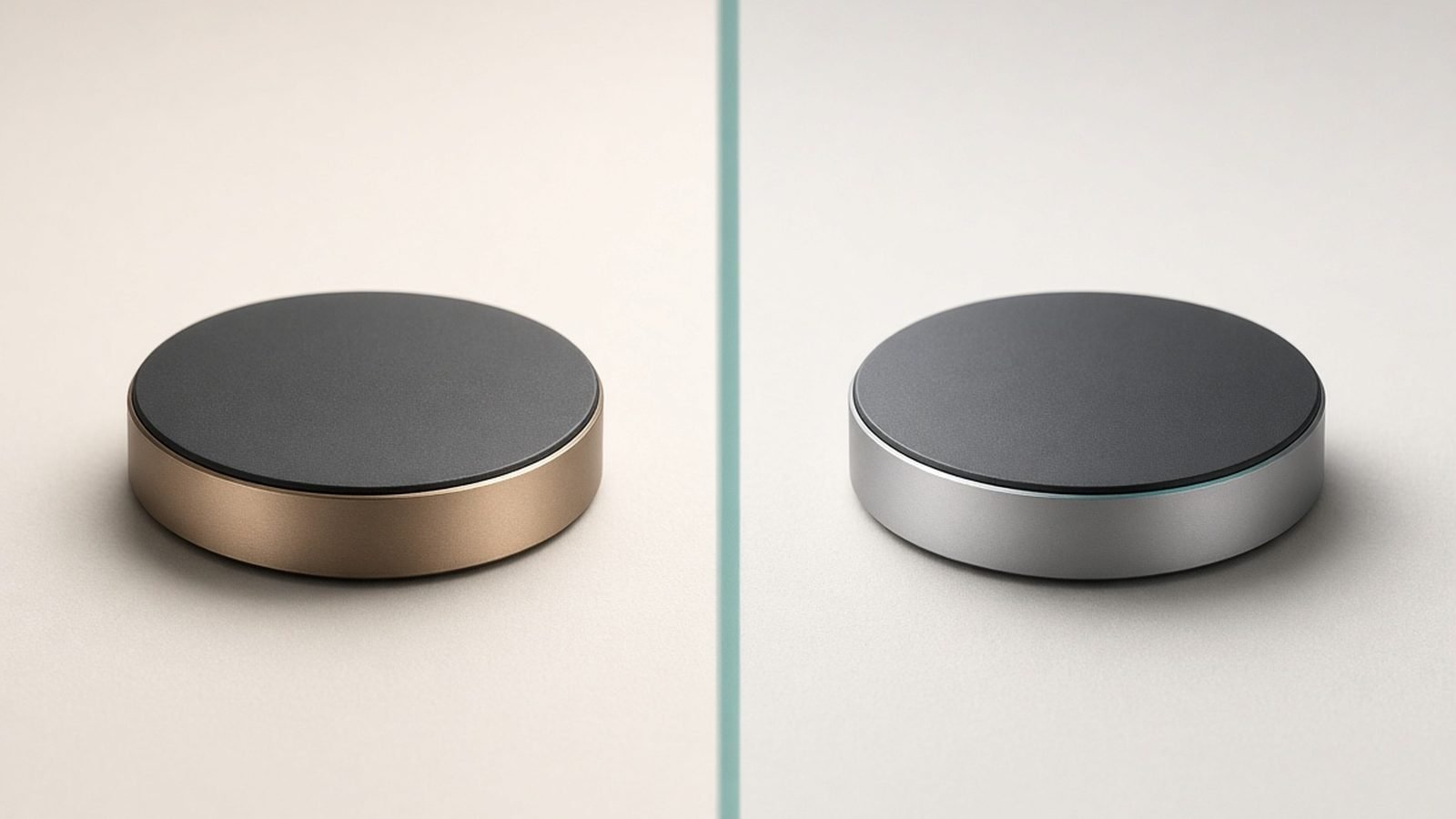
MagSafe vs Qi2 confuses people because the two are closely related, not opposed. Qi2 is the open, industry-wide wireless charging standard that adopted Apple’s MagSafe magnet technology; MagSafe is Apple’s own branded implementation that goes a little further on iPhone. In practice, a good Qi2-certified magnetic charger will snap onto an iPhone and charge it at up to 15W, and onto a compatible Android phone too — while MagSafe-branded chargers can push newer iPhones to 25W. For most buyers, a Qi2 charger is the smarter, more universal purchase.
Based on the Wireless Power Consortium’s Qi2 specifications, Apple’s MagSafe documentation, and aggregated user reports, here’s exactly what separates them and which one belongs on your desk or nightstand.
MagSafe vs Qi2 at a glance
| MagSafe | Qi2 | |
|---|---|---|
| What it is | Apple’s branded magnetic charging | Open industry standard (WPC) |
| Magnets | Yes (Apple’s design) | Yes — the “Magnetic Power Profile” |
| Peak speed (iPhone) | Up to 25W (iPhone 15/16-class+) | Up to 15W (Qi2), 25W with Qi2.2 |
| Works with Android | No (iPhone-focused) | Yes, on Qi2-compatible phones |
| Certification body | Apple (MFi for accessories) | Wireless Power Consortium |
| Typical charger price | ~$39–59 / £39–55 | ~$25–45 / £25–42 |
| Alignment | Magnetic, perfect every time | Magnetic, perfect every time |
| Best for | iPhone users wanting max speed | Mixed households, universal use |
The relationship: Qi2 grew out of MagSafe
Here’s the history that makes everything click. Apple launched MagSafe on the iPhone 12 in 2020: a ring of magnets that snaps accessories into perfect alignment and enables faster, more reliable wireless charging than the old, fiddly Qi pads where a millimetre of misalignment tanked your speed.
In 2023 the Wireless Power Consortium — the body behind the original Qi standard — released Qi2, whose headline feature, the “Magnetic Power Profile,” is essentially Apple’s MagSafe magnet system contributed to the open standard. So Qi2 phones and chargers use the same magnetic snap-and-align approach, but as an industry-wide spec that any manufacturer can build to and any phone maker can adopt.
That’s why the honest answer to “is Qi2 the same as MagSafe?” is: almost, by design. Qi2 is the shared foundation; MagSafe is Apple’s branded, slightly-extended version of it.
Charging speed: where they actually differ
This is the one real gap in 2026, and it’s worth being precise about.
Base Qi2 charges at up to 15W. That matches what MagSafe delivered on iPhones for years and is plenty for overnight charging or topping up at your desk.
MagSafe on recent iPhones (the 15 and 16 families and newer) can reach 25W with an Apple-rated adapter and cable. Apple got there first.
Qi2.2 — the updated spec rolling out on 2026 hardware — raises the open standard’s ceiling to 25W as well, closing most of the gap. So the distinction is narrowing fast: a Qi2.2-certified charger on a supported phone can now match MagSafe’s top speed.
Two caveats from aggregated user reports. First, wireless charging is less efficient and runs warmer than a cable — if you need the fastest possible top-up, a wired Best GaN Chargers 2026: 30W to 160W Compared & Ranked still wins comfortably. Second, hitting any of these peak figures requires a charger and a wall adapter rated for it; a weak 5W plug throttles even the best pad.
Compatibility: the deciding factor for many
If you own only iPhones, MagSafe and Qi2 both serve you well and the choice is mostly about that 25W ceiling. If your household has a mix of phones, Qi2 is the clear winner.
- iPhone (12 and newer): Works with both MagSafe and Qi2 chargers, magnets and all.
- Qi2 Android phones (a growing list including recent Samsung Galaxy, Google Pixel and others with built-in magnets or magnetic cases): Work with Qi2 chargers and, physically, with MagSafe-branded pads too — though “MagSafe” branding is Apple’s, the magnets are compatible.
- Older Qi-only phones (no magnets): Charge on any pad but without magnetic alignment, so they can sit slightly off-center and charge slower.
The practical takeaway: buy Qi2 and one charger serves an iPhone, a partner’s Pixel, and your AirPods case interchangeably. That universality is Qi2’s biggest advantage over Apple’s walled-garden branding.
Certification, safety and buying smart
Both ecosystems have a certification you should look for. For Apple, it’s MFi (Made for iPhone) on MagSafe accessories. For the open standard, it’s the Qi2 logo from the Wireless Power Consortium. Certified chargers have passed thermal and safety testing, manage heat properly, and won’t over-deliver power in a way that stresses your battery.
Avoid uncertified “magnetic 15W” pads from unknown brands. Aggregated user reports repeatedly flag cheap magnetic chargers that run hot, hold magnets weakly, or fail to negotiate the full speed. A few dollars saved isn’t worth a warm phone overnight. Look for named brands — Anker, Belkin, ESR, Ugreen and similar — carrying either the Qi2 or MFi mark.
If you want one accessory that both charges and travels, a magnetic power bank is a great companion; see our Best Desk Setup Accessories 2026: Upgrade Your Workspace guide for pairing chargers with the rest of a tidy workspace, and consider how a magnetic pad fits into an Best Portable Monitors 2026: For Laptops & Travel-style mobile kit.
Which should you buy?
Buy a Qi2 (or Qi2.2) charger if…
You want one magnetic charger that works across iPhone and Android, you value the open standard’s future-proofing, and you’re comfortable with 15W (Qi2) or you can find a Qi2.2 pad for the full 25W. This is the right call for most people and for any mixed-device household.
Pros: Universal across brands, cheaper on average, magnet alignment identical to MagSafe, Qi2.2 now matches MagSafe speed. Cons: Base Qi2 tops out at 15W; you must check for the Qi2.2 logo to get 25W.
Who it’s for: Households with more than one phone brand, Android users, and iPhone owners who don’t need the absolute fastest wireless speed.
Buy a MagSafe charger if…
You’re all-in on iPhone, want the simplest guaranteed-25W experience on a recent model, and value Apple’s tight accessory ecosystem (stands, wallets, car mounts) built around the MagSafe brand.
Pros: Up to 25W on current iPhones, huge accessory ecosystem, MFi-tested reliability. Cons: iPhone-focused, generally pricier, less useful in a multi-brand home.
Who it’s for: iPhone-only users who want maximum wireless speed and the widest range of first- and third-party MagSafe accessories.
FAQ
Is Qi2 the same as MagSafe?
Nearly. Qi2’s “Magnetic Power Profile” is based on Apple’s MagSafe magnet technology, contributed to the open Qi2 standard. They use the same snap-and-align magnets, so a Qi2 charger works magnetically with an iPhone and a MagSafe pad works with a Qi2 Android phone. The main differences are branding, certification body, and peak speed.
Does Qi2 work with iPhone?
Yes. Every iPhone from the 12 onward supports Qi2 magnetic charging natively, and a Qi2 charger will snap on and charge at up to 15W (or 25W with a Qi2.2 charger on a supported iPhone). You don’t need an Apple-branded MagSafe pad to get magnetic wireless charging on an iPhone.
How much faster is MagSafe than Qi2?
On paper, MagSafe reaches 25W on recent iPhones while base Qi2 tops out at 15W — a noticeable gap for fast top-ups. But the new Qi2.2 spec also hits 25W, so on 2026 hardware the difference largely disappears. For overnight charging, 15W versus 25W makes no practical difference.
Can I use a MagSafe charger on an Android phone?
Physically, yes — if the Android phone is Qi2-compatible with built-in magnets, a MagSafe-branded pad will align and charge it at Qi speeds. The magnets are cross-compatible. However, some Apple-specific features and full 25W speeds are reserved for iPhones, so a Qi2 charger is the cleaner choice for Android.
Do I need a special wall plug for fast wireless charging?
Yes. To hit 15W or 25W, the charger needs a wall adapter that can supply enough power — typically a 20W-or-higher USB-C PD plug. A weak 5W plug will throttle even the best magnetic charger. A quality GaN adapter covers this; see our Best GaN Chargers 2026: 30W to 160W Compared & Ranked guide.
Is wireless charging bad for my battery?
Certified Qi2 and MagSafe chargers manage heat and power to protect the battery, and modern phones include charge-optimization features. The main long-term factor is heat — wireless runs a little warmer than a cable. Using a certified charger and keeping the phone out of direct sun while charging keeps any impact minimal.
Verdict
MagSafe vs Qi2 isn’t a rivalry so much as a family tree. For most people in 2026, buy a Qi2 (ideally Qi2.2) charger — it uses the same magnets, matches MagSafe on speed at the top tier, works across iPhone and Android, and usually costs less. Choose a MagSafe-branded charger only if you’re iPhone-exclusive and want the guaranteed 25W plus Apple’s deep accessory ecosystem. Either way, look for the Qi2 or MFi logo, pair it with a proper wall adapter, and you’ll get fast, reliable, perfectly-aligned charging.
Zen Tech Hub may earn a commission from links on this page, at no extra cost to you.