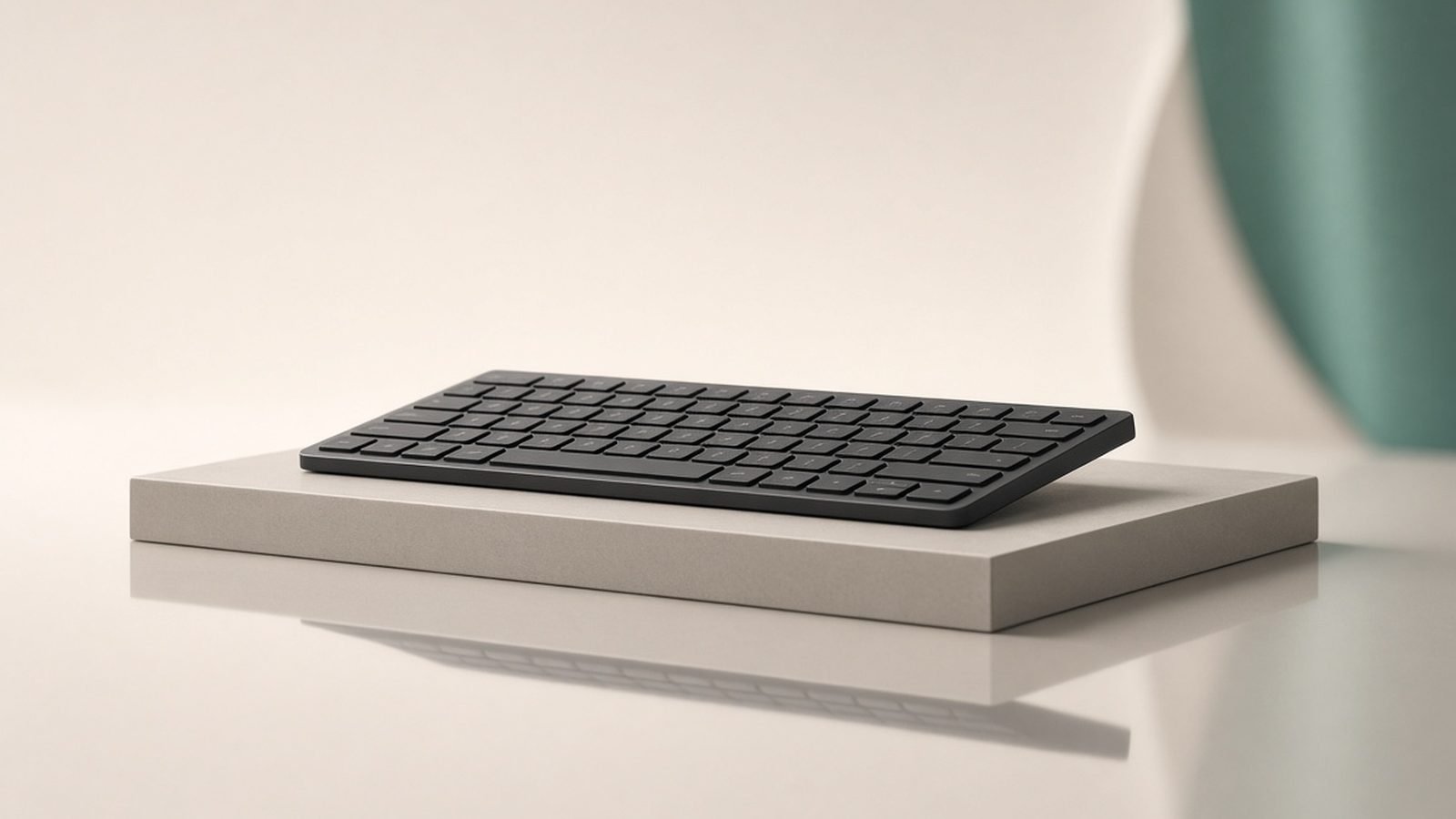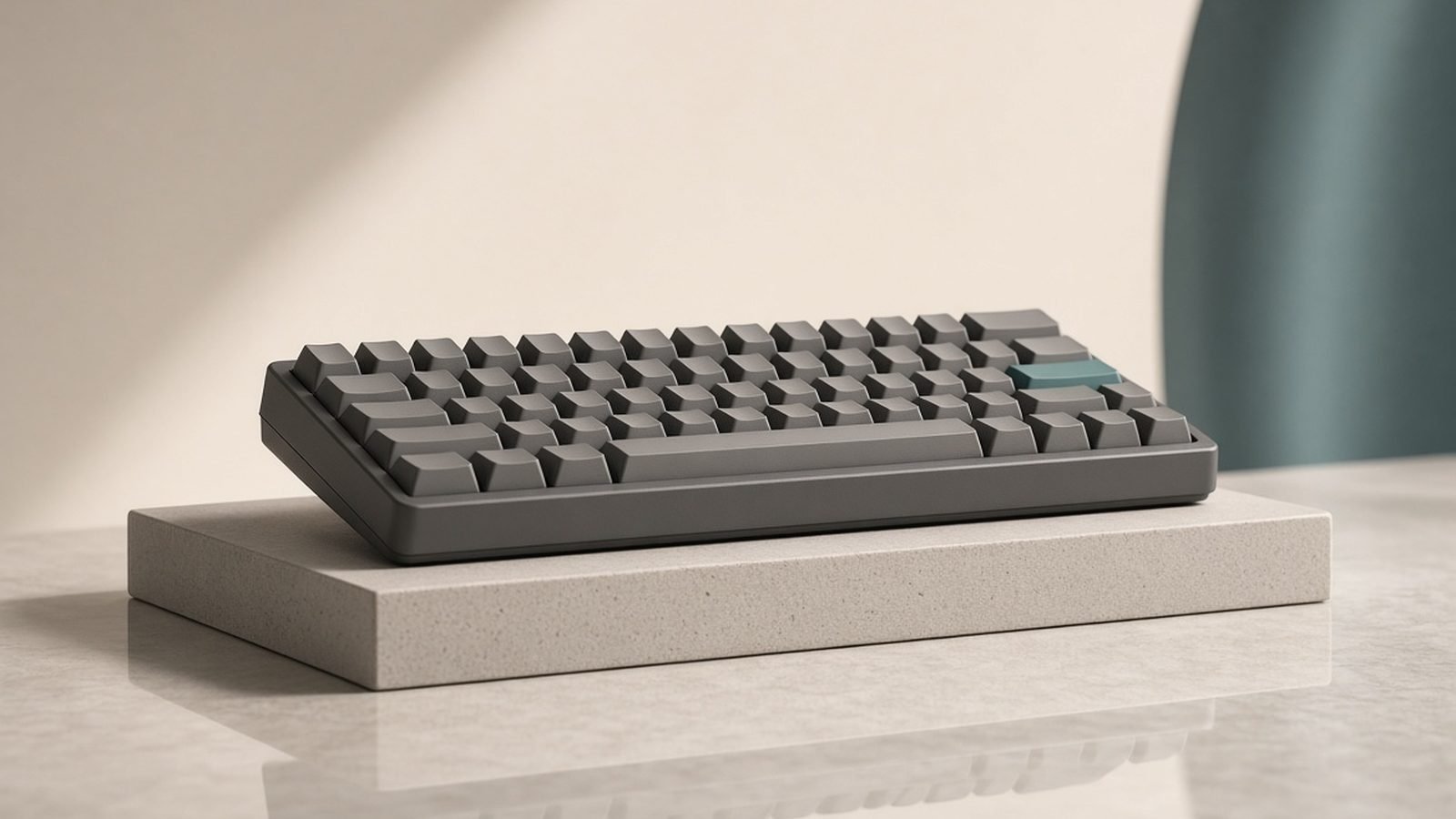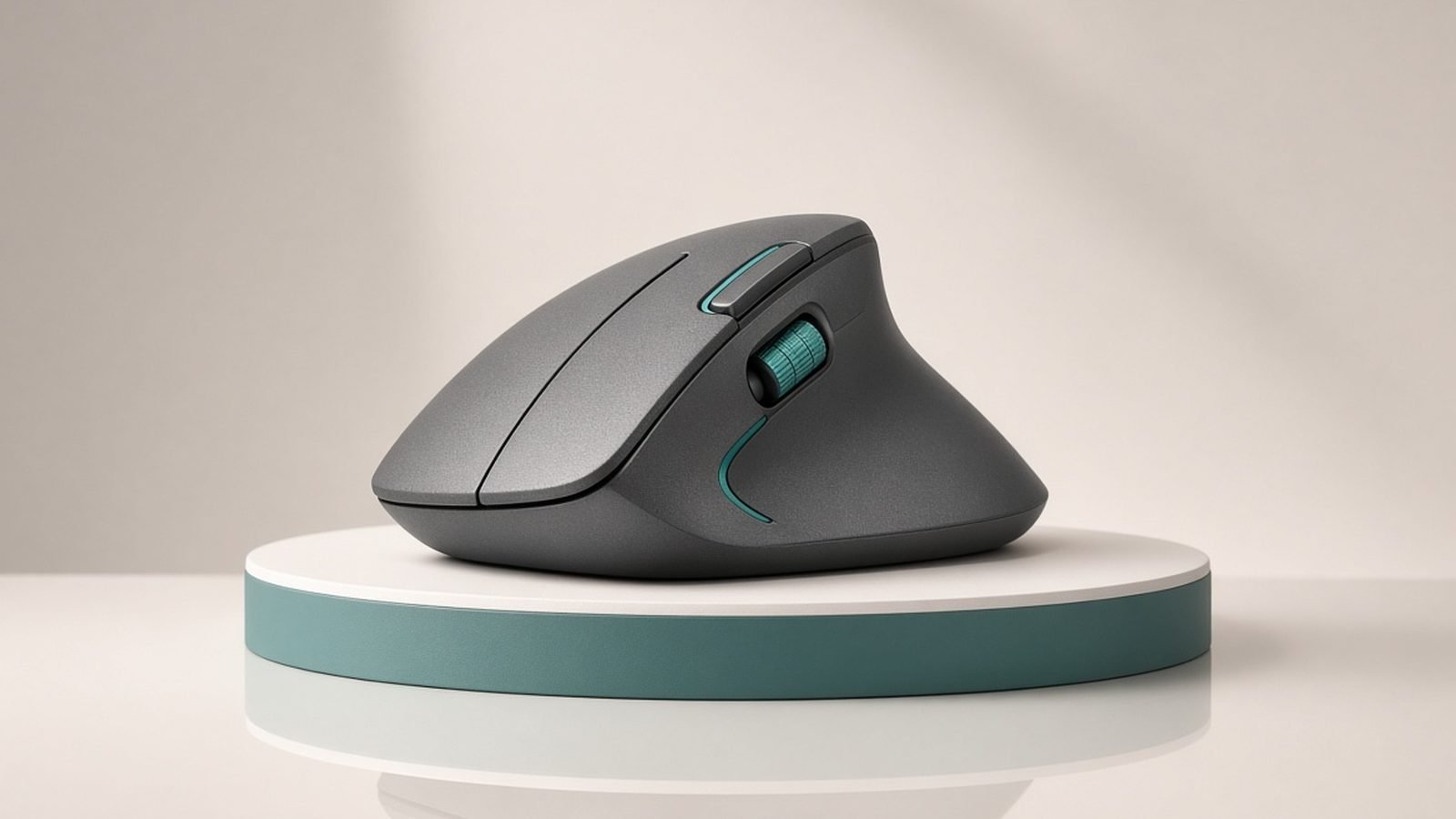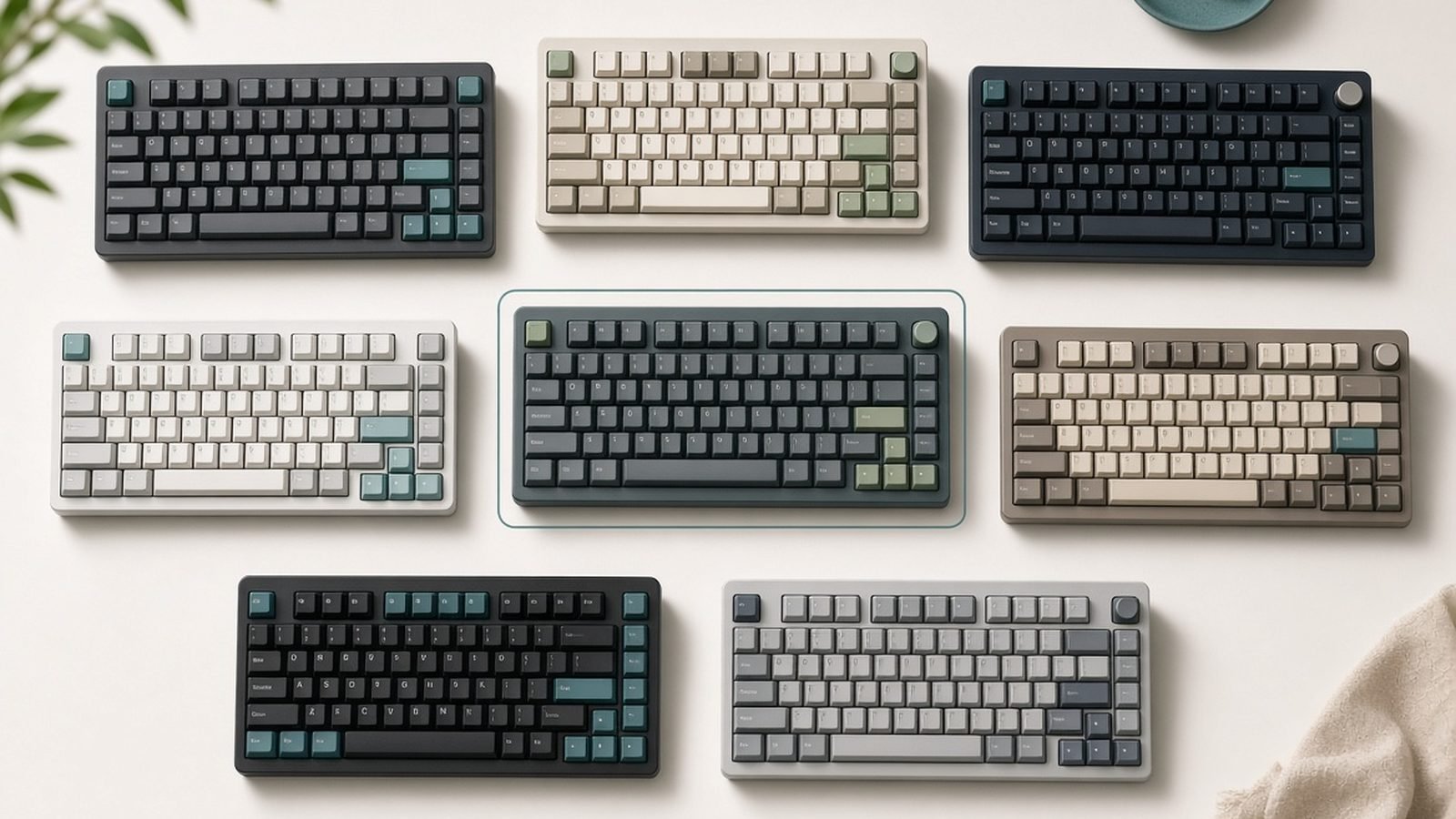
The best wireless keyboard for most people is the Logitech MX Keys S — quiet, comfortable for all-day typing, and able to pair with three devices at once so it drives your laptop, desktop and tablet from one board. If you want the tactile feel of a mechanical keyboard without the desk-shaking noise, the Keychron K3 Pro low-profile is the pick instead.
This is a work-and-typing guide, not a gaming one. That changes the priorities: comfort over eight-hour days, quiet keys for shared spaces and calls, reliable multi-device switching, and battery life measured in weeks or months rather than hours. Below are six picks across that spectrum, judged on published specs, documentation and aggregated owner feedback rather than invented test scores. Every one names who it suits and where it compromises.
Best wireless keyboard at a glance
| Pick | Product | Best for | Price (US / UK) |
|---|---|---|---|
| Best overall | Logitech MX Keys S | All-day work typing | around $109 / £109 |
| Best mechanical feel | Keychron K3 Pro (low-profile) | Tactile + quiet-ish | around $94 / £89 |
| Best for Mac | Apple Magic Keyboard (Touch ID) | macOS ecosystem | around $149 / £129 |
| Best compact | Logitech MX Keys Mini | Small desks, ergonomics | around $99 / £99 |
| Best full mechanical | Keychron V-series wireless | Enthusiast typing | around $99 / £94 |
| Best budget | Logitech Signature K855 / Pebble Keys 2 | Cheap and reliable | around $49 / £44 |
How we picked
Zen Tech Hub rankings are built from spec analysis and aggregated real-world evidence, not lab claims we didn’t make. For this guide we compared manufacturer specs, switch and keycap documentation, and battery-life ratings, then read hundreds of verified owner reviews across US and UK retailers. We weighted the things that decide whether you keep a keyboard: typing comfort over long sessions, noise (crucial on video calls), how smoothly it switches between devices, and whether the software is a help or a nuisance.
We deliberately favoured boards good for work and prose. A clacky gaming keyboard can be a superb typing tool, but noise and desk footprint matter more here than RGB or polling rate.
Best overall: Logitech MX Keys S
Scissor-switch · 3-device Bluetooth + Logi Bolt · backlit · around $109 / £109
The logitech mx keys s review consensus is near-unanimous, and we agree: for typing all day at a desk, this is the wireless keyboard to beat. The spherically dished keycaps guide your fingertips, the low-profile scissor switches are quiet and satisfying without being mushy, and smart backlighting only lights when your hands approach — which is part of why battery life stretches to weeks (months with backlight off). Easy-Switch buttons flip between three paired devices instantly.
The compromises are deliberate. It’s a full-size board with a number pad, so it eats desk width and pushes your mouse further right — a real ergonomic consideration over years. It’s also not hot-swappable or mechanical, so keyboard enthusiasts will find it soulless. And Logi Options+ software, while useful, is heavier than it needs to be. None of that dents its status as the default work keyboard.
Pros:
- Excellent, quiet all-day typing feel
- Three-device switching that just works
- Proximity backlight; weeks of battery
- Rock-solid build and cross-platform support
Cons:
- Full-width footprint crowds your mouse
- Not mechanical or hot-swappable
- Options+ software is bloated
Who it’s for: Anyone who types for a living, works across a laptop and desktop, and wants a quiet, comfortable board with no fuss. Pair it with a comfortable mouse to complete the setup. Best Ergonomic Mice 2026: Comfort Without RSI
Check price: Logitech MX Keys S Wireless Keyboard
Best mechanical feel: Keychron K3 Pro (low-profile)
Low-profile mechanical · hot-swappable · Bluetooth + 2.4GHz + wired · around $94 / £89
If the MX Keys feels too flat and you crave a real keystroke, the keychron wireless keyboard range is where work-friendly mechanical lives. The K3 Pro is a slim 75% board with low-profile mechanical switches — you get tactile bump and travel, but in a thin body that suits a desk rather than a gaming den. It’s hot-swappable, works over Bluetooth (three devices), 2.4GHz or USB-C, and runs QMK/VIA for deep remapping.
Be realistic about noise: even “quiet” tactile switches are louder than the MX Keys, so on frequent video calls colleagues may hear you. Battery life is also shorter than the Logitech because backlighting and mechanical switching draw more. But for typists who want feel and don’t mind a little clack, nothing at this price feels as good to use.
Pros:
- Genuine mechanical feel in a slim body
- Hot-swappable switches; QMK/VIA remapping
- Bluetooth, 2.4GHz and wired all included
- Mac and Windows keycaps in the box
Cons:
- Audibly louder than scissor-switch boards
- Shorter battery life than the MX Keys S
- 75% layout drops the number pad
Who it’s for: Typists who want mechanical feel and customisation for work without a full-size gaming keyboard’s bulk or racket.
Check price: Keychron K3 Pro Low-Profile Wireless Keyboard
Best for Mac: Apple Magic Keyboard (with Touch ID)
Scissor-switch · Bluetooth · Touch ID · around $149 / £129
For someone all-in on macOS, the apple magic keyboard with Touch ID is hard to argue with. Touch ID unlocks the Mac and authorises payments and passwords without reaching for a phone — a genuine daily convenience no third-party board matches. The typing feel is low-travel and quiet, the build is impeccable, and it charges over USB-C (finally) with battery life measured in weeks.
The limits are the Apple tax and lock-in. It only pairs with one device at a time with no quick-switch buttons, Touch ID works only on Apple Silicon Macs, and at $149 / £129 it costs more than better-featured rivals. It’s also a flat, minimal typing experience some find fatiguing. But inside the Apple ecosystem, the integration wins.
Pros:
- Touch ID unlock and authentication on Mac
- Impeccable build; USB-C charging at last
- Very quiet, low-profile keys
- Seamless macOS pairing
Cons:
- One device at a time, no Easy-Switch
- Touch ID only on Apple Silicon Macs
- Expensive for the feature set
Who it’s for: Mac desktop and MacBook owners who value Touch ID and ecosystem polish over multi-device flexibility.
Check price: Apple Magic Keyboard with Touch ID
Best compact: Logitech MX Keys Mini
Scissor-switch · 3-device Bluetooth · backlit · around $99 / £99
The MX Keys Mini is the MX Keys S with the number pad amputated — and for many people that’s an upgrade, not a downgrade. Losing the num pad pulls your mouse hand back toward centre, easing shoulder strain over long days, and the smaller board leaves more desk free. You keep the excellent typing feel, proximity backlight and three-device switching.
The obvious cost is the missing number pad, which matters if you live in spreadsheets or accounting software. There’s no wired option and no included wrist rest either. But as a compact, ergonomics-minded work board, it’s the one we’d recommend to anyone whose mouse feels too far away.
Pros:
- Same great typing as the MX Keys S, smaller
- Better mouse ergonomics without the num pad
- Proximity backlight and 3-device switching
- Frees up meaningful desk space
Cons:
- No number pad — a dealbreaker for heavy data entry
- Bluetooth only, no wired mode
- No wrist rest included
Who it’s for: Desk workers who rarely use a number pad and want their mouse closer for better posture. It fits neatly into a tidy, ergonomic setup. Best Desk Setup Accessories 2026: Upgrade Your Workspace
Check price: Logitech MX Keys Mini Wireless Keyboard
Best full mechanical: Keychron V-series wireless
Full-height mechanical · hot-swappable · gasket-mounted · around $99 / £94
When you want the full enthusiast typing experience and desk space isn’t tight, Keychron’s full-height V-series wireless boards deliver a plush, gasket-mounted feel with deep customisation for around a hundred dollars or pounds. Hot-swap sockets let you try different switches, the sound is fuller and more satisfying than any low-profile board here, and VIA support means you can remap anything.
This is the least “office-friendly” pick: it’s tall (a wrist rest is close to mandatory), heavier, and louder, so it’s poorly suited to open-plan calls. Choose linear or silent tactile switches if noise matters. For a home office where feel is the priority, though, it’s the most rewarding board to type on all day.
Pros:
- Rich, cushioned gasket-mounted typing feel
- Hot-swappable switches and full VIA remapping
- Great value for an enthusiast board
- Multiple layouts and switch options
Cons:
- Tall and heavy; really wants a wrist rest
- Loudest option here — poor for shared offices
- Overkill if you just want to type emails
Who it’s for: Home-office typists and keyboard enthusiasts who prioritise feel and customisation over portability and quiet.
Check price: Keychron V-Series Wireless Mechanical Keyboard
Best budget: Logitech Pebble Keys 2 / Signature K855
Scissor-switch · 3-device Bluetooth · around $49 / £44
You do not need to spend a hundred dollars for a good wireless keyboard. Logitech’s budget Signature and Pebble Keys 2 boards offer quiet, comfortable scissor-switch typing, three-device Bluetooth switching, and battery life measured in years from a couple of AAA cells. Build is plasticky rather than premium, and there’s no backlight, but the core typing experience is genuinely pleasant.
The compromises are exactly what you’d expect at the price: no backlighting, lighter construction, and a slightly less refined keystroke than the MX Keys. For a secondary machine, a student desk, or anyone who just wants a reliable board without ceremony, it’s outstanding value and hard to beat.
Pros:
- Quiet, comfortable typing for the money
- Three-device Bluetooth switching
- Multi-year battery from AAA cells
- Logitech reliability at a budget price
Cons:
- No backlight
- Plasticky, lighter build
- Keystroke less refined than premium boards
Who it’s for: Budget buyers, students and second-desk setups who want dependable multi-device typing without spending much.
Check price: Logitech Pebble Keys 2 K380s
How to choose
Five factors settle the decision for most buyers.
- Switch type. Scissor (MX Keys, Magic Keyboard) is quiet, flat and low-effort — best for offices and calls. Mechanical (Keychron) gives feel and feedback but more noise. Pick for your environment first.
- Noise. If you’re on video calls all day in a shared space, a quiet scissor board saves you from being “that person.” Reserve loud mechanicals for solo home offices.
- Multi-device switching. If you use more than one computer or a tablet, Easy-Switch-style three-device pairing is a daily quality-of-life win. Apple’s Magic Keyboard notably lacks it.
- Layout and footprint. A number pad you never use just pushes your mouse away and strains your shoulder. Compact or tenkeyless boards improve posture for non-spreadsheet users.
- Battery and charging. Scissor boards go weeks to months; backlit mechanicals need charging more often. All the picks here charge or run for a long time, but check if you hate cables.
A good keyboard is half of a comfortable desk. The mouse is the other half, and how far your keyboard pushes it matters. Best Ergonomic Mice 2026: Comfort Without RSI
FAQ
What’s the best wireless keyboard for typing all day?
The Logitech MX Keys S for most people — its dished, quiet scissor keys are comfortable over long sessions and it switches between three devices. If you prefer tactile feedback, the Keychron K3 Pro low-profile gives a mechanical feel that’s still desk-appropriate.
Is a mechanical keyboard better for work than scissor-switch?
Not automatically. Mechanical boards feel better to type on and last longer, but they’re louder — a real problem on video calls in shared spaces. Scissor-switch boards like the MX Keys are quieter, flatter and lower-effort. Choose based on your environment as much as your preference.
Can wireless keyboards connect to multiple devices?
Many can. Logitech’s Easy-Switch and Keychron’s Bluetooth boards pair with three devices and flip between them with a button press — ideal if you use a laptop, desktop and tablet. Notably, Apple’s Magic Keyboard connects to only one device at a time with no quick-switch.
Are wireless keyboards good enough for fast typing?
Yes. Modern Bluetooth and 2.4GHz wireless has no perceptible latency for typing prose or code — the old “wireless lag” concern is gone for keyboards. The only place wired still wins is competitive gaming, which isn’t what these work boards are for.
How long do wireless keyboard batteries last?
Scissor-switch boards like the MX Keys S run weeks with backlight on and months without; budget AAA boards last a year or more. Backlit mechanical keyboards need charging more often — often every week or two with lighting on. All charge over USB-C or use replaceable cells.
Do I need a keyboard with a number pad?
Only if you do heavy data entry, accounting or spreadsheet work. For everyone else, a compact or tenkeyless board is better ergonomically because it lets your mouse sit closer to centre, reducing shoulder strain. The MX Keys Mini exists precisely for this reason.
Verdict: which wireless keyboard should you buy?
For the majority of people the Logitech MX Keys S at around $109 / £109 is the right answer: quiet, comfortable, and a genuine three-device workhorse. Want mechanical feel without gaming-keyboard bulk? The Keychron K3 Pro low-profile. Deep in the Apple world? The Magic Keyboard with Touch ID earns its price.
Tight on desk space, buy the MX Keys Mini; chasing the best pure typing feel at home, the Keychron V-series; on a budget, the Logitech Pebble Keys 2 does the job for under fifty. Whatever you choose, match it to a comfortable mouse and a tidy desk and you’ve built a setup you’ll enjoy for years. Best Desk Setup Accessories 2026: Upgrade Your Workspace
Zen Tech Hub may earn a commission from links on this page, at no extra cost to you.