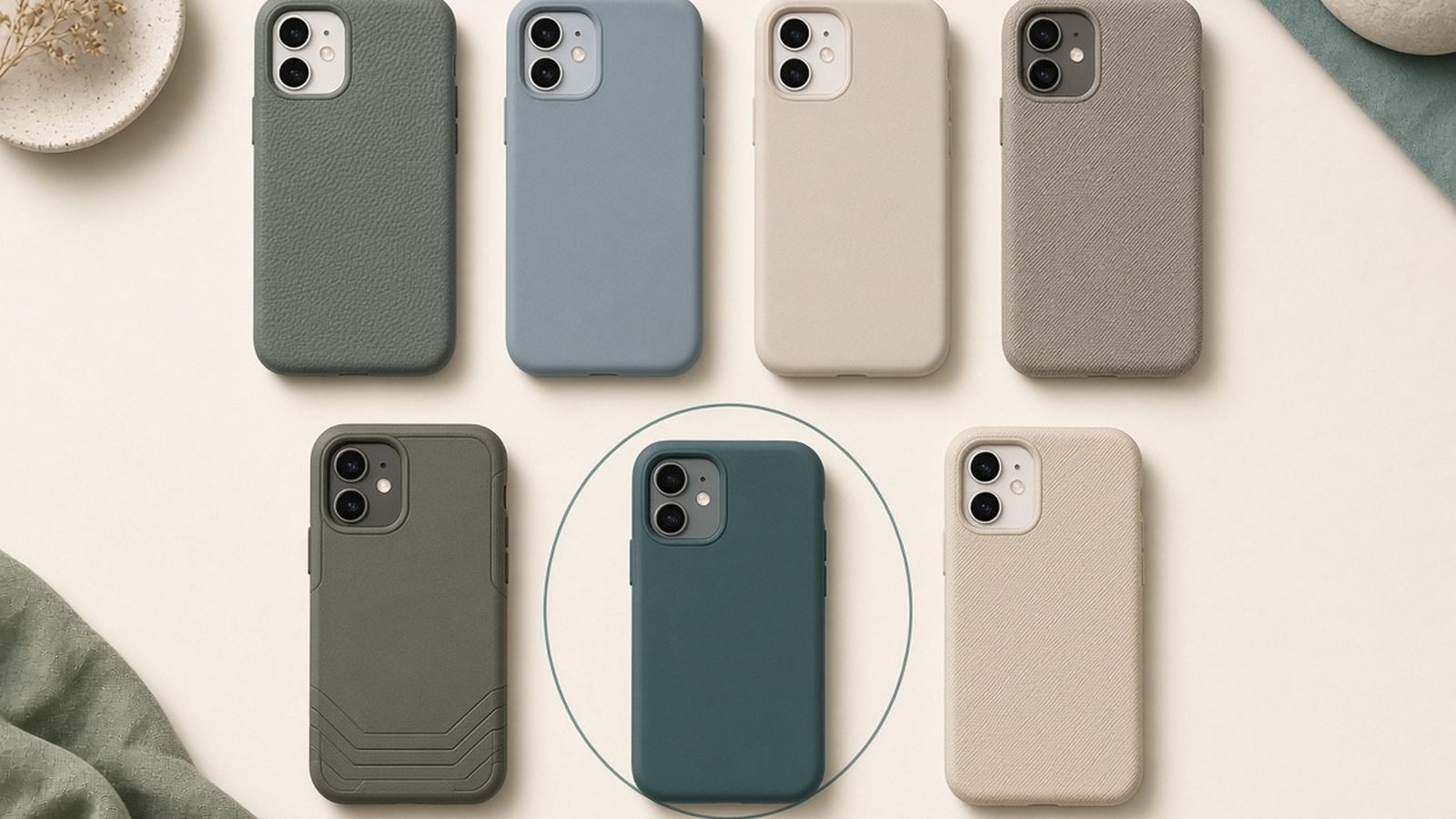
The best phone case for most people in 2026 is a Spigen — brands like the Ultra Hybrid and Tough Armor deliver genuine drop protection, clean design, and strong MagSafe magnets for a fraction of the boutique price. If you need maximum ruggedness, an OtterBox Defender is still the toughest mainstream shell. For a case that’s also a mounting system, Peak Design leads; for personalization, Casetify; for the best slim value, ESR; and for grip and eco-materials, Mous. Good cases run from around $15 / £15 for a solid Spigen up to $60+ / £60+ for a custom Casetify.
This guide draws on published materials specs, drop-test certifications (like MIL-STD-810G), magnet standards, and aggregated owner feedback across US and UK buyers — not our own drop tests. The most important change in 2026 is that MagSafe and Qi2 magnets are now the baseline, so a case without proper magnets is quietly costing you charging speed and accessory compatibility.
Best phone case 2026 at a glance
| Pick | Brand / Line | Best for | Price (US / UK) |
|---|---|---|---|
| Best overall | Spigen (Ultra Hybrid / Tough Armor) | Protection-to-price balance | around $18–35 / £16–33 |
| Best rugged | OtterBox Defender Series | Maximum drop protection | around $60 / £55 |
| Best custom | Casetify (Impact / Bounce) | Personalized design + protection | around $55–75 / £55–75 |
| Best mounting system | Peak Design Mobile | Cyclists, creators, car mounts | around $40 / £40 |
| Best slim value | ESR (Classic Hybrid / Air Armor) | Cheap MagSafe cases that work | around $15–20 / £14–19 |
| Best grip / eco | Mous (Limitless / Super Thin) | Grippy feel, sustainable materials | around $50 / £45 |
Short version: buy Spigen unless you have a specific reason not to. Choose OtterBox if you drop phones hard, Casetify if you want it to look unique, Peak Design if you mount your phone, ESR to save money, and Mous for the best in-hand grip.
For the wider kit around your phone, see our Best Screen Protectors 2026: Tempered Glass Top Picks guide and the Best MagSafe & Qi2 Power Banks 2026: Which One Wins? roundup — a good case, protector, and magnetic battery are the three-part starter set. Everything in this category lives at Accessories & Charging.
How we picked
Four factors separated the picks from the pile of anonymous cases online.
Real protection, not just claims. We favored cases with credible drop-test ratings (MIL-STD-810G is the common benchmark), raised bezels around the screen and camera, and reinforced corners — the parts that actually absorb impact. A case that only looks tough is a liability.
MagSafe / Qi2 magnet quality. In 2026 the magnet ring is core function, not a bonus. Weak or missing magnets mean slow wireless charging and accessories that slide off. We prioritized cases with strong, correctly aligned magnet arrays, and flagged where magnets are absent.
Fit, feel, and daily usability. Button feedback, port cutouts, grip, pocketability, and whether the case yellows over time all shape the daily experience. Aggregated long-term owner reports were decisive here, since these problems only show up after weeks.
Value and range. A great case is only useful if it’s made for your phone. We favored brands with wide, up-to-date model coverage across iPhone 17, recent Samsung Galaxy, and Google Pixel lines, and honest pricing for what you get.
Best overall: Spigen (Ultra Hybrid & Tough Armor)
MIL-grade options with MagSafe, around $18–35 / £16–33
Spigen is the answer for most people because it consistently delivers 80–90% of a premium case’s protection and design at a third of the price. The lineup covers the whole spectrum: the clear Ultra Hybrid (MagFit) is a slim, rigid-back case with a shock-absorbing bumper and strong magnets; the Tough Armor adds layered protection and a kickstand for genuinely rugged use; and there are slimmer and more stylish variants in between. Whatever your phone and priorities, there’s a Spigen that fits.
Build quality is the reason owners keep coming back. Buttons are tactile, cutouts are precise, the MagFit magnets grip firmly and charge cleanly, and the clear versions resist yellowing better than most budget rivals. Model coverage is excellent and quick to update for new iPhone, Galaxy, and Pixel releases, so you’re rarely stuck waiting.
The trade-off is that Spigen is functional first, fashionable second. The designs are clean but understated — if you want your phone to be a statement piece, Casetify below is the play. And while Tough Armor is genuinely tough, the very hardest drops are still OtterBox territory. For the overwhelming majority of buyers, though, Spigen is the smart-money default.
Pros:
- Excellent protection-to-price ratio across many styles
- Strong MagFit magnets and clean wireless charging
- Precise cutouts and satisfying buttons
- Wide, frequently updated model coverage
Cons:
- Designs prioritize function over flair
- Not quite OtterBox-level for extreme drops
- So many variants the naming gets confusing
Who it’s for: almost everyone — buyers who want reliable, MagSafe-ready protection without overpaying.
Best rugged: OtterBox Defender Series
Multi-layer MIL-STD protection, around $60 / £55
When survival is the only spec that matters, the OtterBox Defender is still the benchmark. It’s a multi-layer system — a hard inner shell, a soft outer cover, and (on the classic Defender) a holster that doubles as a stand — engineered to shrug off drops that would crack a slim case. Port covers keep out dust and grit, and the raised edges protect the screen and camera on impact. For construction sites, kids, and the genuinely accident-prone, nothing mainstream protects better.
OtterBox backs this with a solid warranty and long-standing reputation, and the MagSafe-compatible versions add the magnet ring the older Defenders lacked. Owner feedback is blunt about the value proposition: people who buy a Defender rarely regret it after the first serious drop.
The costs are bulk and money. The Defender makes any phone noticeably bigger and heavier, which undoes the thin-and-light design you paid for, and it’s among the priciest mainstream cases. It can also be a fight to install and remove. If you don’t actually abuse your phone, this is more armor than you need — but if you do, it’s exactly right.
Pros:
- Class-leading multi-layer drop protection
- Port covers guard against dust and debris
- Holster/stand on classic versions
- Strong warranty and MagSafe options available
Cons:
- Bulky and heavy
- Expensive versus slimmer rugged cases
- Fiddly to put on and take off
Who it’s for: people in tough environments, parents, and anyone who drops phones hard and often.
Best custom: Casetify (Impact & Bounce)
Personalized designs with real protection, around $55–75 / £55–75
Casetify is where protection meets self-expression. You choose from thousands of designs — or add your own name, photos, and text — and the case is made to order, so it looks unlike anything off the shelf. Crucially, the protection is real: the Impact cases carry multi-metre drop ratings, and the newer Bounce line adds reinforced corners for even more shock absorption, with strong MagSafe magnets across the range. This isn’t a flimsy fashion case.
The appeal is obvious for anyone who wants their phone to feel personal without sacrificing safety. Build quality is generally praised in owner feedback, the magnets work well, and the brand refreshes designs and collaborations constantly, so there’s always something new. It’s also a popular gift precisely because you can personalize it.
The honest trade-offs are price and material feel. Casetify is expensive — you’re paying a premium for the customization and branding — and some owners find the clear cases yellow over time or the plastic feels less premium than the price implies. Slim it is not, either. If looks and individuality top your list and budget is secondary, though, it’s the standout.
Pros:
- Deep personalization and huge design range
- Genuine multi-metre drop protection (Impact/Bounce)
- Strong MagSafe magnets
- Frequent new designs and collabs
Cons:
- Expensive for what’s essentially a plastic case
- Clear versions can yellow over time
- Bulkier than truly slim cases
Who it’s for: buyers who want a unique, personalized case and won’t compromise on protection to get it.
Best mounting system: Peak Design Mobile
Case plus magnetic SlimLink mount ecosystem, around $40 / £40
Peak Design’s case is really the entry point to a mounting system, and that’s its genius. The slim, protective case has the company’s SlimLink magnetic-and-mechanical mount built into the back, which locks securely into a range of accessories: bike and motorcycle mounts, car vents and dashes, wallets, tripod adapters, and creator rigs. Unlike pure-magnet mounts, the mechanical latch means it won’t shake loose on rough roads — a real advantage for cyclists and motorcyclists.
For creators, commuters, and anyone who mounts their phone regularly, this turns the case into a platform. It’s also MagSafe/Qi2 compatible, so standard magnetic chargers and accessories still work, and the case itself offers respectable everyday drop protection despite the slim profile. The ecosystem is the reason to buy in.
The trade-offs are scope and value if you don’t mount. Bought as a plain case, $40 / £40 is a lot when a Spigen protects similarly for less — the maths only works once you own a mount or two. And while protection is solid, it’s not rugged-tier. But as the hub of a mounting setup, nothing else is this seamless.
Pros:
- Secure mechanical + magnetic SlimLink mount
- Excellent ecosystem of bike, car, and creator mounts
- Slim yet respectably protective
- MagSafe/Qi2 compatible for standard accessories
Cons:
- Only great value if you buy mounts
- Not rugged-tier protection
- Accessories add up in cost
Who it’s for: cyclists, motorcyclists, drivers, and creators who mount their phone often and want it rock-solid.
Best slim value: ESR (Classic Hybrid & Air Armor)
Slim MagSafe cases that work, around $15–20 / £14–19
ESR has quietly become the value champion of MagSafe-era cases. Its Classic Hybrid and Air Armor lines offer slim, clear or tinted cases with reinforced corners and — critically at this price — genuinely strong magnets that charge cleanly and hold accessories. You get much of the Spigen experience for a few dollars or pounds less, which adds up if you change cases often or buy for a family.
Owner feedback highlights that ESR’s magnets punch above the price, and the brand offers useful extras like built-in kickstands (the Boost versions), camera-lip protection, and reliably clear plastic. For a slim everyday case with working MagSafe on a budget, it’s hard to beat.
The trade-offs are refinement and longevity. The plastics can feel a notch less premium than Spigen’s, some clear models yellow eventually, and it’s a slim case — not a rugged one — so it’s built for everyday knocks, not construction-site abuse. As an inexpensive, MagSafe-ready daily driver, though, ESR is the value pick.
Pros:
- Surprisingly strong magnets for the price
- Slim, light everyday protection
- Useful extras like kickstands and camera lips
- Great value for families and frequent switchers
Cons:
- Materials feel slightly less premium
- Some clear versions yellow over time
- Slim protection only, not rugged
Who it’s for: budget-conscious buyers who want a slim, working MagSafe case without paying boutique prices.
Best grip / eco: Mous (Limitless & Super Thin)
Grippy, sustainable materials, around $50 / £45
Mous stakes out a distinct niche: cases that feel great in the hand and lean into sustainable materials. The Limitless line uses the company’s AiroShock impact protection with premium finishes (bamboo, leather, aramid fibre) that provide natural grip and a genuinely upmarket feel, while the Super Thin offers minimal bulk for people who dislike cases at all. Mous has expanded its use of recycled and responsibly sourced materials, which appeals to eco-minded buyers.
The draw is the tactile experience. Owners consistently praise how secure Mous cases feel — the textured backs resist the “bar of soap” slipperiness of glossy cases — and the AiroShock corners provide real drop protection despite the refined looks. The magnet-equipped versions handle MagSafe well, and the brand’s mounting accessories add flexibility.
The trade-offs are price and the usual boutique caveats. Mous costs more than Spigen or ESR for comparable protection, the Super Thin trades away some ruggedness for slimness, and premium finishes like leather age and wear. If in-hand feel and materials matter to you as much as protection, it’s worth the premium; if you just want maximum safety per dollar, look elsewhere.
Pros:
- Excellent grip and premium in-hand feel
- AiroShock corners give real drop protection
- Sustainable and recycled material options
- Good MagSafe versions and accessories
Cons:
- Pricey for the protection level
- Super Thin sacrifices ruggedness
- Premium finishes wear over time
Who it’s for: buyers who prioritize grip, materials, and sustainability and will pay a premium for the feel.
How to choose a phone case
Four questions get you to the right case.
How rough is your life with your phone? Be honest. If you regularly drop it on concrete, work outdoors, or hand it to kids, buy rugged (OtterBox Defender). If you’re careful and mostly indoors, a slim case (ESR, Spigen Ultra Hybrid) protects enough without the bulk. Matching the armor to the abuse avoids carrying weight you don’t need.
Do you use MagSafe or Qi2? If you charge wirelessly or use magnetic mounts, wallets, or batteries, insist on a case with a proper built-in magnet ring — not a bare “wireless charging compatible” case, which charges slower and drops accessories. Every category winner here has a magnet version; make sure you pick it.
Slim or protective — where’s your line? There’s a genuine trade-off between pocketability and protection. Decide which you’ll resent more: a bulkier phone, or a cracked one. Most people are happiest in the middle (Spigen Tough Armor, Casetify Impact), which is why those sell so well.
Does design or a system matter to you? If you want the phone to look like yours, Casetify wins. If you mount your phone for cycling, driving, or filming, Peak Design’s ecosystem is worth building around. Pay for the extra only if you’ll actually use it.
FAQ
Do I need a case with MagSafe if I have an iPhone?
If you use wireless charging or any magnetic accessories, yes. A proper MagSafe (or Qi2) case has aligned magnets that snap chargers, mounts, wallets, and power banks firmly in place and charge at full speed. A case without magnets can still charge wirelessly but slower and with worse alignment, and magnetic accessories won’t grip. All the iPhone winners here offer MagSafe versions — choose those.
Is OtterBox actually worth the extra money?
If you genuinely abuse your phone, yes. The Defender’s multi-layer protection is a real step above slim cases and can prevent an expensive screen or frame repair after a hard drop, which pays for itself the first time. If you’re careful with your phone, though, you’re paying for bulk and armor you won’t use — a Spigen Tough Armor or Casetify Impact protects plenty for less.
Why do clear phone cases turn yellow?
Yellowing is caused by UV exposure and heat degrading the flexible TPU plastic over time — it’s largely unavoidable with cheap clear cases. Better clear cases (Spigen’s premium clear lines, higher-end Casetify) use more UV-resistant materials and yellow far more slowly, but no clear case stays perfectly crystal forever. If yellowing bothers you, a tinted or opaque case sidesteps the issue entirely.
Are these cases available for Samsung and Pixel, not just iPhone?
Mostly, yes, though coverage varies. Spigen, OtterBox, ESR, Mous, and Peak Design all make cases for recent Samsung Galaxy and Google Pixel flagships, often with the same lines described here. Casetify covers major Android phones too. Note that MagSafe-style magnets on Android depend on the phone: Pixel’s recent models add native magnets, while many Samsung phones need a “Qi2 Ready” magnetic case to get the magnet ring.
How much should I spend on a phone case?
For most people, around $15–35 / £14–33 buys an excellent case (ESR to Spigen) with real protection and working magnets — there’s little reason to spend less on a no-name shell that may lack proper magnets or fit. Spend more ($50–75 / £45–75) only for a specific reason: extreme ruggedness (OtterBox), personalization (Casetify), a mounting system (Peak Design), or premium materials (Mous).
Does a case affect wireless charging speed?
A good MagSafe/Qi2 case doesn’t meaningfully slow charging — the magnets keep alignment perfect, which is what matters. A thick case without magnets, or a very thick rugged case, can slow wireless charging or cause misalignment and heat. If you charge wirelessly, choosing a case with proper magnets is the single best way to keep speeds up. For troubleshooting slow charging, see our How to Fix Slow USB-C Charging guide.
Zen Tech Hub may earn a commission from links on this page, at no extra cost to you.