Nanoleaf makes the most eye-catching decorative lighting in the smart home — modular panels and light bars that turn a wall into a piece of interactive art. In 2026 it’s the brand to buy if aesthetics come first. The short verdict: nobody does design-led, wall-mounted light installations like Nanoleaf, and its early embrace of Matter and Thread makes it more future-proof than it used to be. The caveats are real, though: high per-panel cost, a sometimes-flaky app, and mounting that can be fiddly and unforgiving.
Buy Nanoleaf if you want statement lighting that doubles as decor and you’ll enjoy tuning scenes and effects. Look elsewhere if you want practical, high-output room lighting, rock-solid reliability, or the lowest price per lumen — Nanoleaf is about the look, not the lux.
Company overview
Nanoleaf is a Canadian company headquartered in Toronto, founded in 2012. It began with an unusually efficient dodecahedron LED bulb funded on crowdfunding platforms, then found its identity with the modular, touch-reactive light panels that made its name. Today it’s best known as the design-forward smart-lighting brand — the one you buy for a feature wall behind a desk, TV or gaming setup rather than to light a room.
Its reputation is a study in trade-offs. Reviewers consistently love the look and the creativity of Nanoleaf’s products, and the brand earns real credit as an early and enthusiastic adopter of Matter and the Thread networking protocol — it has shipped Thread border-router hardware and Matter-compatible lighting ahead of many bigger rivals. But it draws equally consistent criticism for app instability, mounting headaches, and prices that add up alarmingly once you want a panel layout big enough to impress.
Unlike Signify or Xiaomi-linked Aqara, Nanoleaf is an independent specialist. That focus is its charm and its risk: it lives or dies by decorative lighting.
What Nanoleaf makes
Nanoleaf’s lineup splits into showpiece decor and a growing line of everyday smart lights:
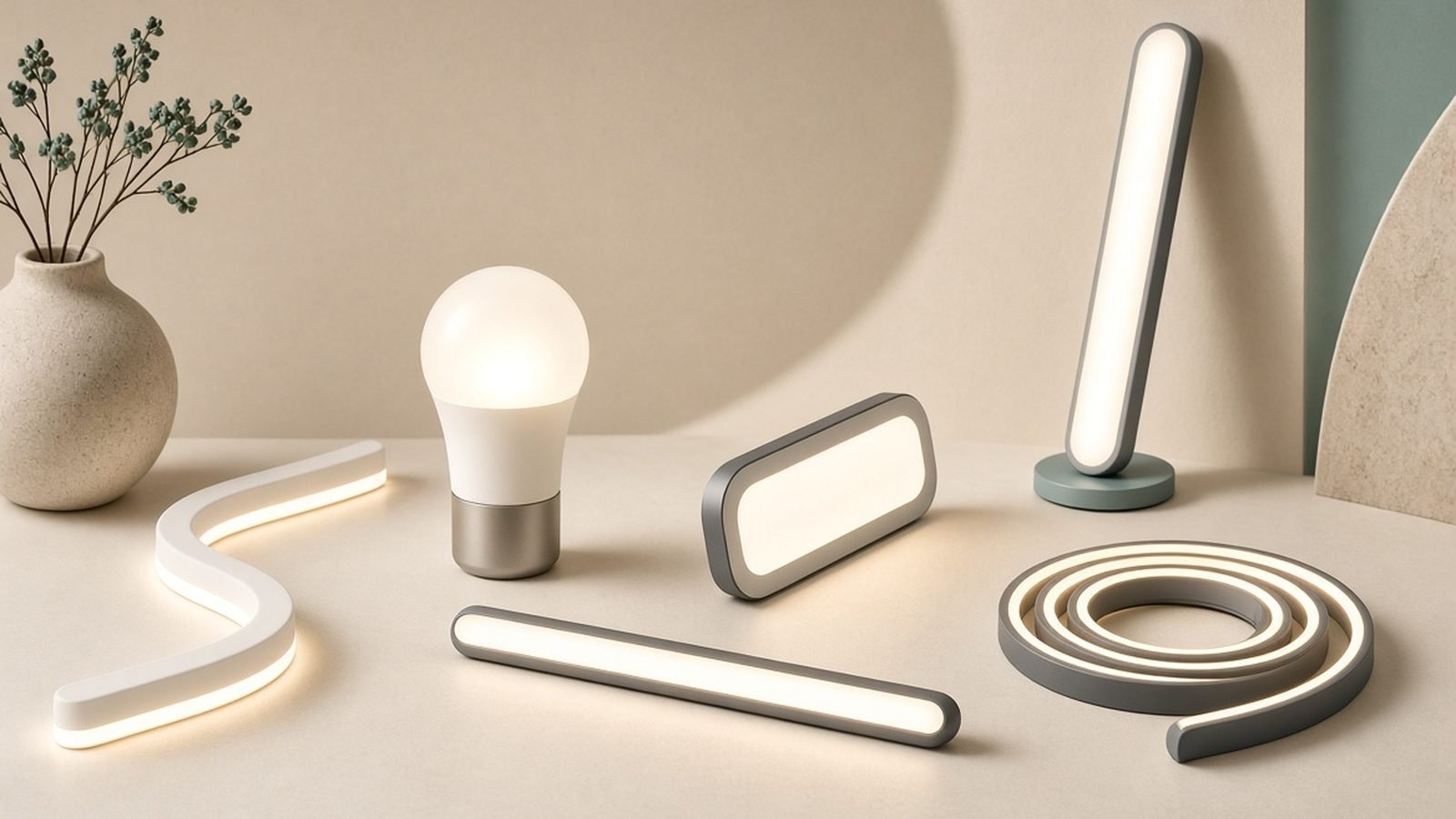
- Modular panels — Shapes (hexagons, triangles, mini triangles) that connect edge to edge into custom layouts, and the fabric-covered, screen-mirroring Canvas-style squares.
- Light bars — Lines, thin backlit bars that mount in angular patterns for a cleaner, more minimalist look than panels.
- Textured and ambient panels — Elements (wood-look) and other finishes aimed at a warmer, more “designer” aesthetic.
- Ceiling and overhead lighting — the Skylight modular ceiling system for genuine overhead illumination with effects.
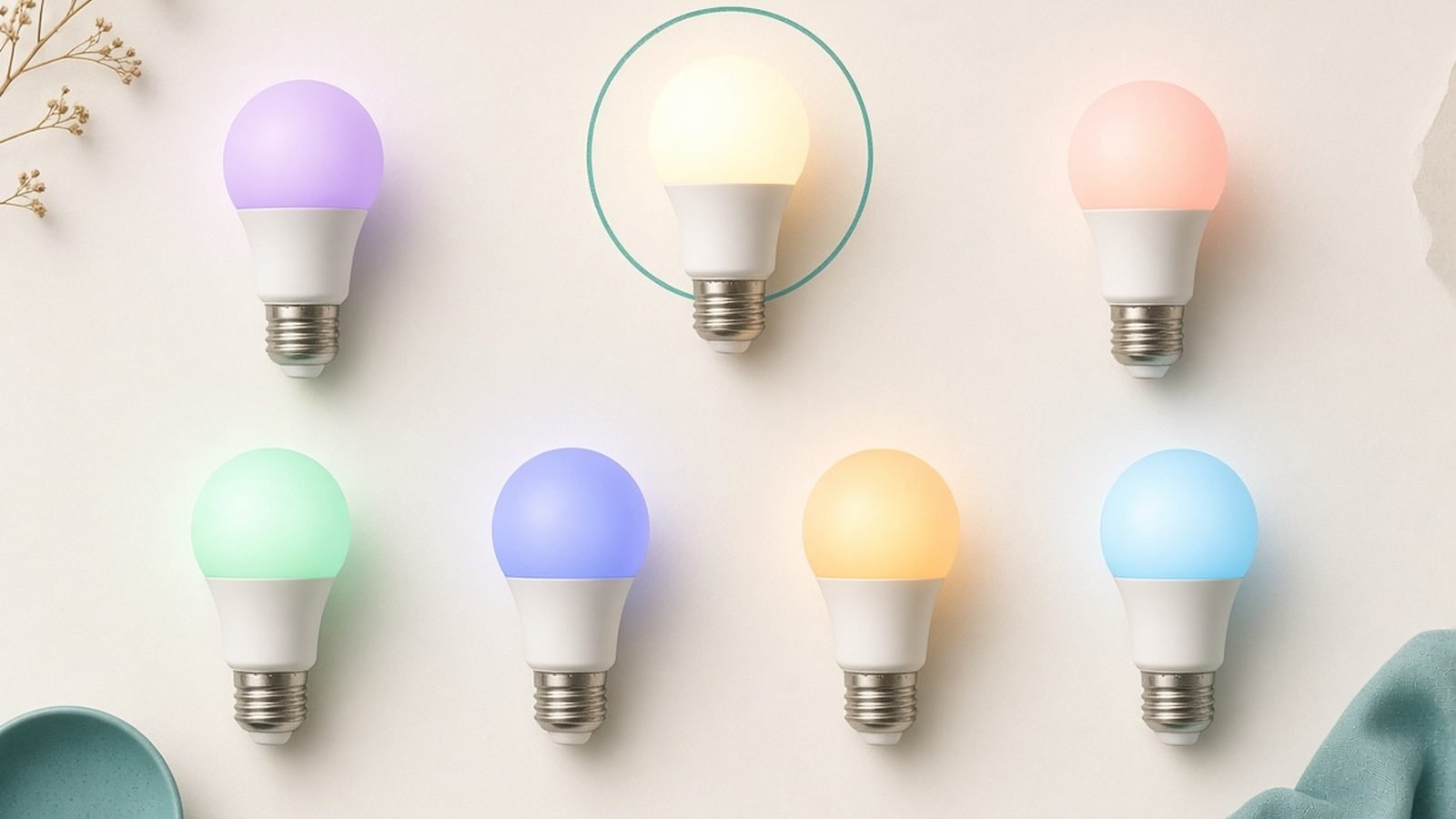
- Essentials range — Matter-over-Thread bulbs, light strips and downlights that compete as everyday smart lights rather than pure decor.
- Controls and sensors — touch and gesture controls built into panels, plus screen-mirror and music-sync features.
Standout Nanoleaf products in 2026
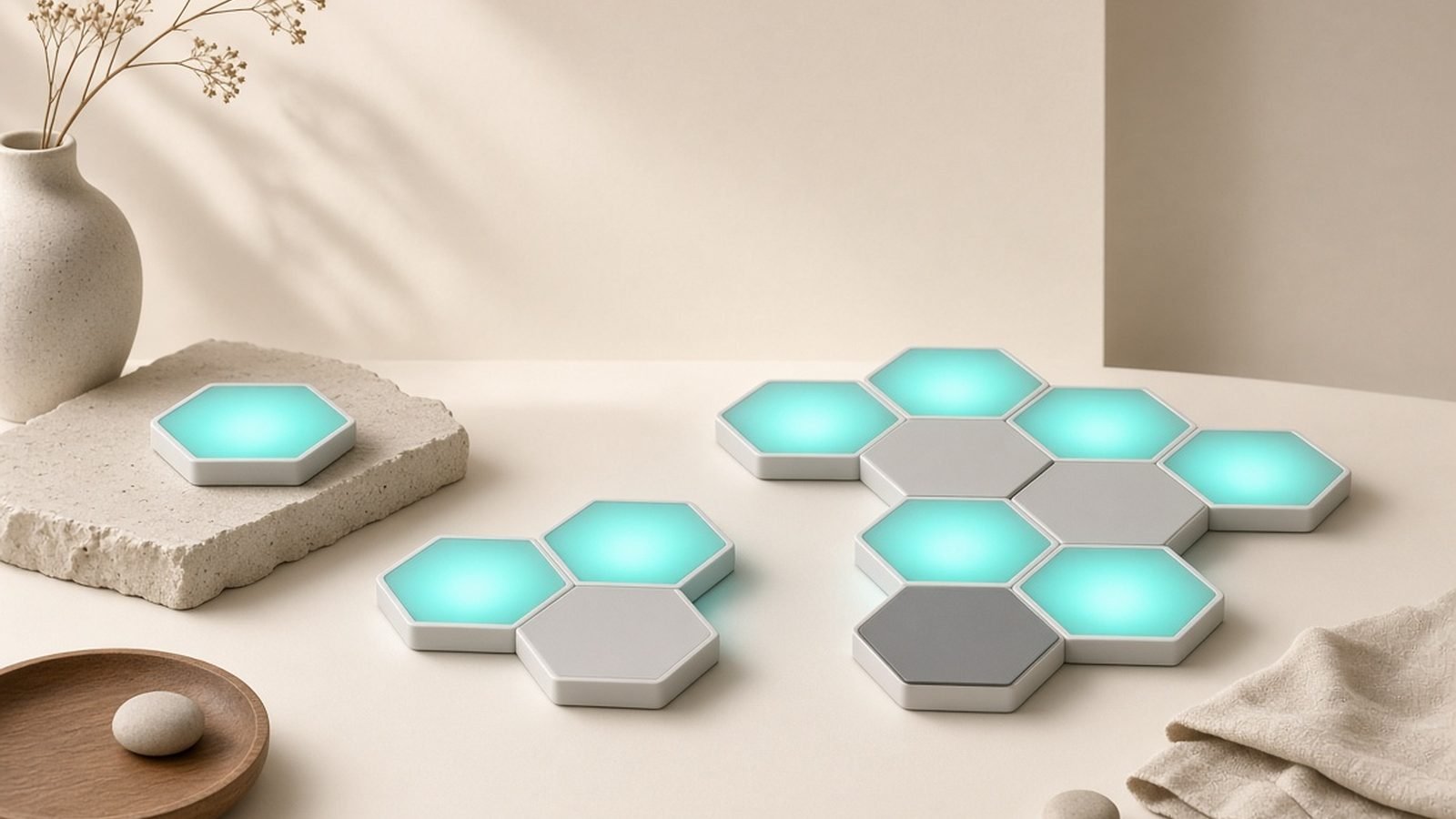
Nanoleaf Shapes Hexagons — around $200 / £180 for a starter kit. The signature product: touch-reactive, edge-connecting hexagon panels you arrange into any layout you like. Bright, colorful and genuinely interactive, they’re the reason people know the brand and a fixture on our Best Philips Hue Alternatives in 2026: Cheaper Smart Bulbs shortlist for accent lighting.
Nanoleaf Lines — around $200 / £180 for a starter kit. Backlit light bars that mount in angular geometric patterns. More minimalist and “grown-up” than the panels, they cast color onto the wall behind rather than glaring directly, which many people prefer.
Nanoleaf Skylight — around $250 / £250 for a starter kit. A modular ceiling-mounted system that finally puts Nanoleaf’s effects overhead, giving usable room light plus dynamic scenes. It’s hardwired, so it’s a more permanent, more practical install than the stick-on panels.
Nanoleaf Essentials bulbs and strips — around $20 / £18 each. The everyday line, built on Matter over Thread. These are the products to consider if you want Nanoleaf’s ecosystem for normal lighting, and they slot into our Best Smart Light Bulbs 2026: Philips Hue & Alternatives comparisons against Hue and Govee.
Nanoleaf Elements — around $250 / £250 for a starter kit. Wood-look hexagon panels that produce warm white shades for a calmer, more Scandinavian aesthetic — the pick for people who find RGB too gamer-ish.
Strengths
Unmatched design and customization. Nothing else lets you build a custom-shaped, touch-reactive light sculpture on your wall. The layouts are personal, the effects are mesmerizing, and screen-mirror and music-sync make them lively.
Early Matter and Thread adoption. Nanoleaf was ahead of the curve on Matter and Thread, and several products can act as Thread border routers — a genuine future-proofing advantage.
Great for creators and gamers. Screen mirroring, rhythm-reactive scenes and gesture controls make Nanoleaf a favorite for streaming backdrops and gaming setups.
Approachable entry price. A single starter kit is affordable enough to try, even if scaling up gets expensive.
Strong aesthetic finishes. The Lines and Elements lines in particular look premium and can suit a grown-up living space, not just a games room.
Weaknesses & criticisms
Cost scales badly. Starter kits are reasonable, but a wall-filling layout with expansion packs quickly runs into serious money for the amount of light you get.
App instability. The Nanoleaf app is a recurring pain point — users report disconnects, devices that won’t re-pair, and effects or schedules that misbehave, more often than with Hue.
Mounting is fiddly. Panels attach with adhesive mounting tape and link with small connectors. Repositioning can tear paint, connectors can work loose, and getting a layout perfectly aligned takes patience.
More decor than illumination. Except for Skylight, these are accent lights. They add color and mood but won’t properly light a room, so they’re an addition to your lighting, not a replacement.
Durability questions. Some owners report panels or connectors failing over time, and the reliance on adhesive means relocating a setup can be destructive.
Reliability & support
Nanoleaf’s reliability is mixed and mostly comes down to software and mounting rather than the LEDs themselves. The panels are bright and long-lived when left alone, but the app is the weak link: connection drops, pairing struggles and occasional firmware quirks are common complaints, and the Thread/Matter transition, while forward-looking, has introduced its own teething issues. Physically, the adhesive-and-connector system is reliable once set but unforgiving if you ever need to move it.
Warranty is a standard limited term, typically one to two years depending on region, handled through Nanoleaf support. The company is responsive and pushes regular firmware and app updates, and its willingness to back Matter and Thread shows genuine engineering ambition. But it’s a smaller specialist than Signify, and buyers should weigh that: support and stability aren’t quite at the level of the market leader. The honest read: buy Nanoleaf for the look, expect to fiddle with the app occasionally, and plan your layout carefully because moving it later is a hassle.
Who should buy Nanoleaf
Buy Nanoleaf if lighting is part of your decor and you want a statement piece — a hexagon wall behind your desk, angular Lines above the TV, or a dynamic Skylight ceiling. It’s ideal for gamers, streamers, creators and anyone who enjoys designing and tuning their space, and the Essentials range gives you a Matter-over-Thread on-ramp for everyday bulbs too.
Look elsewhere if you want practical room lighting, the best value per lumen, or the most reliable, hands-off experience. For everyday bulbs, compare against Hue and Govee in our Best Smart Light Bulbs 2026: Philips Hue & Alternatives and Best Philips Hue Alternatives in 2026: Cheaper Smart Bulbs guides — Nanoleaf earns its place on the accent-lighting side of that decision, not the workhorse side.
FAQ
Is Nanoleaf a good brand?
Yes, within its niche. Nanoleaf makes the best design-led decorative lighting in the smart home and was an early Matter and Thread adopter. It’s a strong buy for statement accent lighting. It’s a weaker choice if you want practical room illumination, the best value, or the most stable app.
Is Nanoleaf reliable?
The LEDs are durable, but reliability is dragged down by app instability and fiddly adhesive mounting. Disconnects and pairing issues are the most common complaints. Once a layout is set up and behaving, it’s fine — but expect to troubleshoot the app more often than with a market leader like Hue.
Where is Nanoleaf from?
Nanoleaf is a Canadian company headquartered in Toronto, founded in 2012. It started with an energy-efficient LED bulb before pivoting to the modular, touch-reactive light panels it’s now known for. It remains an independent smart-lighting specialist.
Do Nanoleaf panels fall off the wall?
They can, over time or on certain surfaces. Panels use adhesive mounting tape, which may loosen in heat or on textured walls, and can also pull paint off when removed. Careful surface prep helps, and planning your layout up front avoids the destructive process of repositioning later.
Does Nanoleaf support Matter and HomeKit?
Yes for much of the current range. Nanoleaf was an early backer of Matter and Thread, and many products support Apple Home, Alexa and Google Home, with several able to act as Thread border routers. Support varies by product generation, so check the specific model’s compatibility.
Is Nanoleaf brighter than normal smart bulbs?
Generally no. Nanoleaf panels and Lines are designed as accent and mood lighting, so they’re not as bright as a good smart bulb for lighting a whole room. The exception is the hardwired Skylight ceiling system, which is built to provide genuine overhead illumination.
Zen Tech Hub may earn a commission from links on this page, at no extra cost to you.