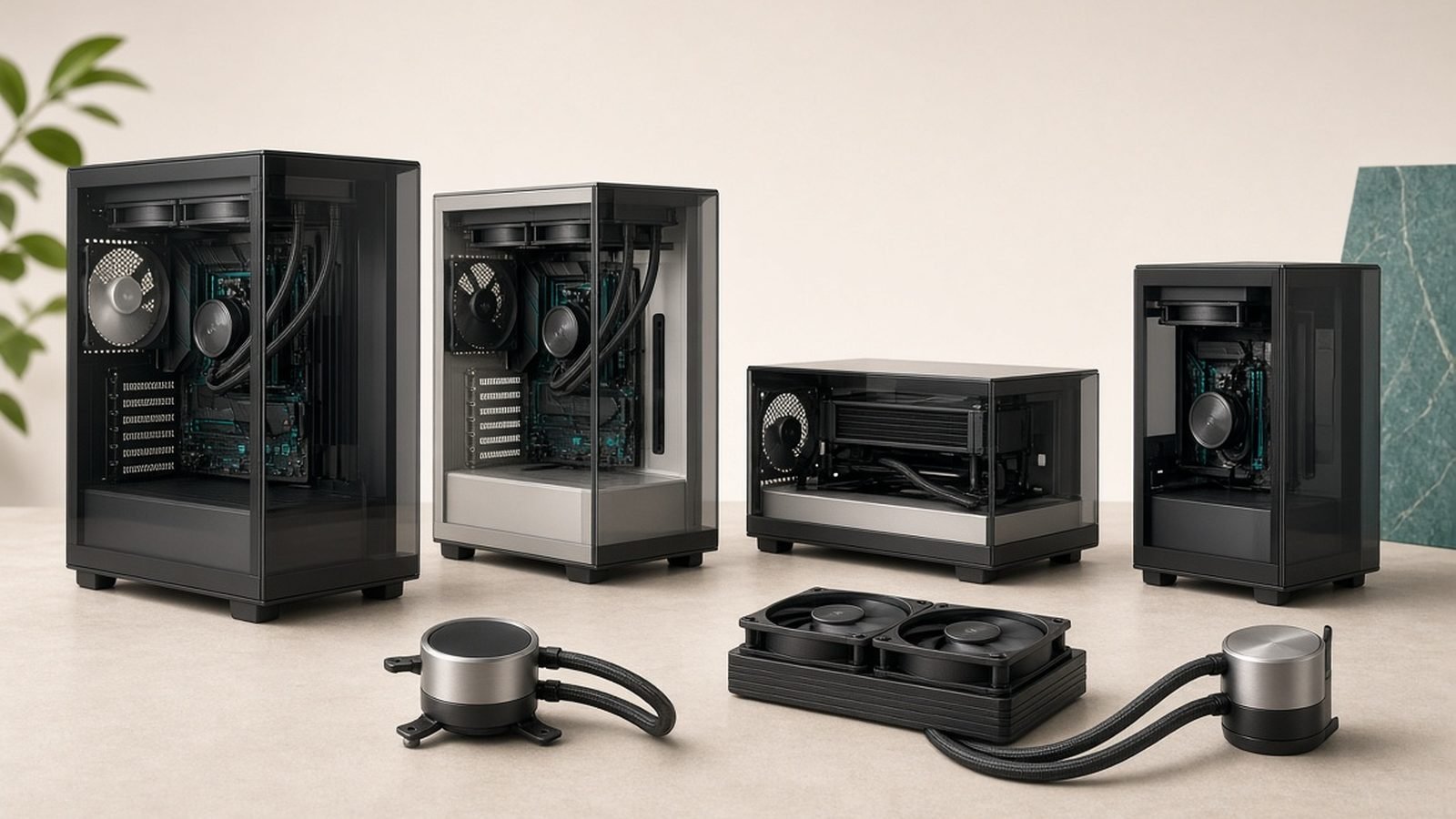
NZXT built its name on clean, minimalist PC cases and a beginner-friendly approach to building, and it’s now a full ecosystem of cases, coolers, power supplies, fans and even prebuilt PCs. The short verdict: NZXT is a good brand for people who prize design, simplicity and a cohesive look, and its cases and Kraken liquid coolers are genuinely well-liked. But you pay a premium for the aesthetic, several products are rebadged from other manufacturers, its CAM software divides opinion, and the brand carries a notable past safety recall that’s worth knowing about.
Buy NZXT if you want a stylish, approachable build that looks like a showpiece and don’t mind paying for it. Look elsewhere if you want maximum value, the best raw performance per dollar, or lightweight software.
Company overview
NZXT was founded in 2004 by Johnny Hou and is headquartered in Los Angeles, California, with operations in Asia. It’s a privately held company that started with gaming cases and gradually expanded into a broader ecosystem of PC components and services.
NZXT’s reputation is built on industrial design. It helped popularize the clean, cable-managed, tempered-glass aesthetic that dominates modern builds, and its H-series cases are frequent recommendations for people who want a machine that looks good. Beyond hardware, NZXT runs the CAM software (monitoring, lighting and fan control), a BLD prebuilt-PC service, and a subscription program. The company is design-led and beginner-focused, which is both its biggest strength and the root of most criticism: it optimizes for looks and ease over squeezing out the best value or performance, and some of its components are sourced from third-party manufacturers rather than built in-house.
What NZXT makes
NZXT’s 2026 lineup includes:
- PC cases — the flagship H-series (H5, H7, H9 in Flow and Elite variants) known for clean lines, cable bars and glass panels.
- Liquid coolers — the Kraken and Kraken Elite AIO series, the latter with a customizable LCD screen on the pump.
- Power supplies — the C-series gold and platinum units (built on third-party platforms).
- Fans — the F-series airflow and RGB fans, plus RGB and fan controllers.
- Peripherals — Function mechanical keyboards and Lift lightweight mice.
- Motherboards — the N-series boards designed to match NZXT’s aesthetic.
- Prebuilt PCs and services — the BLD custom-build service and Player-series prebuilts, plus CAM software.
The unifying thread is a consistent, minimalist design language across the whole ecosystem.
Standout NZXT products in 2026
NZXT H7 Flow (2024/2026) — around $139 / £129. A mid-tower that balances NZXT’s signature clean look with genuinely good airflow, and one of the brand’s most-recommended cases. It’s a regular on our Best PC Cases 2026: Airflow, Looks & Value guide for builders who want style without sacrificing thermals.
NZXT Kraken Elite 360 RGB — around $289 / £279. The flagship AIO, with a bright customizable LCD on the pump cap and strong cooling performance. It appears on our Best CPU Coolers 2026: Top Air & AIO Liquid Picks roundup for builders who want a showpiece cooler, though the LCD commands a clear premium.
NZXT H9 Elite — around $229 / £219. A dual-chamber, glass-heavy case designed to show off the build from multiple angles — a favorite for display machines, if a pricey one.
NZXT C1000 Gold ATX 3.1 — around $159 / £149. A fully modular gold power supply supporting the latest standard. It’s solid, though built on a third-party platform; see how it compares on our Best Power Supplies 2026: Reliable PSUs Ranked guide.
NZXT Function 2 — around $129 / £119. An optical-switch mechanical keyboard with a clean design that matches the rest of the ecosystem, aimed at the aesthetic-minded builder.
NZXT Lift 2 Symm — around $49 / £45. A genuinely competitive lightweight wireless gaming mouse, and one of NZXT’s stronger peripheral efforts.
Strengths
Outstanding design and cohesion. NZXT’s core appeal. Its cases, coolers, fans and boards share a clean, minimalist look that makes it easy to build a machine that looks like a product rather than a parts bin.
Beginner-friendly. From cable-management features in the cases to the CAM software and the BLD build service, NZXT lowers the barrier to a good-looking, working PC for first-time builders.
Strong cases and Kraken coolers. The H-series cases and Kraken AIOs are the brand’s best work and are widely recommended on their own merits, not just their looks.
Good ecosystem experience. For buyers who want everything to match and be controllable from one app, NZXT delivers a tidy, coherent package.
Weaknesses & criticisms
Premium pricing. You pay for the design. NZXT cases, coolers and PSUs generally cost more than functionally similar competitors, so value shoppers can do better elsewhere.
Rebadged components. Several NZXT products — notably power supplies and some fans — are built on third-party platforms rather than designed in-house, so the premium doesn’t always reflect original engineering.
The H1 recall. NZXT’s most serious past controversy: the original H1 mini-ITX case was recalled in 2020–2021 after its included PCIe riser could pose a fire hazard. NZXT issued a recall and a fix, and current products are unaffected, but it’s a real part of the brand’s history and worth knowing.
CAM software divides users. CAM is required to control lighting, fan curves and the Kraken LCD, and it’s criticized for being account-oriented, occasionally heavy, and historically buggy — a recurring complaint in owner feedback.
Reliability & support
NZXT’s reliability is generally good for its core hardware. The cases are simple, well-built enclosures that last, and the Kraken AIOs have a solid long-term reputation, backed by lengthy warranties (commonly six years on the Kraken coolers and up to 10 years on the higher-tier power supplies). Those warranty lengths are reassuring and competitive with the best in the category.
The important caveats are historical and software-related rather than about everyday build quality. The H1 recall showed NZXT will act on a serious safety issue, but it’s a mark on the record. CAM software is the more persistent day-to-day gripe. Customer support and RMA experiences are generally rated as reasonable, in line with premium peers. The honest summary: NZXT hardware is dependable and well-warrantied, the software is the weak point, and the H1 episode is worth being aware of even though current products are unaffected.
Who should buy NZXT
Buy NZXT if design, simplicity and a cohesive look matter to you, and you’re happy to pay a premium for them. It’s an excellent choice for first-time builders who want an attractive, approachable machine, for display-focused showpiece builds, and for anyone who values a matching ecosystem over chasing the best value. The H-series cases and Kraken coolers are the standout reasons to buy in.
Look elsewhere if value or raw performance per dollar is your priority — you can build something equally capable for less using other reputable brands — or if you’d rather avoid account-based companion software. Enthusiasts who care more about internals than aesthetics may prefer brands with more in-house engineering.
FAQ
Is NZXT a good brand?
Yes, especially for cases and Kraken liquid coolers, and for anyone who values clean design and beginner-friendly building. The trade-offs are premium pricing, some rebadged components, and the CAM software.
Is NZXT reliable?
Generally, yes. Its cases and Kraken AIOs are well-built and carry long warranties (up to six years on coolers and up to 10 on higher-end PSUs). The main historical concern was the 2020–2021 H1 case recall, which has since been resolved and doesn’t affect current products.
Where is NZXT from and who owns it?
NZXT was founded in 2004 by Johnny Hou and is headquartered in Los Angeles, California. It’s a privately held company.
What was the NZXT H1 recall?
The original H1 mini-ITX case was recalled in 2020–2021 because its included PCIe riser adapter could, in rare cases, pose a fire hazard. NZXT issued a recall and a fix. Current NZXT products are not affected, but it remains a notable part of the brand’s history.
Is NZXT better than Corsair?
They compete closely. NZXT leads on minimalist design and beginner-friendliness, while Corsair has broader breadth (memory, more PSU platforms) and a deeper RGB ecosystem. Both are premium; the choice comes down to aesthetics and priorities — compare cases on our Best PC Cases 2026: Airflow, Looks & Value guide.
Do I have to use NZXT CAM software?
The hardware runs without it, but you need CAM to control lighting, fan curves and the Kraken’s LCD screen. It’s frequently criticized for being account-oriented and occasionally heavy, so factor that in if you prefer lightweight software.
Zen Tech Hub may earn a commission from links on this page, at no extra cost to you.