Sabrent is the value-storage brand that enthusiasts keep quietly recommending. It’s best known for its Rocket line of NVMe SSDs, which repeatedly deliver near-flagship speed at a lower price than Samsung or WD, alongside a deep catalog of enclosures, docks, hubs and adapters. The short verdict: Sabrent is a genuinely good storage brand for anyone who wants fast SSDs and clever storage accessories at a keen price, and its Rocket drives are frequent value picks. The caveat is that it’s a lean, accessory-heavy operator without the scale of the memory giants — warranty coverage often depends on registering the product, first-party software is minimal, and support is smaller than the big names, so it’s a value play rather than a premium safety blanket.
Buy Sabrent if you want fast, affordable NVMe storage and useful enclosures, and you’ll register your drive. Look elsewhere if you want the longest no-strings warranty, rich management software, or the reassurance of a huge support operation.
Company overview
Sabrent is an American company, headquartered in Los Angeles, California. It’s a privately held, independent brand that has grown from a general computer-accessories maker into a storage specialist best known for SSDs and storage peripherals. Like most drive brands, Sabrent does not fabricate its own silicon — it sources NAND flash and controllers from established suppliers (its Rocket drives have used well-regarded Phison controllers and mainstream NAND), then designs, assembles and brands the finished products.
The heart of the brand is the Rocket SSD family, which built Sabrent’s reputation by offering high-end NVMe performance at prices that undercut the flagships, often being among the first to market with new PCIe generations. Around that sits a large catalog of enclosures, docking stations, USB hubs, card readers and cables — the kind of practical storage accessories that made Sabrent a go-to for anyone building an external drive or expanding connectivity. Its reputation among enthusiasts and creators is strong for value and for being early to new standards; it’s less of a household name than Samsung, but well-respected in the storage community.
What Sabrent makes
Sabrent’s lineup centers on storage and connectivity:
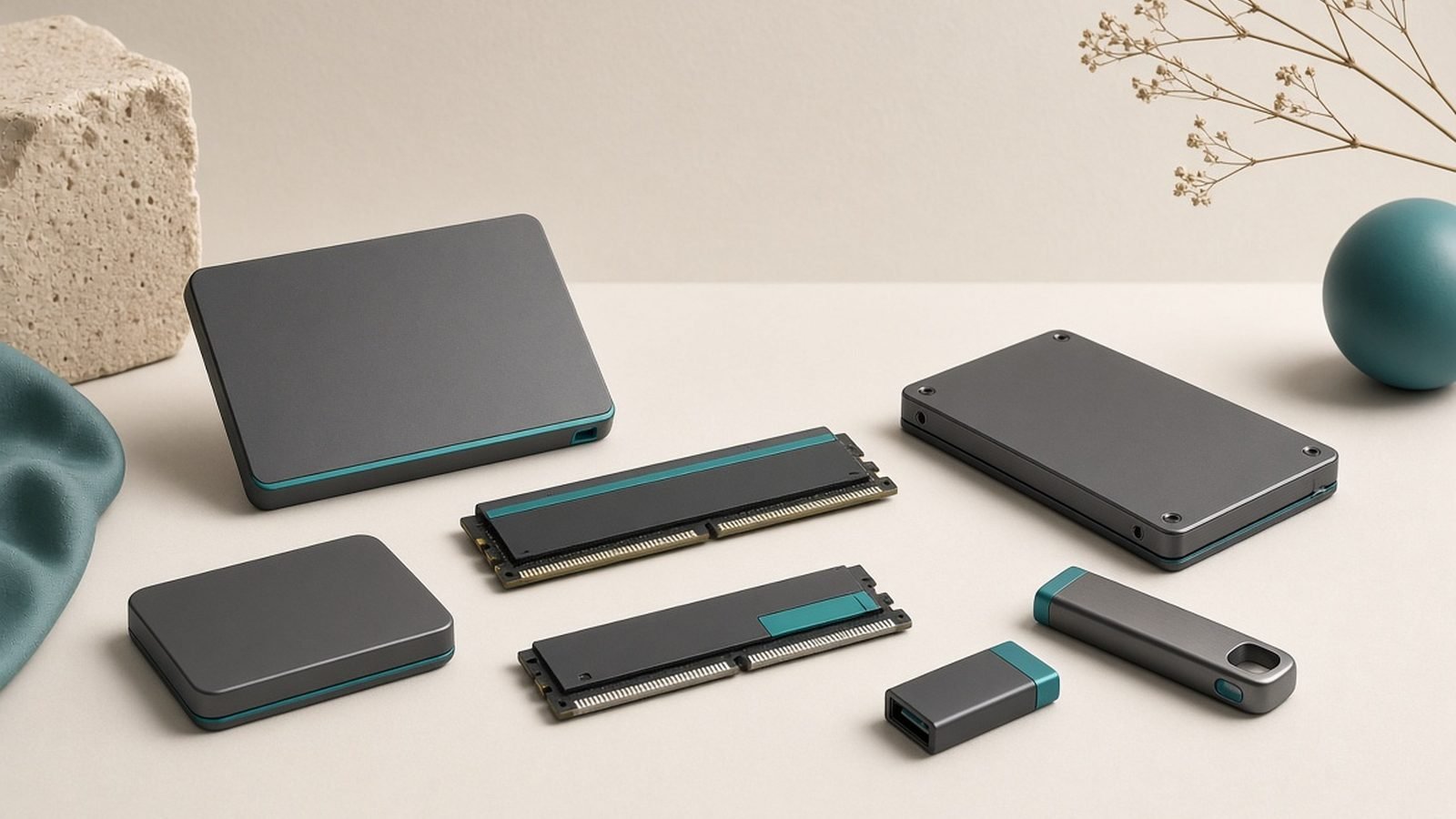
- Internal NVMe SSDs — the Rocket line, spanning PCIe 3.0, 4.0 and flagship 5.0 (Rocket 5, Rocket 4 Plus) plus compact 2230 drives (Rocket Q, Rocket Nano) for handhelds and laptops.
- Portable SSDs — external Rocket drives, including fast USB and Thunderbolt models.
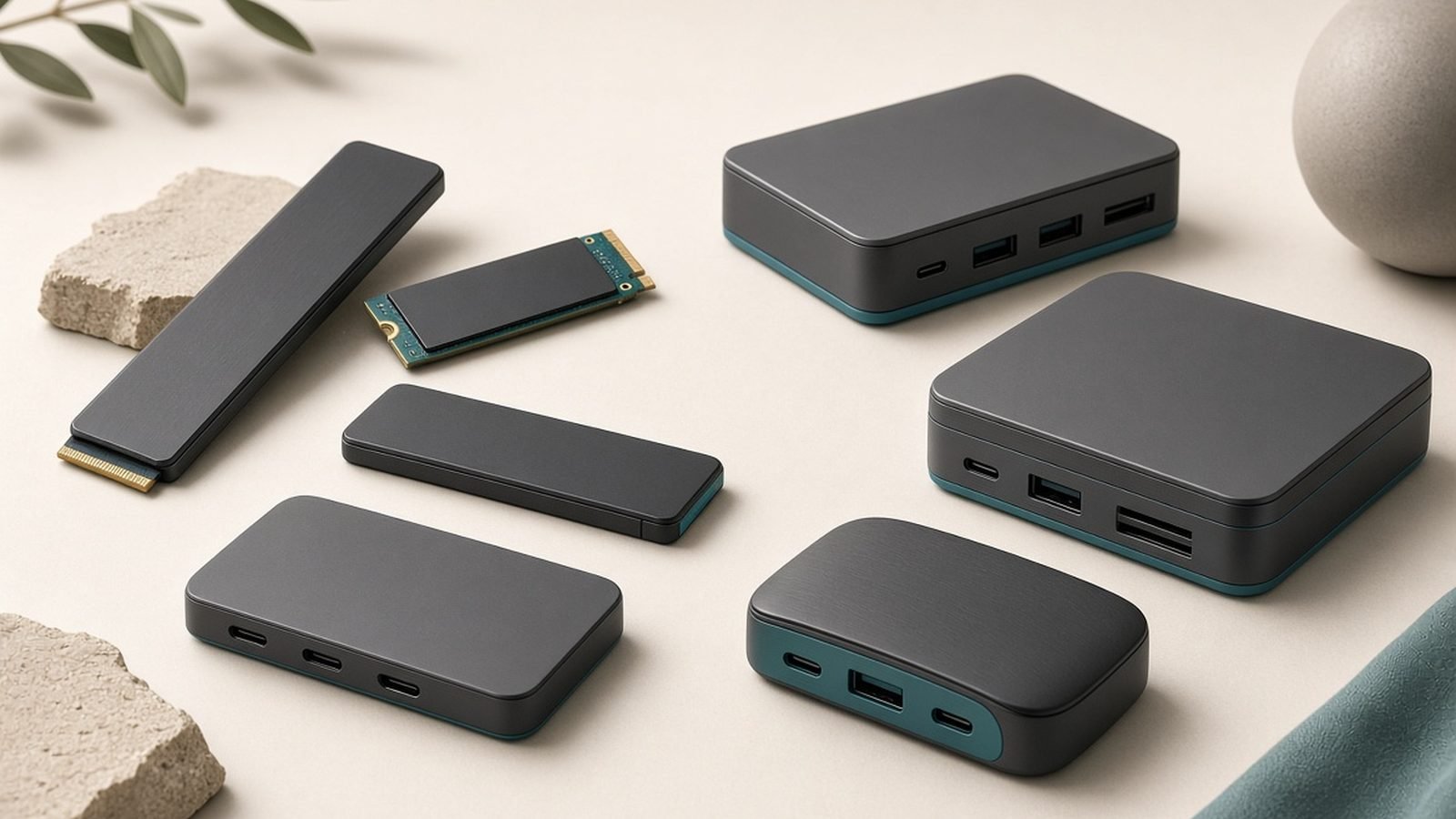
- SSD enclosures and docks — a deep range of NVMe and SATA enclosures, docking stations and multi-bay units, a genuine Sabrent specialty.
- Hubs, readers and adapters — USB-C hubs, card readers, cables and connectivity accessories.
- High-capacity storage — Sabrent has been notable for pushing very large consumer SSD capacities (up to 8TB and beyond) ahead of many rivals.
Its focus is storage and the accessories around it rather than RAM or a broad component ecosystem.
Standout Sabrent products in 2026
Sabrent Rocket 5 PCIe 5.0 NVMe SSD — around $199 / £189 for 2TB. Sabrent’s flagship Gen5 drive, competitive with the fastest consumer SSDs on sequential speed and typically cheaper than the big-name equivalents. It’s a value performance pick in our Best SSDs 2026: NVMe & SATA Drives Compared & Ranked roundup.
Sabrent Rocket 4 Plus PCIe 4.0 NVMe — around $129 / £119 for 2TB. A long-serving, well-reviewed Gen4 drive that balances speed, endurance and price, and a fixture in value SSD recommendations.
Sabrent Rocket Nano / Rocket Q 2230 SSD — around $89 / £85 for 1TB. Compact single-sided drives ideal for the Steam Deck, ROG Ally and thin laptops, an area where Sabrent moved early and remains popular.
Sabrent Rocket XTRM-Q / Thunderbolt portable SSD — around $199 / £189 for 2TB. Fast external storage for creators moving large files; if you’re weighing portable options, see our Best SSDs 2026: NVMe & SATA Drives Compared & Ranked comparison.
Sabrent USB-C NVMe enclosures — around $39 / £35. The accessory Sabrent is arguably best-loved for: well-built enclosures that turn a spare NVMe drive into a fast portable SSD.
Sabrent multi-bay docking stations. Practical docks for cloning, backup and multi-drive setups, useful when planning storage — pair with our Best RAM 2026: DDR5 Kits for Gaming & Work guide if you’re speccing a full build.
Strengths
- Excellent price-to-performance. Rocket SSDs repeatedly deliver near-flagship speed for less than Samsung or WD, which is the core of Sabrent’s appeal.
- Early to new standards. Sabrent is often among the first to ship new PCIe generations and very high capacities, making it a favorite for early adopters.
- Deep accessory catalog. Its enclosures, docks and hubs are genuinely well-regarded and turn Sabrent into a one-stop shop for DIY external storage.
- Small-form-factor leadership. Sabrent’s 2230 drives are among the go-to upgrades for handheld gaming PCs and ultra-thin laptops.
- Proven controllers and NAND. Rocket drives typically use respected Phison controllers and mainstream NAND, so the performance is real, not marketing.
Weaknesses & criticisms
- Warranty depends on registration. Sabrent’s headline SSD warranty (commonly up to five years) often requires registering the product within a set window; without registration, coverage can drop to as little as one year. It’s a real catch that trips up buyers who don’t read the terms.
- Minimal software. There’s a basic Sabrent Control Panel/toolbox, but it’s light compared with Samsung Magician or WD Dashboard, with fewer monitoring, cloning and tuning features.
- Smaller support scale. As a lean brand, Sabrent’s customer service and RMA operation is smaller than the storage giants, and experiences vary by region — fine when it works, less reassuring than a global support machine.
- Value NVMe slows when full. As with most brands, the cheaper DRAM-less drives can drop write speed under sustained load or when nearly full.
- Less independent long-term data. Because Sabrent ships fewer units than the giants, there’s less large-scale, long-run reliability data to draw on than for Samsung or Crucial.
Reliability & support
Sabrent’s Rocket SSDs have a good day-to-day reliability reputation among enthusiasts and creators, helped by their use of proven Phison controllers and mainstream NAND. Aggregate owner feedback is largely positive, and the drives have held up well in long-term enthusiast use, though there’s less massive-scale reliability data than for the biggest brands simply because Sabrent ships fewer units. Dead-on-arrival and premature-failure reports exist, as with any drive maker, but aren’t a defining problem.
The bigger practical caveat is the warranty structure. Sabrent commonly advertises up to a five-year warranty on Rocket drives, but that longer term frequently depends on registering the product shortly after purchase — leave it unregistered and coverage can fall to around one year. That’s a genuine downside versus brands that grant their full warranty automatically, and it’s the single thing every Sabrent buyer should act on at unboxing. Support and RMA are handled by a smaller operation than the giants, so patience can be needed. The honest summary: Sabrent’s hardware is a strong value bet, but read and act on the warranty terms, and know you’re buying from a lean brand rather than a huge support organization.
Who should buy Sabrent
Buy Sabrent if you want fast, affordable NVMe storage and genuinely useful storage accessories, and you’re the kind of buyer who’ll register the drive to lock in the full warranty. It’s an excellent choice for value performance builds, high-capacity storage, handheld and thin-laptop upgrades (its 2230 drives), and anyone building external drives from enclosures and bare SSDs. Enthusiasts and creators who want speed per dollar are its natural audience.
Look elsewhere if you want the longest automatic, no-strings warranty, a rich management software suite, or the reassurance of a very large support operation — where Samsung, WD or Crucial may suit better. For fast, keenly priced storage and clever accessories, though, Sabrent is one of the best value picks in the category.
FAQ
Is Sabrent a good brand?
Yes, especially for value storage. Sabrent’s Rocket NVMe SSDs deliver near-flagship speed for less than the big names, and its enclosures and docks are well-regarded. The main caveats are a warranty that often depends on registration, minimal software, and a smaller support operation than the storage giants.
Is Sabrent reliable?
Broadly yes. Rocket drives use proven Phison controllers and mainstream NAND, and enthusiast owner feedback is largely positive over the long term. There’s less massive-scale reliability data than for Samsung or Crucial because Sabrent ships fewer units, but it’s not a brand with a reputation for widespread failures.
Where is Sabrent from and who owns it?
Sabrent is an American company, headquartered in Los Angeles, California. It’s privately held and independent, and it designs and brands its drives and accessories using NAND and controllers from established suppliers rather than fabricating its own chips.
Is Sabrent SSD good?
Yes. The Rocket line, including the Gen5 Rocket 5, Gen4 Rocket 4 Plus and compact 2230 Rocket Nano, offers strong speed at competitive prices and is a repeat value pick. Just register the drive to secure the full warranty. See our Best SSDs 2026: NVMe & SATA Drives Compared & Ranked roundup for where the Rockets land.
Do I need to register my Sabrent SSD for the warranty?
In most cases yes. Sabrent’s advertised longer warranty (commonly up to five years) typically requires registering the product within a set window after purchase; without registration, coverage can drop to around one year. Register at unboxing to avoid being caught out.
Sabrent vs Samsung SSD — which is better?
Samsung leads on peak sustained performance, rich Magician software and automatic long warranties. Sabrent usually wins on price and is quick to new standards and high capacities. For the best value NVMe speed, Sabrent is compelling; for the most polished, no-strings ownership experience, Samsung has the edge.
Zen Tech Hub may earn a commission from links on this page, at no extra cost to you.